
Last updated November 18, 2026
 AC repair
 Furnace & heating
 Heat pumps
 Ductless mini splits
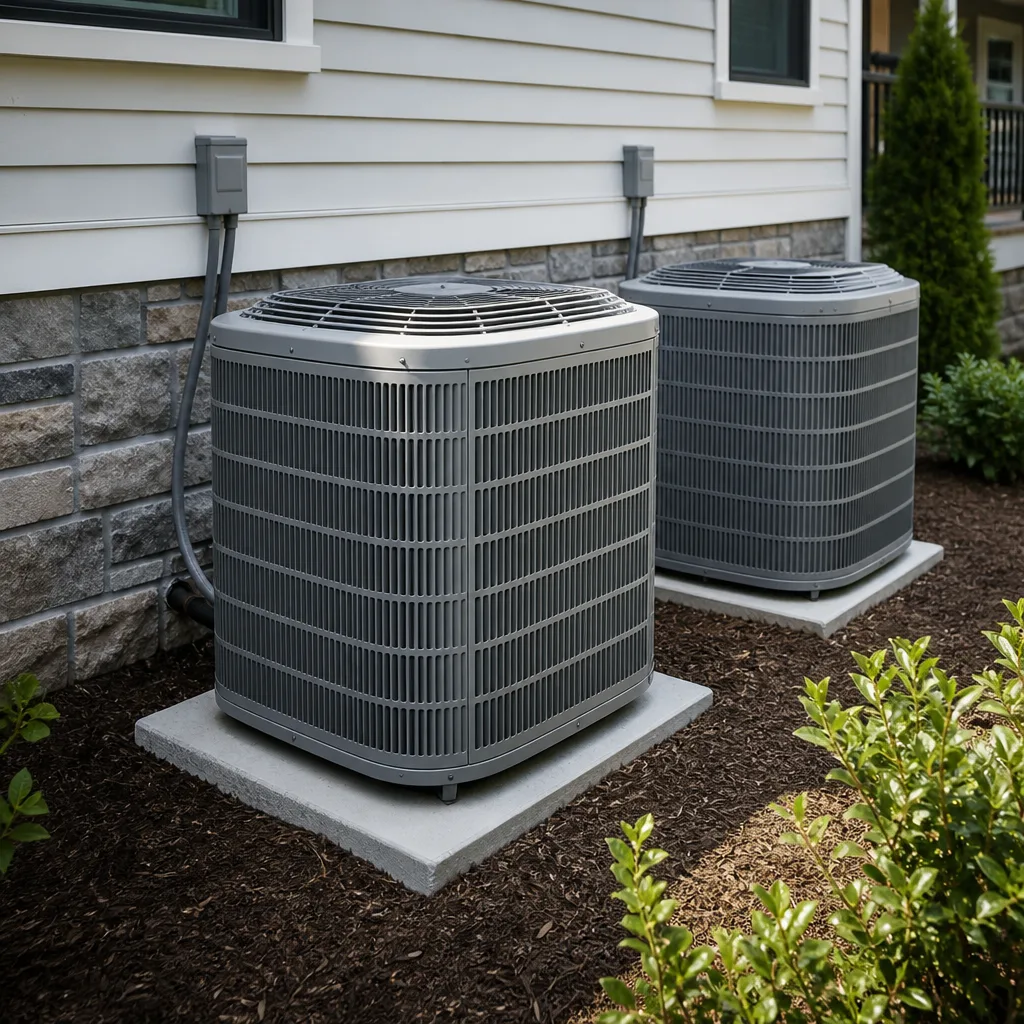 Carrier
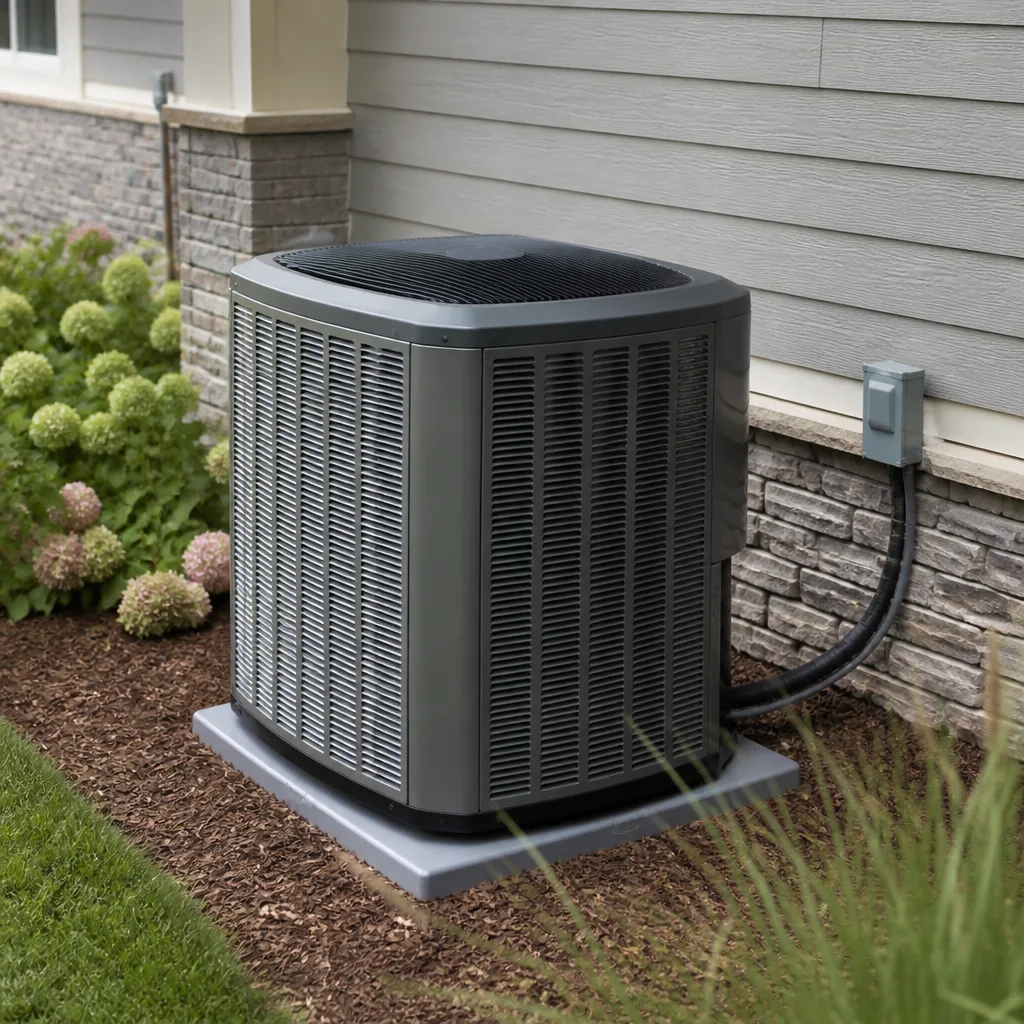 Trane
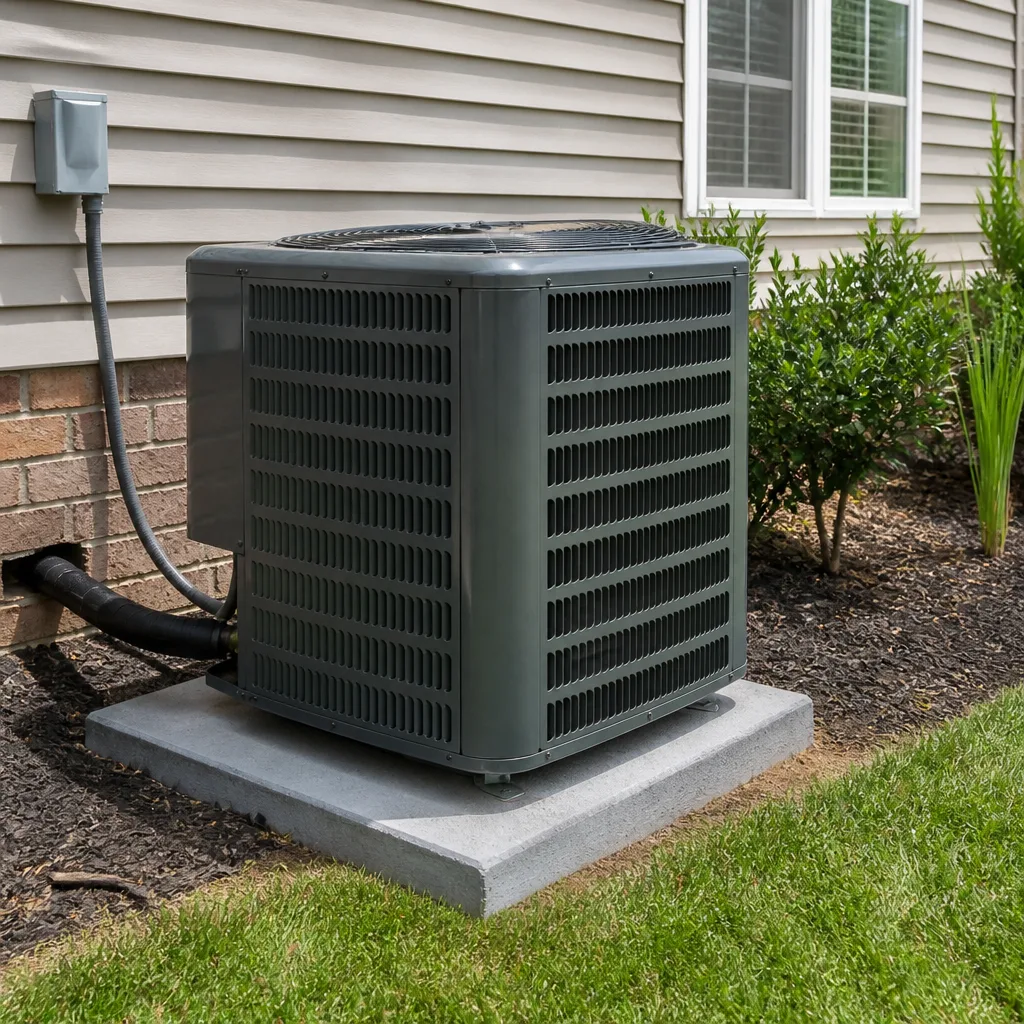 Goodman
Seasonal tune-up and full diagnostic on your Carrier, Trane, or Goodman system - readings shown to you before any repair is proposed
Diagnosis first, numbers second - you approve the repair price before a single part goes in.
Get your free estimateEmergency & Commercial HVAC Maintenance Schedule: What to Do and When
Here’s the number that changes how most business owners think about maintenance: a commercial rooftop unit in Mesquite running 10 to 12 hours a day packs the equivalent wear of two to three years on a northern-state unit into a single desert summer. Between the triple-digit heat, the UV load on the roof, and the dust that settles on every condenser coil in the valley, a once-a-year service visit isn’t maintenance. It’s a formality. This guide lays out a maintenance calendar built around hours of operation and Mesquite’s actual climate, so you can stop paying for emergency repairs that a schedule could have prevented.
Quick Answer
Commercial HVAC maintenance in Mesquite should be scheduled by runtime hours, not calendar quarters. Plan a pre-summer inspection in March or April, coil and drain service every 90 days during cooling season, filter changes every 30 to 60 days depending on dust and occupancy, and a heating check in October before the first cold snap. Any unit running more than 2,000 hours a year needs a quarterly visit at minimum.
Styles & brands we work with
- AC repair
- Furnace & heating
- Heat pumps
- Ductless mini splits
- Carrier
- Trane
- Goodman
Table of Contents
- Why Hours of Operation Beat Calendar Months
- The Pre-Summer Rooftop Inspection Checklist
- Filter, Coil, and Drain Pan Intervals for Mesquite Dust
- Building an Equipment Log That Creates Accountability
- The Business-Continuity Math for Maintenance Contracts
- The Heating Side: What Changes in November
- When a Maintenance Failure Becomes a 2 A.M. Call
Why Hours of Operation Beat Calendar Months
Most commercial maintenance contracts are sold in quarterly blocks because quarterly is easy to sell. It’s also a guess. A restaurant running its rooftop unit 14 hours a day and a storage facility running one 4 hours a day don’t accumulate the same load, and they shouldn’t be on the same schedule. The unit doesn’t know what month it is. It knows how many hours the compressor has turned, how much dirt has caked the coil, and how many gallons of condensate have run through the drain pan.
Start your scheduling by adding up actual runtime. Walk your building and note the hours each system operates per day, then multiply by days per week and weeks per year. That number, not the thermostat on the wall, is what drives your service frequency.
- Under 1,000 hours a year (small office, storage, seasonal use): two visits a year, one pre-summer and one pre-winter, is usually enough.
- 1,000 to 2,000 hours a year (standard retail, professional offices): quarterly service during cooling season.
- Over 2,000 hours a year (restaurants, gyms, clinics, anything open long hours): quarterly minimum, with filter changes on a 30-day cycle and mid-season coil checks.
In Mesquite specifically, the cooling season runs long. We regularly see systems carrying meaningful load from April into October, which is six months of hard runtime rather than the three or four that contractors in cooler climates plan around. A schedule copied from a national template will underserve your equipment by roughly half.
The Pre-Summer Rooftop Inspection Checklist
The March-to-April inspection is the one that pays for itself. Everything you catch on a mild spring afternoon is a repair you’re not making on a 112-degree day with a building full of people. Rooftop units in the high-desert environment take a specific kind of beating, and the checklist should reflect it.
- Coil cleaning, both sides. Desert dust packs the condenser fins tighter than the national average, and a dirty coil raises head pressure, which shortens compressor life and drives up your power bill all summer.
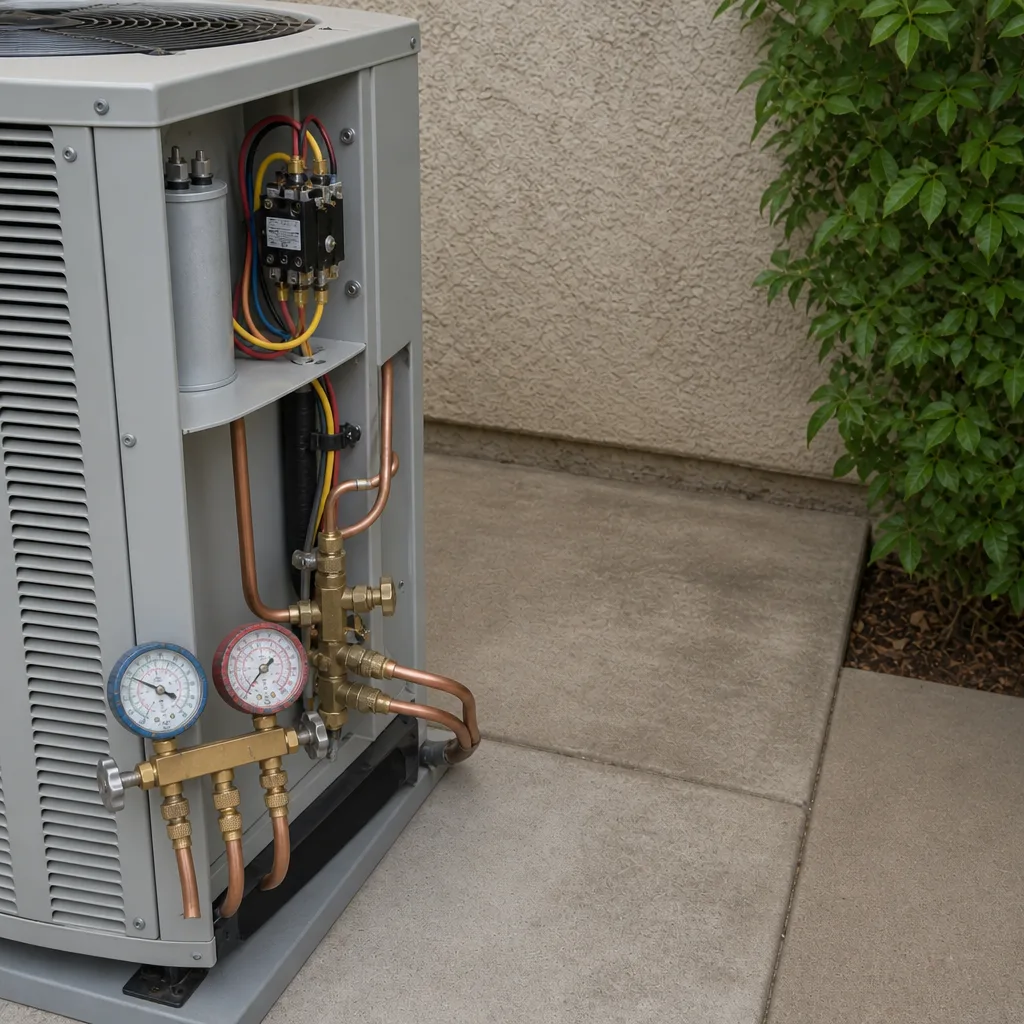
- Refrigerant charge check. Verify charge by superheat and subcooling, not just pressure. A slightly undercharged unit runs longer, and longer runtime in this heat is where failures begin.
- Drain pan and condensate line. Clear the pan, flush the line, and check the float switch. Standing water in a rooftop pan in July is a biological problem and a shutdown waiting to happen.
- Electrical connections and contactors. Look for pitting, heat discoloration, and loose lugs. Rooftop vibration plus high ambient temperatures is a combination that loosens terminals.
- UV and weather damage. Inspect wiring insulation, service valve caps, and cabinet seals for sun cracking. Mesquite’s UV is hard on anything rubber or plastic on a roof.
- Belts, bearings, and blower wheel. Check belt tension and wear, listen to the bearings, and inspect the blower wheel for dust buildup that throws it out of balance.
- Thermostat and controls calibration. Confirm setpoints, schedules, and economizer operation if you have one. A control that’s drifted runs the unit longer than it needs to.
- Filter loading baseline. Note current filter condition and record it. That baseline is what tells you whether your change interval is right.
We’ve seen units on Mesquite rooftops with coils so packed with dust that the fan was pulling almost no air. Owners didn’t notice until the space stopped cooling, because the decline was gradual. A spring inspection catches it while it’s still a cleaning job instead of a compressor replacement.
Filter, Coil, and Drain Pan Intervals for Mesquite Dust
National filter-change guidance assumes average dust. Mesquite isn’t average. Wind-blown desert particulate, construction dust, and the fine silt that settles on everything means filters load faster here, and the intervals you’ll find in a generic maintenance manual will leave you changing filters too late.
- Filters: 30 days for restaurants, gyms, clinics, and any space with high occupancy or grease in the air. 60 days for standard offices and retail. Check monthly regardless and change on condition, not just the calendar.
- Condenser coils: inspect every 90 days during cooling season, clean as needed. Rooftop units near gravel lots or open desert edge load faster and may need cleaning twice a season.
- Evaporator coils: inspect annually, clean when the pressure drop across the coil tells you it’s time. A dirty evaporator coil reduces capacity and can freeze.
- Drain pans: flush every service visit during cooling season. In a long Mesquite summer, a pan can grow standing water and biological film in weeks.
- Blower wheels: inspect quarterly, clean annually. Dust buildup unbalances the wheel and stresses the motor.
Two things determine the real interval: how dirty your specific location is and how many hours the unit runs. A unit on a Mesquite rooftop next to a dirt lot needs more attention than one over a paved parking structure. Write the actual condition down at every visit so the next technician, whether it’s us or anyone else, knows what your equipment is doing rather than guessing from a template.
Building an Equipment Log That Creates Accountability
An equipment log is the single cheapest maintenance tool you can own. It’s a binder or a spreadsheet with one page per unit, and it does something no service visit can: it shows a pattern. It catches the technician who skips the coil cleaning, the unit that keeps losing refrigerant, and the drain pan that keeps clogging. Without it, every visit starts from zero and nobody’s accountable for anything.
For each unit, record the model and serial number, install date, and location on the roof or in the building. Then at every service visit, log the date, the technician or company, the runtime hours, filter condition, coil condition, refrigerant readings, and any parts replaced. Note anything the technician recommended and whether it was done.
- One page per unit. Model, serial, install date, and physical location. Photograph the nameplate and tape the photo inside the binder.
- Log every visit the same way. Same fields, same order, every time. Consistency is what makes the pattern visible.
- Record recommendations and outcomes. If a technician flags a failing contactor, write down whether it was replaced and when. Unaddressed recommendations are the leading indicator of a future emergency.
- Review the log annually. If one unit shows up three times in a year and the others don’t, that unit is telling you something. Either it’s undersized for its load or it’s nearing the end of its service life.
This matters more than most owners realize. When you can show that a unit has failed three times in 18 months, the repair-versus-replace conversation becomes a math problem instead of an argument. You’ll find the same discipline applied on our AC Repair & Installation in Mesquite page, where the log often decides the answer before a technician ever opens a panel.
The Business-Continuity Math for Maintenance Contracts
Every business owner wants to know what a maintenance contract costs. The better question is what one lost service day costs. If your building is a restaurant, a closed day in July is lost revenue, spoiled inventory, and possibly staff sent home. If it’s a clinic, it’s cancelled appointments. If it’s retail, it’s customers walking out into the heat. The contract premium is almost always smaller than a single day of that.
Run the math honestly. Take your average daily revenue during cooling season, add the cost of an emergency service call at a premium rate, and multiply by the one or two days a year a neglected unit is likely to fail. Then compare that to the annual cost of a scheduled quarterly contract. For most commercial spaces in Mesquite, the contract wins, and it wins by a wider margin the hotter the summer gets.
There’s a second, quieter benefit. A contract sets the schedule so you don’t have to remember it, and it puts the same eyes on your equipment every quarter. Consistency is where problems get caught early, and early is cheap. A failing contactor caught in April is a minor repair. The same contactor failing in August is a service call, a shutdown, and a rushed fix.
We’ve watched this play out for over four decades in this community. The businesses that stay comfortable through a Mesquite summer are almost never the ones with the newest equipment. They’re the ones with a written schedule and someone who shows up for it.
The Heating Side: What Changes in November
Heating gets neglected in the desert because it runs so much less, and that’s exactly why it fails when it’s needed. A rooftop heat section that sat idle for eight months doesn’t get better with age. It gets a corroded ignitor, a spider web in a burner tube, or a pressure switch that’s decided not to close. Mesquite winters bring cold nights, and a commercial space with no heat is a closed space.
The October or early November visit should cover the heat exchanger inspection, burner cleaning, ignition system check, flue and venting inspection, and a full safety check for any gas-fired equipment. On heat pump systems, the reversing valve and defrost cycle need verification before the first cold night. If you’re running a heat pump or mini-split setup, the specific checks are covered on our Heat Pump & Mini Split in Mesquite page, and the heating-side schedule for furnaces lives on our Heating & Furnace in Mesquite page.
One caveat that matters: gas-fired rooftop equipment involves burners, flue gases, and combustion air, and what you can see from the outside tells you almost nothing about what’s happening inside the heat exchanger. Don’t open a burner compartment to “take a look.” A cracked heat exchanger can put carbon monoxide into an occupied space. This is a trained-professional job, every time, and any company that tells you otherwise is telling you something about how they work.
When a Maintenance Failure Becomes a 2 A.M. Call
Almost every emergency call we take traces back to something a schedule would have caught. A compressor that seized after a summer of running hot on a dirty coil. A drain pan that overflowed into a ceiling because the float switch was never tested. A unit that tripped on high pressure at 9 p.m. because nobody had checked the charge since it was installed. The crisis is the costume. The maintenance failure is underneath it.
That’s the argument for a disciplined schedule right there. It’s not about avoiding service calls. It’s about converting the expensive, disruptive, after-hours ones into planned daytime work with a known price. When a maintenance program is working, the emergency calls go quiet. When they spike, the schedule has slipped somewhere, and the equipment log is where you find out where.
If you’re reading this after a failure rather than before one, that’s fine. Call us at (888) 570-3601 and a live person will answer, day or night, including holidays. We’ll get the building back up and then help you build the schedule that keeps it from happening again.
Common Mistakes to Avoid
- Buying a quarterly contract and assuming it’s enough. Quarterly is a starting point, not a fit. A restaurant running 14-hour days needs more than four visits a year, and the contract should reflect your runtime, not a sales template.
- Changing filters on a calendar instead of on condition. In Mesquite’s dust, a 90-day filter change means you’re running loaded filters for a third of the season. Check monthly and change when they’re loaded.
- Skipping the heating check because “we hardly use it.” A heat exchanger that fails from corrosion and neglect during eight idle months is a safety issue, not just a comfort one. Every commercial heating system needs a pre-winter inspection.
- Not keeping an equipment log. Without a written record, every visit starts over and nobody catches the pattern. The unit that fails in August looks like bad luck instead of a trend.
- Cleaning coils by pressure-washing the fins. This flattens the fins and does lasting damage. Coil cleaning is a careful chemical and rinse job, and it’s one of the reasons we trained our technicians as journeymen rather than handing them a hose.
- Ignoring rooftop UV damage. Sun-cracked wiring insulation and weathered service caps are the kind of thing that causes a failure nobody can explain later. Inspect them every spring.
- Treating the cheapest contract bid as the best deal. A low quarterly price often means fewer visits than you need and no written record of what was actually done. Ask for the scope in writing before you sign anything.
See the difference
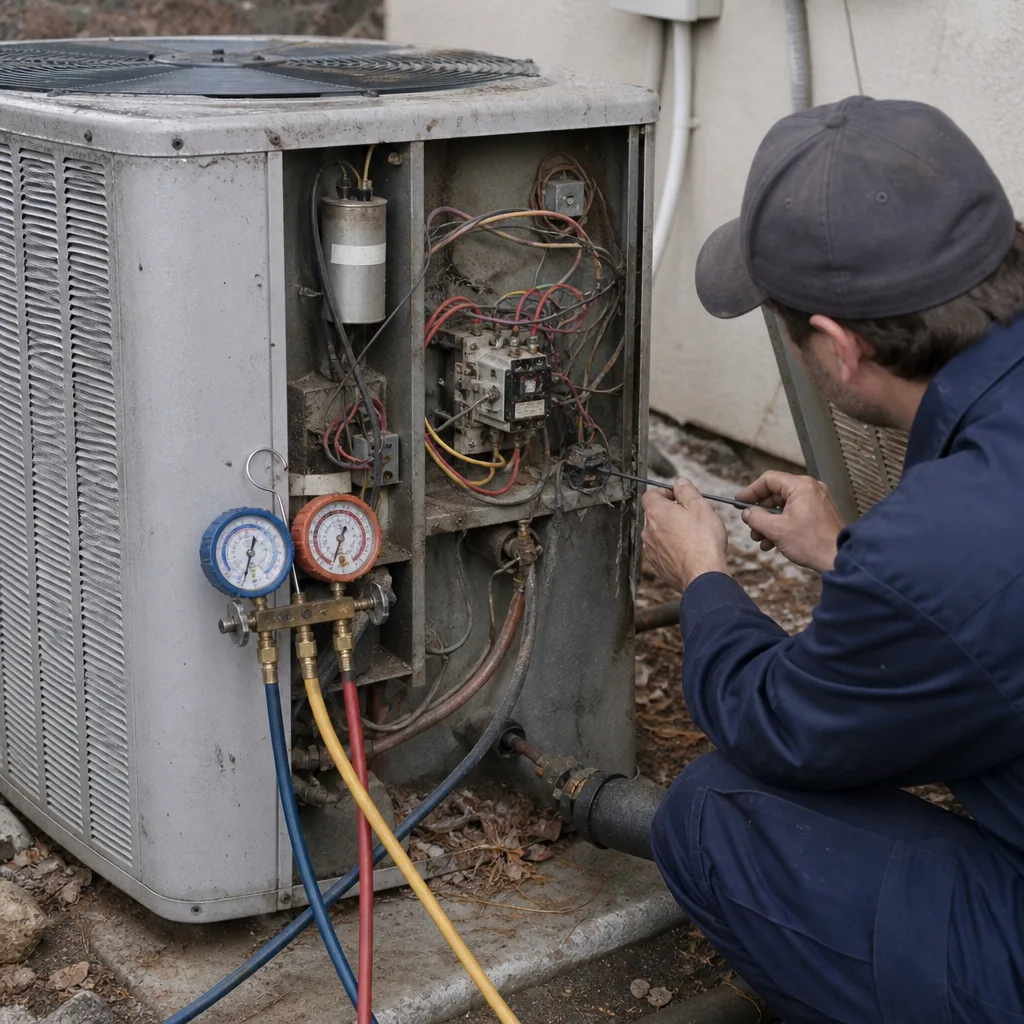 Before
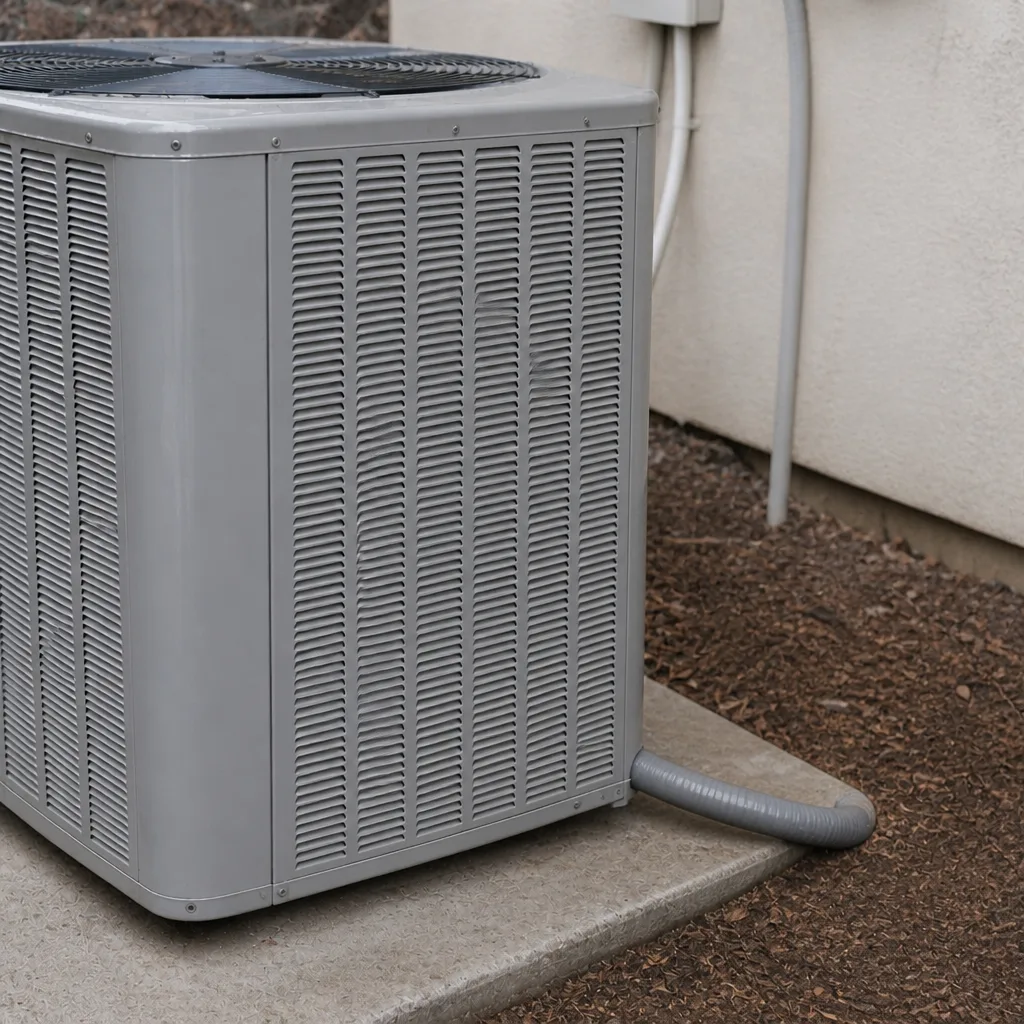 After
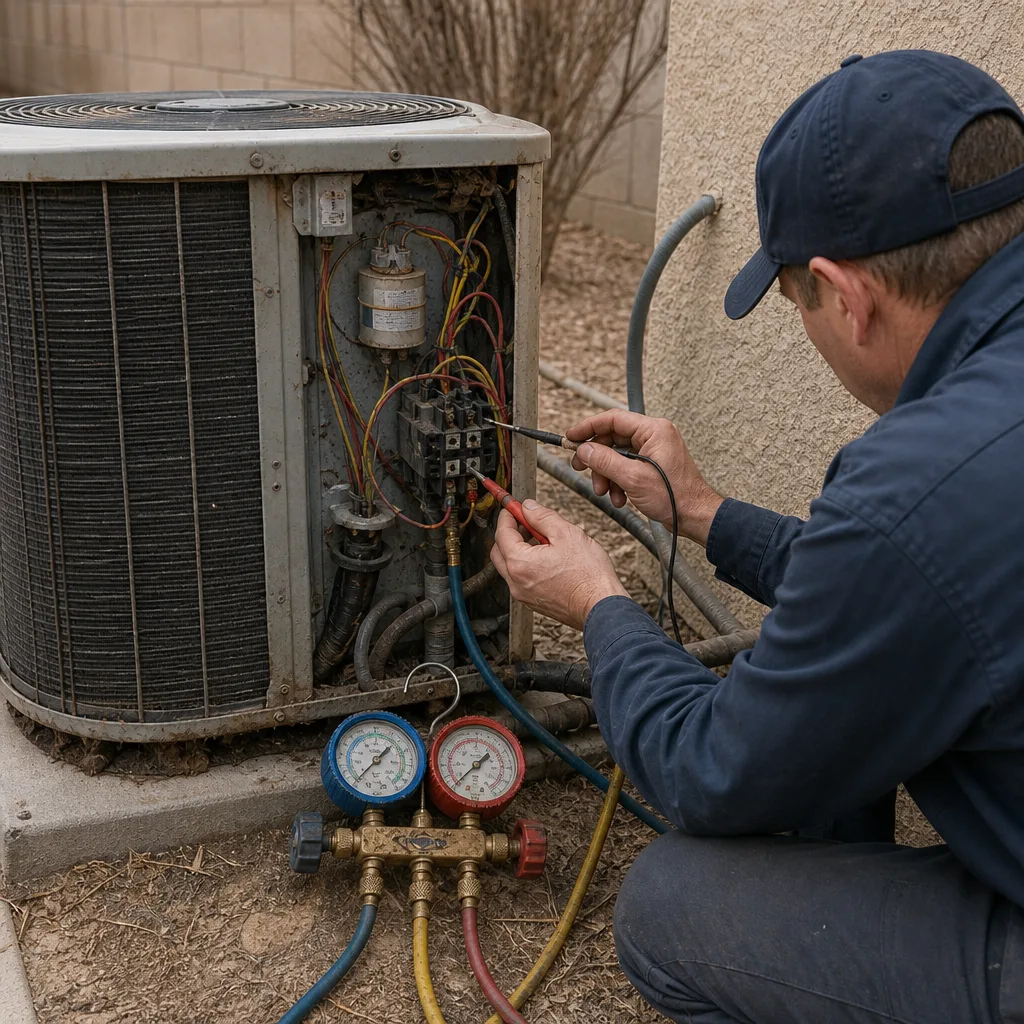 Before
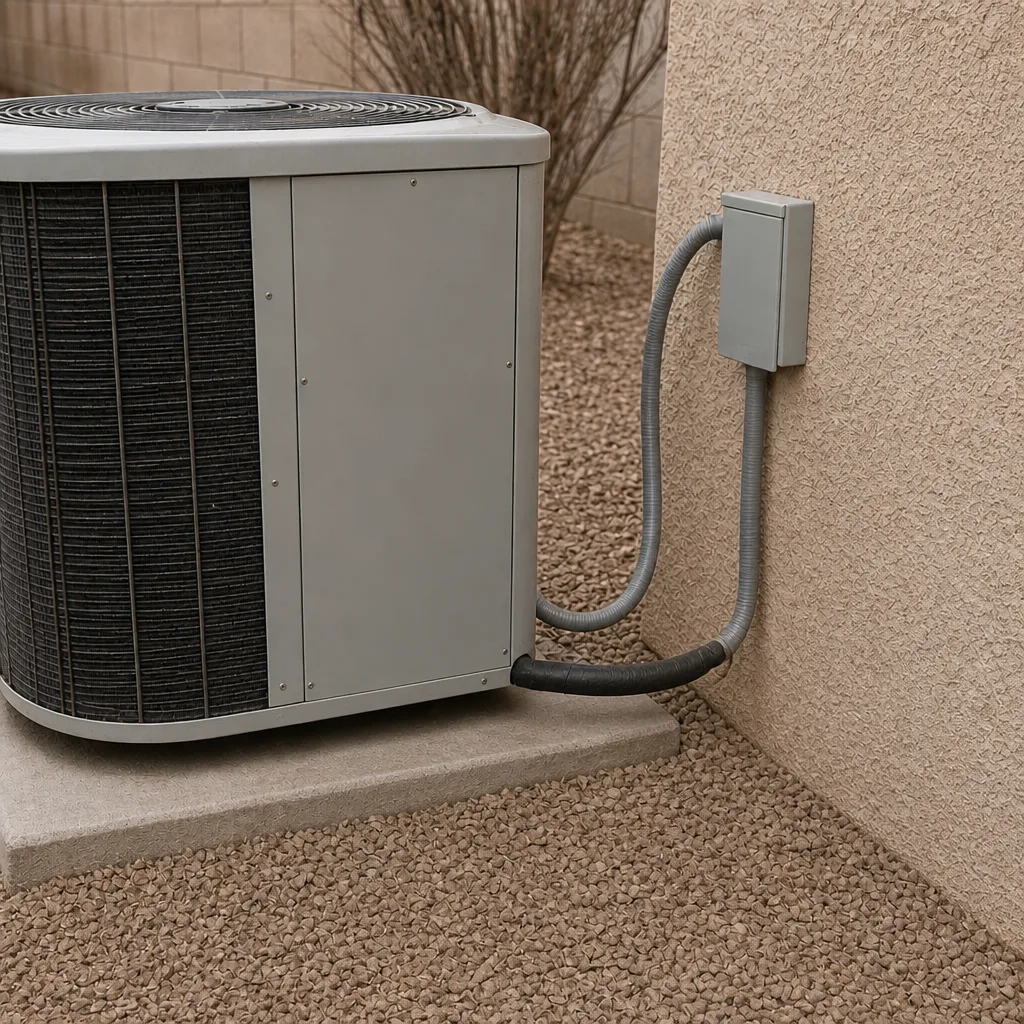 After
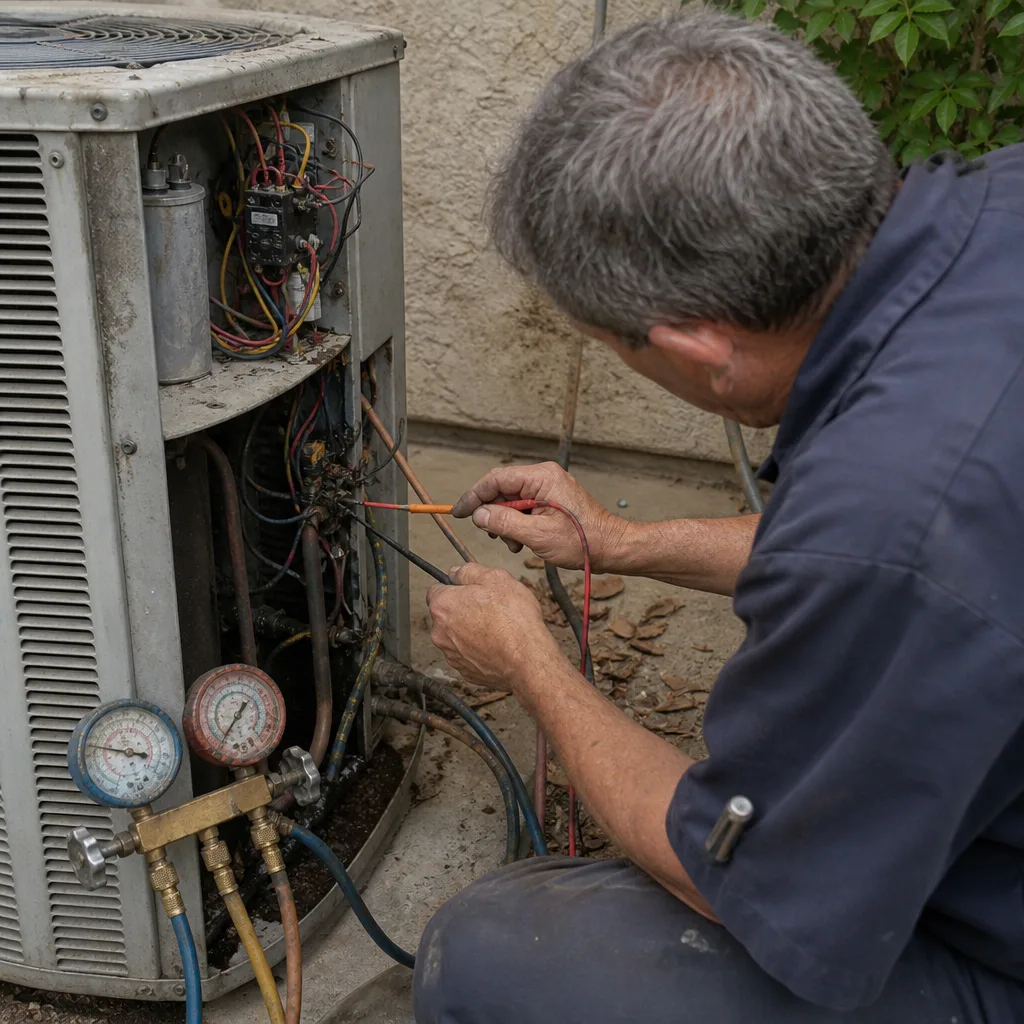 Before
 After
When to Call a Professional
Call a professional the moment you see refrigerant oil around a fitting, hear a compressor short-cycling, notice water staining near a rooftop curb, or smell gas anywhere near a heating unit. Those are stop-now conditions, not schedule-later conditions. Call if a unit has run more than three cooling seasons without a coil cleaning, if a space isn’t holding temperature through the afternoon, or if your power bill has climbed without a change in hours. On gas-fired heating, don’t investigate a suspected heat exchanger problem yourself; that’s a carbon monoxide risk and a trained-professional job.
Fireside Heating & Air Co. Mesquite offers free estimates in Mesquite, and our phones are answered by a live person around the clock, every day of the year. Call (888) 570-3601. Whatever we find, you’ll get a straight answer and a price quoted before any work starts. The price quoted is the price paid, and every job carries our 90-Day Done Right Promise in writing.
Frequently Asked Questions
Every 90 days during cooling season for most commercial systems in Mesquite, with a pre-summer inspection in March or April and a heating check in October or November. Units running more than 2,000 hours a year need quarterly visits at minimum, and restaurants or clinics open long hours should plan on filter changes every 30 days. Call (888) 570-3601 and we’ll help you size the schedule to your actual runtime rather than a national average.
Commercial systems run longer hours, serve more people, and often sit on a roof where they take more UV and dust exposure, so they generally need more frequent service and a written equipment log to catch patterns. Residential systems usually need two visits a year. Commercial systems can need four or more, depending on load. The schedules differ because the wear differs, not because the equipment is fundamentally different. Call (888) 570-3601 for a free estimate on a commercial schedule built for your building.
You can call when something breaks, and we’ll answer. But the contract almost always costs less than one lost service day. The businesses that stay comfortable through a Mesquite summer are usually the ones with a written schedule and someone who shows up for it. The contract converts after-hours emergencies into planned daytime work at a known price. Call (888) 570-3601 and we’ll walk you through what a contract covers and what it costs.
Our technicians are trained on nine major brands, including Lennox, Goodman, Rheem, York, Carrier, Trane, Daikin, Bryant, and American Standard. That covers most rooftop and split commercial equipment we see in Mesquite. If you’re unsure what’s on your roof, the nameplate photo in your equipment log will tell you, and we can confirm before the first visit. Call (888) 570-3601 with the model number and we’ll give you a clear answer.
It depends on unit count, runtime hours, and whether you need quarterly or more frequent visits, so there’s no single number that would be honest. What we can promise is that the price quoted is the price paid, with no surprise charges after the visit. We’ll look at your equipment and your hours, write out exactly what the contract covers, and you’ll have it in writing before you decide. Call (888) 570-3601 for a free estimate.
Call (888) 570-3601. A live person answers around the clock, every day of the year, including weekends and holidays, so you won’t hit a voicemail tree. Turn the system off at the thermostat or breaker if you suspect a refrigerant or electrical fault, keep the building ventilated, and stay off the roof. We’ll get a technician out and get the building back up, then help you build the schedule that keeps the next failure from happening.
The Bottom Line
Commercial HVAC maintenance isn’t a checkbox list. It’s a schedule built around how hard your equipment actually runs, in the climate it actually runs in. In Mesquite, that means a pre-summer rooftop inspection in spring, quarterly coil and drain service through a six-month cooling season, monthly filter checks on a 30-day cycle for high-load spaces, and a heating inspection before the first cold night. It means a written equipment log on every unit so patterns become visible. And it means recognizing that almost every emergency call is a maintenance failure underneath the crisis. Done right, or we make it right. That’s the whole idea.
If you’d like a maintenance schedule built for your building rather than handed to you from a template, Fireside Heating & Air Co. Mesquite offers free estimates and answers the phone around the clock. Call (888) 570-3601. Start with a Fireside Heating & Air Co. Mesquite home look at who we are and how we work, and you’ll know pretty quickly whether we’re the kind of company you want on your roof for the next twenty years.
Written by the team at Fireside Heating & Air Co. Mesquite.