
Last updated November 18, 2026
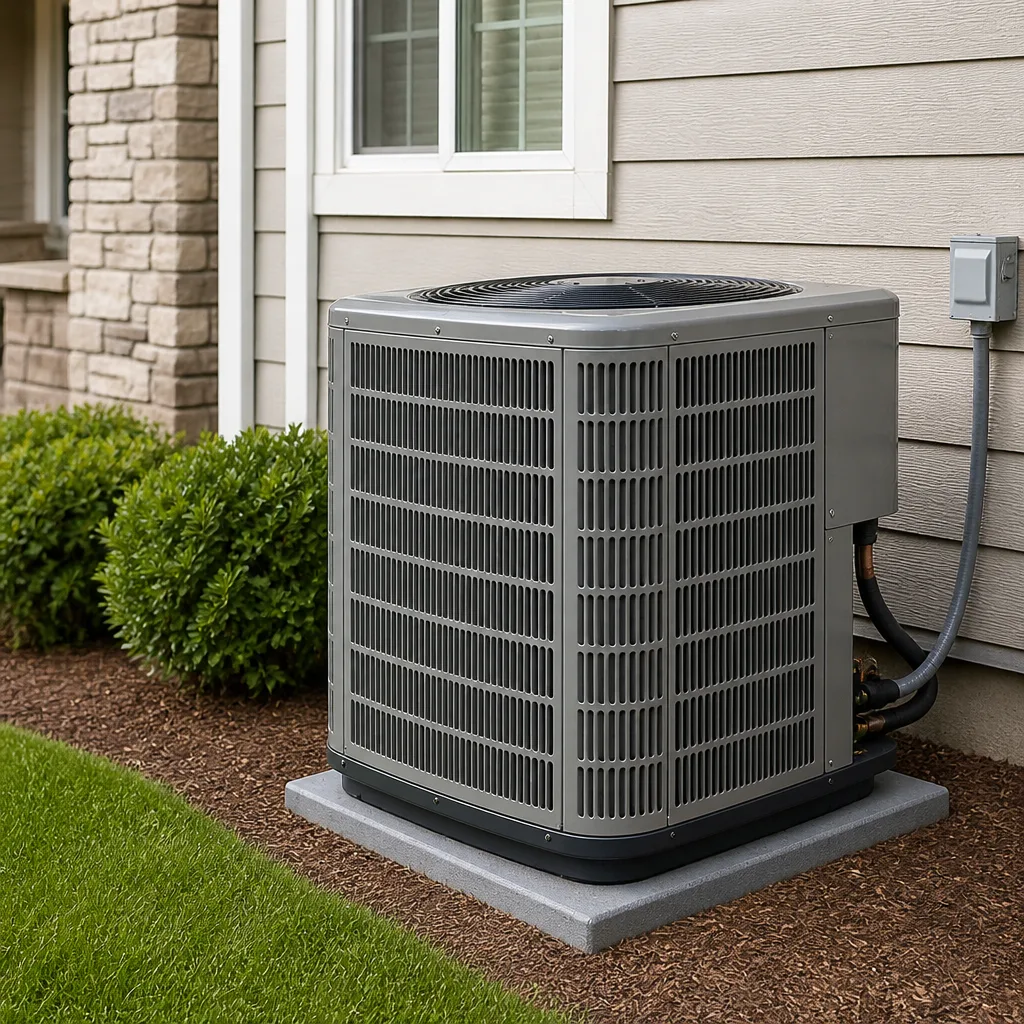 AC repair
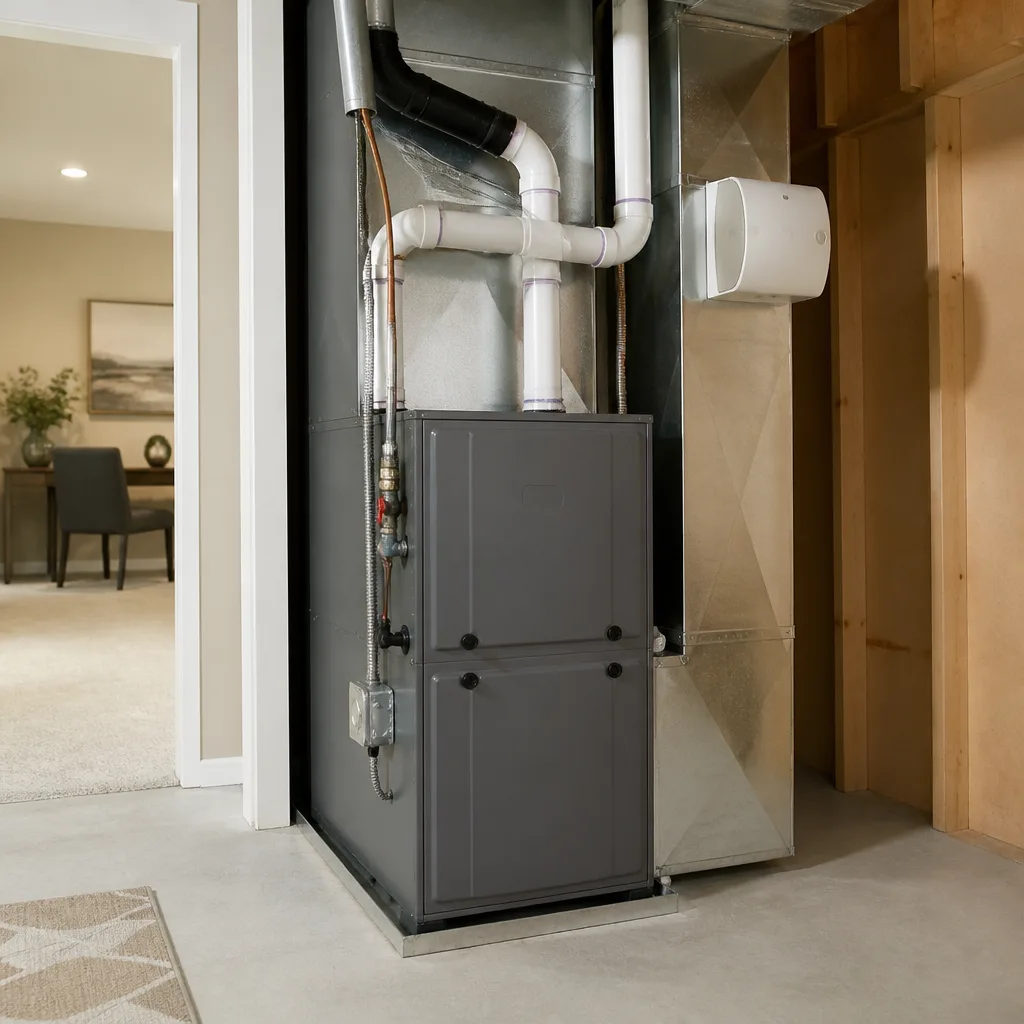 Furnace & heating
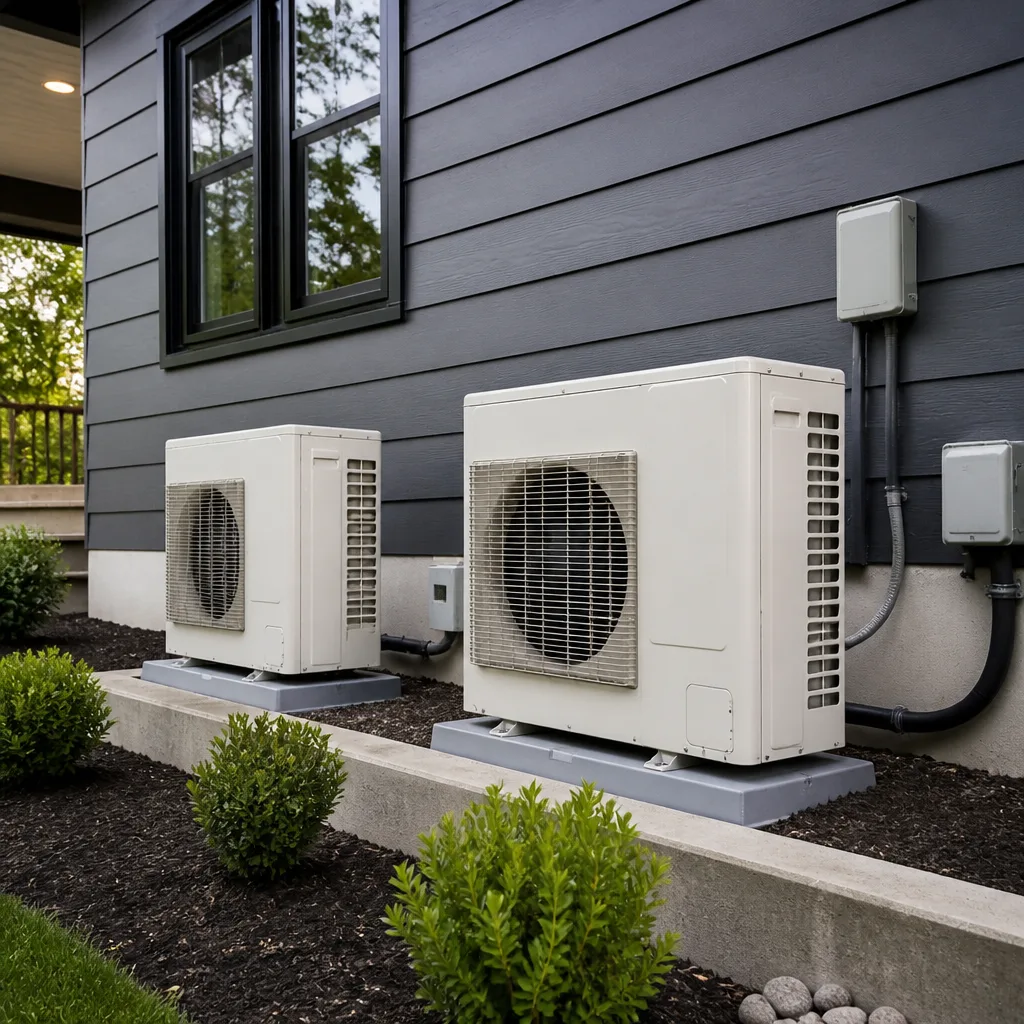 Heat pumps
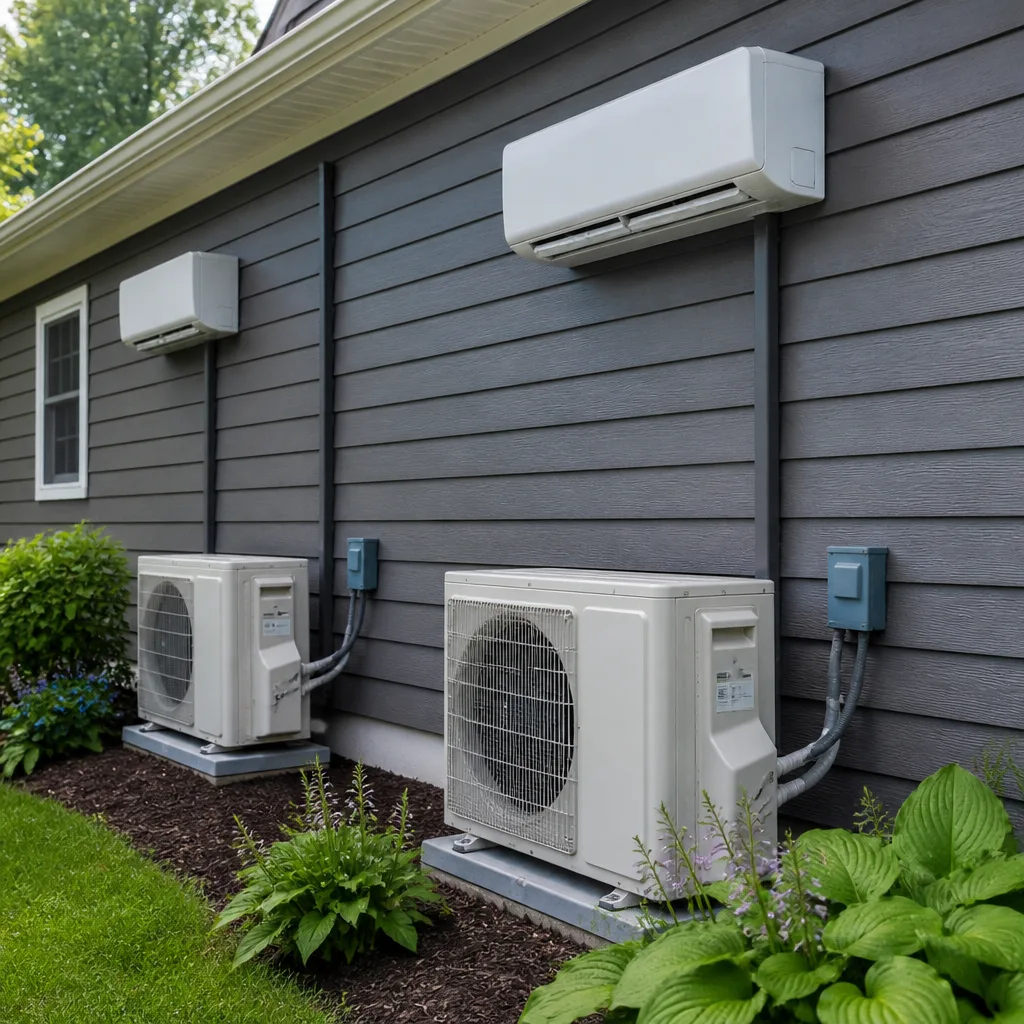 Ductless mini splits
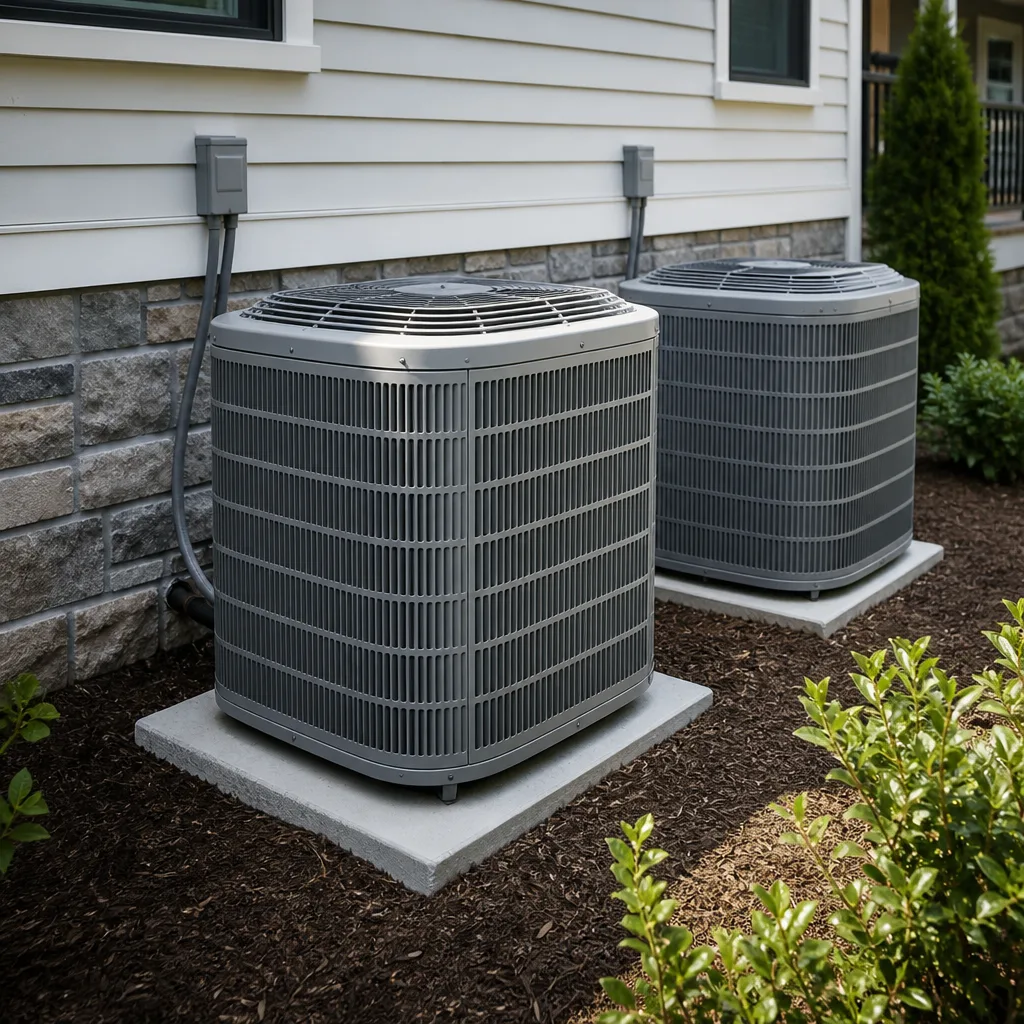 Carrier
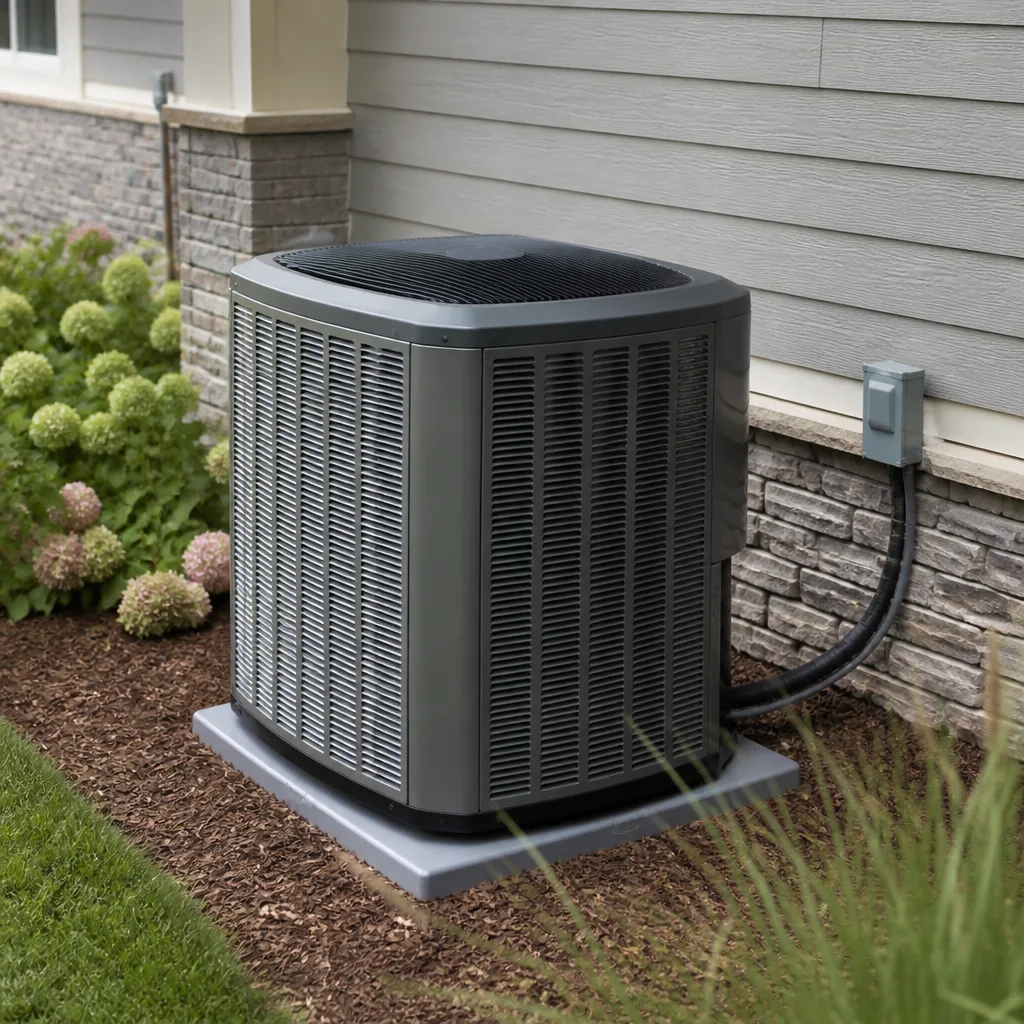 Trane
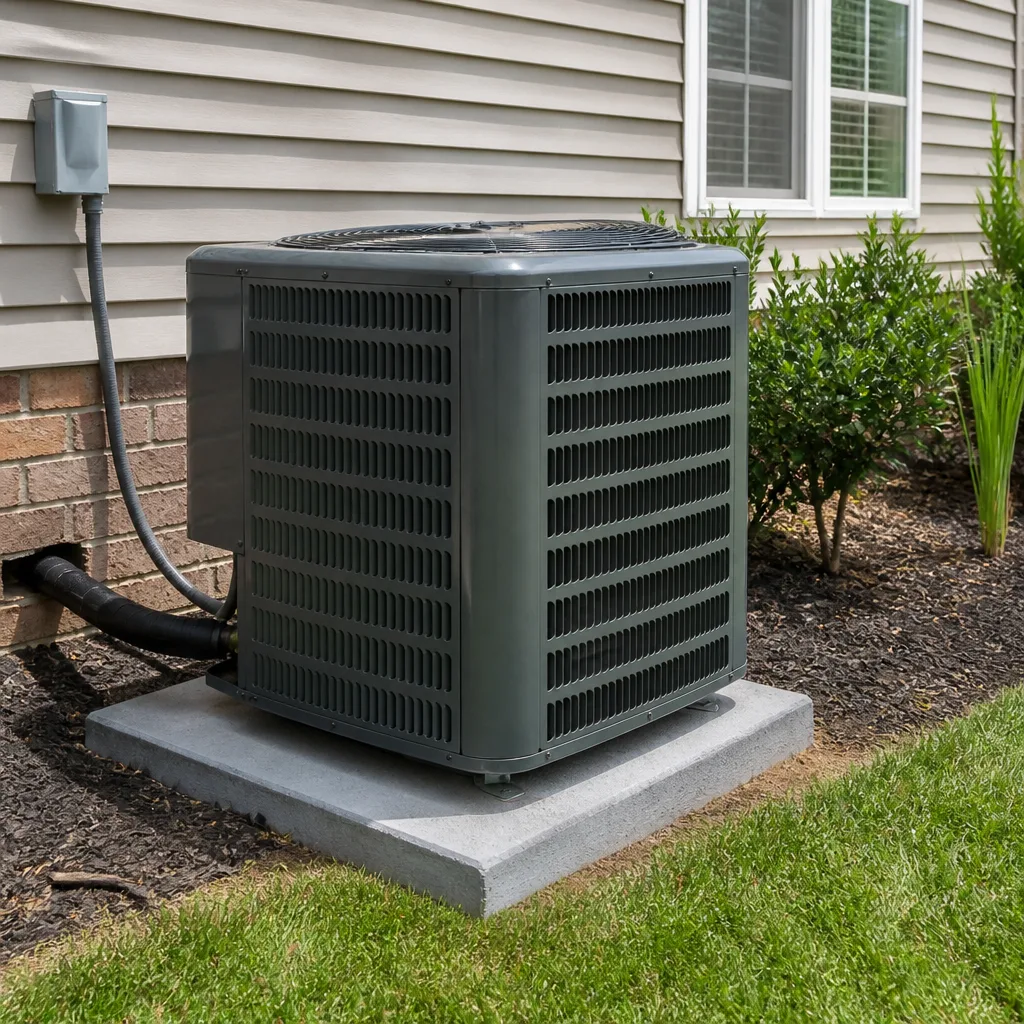 Goodman
Seasonal tune-up and full diagnostic on your Carrier, Trane, or Goodman system - readings shown to you before any repair is proposed
Diagnosis first, numbers second - you approve the repair price before a single part goes in.
Get your free estimateDIY vs Professional Emergency & Commercial HVAC: What’s Safe to Do Yourself
A business owner who resets a tripped commercial breaker without understanding why it tripped – a ten-second action – can void an equipment warranty, breach a service contract, and in some cases leave a documented liability sitting in an insurance file. That’s the part nobody mentions in the DIY videos. For a homeowner in Mesquite with a sticky thermostat, the worst case is an uncomfortable afternoon. For a property manager with a rooftop unit on a commercial building, the worst case carries a signature on it. This guide draws the actual line: which tasks you can safely handle, where the legal and safety boundaries sit, and what crossing them really costs.
Quick Answer
In a commercial building, you can safely do three things yourself: check and set the thermostat, look at the air filter (without pulling apart the unit), and eyeball the condensate drain pan for standing water. Everything else – refrigerant, electrical components, gas, compressors, control boards – requires a licensed, EPA-certified technician, and unauthorized work can void warranties, breach your lease, or complicate an insurance claim. If you’re unsure whether a task crosses that line, it does.
Styles & brands we work with
- AC repair
- Furnace & heating
- Heat pumps
- Ductless mini splits
- Carrier
- Trane
- Goodman
Table of Contents
- The Three Things You Can Always Do Safely
- Why Refrigerant Work Is Never a DIY Job
- What Your Lease and Insurance Policy Actually Say About HVAC
- Emergency Bypass Actions: When They’re Acceptable and How to Document Them
- How to Vet a Commercial HVAC Contractor in Under Five Minutes
- Mesquite’s Climate and Your Equipment: What Fails Here
- Repair or Replace: The Decision You Should Not Make Alone
- What Commercial HVAC Service Actually Costs
The Three Things You Can Always Do Safely
Start with what’s genuinely in your lane. A building owner or property manager in Mesquite can do these three tasks without touching a screwdriver and without taking on any liability. They’re the same three things our technicians check first on almost every service call, because a surprising share of “emergency” calls end right here.
1. Thermostat checks. Confirm the setpoint, the mode (heat, cool, auto, fan), the schedule, and the batteries. In commercial spaces with programmable thermostats or building automation, someone has usually bumped a schedule or left a unit in “hold.” A 30-second check has resolved more “no cooling” calls than any other single action.
2. Air filter visual inspection. Look at the filter. Hold it up to the light. If you can’t see through it, it’s loaded. On a commercial unit, a clogged filter chokes airflow, drives up head pressure, and shortens compressor life. You can pull the old filter and slide in a new one of the same size and rating – that’s maintenance, not repair – but don’t pull panels, don’t open electrical compartments, and don’t go into the blower section.
3. Drain pan checks. Walk to the indoor unit (or the rooftop unit, if you can safely access it) and look at the condensate pan. Standing water, algae, rust, or overflow staining are signs the drain line is clogging. You can clear an accessible trap or vacuum out a visible line, but if the pan is overflowing into a ceiling, shut the system down and call for service.
That’s the full list. If a task isn’t on it, treat it as a professional task until someone qualified tells you otherwise.
Why Refrigerant Work Is Never a DIY Job
Refrigerant is regulated by federal law, not by company policy. Under Section 608 of the Clean Air Act, anyone who services, repairs, or disposes of equipment containing ozone-depleting refrigerants (and their substitutes) must hold EPA Section 608 certification. That’s not a certification a business owner picks up on the weekend. It requires a proctored exam and a demonstrated understanding of recovery, evacuation, and safe handling. The fines for knowing violations run into the tens of thousands of dollars per day, per violation.
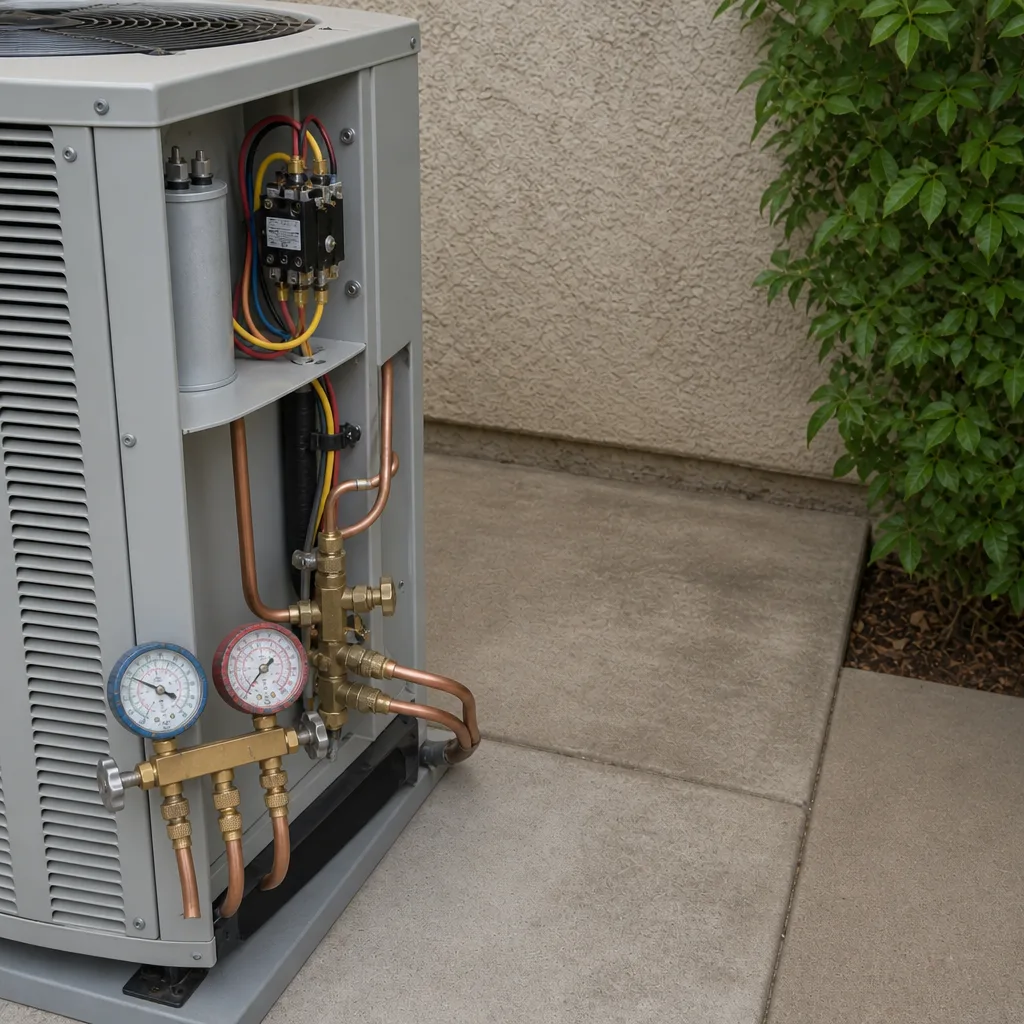
There’s a practical side, too. Modern systems use refrigerants – R-410A and, increasingly, R-454B and R-32 – that operate at much higher pressures than the old R-22 equipment. Handling them requires a recovery machine, a vacuum pump, manifold gauges, and a scale. You cannot “top off” a system the way you top off a car’s oil. A system that’s low on refrigerant is leaking, and the only real fix is finding and repairing the leak, then evacuating and recharging to a precise weighed amount.
In our experience across Mesquite commercial buildings, refrigerant problems masquerade as something else. A unit that’s icing up, short-cycling, or blowing warm air in July is often a charge issue or a restriction in the metering device, and guessing at it with a can of refrigerant from a hardware store usually makes the situation worse. It can also void the warranty on a York or Daikin system in a way that’s expensive to undo. If your system is a heat pump, the same rule applies; refrigerant work isn’t a homeowner task on either side of the cycle.
What Your Lease and Insurance Policy Actually Say About HVAC
Most commercial tenants and many building owners have never read the HVAC clause in their lease. That’s understandable – leases are long, and the language is dense. But when something goes wrong, those clauses decide who pays. Here’s what to look for before you touch anything.
- “Tenant shall maintain” vs. “Landlord shall maintain.” Many triple-net (NNN) leases push HVAC maintenance onto the tenant. If yours does, that means filters, belts, and seasonal service are your responsibility, and the landlord can pass through the cost of a repair caused by neglect.
- Authorized-contractor clauses. A lot of leases specify that HVAC work must be performed by a licensed contractor, sometimes by one the landlord has approved. If you do the work yourself or hire an unlicensed handyman, you’ve breached the lease regardless of the outcome.
- Waiver-of-subrogation and liability-assignment clauses. If unauthorized work causes a fire, a flood, or a refrigerant release, the insurance carrier can deny the claim or pursue recovery from the party who did the work. That party is you.
- Equipment warranty language. Manufacturer warranties commonly exclude damage from improper installation or unauthorized service. A single well-meant DIY repair can void a warranty on a unit that cost more to install than some cars.
If you own the building, check your property insurance policy for the same themes. Many policies require that mechanical systems be maintained per manufacturer specifications and serviced by licensed technicians. In a Mesquite commercial property, where summer heat pushes equipment hard for five or six months straight, a carrier may point to missed maintenance as a cause of loss. Reading these clauses before an emergency is the cheapest insurance you’ll ever buy.
Emergency Bypass Actions: When They’re Acceptable and How to Document Them
There are moments when doing nothing is worse than doing something small. A unit trips a breaker at 11 p.m. during a heat wave and the space holds temperature-sensitive inventory. The building is unoccupied and the fire alarm is tied to a system you don’t fully understand. In those cases a limited “emergency bypass” can be the right call – but the line between a reasonable action and a dangerous one is narrow, and you need to leave a paper trail.
Here’s what we mean by an acceptable bypass, and how to document it:
- Reset a breaker once. Find the panel, identify the circuit, and reset the breaker once. If it trips again, stop. A breaker that trips twice is telling you something is wrong, and resetting a third time is how fires start.
- Shut the system off rather than force it on. If a unit is making a grinding noise, smoking, or tripping repeatedly, the safe bypass is to shut it down at the disconnect or the breaker and leave it off until a technician arrives.
- Isolate the affected zone if you can. If a building has multiple units and one has failed, closing a damper or setting the thermostat to “off” in that zone can keep the rest of the building comfortable.
- Document everything, in writing, immediately. Note the time, the exact action you took, who authorized it, and the reason. Take photos of the breaker position, the thermostat setting, and the unit condition. Email it to yourself and to whoever owns the building. That record is what a service technician and an insurance adjuster will look at.
- Call for professional service the same night. A bypass is a bridge, not a solution. If the equipment is on a York or Bryant system with a service contract, the contract may require that only the contracted provider perform work – even emergency work. Read that clause before you touch the panel.
Never bypass a safety switch, jumper a pressure control, block a high-limit switch, or tape down a door switch. Those exist to prevent fires and equipment destruction, and defeating them is a documented liability in any insurance claim that follows.
How to Vet a Commercial HVAC Contractor in Under Five Minutes
When a system fails in Mesquite in July, you don’t have time for a week-long vetting process. You need three questions answered, and the answers tell you most of what you need to know.
- “Are you licensed and insured to work on commercial equipment in this state, and can you send me the certificate?” Any qualified contractor can send a certificate of insurance and a license number the same day. Anyone who hesitates, deflects, or asks you to “trust them” is telling you something.
- “Who is coming to my property, and are they background-checked?” A commercial building often has inventory, cash, and sensitive equipment. A professional company will tell you a background-checked, uniformed technician is on the way and can name the brand certifications the crew holds. Vague answers here are a warning sign.
- “What’s the diagnostic fee, and will I get the price in writing before you start work?” Upfront, written pricing is the difference between a service call and a surprise. Ask for a written estimate before the technician touches anything, and ask if there’s any charge for a second opinion on an estimate you already have.
Our own practice is simple: a live person answers every call, day or night, including the 2 a.m. no-heat call, and we quote a price before we start. Any company worth calling should be able to say the same without hedging.
Mesquite’s Climate and Your Equipment: What Fails Here
Commercial HVAC in Mesquite works harder than in most of the country. Summer design temperatures push well past 110°F, and commercial rooftop units sit in full sun, baking their compressors and condensers through a five- or six-month cooling season. Winter nights drop into the 30s, but the heating load is modest compared to the cooling load. The result is equipment that lives a hot, dusty, high-cycle life.
What we see fail most in Mesquite commercial buildings: clogged condenser coils (dust blows in from the surrounding desert and packs into the fins), failed capacitors and contactors (heat is hard on electrical components), and condensate drain lines that grow algae and clog, especially near the change of seasons. In retail spaces and restaurants, grease and dust accumulate faster than the maintenance schedule assumes, and filters that are rated for three months realistically need attention sooner.
If you own or manage a commercial property in Mesquite and your filters are being changed by whoever is on site, make sure they’re doing it. Ask for a written log. A $12 filter that’s been skipped for a year costs hundreds in compressor wear, and we’ve seen the difference in repair bills on well-maintained buildings versus neglected ones on the same street.
For a deeper look at the equipment side of things, our AC Repair & Installation in Mesquite page covers what commercial and residential systems need in this climate, and our Heating & Furnace in Mesquite page covers the heating side, which matters more during fall and winter changeovers. If your building runs heat pumps, Heat Pump & Mini Split in Mesquite explains the maintenance differences on that equipment.
Repair or Replace: The Decision You Should Not Make Alone
This is the decision that most often goes wrong when a business owner tries to handle it in-house. The instinct is to compare the repair bill to a new unit’s price, and if the repair is less than half the cost of replacement, do the repair. That math works on paper but ignores the cost of downtime, the age of the equipment, the warranty status, and the fact that a 15-year-old commercial rooftop unit is on borrowed time no matter how much you spend on it.
Here’s the rule of thumb we use, but only after we’ve looked at the equipment in person:
- Under 10 years old, single component failure, repair cost under 30% of replacement: repair it, and keep up with maintenance.
- 10 to 15 years old, first major failure, repair cost 30-50% of replacement: get a second opinion. You’re in the gray zone, and the right answer depends on the equipment’s condition and how hard it’s been run.
- Over 15 years old, second major failure in two years, refrigerant leak that isn’t accessible: replacement is usually the better financial decision, and a written estimate with financing and any available rebate paperwork makes it a manageable one.
What you should never do is authorize a big repair or a replacement without a written estimate and a second opinion. We offer a free second opinion on any written estimate, because the difference between two quotes on a commercial system is often thousands of dollars.
What Commercial HVAC Service Actually Costs
Pricing varies by equipment type and building, but here’s a rough frame for what to expect. Use it to sanity-check a quote.
| Service | Typical range |
|---|---|
| Diagnostic / service call | $89-$150 |
| Seasonal tune-up (per unit) | $89-$200 |
| Capacitor or contactor replacement | $150-$350 |
| Condensate drain clearing | $125-$275 |
| Refrigerant leak search and repair | $300-$900 (depends on location) |
| Compressor replacement (commercial) | $1,500-$4,500+ |
| Rooftop unit replacement (5-ton, installed) | $6,000-$12,000 |
These are ballpark numbers, and the real figure depends on the unit, the access, and what else is wrong. That’s why we quote in writing before we start, and why the price quoted is the price paid.
Common Mistakes to Avoid
- Resetting a breaker more than twice. A breaker that trips twice is reporting a fault, not asking for a third try. In Mesquite, where a rooftop unit can pull locked-rotor amps through a marginal breaker on a 115°F afternoon, repeated resets are how small electrical faults turn into equipment fires.
- Adding refrigerant without finding the leak. Topping off a system hides the problem and shortens the compressor’s life. It’s also a Section 608 violation to vent refrigerant, and a technician will tell you a system that needs topping off has a leak that needs to be found.
- Ignoring the lease clause you never read. Many commercial leases in Mesquite assign HVAC maintenance to the tenant and require licensed contractors for repairs. Doing it yourself can breach the lease and put the cost of a preventable failure on your ledger.
- Buying a “universal” part from a big-box store. Universal capacitors and contactors exist, but the wrong rating will fail in weeks or damage the compressor. A commercial system needs the exact part, and generic substitutes are a false economy.
- Running a commercial unit without a filter for “better airflow.” This is the opposite of better airflow. It coats the evaporator coil in dust, and cleaning a commercial coil in place is more expensive than a year of filters.
- Waiting until it fails. In Mesquite, a commercial unit that runs all summer without a tune-up is running on hopes and a prayer. The tune-up costs less than a single emergency repair, and it’s the cheapest warning you’ll ever get about a part that’s about to fail.
- Not documenting an emergency bypass. A reasonable action with no paper trail looks like negligence in an insurance file. A photo, an email, a timestamp, and a follow-up call turn it into a legitimate emergency decision.
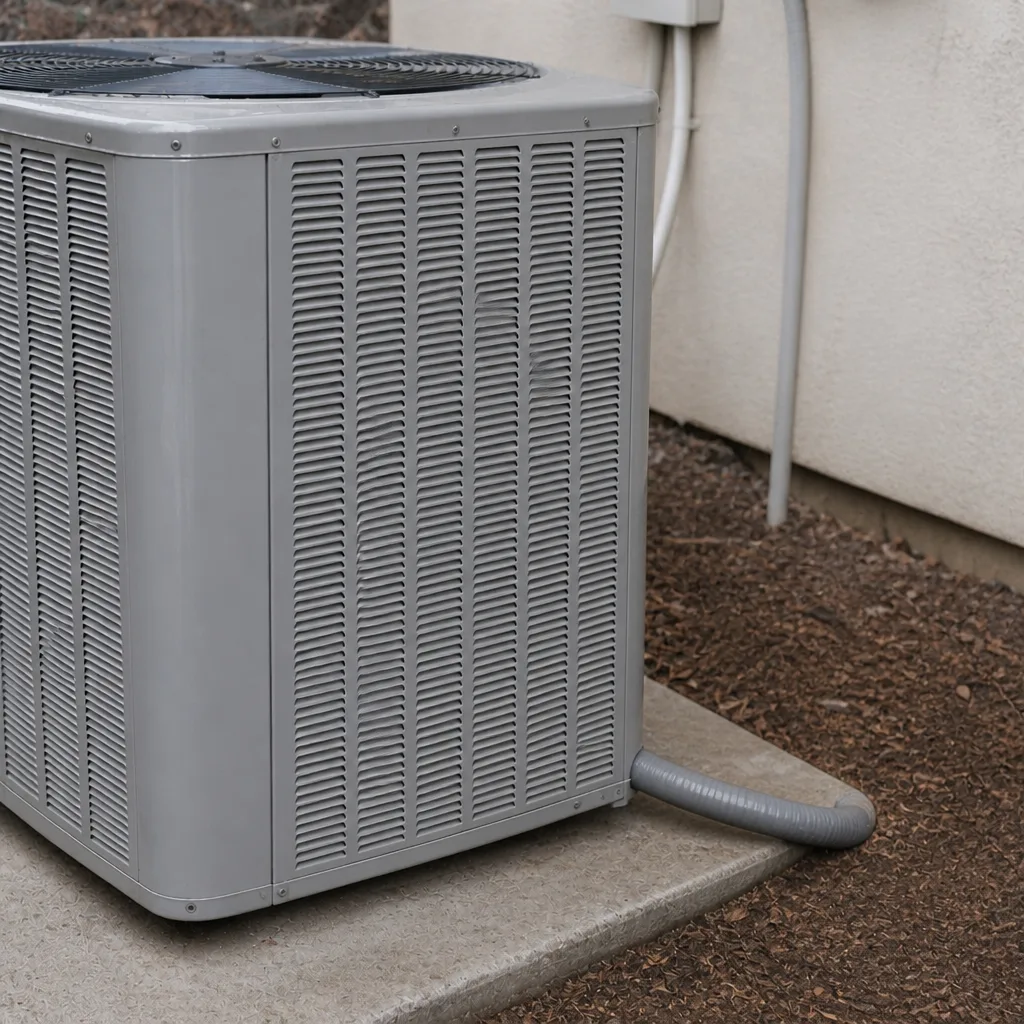
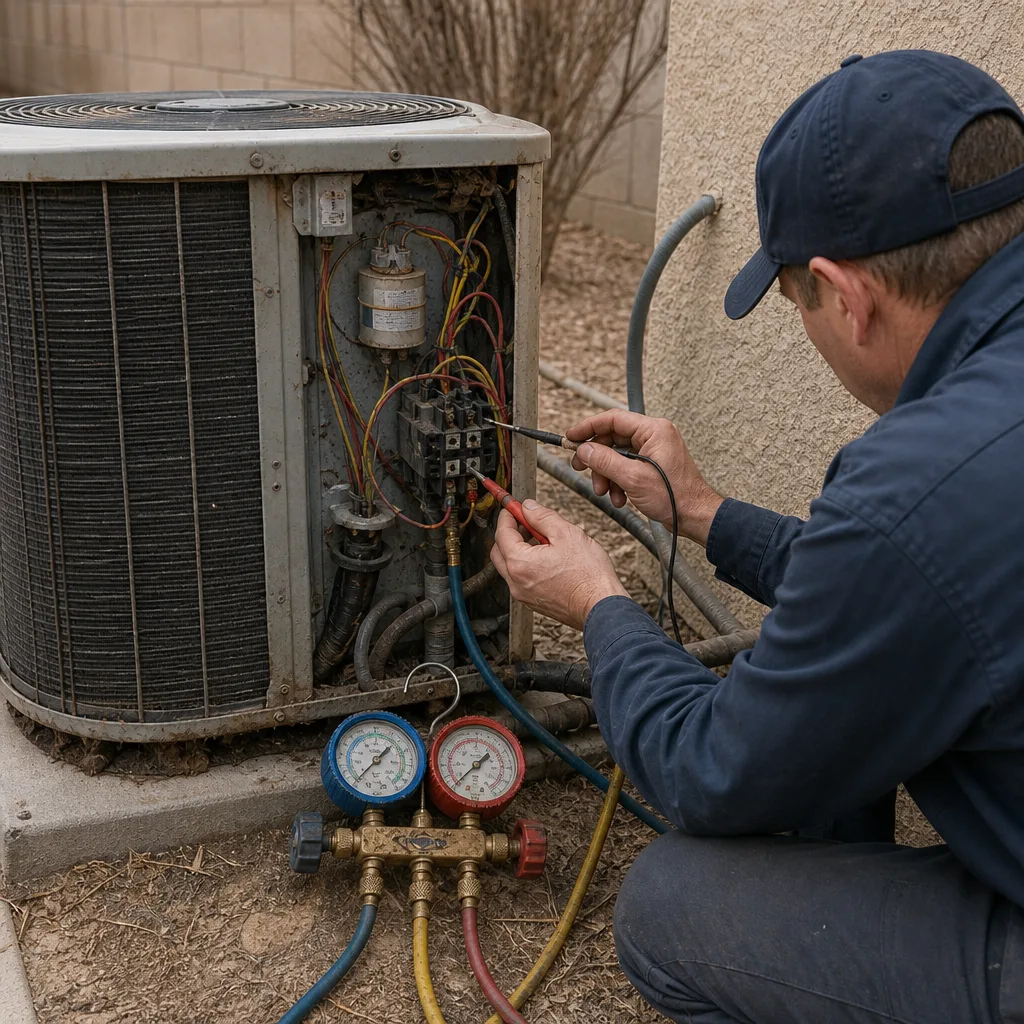
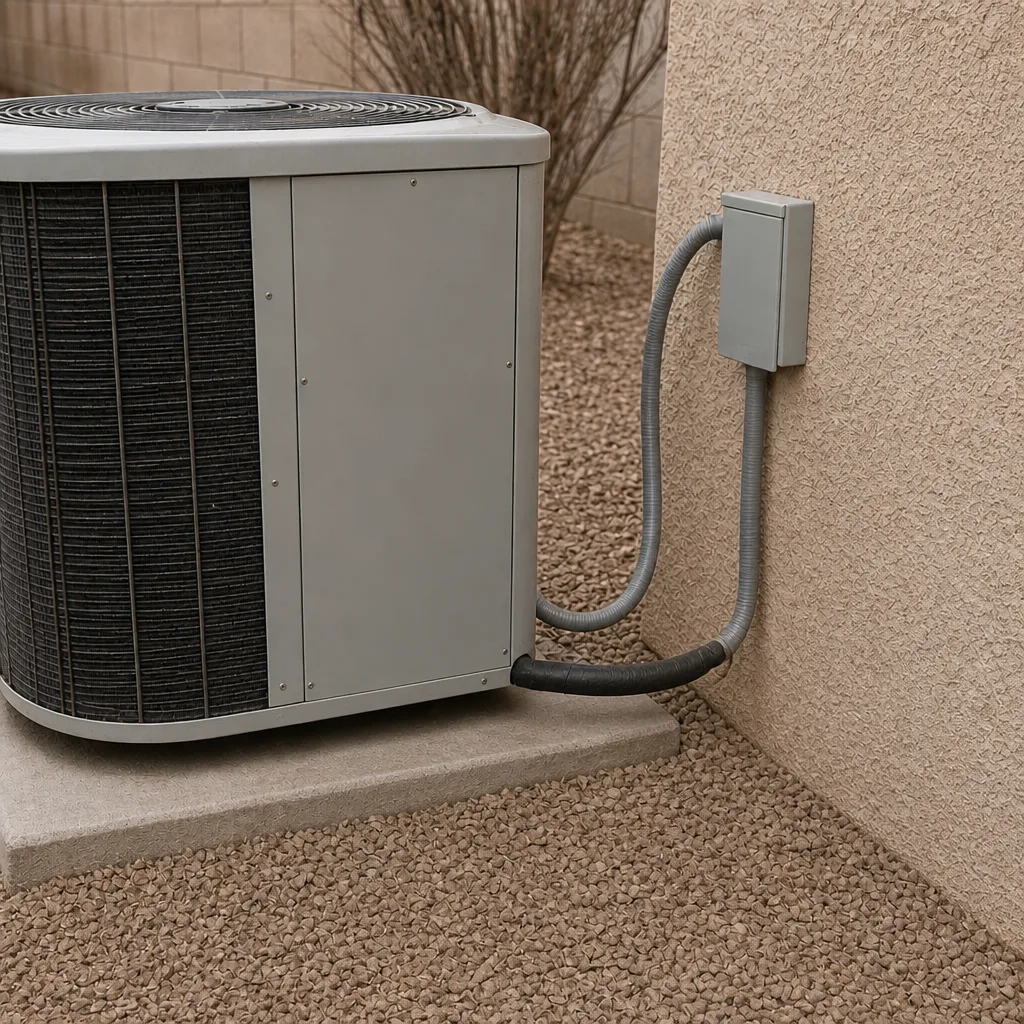
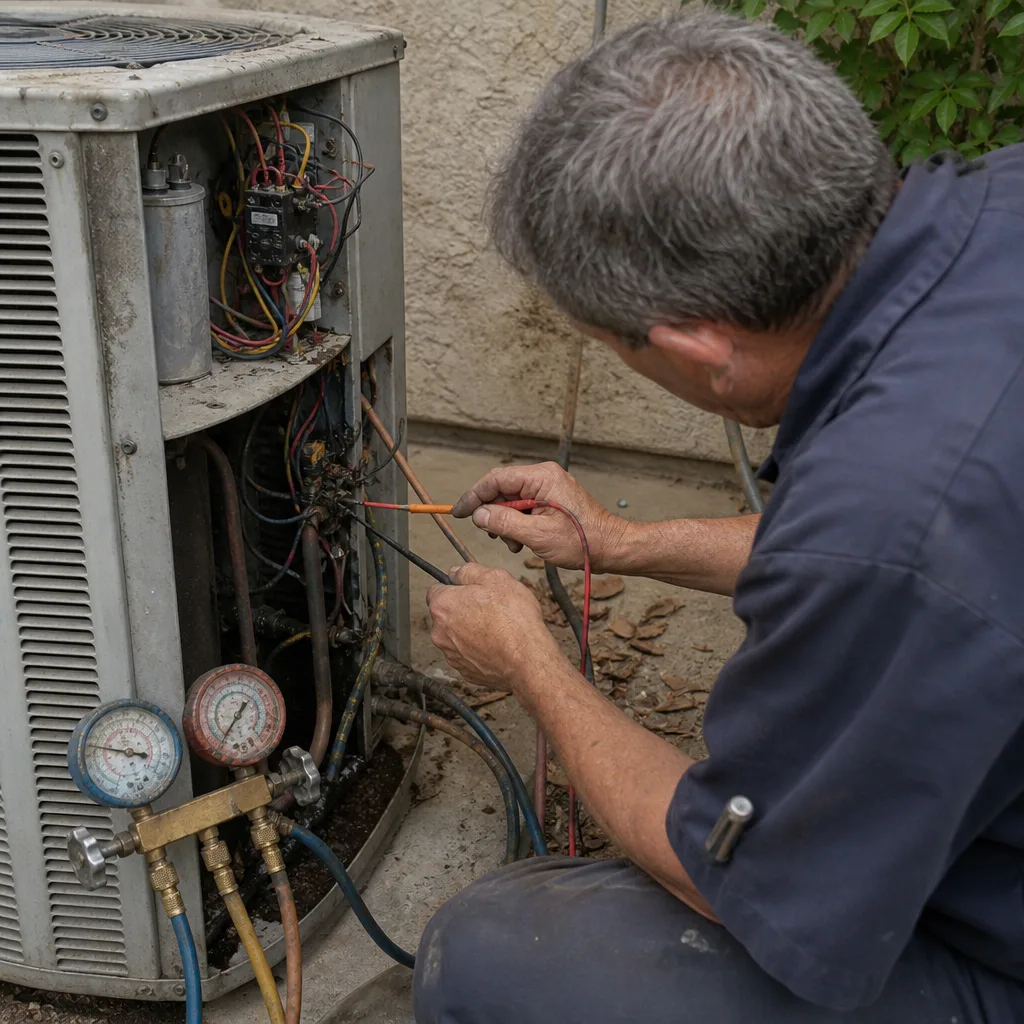
See the difference
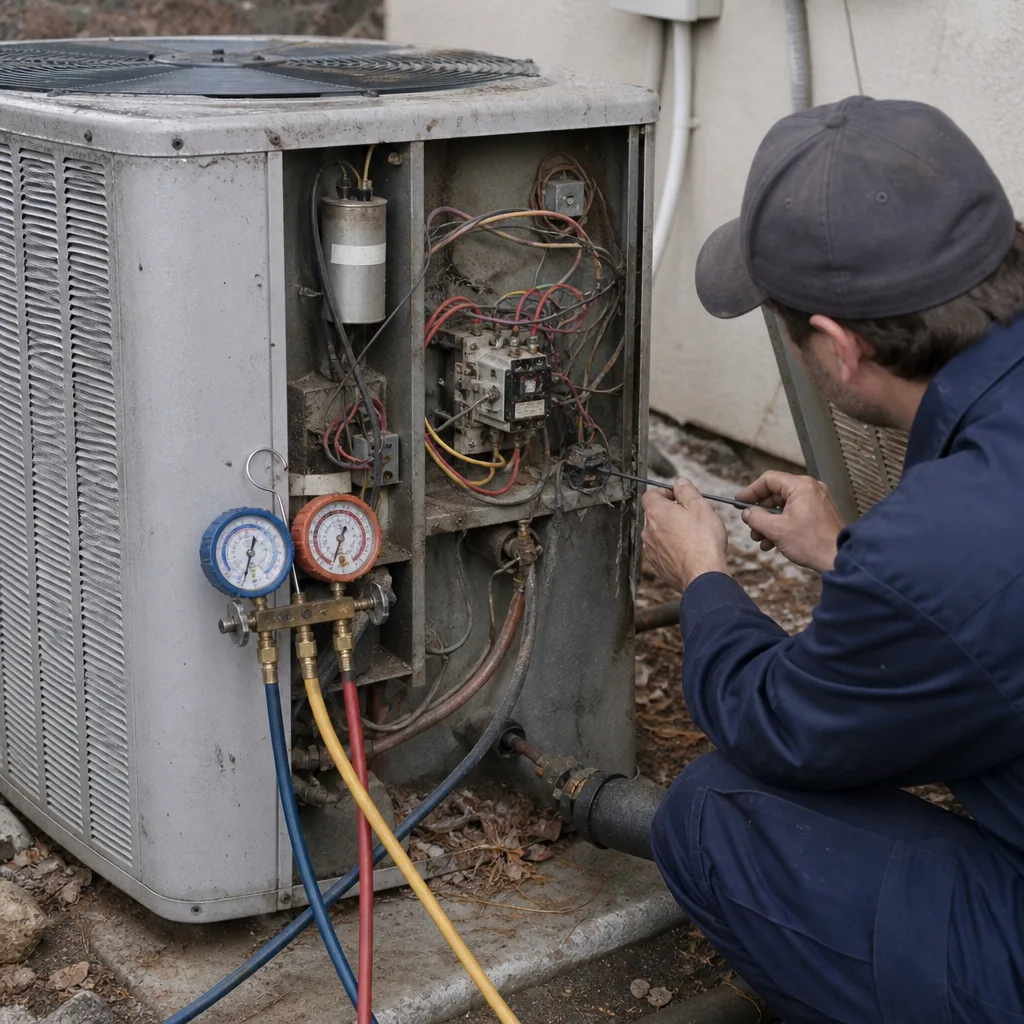 Before
 After
 Before
 After
 Before
 After
When to Call a Professional
Call a professional immediately if you smell gas, see smoke or arcing, hear a grinding or screeching noise, notice water where it shouldn’t be, or if the breaker trips a second time. Also call when you’re not sure – uncertainty is reason enough. The small cost of a diagnostic call is far less than the cost of a mistake on a commercial system. Our technicians are background-checked, uniformed, and trained to service nine major brands, including York, Daikin, and American Standard, and every job is backed by our 90-Day Done Right Promise. We answer the phone 24 hours a day, and if it’s not done right, we make it right, in writing, no arguing. Fireside Heating & Air Co. Mesquite offers free estimates on commercial HVAC work throughout the area – call (888) 570-3601 and a live person will pick up.
Frequently Asked Questions
Yes, you can reset a breaker once. If it trips a second time, stop and call a professional. A breaker that trips repeatedly is telling you the circuit or the equipment has a fault, and continuing to reset it risks fire, voids the warranty on most commercial equipment, and can be used against you in an insurance claim.
Three things: set and check the thermostat, inspect the air filter (and replace it with the correct size), and visually check the condensate drain pan for overflow or algae. Anything involving refrigerant, electrical components inside the cabinet, gas, compressors, or control boards requires a licensed, EPA-certified technician.
Often, yes. Most commercial equipment manufacturers, including York, Daikin, Bryant, and American Standard, exclude damage from improper service or unauthorized repair from warranty coverage. Read your equipment warranty and your lease before touching anything beyond the filter and thermostat.
No. Section 608 of the Clean Air Act requires EPA certification to service, repair, or dispose of equipment containing regulated refrigerants. The fines for knowing violations run into the tens of thousands of dollars per day, per violation, and the handling rules are strict. This is not a task for a property owner or manager.
Shut the equipment down at the breaker or disconnect if it’s making an abnormal noise, smoking, or tripping repeatedly, document the time and the action in writing, and call for service the same night. A live person should answer. Do not attempt a repair beyond a single breaker reset. Fireside Heating & Air Co. Mesquite answers every call 24 hours a day, and our technicians are trained to service nine major brands including York, Daikin, and American Standard.
Ask three questions: whether they’re licensed and insured and can send the certificate today, whether the technician coming is background-checked and uniformed, and whether you’ll get a written price before work starts. A qualified company answers all three without hesitation. Fireside answers the phone with a live person, quotes the price in writing, and backs the job with the 90-Day Done Right Promise.
The Bottom Line
In a commercial building, the question isn’t “can I do this myself” – it’s “who is responsible if it goes wrong, and what does my lease, my insurance policy, and the law say about who can touch this equipment.” You can own the thermostat, the filter, and the drain pan. Everything else belongs to a licensed, EPA-certified professional. Read the HVAC clause in your lease before an emergency, keep a written maintenance log, and vet your contractor with three quick questions before you let anyone near the equipment. In Mesquite, where summer runs the systems hard, that small amount of preparation is worth more than any DIY tutorial you’ll find.
When a system fails or when you’re not sure it’s a job for you, call Fireside Heating & Air Co. Mesquite at (888) 570-3601. A live person answers, day or night, and we’ll give you a free estimate. Learn more about how we work at our Fireside Heating & Air Co. Mesquite home page.
Written by the team at Fireside Heating & Air Co. Mesquite.