
Last updated November 18, 2026
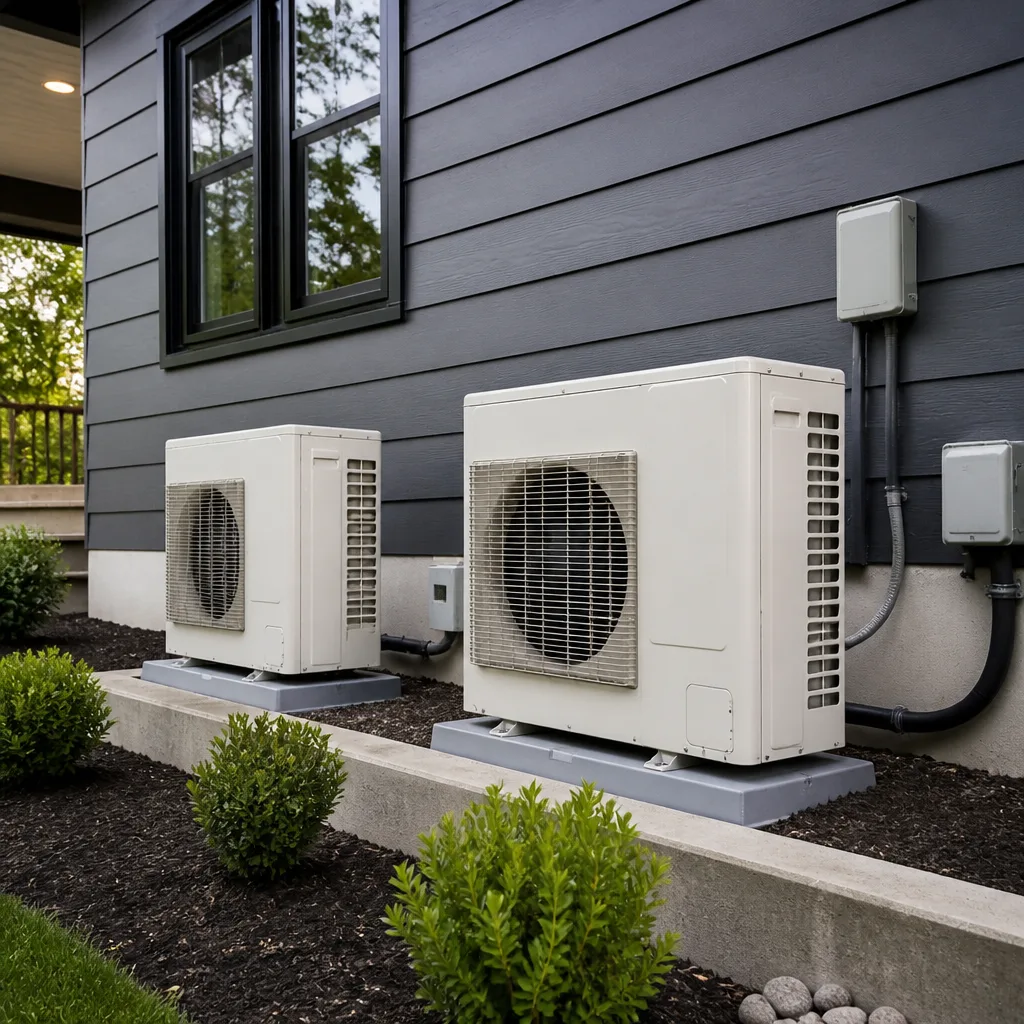 Heat pumps
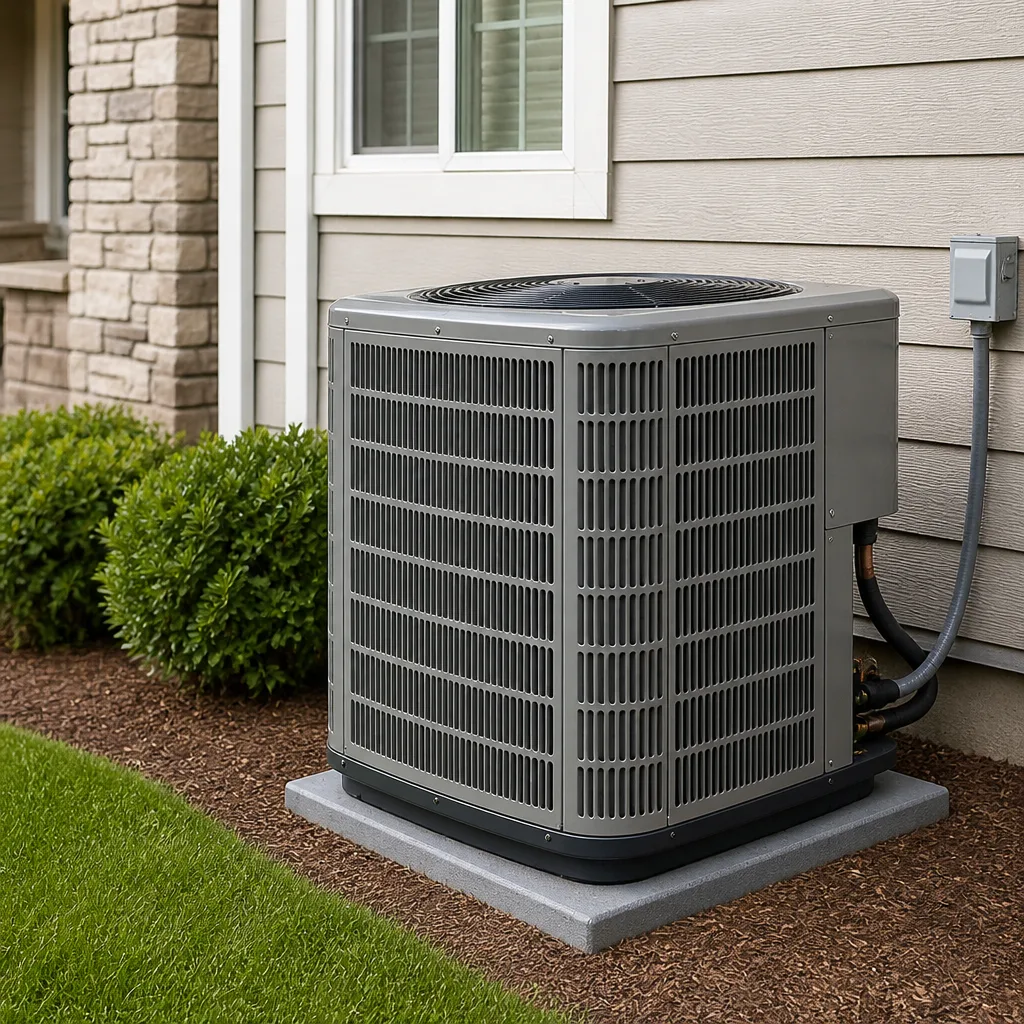 AC repair
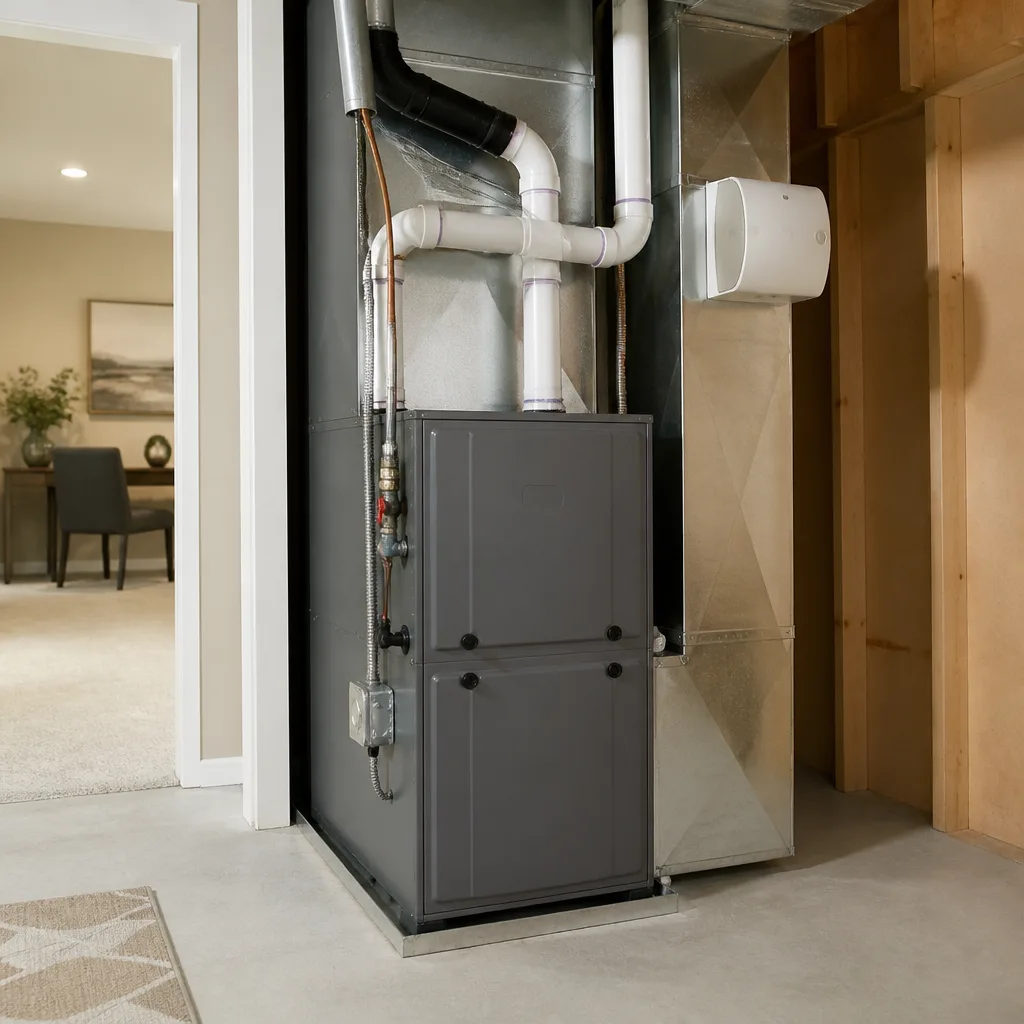 Furnace & heating
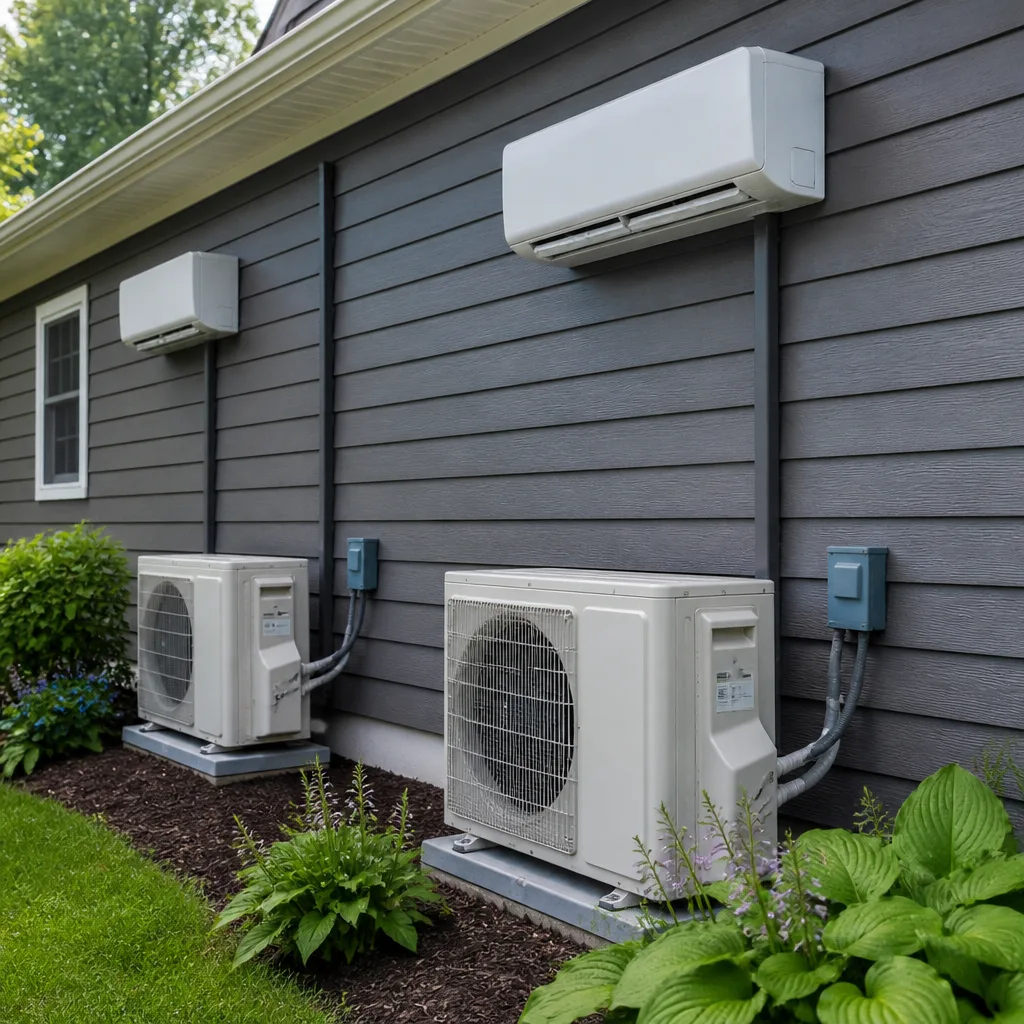 Ductless mini splits
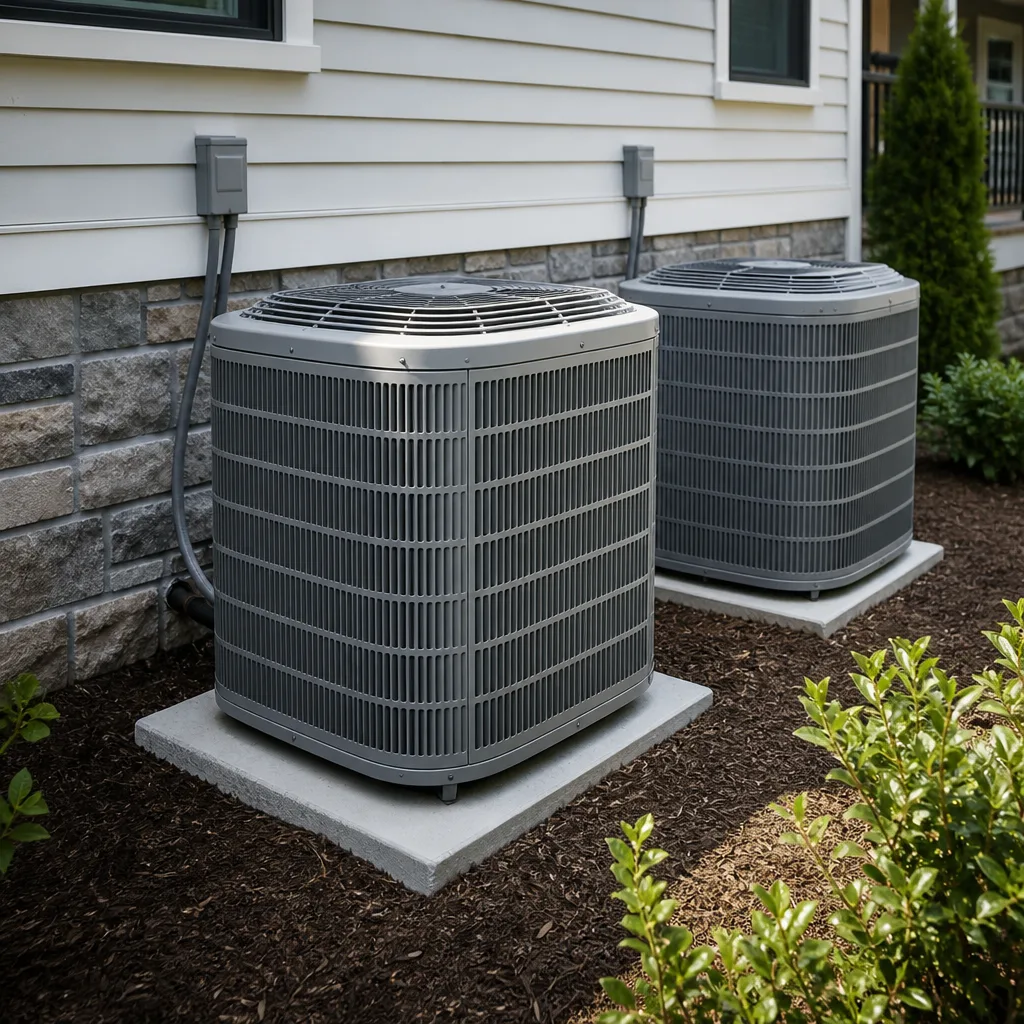 Carrier
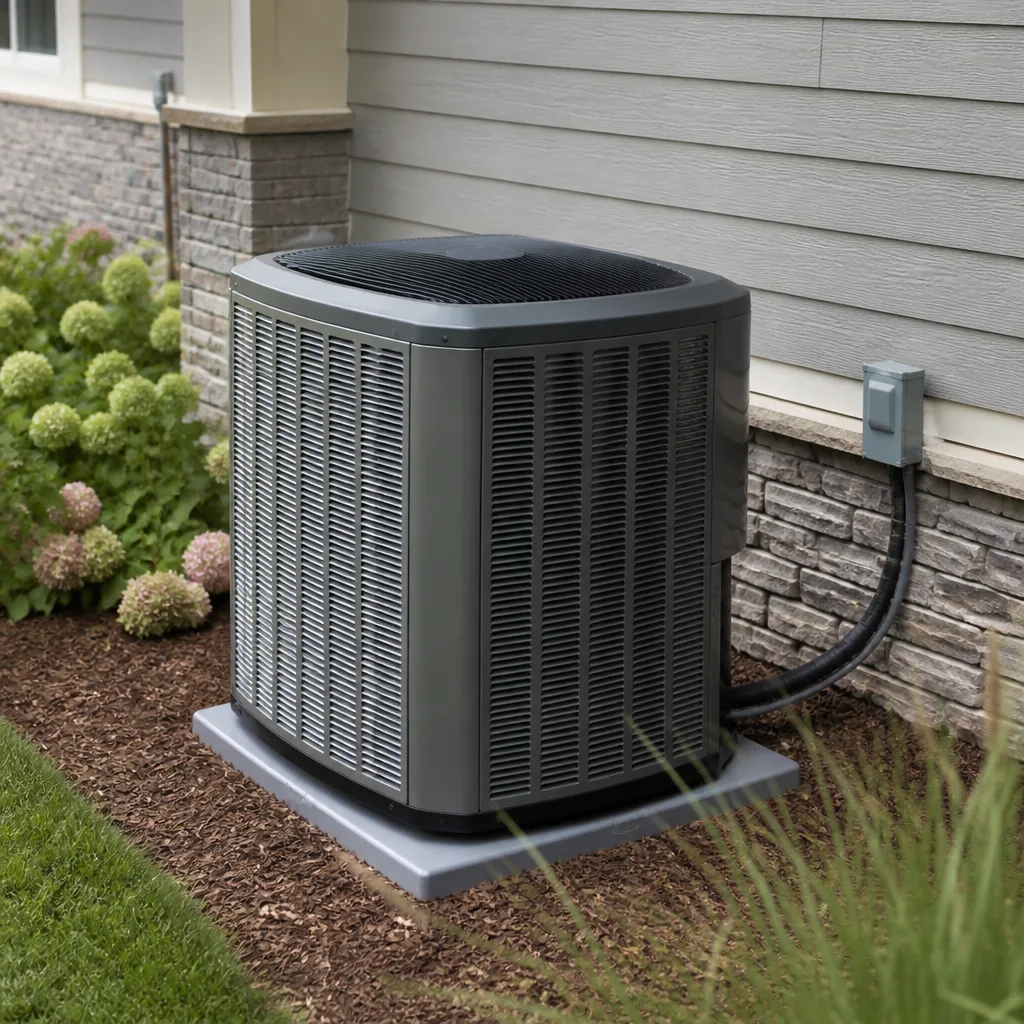 Trane
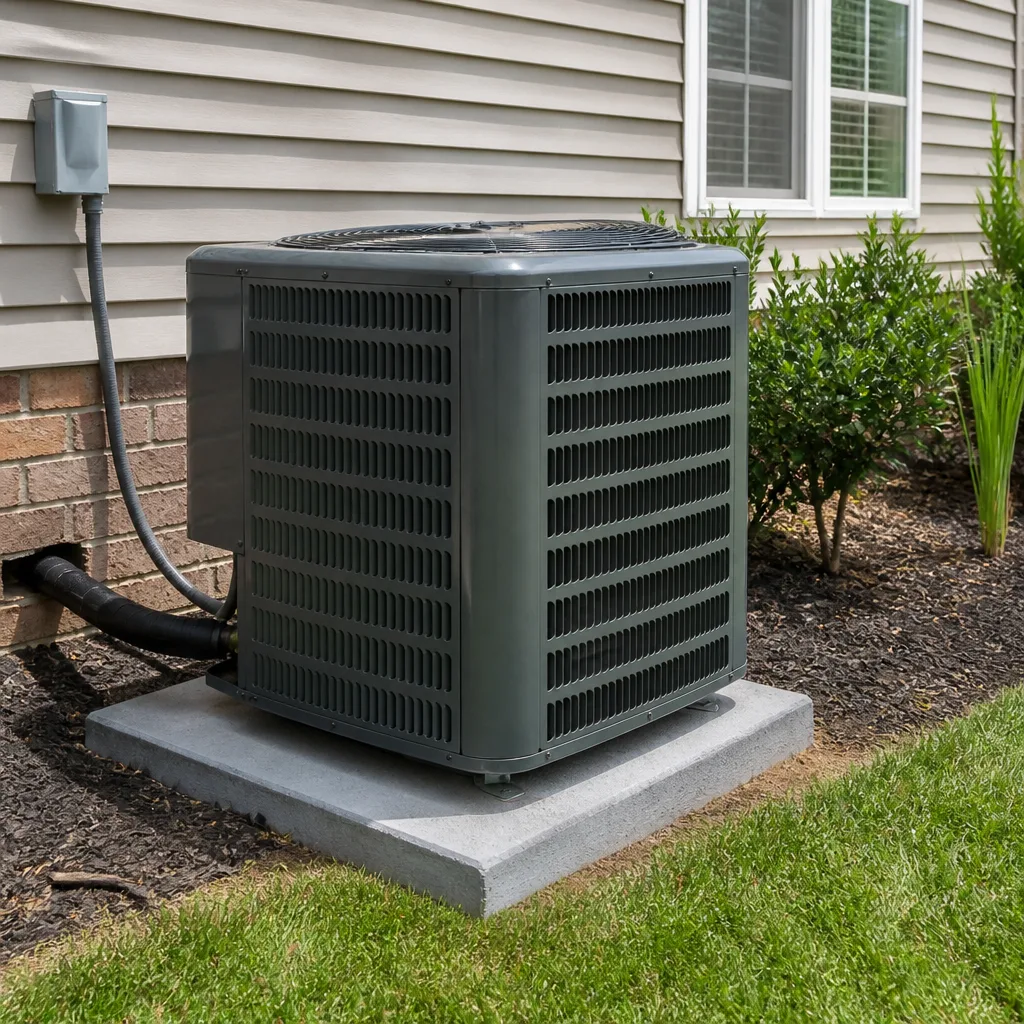 Goodman
Seasonal tune-up and full diagnostic on your Carrier, Trane, or Goodman system - readings shown to you before any repair is proposed
Diagnosis first, numbers second - you approve the repair price before a single part goes in.
Get your free estimateThe Complete Heat Pump & Mini Split Guide for Mesquite Homeowners
A heat pump sized for Las Vegas weather handles Mesquite winters fine until a cold snap hits 28°F, and then you find out whether your installer read the Manual J calculation or just eyeballed the square footage. That gap between a paper number and a real load is where most heat pump regrets in Mesquite are born. This guide covers what the national sizing guides skip: how our elevation, dry air, and sharp temperature swings change the math, when a cold-climate heat pump is enough and when a hybrid backup earns its keep, and what SEER2 and HSPF2 ratings actually mean for a high-desert home.
Quick Answer
A heat pump or ductless mini split works exceptionally well in Mesquite for about eight months of the year, and the only real risk is undersizing it for the two coldest and two hottest months. Get the load calculation right, pair a cold-climate unit with a smart backup for the January cold snaps, and a modern system will handle both our 110°F summers and our sub-freezing winter mornings. The single biggest factor is sizing done from a real Manual J load calculation, not a square-footage rule of thumb.
Styles & brands we work with
- AC repair
- Furnace & heating
- Heat pumps
- Ductless mini splits
- Carrier
- Trane
- Goodman
Table of Contents
- Why Mesquite’s Climate Changes the Sizing Math
- Single-Zone vs. Multi-Zone Mini Splits for Mesquite Floor Plans
- The Auxiliary Heat Question, Answered Honestly
- SEER2 and HSPF2 Ratings in Plain Terms
- The Ductless Advantage for Older Mesquite Homes
- How a Proper Heat Pump Install Works, Step by Step
- What a Heat Pump or Mini Split Costs in Mesquite
Why Mesquite’s Climate Changes the Sizing Math
Mesquite sits at roughly 1,600 feet of elevation in the Virgin River valley, and that position does two things that the Las Vegas Valley guides don’t account for. First, our nights run cooler than the metro area, and our winter mornings can drop into the upper 20s when Las Vegas is still in the 40s. Second, our air is bone dry, and dry air both cools off faster overnight and holds less heat through the day. A system sized purely for cooling capacity, the way a lot of Nevada installs get specified, often comes up short on the heating side.
Here’s the practical consequence. Standard heat pumps are typically rated to full heating capacity down to about 47°F and lose capacity as the outside air drops below that. In a Las Vegas-spec install, that loss almost never matters. In Mesquite, the handful of mornings a year when we hit 28°F to 32°F are exactly the mornings a homeowner notices a system that’s struggling. We’ve seen Mesquite homes on Beaver Dam Road and down in the Sun City development where a unit rated to the square footage runs fine in July but puts out lukewarm air on the coldest mornings of January.
The fix is not to oversize. Oversizing causes its own problems: short cycling, poor humidity control (less of a factor here, but still), and a system that wears out faster because it’s always slamming on and off. The fix is a real load calculation.
- Elevation: 1,600 feet means cooler nights than the valley floor, so heating load is higher than a Las Vegas comparison suggests.
- Dry air: Lower latent cooling load (good) but faster overnight temperature drops (requires heating headroom).
- Temperature swing: A 110°F July afternoon and a 28°F January morning live in the same weather year.
- Sun exposure: Older Mesquite ranch homes often have little window shading on the west side, which loads the cooling side hard from 2 to 6 p.m.
If you’re comparing options, our Heat Pump & Mini Split in Mesquite page walks through the equipment types we work with, but the load calculation comes first regardless of brand.
Single-Zone vs. Multi-Zone Mini Splits for Mesquite Floor Plans
The zone question comes down to how your house is laid out and how you actually live in it. We see two dominant floor plans in Mesquite: the older single-story ranch homes built decades ago (many with a central hallway and small individual room openings), and the newer builds out toward the golf-course communities with more open sight lines and taller ceilings. Those two layouts call for different answers.
Single-zone makes sense when you have one dominant room you spend most of your time in and the rest of the house is handled by an existing ducted system or stays mostly closed off. A single-zone mini split on a great room or a converted garage is efficient and simple. Multi-zone makes sense when you have distinct areas with different schedules: a master bedroom that runs cool at night, a home office used midday, a guest room that’s empty most of the year. Multi-zone lets you condition only the space you’re using, which is where the real energy savings come from in a house with rooms you don’t heat or cool all day.
For the typical Mesquite ranch home, we often recommend a single ducted heat pump or a pair of multi-zone heads rather than one big single-zone unit in the hallway. The hallway is the wrong place to condition from, because the air has to fight its way into every room through small doorways. For the newer open-plan builds, a single-zone or a two-zone system can actually beat the older layout for even comfort.
Two things to weigh before deciding:
- How many rooms do you actually use every day? If the answer is two or three, multi-zone wins on efficiency.
- Do you have existing ductwork in good shape? If yes, a ducted heat pump can be simpler than adding heads to multiple walls.
- How hot does the west side get? In a Mesquite ranch with west-facing windows, a head on that wall needs shading and a correctly aimed louver angle.
The Auxiliary Heat Question, Answered Honestly
When your heat pump can’t keep up on a cold morning, the auxiliary heat kicks in to fill the gap. The honest answer to whether you need it is: yes, in almost every Mesquite install, but how much matters more than whether. Cold-climate heat pumps today hold close to full capacity down to the low teens and can work as the sole heat source in this climate. But a standard, mid-efficiency heat pump can lose 20 to 30 percent of its rated heating capacity by the time the outside air drops near 30°F. On the handful of mornings we see that in Mesquite, that capacity loss is exactly when you notice.
Two options make sense here. The first is a cold-climate heat pump alone, sized and rated to hold capacity at our coldest design temperature. That’s a clean install, no gas, and it’s the right call for a well-insulated newer home with a modest heating load. The second is a hybrid backup system: the heat pump does most of the heating, and a gas furnace or electric resistance strip handles the deep cold snaps. In a Mesquite ranch home from the 1970s or 80s, where insulation is modest, the hybrid is frequently the safer choice for comfort and for avoiding a surprise bill on the coldest week of the year.
What we don’t recommend is skipping auxiliary heat on a standard heat pump and hoping the cold snap is brief. It usually is brief in Mesquite, but brief is not the same as comfortable, and a homeowner sitting on a 62°F living room for two days is not going to feel like the system was a good investment. Your installer should size the auxiliary to handle the design-day load, not to a guess.
SEER2 and HSPF2 Ratings in Plain Terms
SEER2 measures cooling efficiency; HSPF2 measures heating efficiency. Higher is better for both, and the current federal minimums for a new heat pump are 14.3 SEER2 and 7.5 HSPF2 for our region. Those numbers are the floor, not the target. For Mesquite, you want to shop above the floor because our cooling season runs six months and our heating season runs four, so you’ll feel the difference on your summer bill far more than in a colder climate.
Here’s how to think about it without getting lost in the label:
- SEER2 of 14.3 to 15: meets the minimum. Fine for a low-use seasonal home, rarely our first pick for a full-time residence here.
- SEER2 of 16 to 18: a solid middle ground. In our experience this is where most Mesquite homeowners land for a ducted heat pump, and the efficiency gains over the floor justify the modest price difference.
- SEER2 of 19 and above: high-efficiency territory. Worth it if your home runs the AC hard through July and August and you plan to stay in it long-term.
- HSPF2: aim for 8.5 or higher if you’re relying on the heat pump as your primary heat source, so winter comfort doesn’t depend on the auxiliary heater constantly.
The ratings matter, but the installation matters more. A 19 SEER2 unit installed with a poorly sized line set, a leaking duct system, or the wrong refrigerant charge will underperform a well-installed 16 SEER2 unit almost every time. When we quote a job, the equipment and the install labor are both on the written price, and the price quoted is the price paid.
The Ductless Advantage for Older Mesquite Homes
This is where Mesquite’s older housing stock really benefits. In a home with aging ductwork, duct leakage routinely costs homeowners 25 to 30 percent of their conditioned air before it ever reaches a room. That’s not a scare number; that’s a measurement we’ve seen repeatedly in older ranch homes around town, where the ducts were run through a hot attic and the joints have been leaking for years. You can seal and repair ductwork, and sometimes that’s the right answer. But a ductless mini split sidesteps the problem entirely by putting the air handler in the room and cutting the attic run out of the equation.
Ductless also handles a common local problem: the room that never gets comfortable. The back bedroom over the garage, the addition that was tacked on decades ago, the converted space on a slab. Running new ductwork across a house is expensive and invasive; a single ductless head on an exterior wall solves it in a day.
A few things to know before going ductless in Mesquite:
- Line-set routing: We plan the path from the outdoor unit to the indoor head before anything is drilled. You don’t want a line set crossing a finished wall or a porch ceiling.
- Wall placement: The head goes on an exterior wall, aimed so the air throws across the room, not into a corner or a bed.
- Drainage: Our dry air means less condensate than a humid climate, but the drain still needs a proper slope and a plan for the winter.
If your home already has a solid duct system, a ducted heat pump can be the better value; our AC Repair & Installation in Mesquite page covers the ducted side of things in more detail. And if heating is the immediate concern, our Heating & Furnace in Mesquite page speaks to that directly.
How a Proper Heat Pump Install Works, Step by Step
A heat pump install is load-calculated, ordered, and scheduled, so it isn’t same-day work. Plan for a multi-step process that protects the homeowner from surprises.
- Manual J load calculation. We measure the home, note window orientation and insulation, and calculate the actual heating and cooling loads. This is the step most square-footage guesses skip, and it’s the one that decides whether the system will keep up on the coldest Morning in Mesquite.
- Equipment selection and written fixed price. You get a written quote with the exact equipment, the exact scope of work, and a fixed price. No allowance games, no “we’ll see when we get there.”
- Rebates and financing paperwork. If a rebate or financing program applies, we handle the paperwork before the install date, so the number you agreed to is the number you pay.
- Scheduled install day. The crew arrives with shoe covers and a plan for protecting floors and furniture. We’re background-checked and uniformed, and we work in your home the way we would in our own mother’s.
- Commissioning and walkthrough. We charge the system, verify airflow and refrigerant, run it through both heating and cooling, and walk you through the controls before we leave.
- The 90-Day Done Right Promise. Every job is backed in writing for 90 days. If something isn’t right, we make it right, no arguing and no paperwork.
Most jobs we do finish in a single visit. A heat pump replacement is not a same-day project, and we won’t tell you it is; what we will tell you is the date, the price, and what we’ll do on that date.
What a Heat Pump or Mini Split Costs in Mesquite
Pricing depends on the load calculation, the equipment tier, and the layout of the home. Here are the ranges we work from in Mesquite; your written estimate is the number that matters.
| Item | Typical Range in Mesquite |
|---|---|
| Single-zone ductless mini split (installed) | $3,500 – $6,500 |
| Two-zone ductless mini split (installed) | $6,000 – $11,000 |
| Ducted heat pump replacement (installed, existing ducts) | $7,500 – $14,000 |
| Cold-climate heat pump, high-efficiency | $10,000 – $18,000 |
| Hybrid system with gas furnace backup | $9,000 – $16,000 |
| Manual J load calculation (standalone) | $250 – $450 |
Those are ranges, not quotes. The ducted heat pump figure moves most on duct condition and whether the electrical panel can support the new unit. The ductless figure moves on line-set length and how many zones you add. Our standing offers apply here: $50 off any repair over $250, a free second opinion on any written estimate, an $89 seasonal tune-up, and a 5% Senior and Veteran discount. If a company hands you a number below the low end of these ranges, ask what they left out of the scope, because the missing item is usually the load calculation or the commissioning.
Common Mistakes to Avoid
- Sizing by square footage alone. It’s the single most common error we correct. A 1,800-square-foot Mesquite home with unshaded west windows and a 1,800-square-foot home with deep shade can need meaningfully different systems.
- Skipping the Manual J calculation. If your installer never asked about insulation, windows, or the number of occupants, they aren’t sizing your system; they’re guessing at it.
- Undersizing auxiliary heat to save a few dollars. The savings vanish the first cold snap when the house sits at 62°F and the system can’t catch up.
- Ignoring duct condition in an older ranch home. In a 1970s ranch, leaky attic ducts can throw away a quarter of your conditioning before it reaches a room. Seal or drop to ductless.
- Placing a mini split head where it fights a west wall of summer sun. A head blasting into a sun-baked wall is a system that runs all afternoon and never feels ahead.
- Buying on SEER2 alone. A high-efficiency unit with a sloppy install underperforms a mid-efficiency unit installed right. The install is where the efficiency is actually delivered.
- Not asking for the fixed price in writing. On a project this size, “we’ll see” is not a price. A written number is.
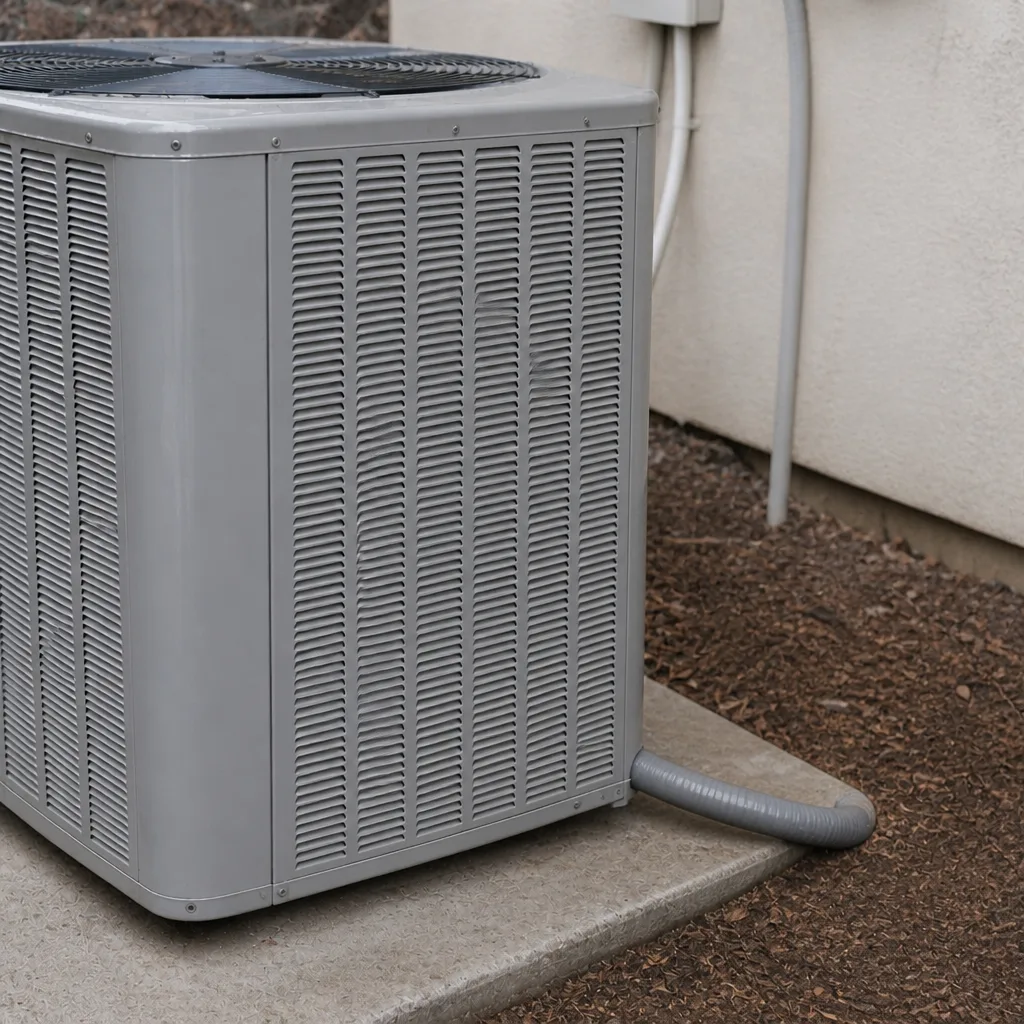
See the difference
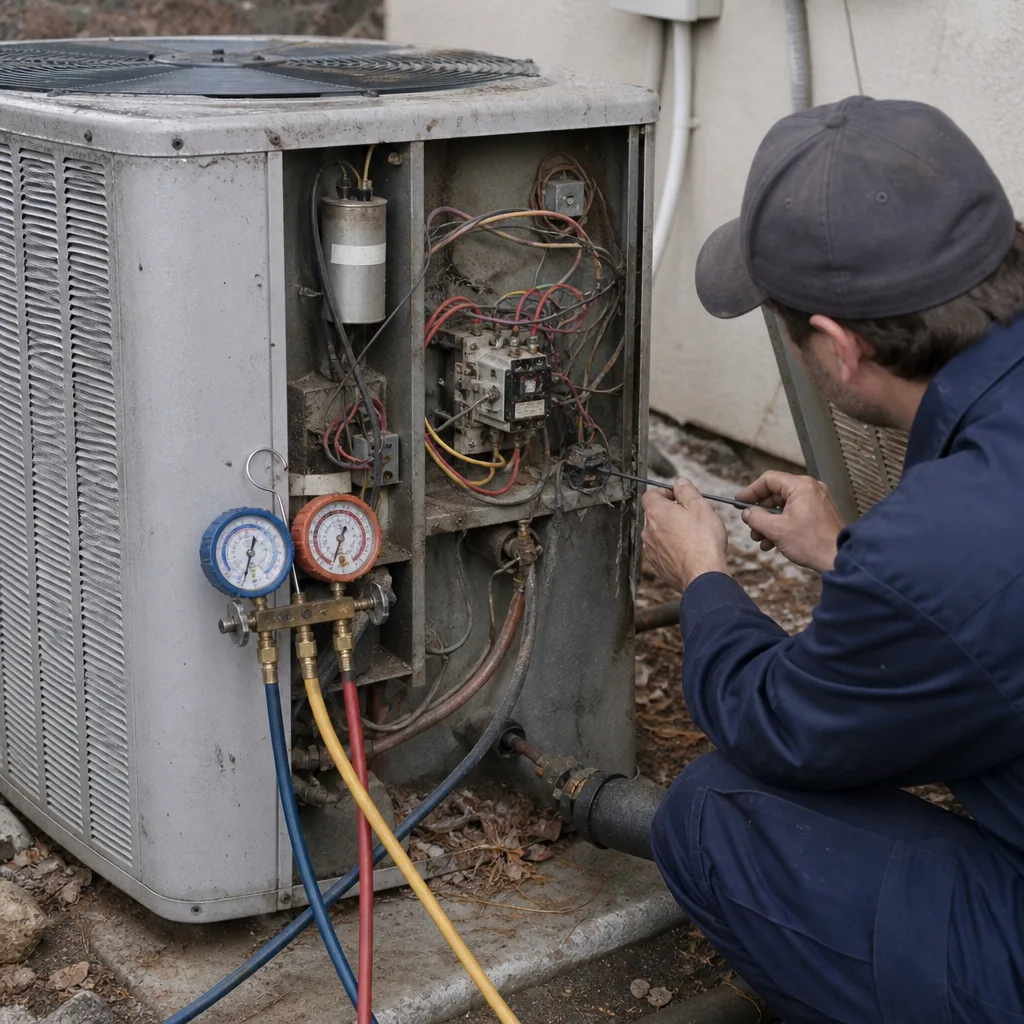 Before
 After
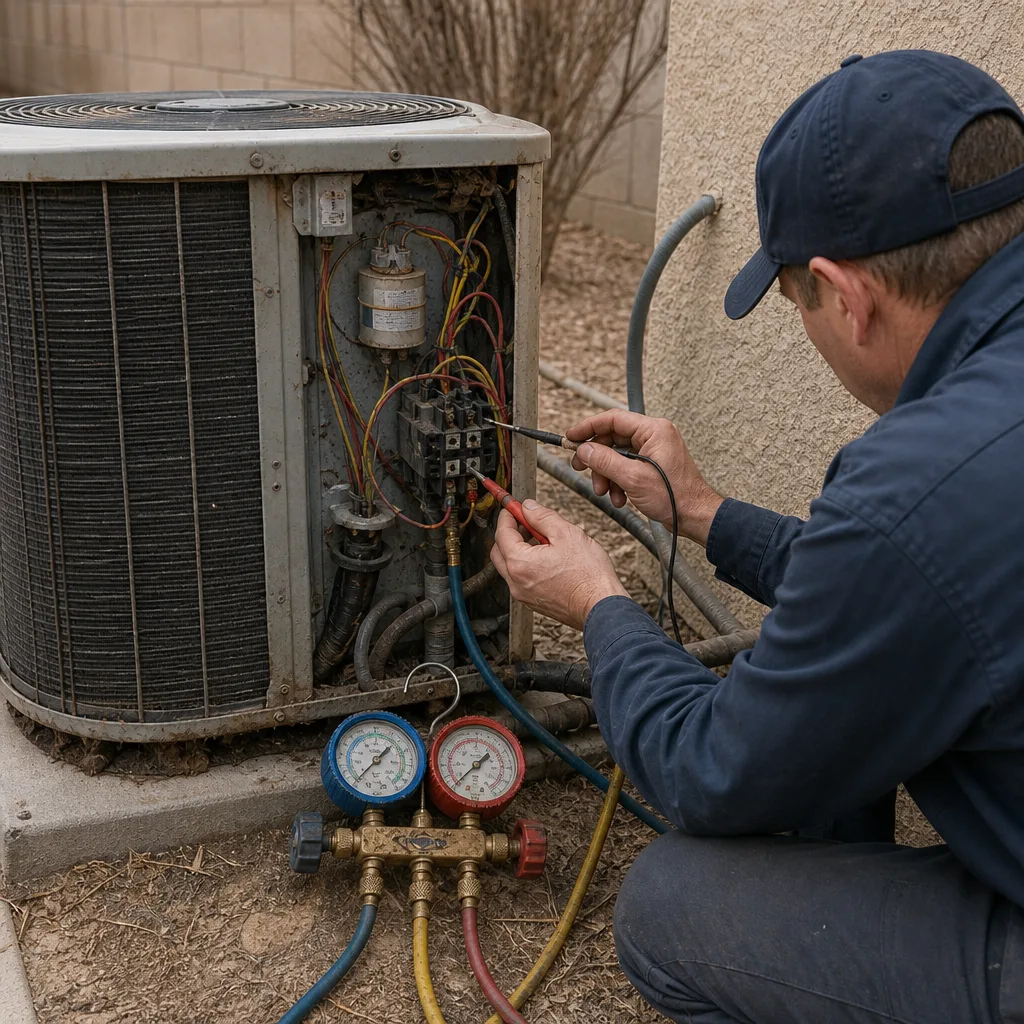 Before
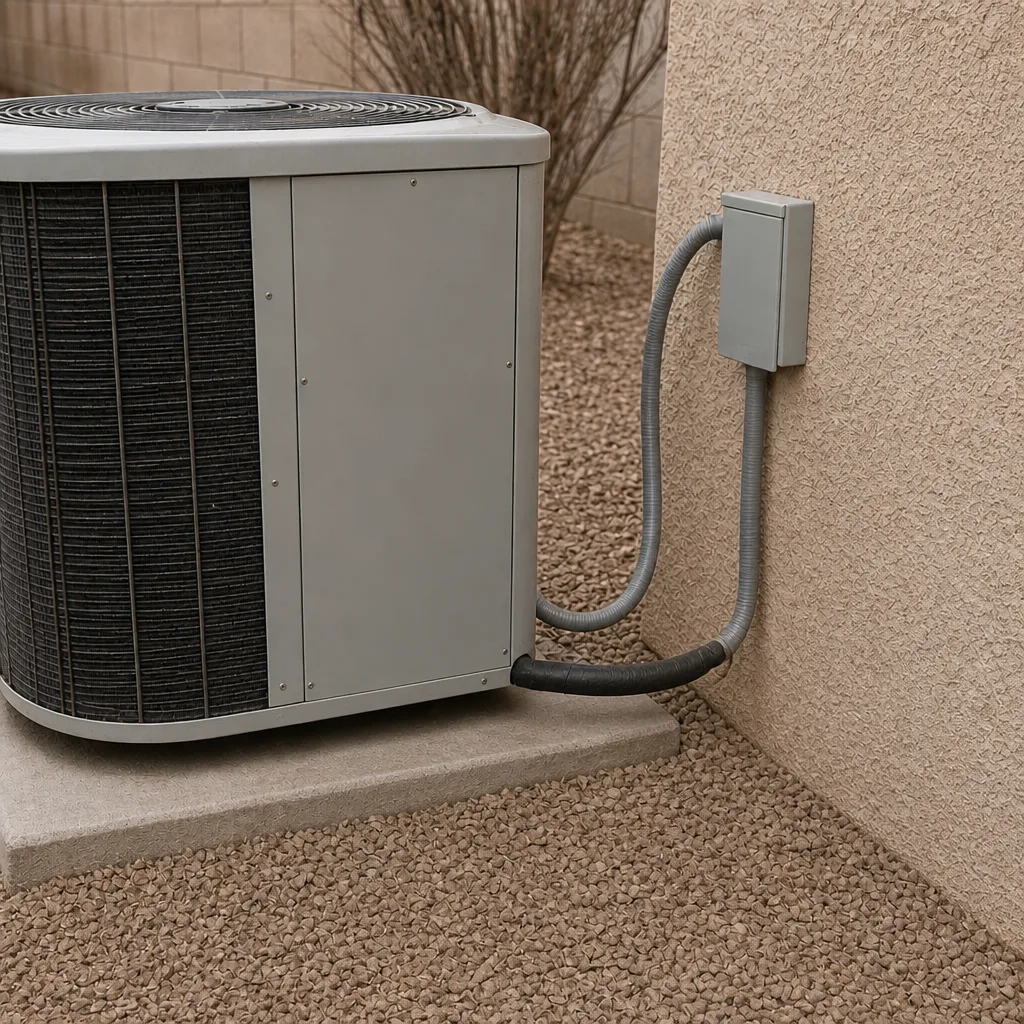 After
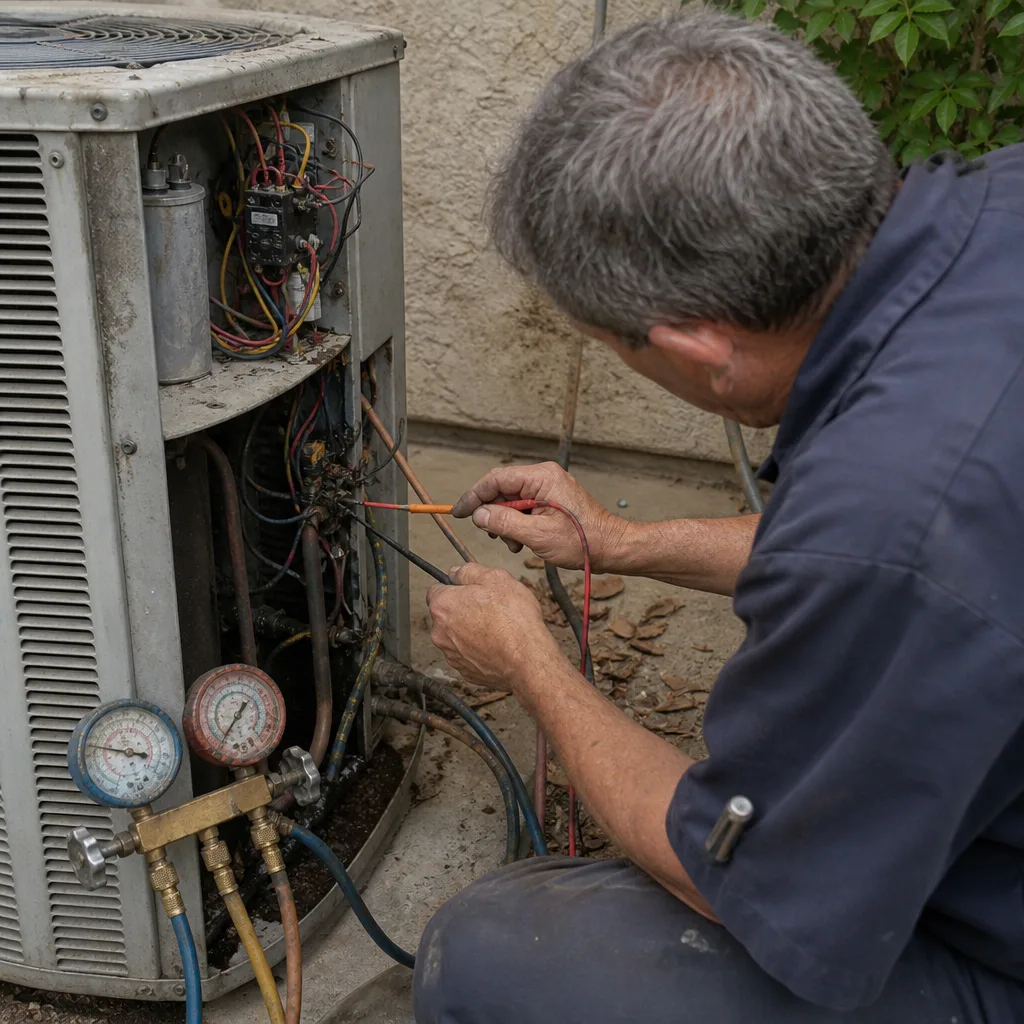 Before
 After
When to Call a Professional
Some things homeowners can reasonably handle, and some cannot. If your heat pump is freezing up at the indoor or outdoor coil, if the auxiliary heat is running constantly in mild weather, if the system short cycles more than twice an hour, or if you’re hearing a metal-on-metal rattle from the outdoor unit, that’s a call. So is the deeper work: any refrigerant line work, any electrical disconnect or panel work, and any compressor diagnosis. Those involve high pressure and high voltage, and they are not a homeowner project. A heat pump or mini split install in Mesquite starts with a free estimate from us – Fireside Heating & Air Co. Mesquite home – and we’ll give you a written fixed price, not a range. Call (888) 570-3601 and a live person will answer, any hour.
Frequently Asked Questions
Yes, in most cases, if it’s a cold-climate heat pump sized to a real Manual J load calculation. Standard heat pumps lose some capacity near 30°F, which is why we spec cold-climate equipment or a hybrid backup for homes with modest insulation. The load calc decides it, not a general rule.
A single-zone ductless mini split typically runs $3,500 to $6,500 installed in Mesquite, and a two-zone system runs $6,000 to $11,000. The range moves on line-set length, zone count, and whether you need electrical upgrades. Call (888) 570-3601 for a fixed written price; estimates are free and there’s no overtime charge.
We recommend 16 to 18 SEER2 for most full-time Mesquite homes, and 19 or higher if you’re running the AC hard through July and August and plan to stay long-term. The federal minimum is 14.3 SEER2, which is the floor, not the target. Call us for a second opinion on any written estimate you have; that second look is free.
In most cases yes, a mechanical permit is required for a heat pump or mini split install in Mesquite, and the permit and inspection vary with the scope of work. Ask your contractor to pull the permit in writing before the install date. If a bid says the permit isn’t needed, that’s a company to walk away from.
Typically one to two days for a ducted heat pump replacement, and a single day for a one-zone ductless mini split. A multi-zone system can run two days. We confirm the timeline in writing with the fixed price, and we’re there on the date we say.
If the system is more than 15 to 18 years old, needs a compressor or coil replacement, or you’re calling us more than once a season, replacement is usually the better spend. If it’s a single failed part on a system under ten years old, repair is the honest answer. We’ll tell you straight, and the 90-Day Done Right Promise applies either way.
The Bottom Line
Mesquite is a good heat pump climate for eight months of the year, and getting the other four right comes down to two things: a real Manual J load calculation and the honest auxiliary-heat conversation. A properly sized cold-climate heat pump or a hybrid system will handle our summers and our cold snaps without complaint. A ductless mini split sidesteps the duct-leakage problem in older Mesquite homes and puts comfort where you need it. Above all, get the fixed price in writing, know what your installer left out, and choose a company that stands behind the work. That’s the whole guide, and it’s enough.
Ready to talk about your home? Call Fireside Heating & Air Co. at (888) 570-3601 for a free estimate. A live person answers every call, the price quoted is the price paid, and every job is backed in writing for 90 days. That’s the square deal.
Written by the team at Fireside Heating & Air Co. Mesquite.