
Last updated November 18, 2026
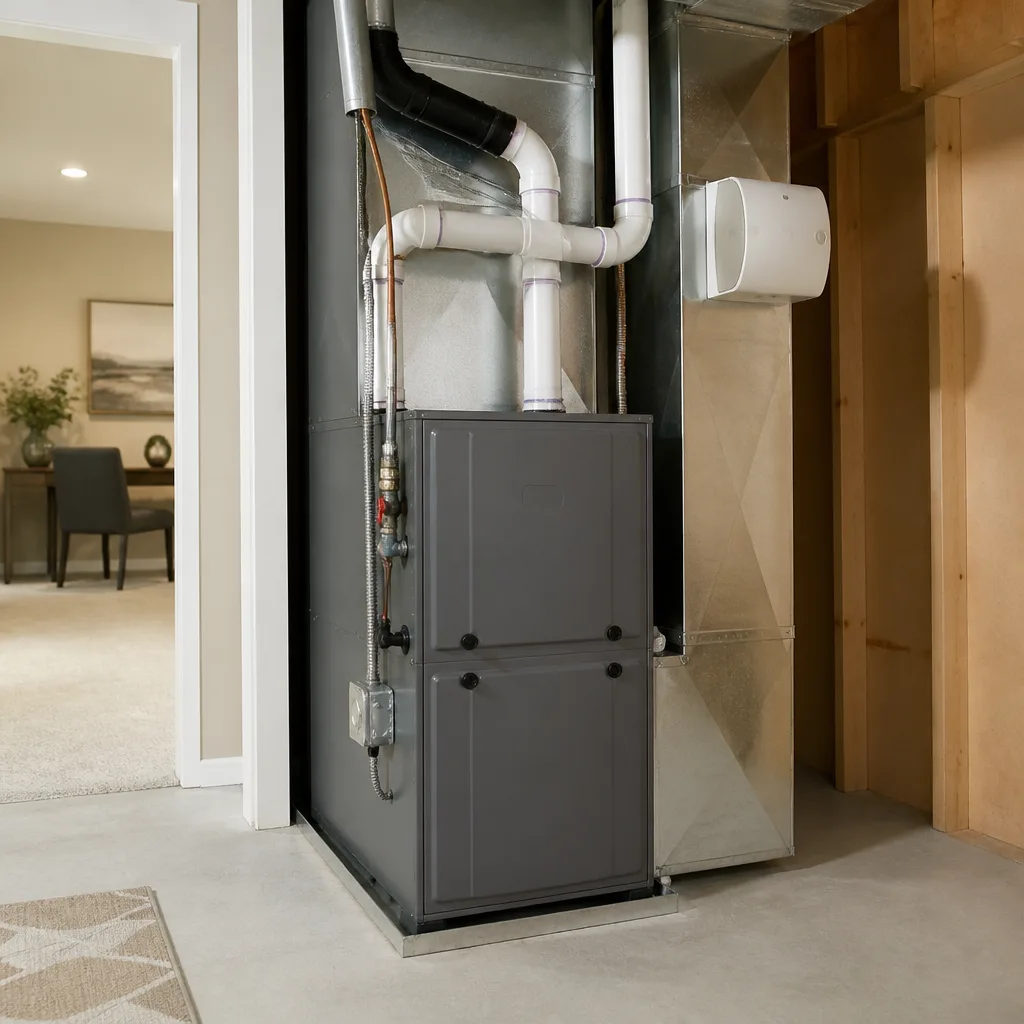 Furnace & heating
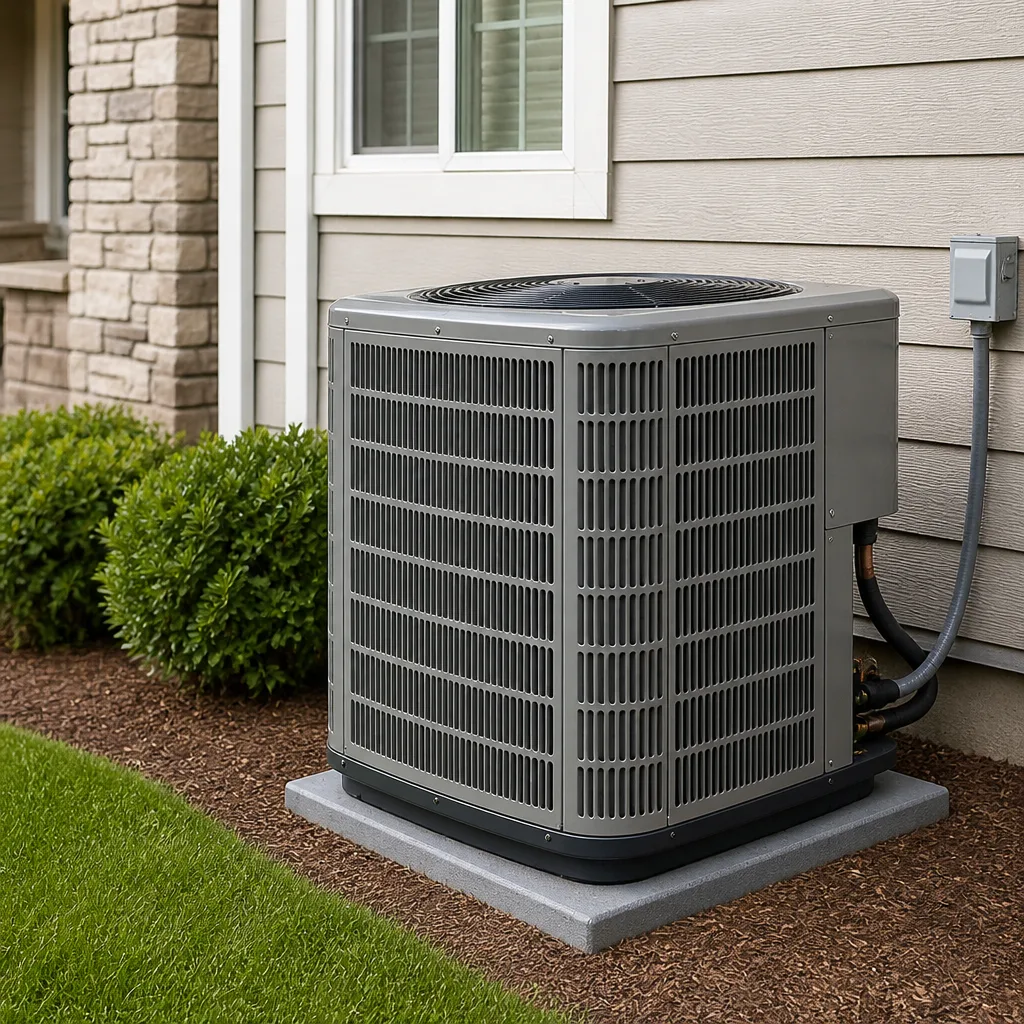 AC repair
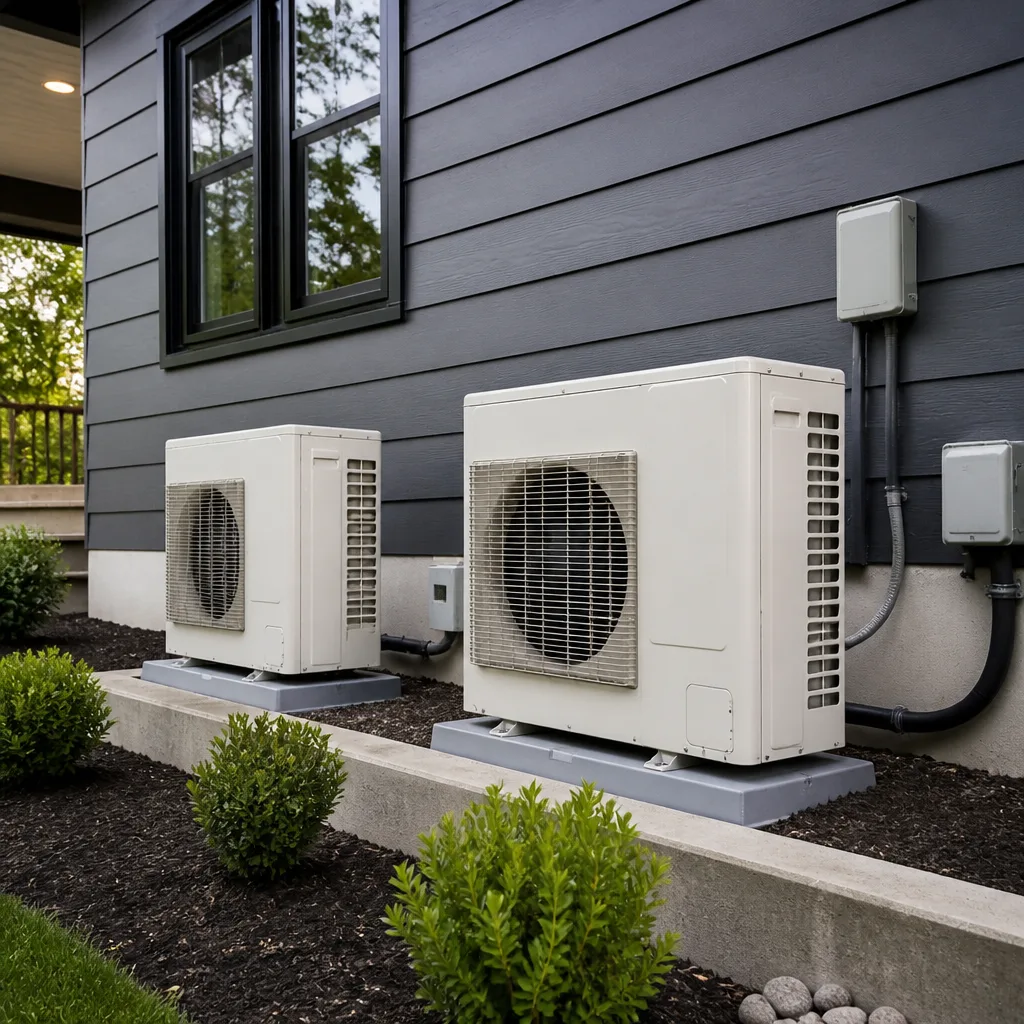 Heat pumps
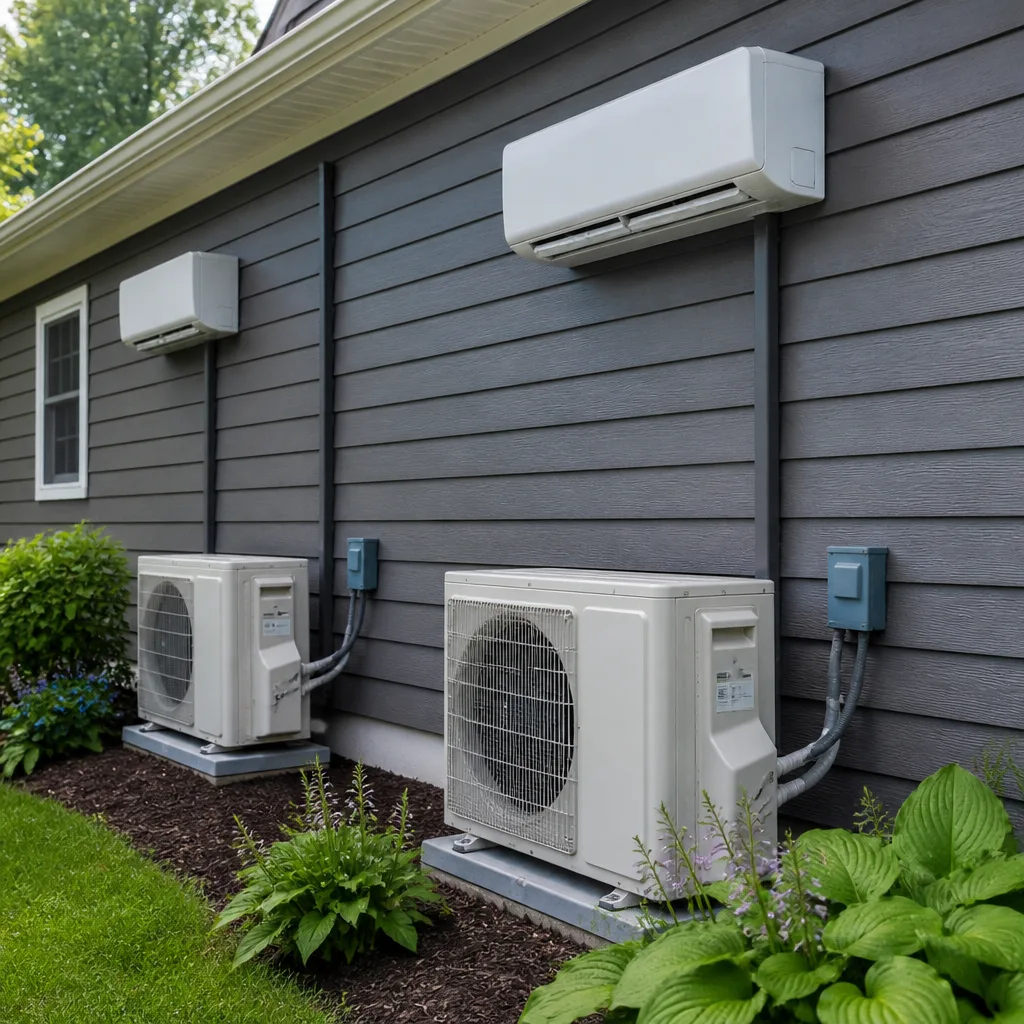 Ductless mini splits
 Carrier
 Trane
 Goodman
Seasonal tune-up and full diagnostic on your Carrier, Trane, or Goodman system - readings shown to you before any repair is proposed
Diagnosis first, numbers second - you approve the repair price before a single part goes in.
Get your free estimateHeating & Furnace Maintenance Schedule: What to Do and When
A furnace that passed a clean inspection back in March has just spent seven months sitting untouched through a Mesquite summer. Seven months of desert dust settling onto the burners. Seven months of cabinet temperatures that can climb past 115°F in an unconditioned garage, quietly cooking capacitors and control boards. And a very good chance that field mice found the warm, dark cabinet a fine place to raise a family. Then the first cold night arrives, the thermostat clicks, and nothing happens. The fall startup shouldn’t be a surprise. This guide lays out a maintenance schedule built for systems that go dormant for most of the year – a schedule written from Mesquite, for Mesquite.
Quick Answer
The core furnace maintenance schedule is simple: a full professional tune-up every fall (ideally in October, before the first cold snap), a filter change every 1-3 months, a homeowner visual check of the heat exchanger and cabinet each fall, and a mid-winter check-in. But a furnace that sat idle through a desert summer needs extra attention beyond that standard checklist. Dust accumulation on burners, rodent nesting in the cabinet, and heat-dried ignition components all need their own inspection before the season begins.
Styles & brands we work with
- AC repair
- Furnace & heating
- Heat pumps
- Ductless mini splits
- Carrier
- Trane
- Goodman
Table of Contents
- Why a Dormant Furnace Needs Its Own Checklist
- The Pre-Season Startup Checklist for Desert Systems
- Burner Cleaning in a Dusty Desert: Why Every Year
- Testing the Heat Exchanger Before the First Cold Night
- Filter Maintenance for a Dual-System Home
- The October Timing Window
- The Monthly and Mid-Winter Check-In
- Common Mistakes to Avoid
Why a Dormant Furnace Needs Its Own Checklist
Most furnace maintenance advice you’ll find online was written for places like Minnesota or Ohio, where the system runs from October to April and gets constant use. Those guides assume the furnace is being exercised regularly. In Mesquite, your furnace sits idle for the better part of seven months. The system isn’t worn out from running; it’s worn out from sitting.
That distinction matters. A furnace that runs all winter gets its components flowing with air, keeps its burners moving, and pushes out accumulated debris every cycle. A furnace that sits through a Mesquite summer collects everything the desert throws at it. Fine alkaline dust drifts in through the vents. The garage where many units are located bakes at 115°F or hotter for weeks. Rubber gaskets dry out. Capacitors age faster in that heat. And the open cabinet, warm and still, becomes a shelter for rodents.
We’ve seen it fall after fall in Mesquite – a furnace that “worked fine last year” fails to fire on the first cold morning because the ignition component had dried out, the burners are caked in dust, or a mouse chewed through a wire in July. The standard annual tune-up checklist covers most routine items, but it doesn’t always cover the specific problems of long desert dormancy. Here’s what we add.
The Pre-Season Startup Checklist for Desert Systems
This is the checklist we use for furnaces that have been dormant through a full Mesquite summer. It’s the heart of this guide – print it, save it, and work through it before the first cold night.
- Inspect the cabinet for rodents and nesting material. Open the access panel and look for droppings, shredded insulation, or chewed wiring. Rodents love the warmth of a dormant furnace cabinet, and their chewing is one of the most common causes of fall no-heat calls.
- Clear the outdoor vent and intake pipes. In Mesquite, desert wind moves a lot of dust and debris. Make sure the PVC intake and exhaust terminations aren’t blocked and that nothing has built a nest in them over the summer.
- Change the filter before the first startup. Don’t pull a filter that sat through a dusty summer and run the furnace on it. A fresh filter protects the blower and heat exchanger on that first start.
- Look at the condensate lines and drain pan. High-efficiency furnaces produce condensation. Dry, dusty summers can leave drains clogged with debris, and a blocked drain will shut the system down.
- Check the capacitor and control board visually. A capacitor that swelled or leaked through a 115°F summer is a common failure point. Look for bulging tops or scorching on the board.
- Inspect the burners for dust. A thin coat of desert dust on the burners is normal after a long dormancy. A thick coat is a problem that needs cleaning (more on that below).
- Test the ignition component. Whether it’s a hot-surface igniter or a spark ignition, the igniter can dry out and become brittle over a dormant season. A professional can test it before it fails.
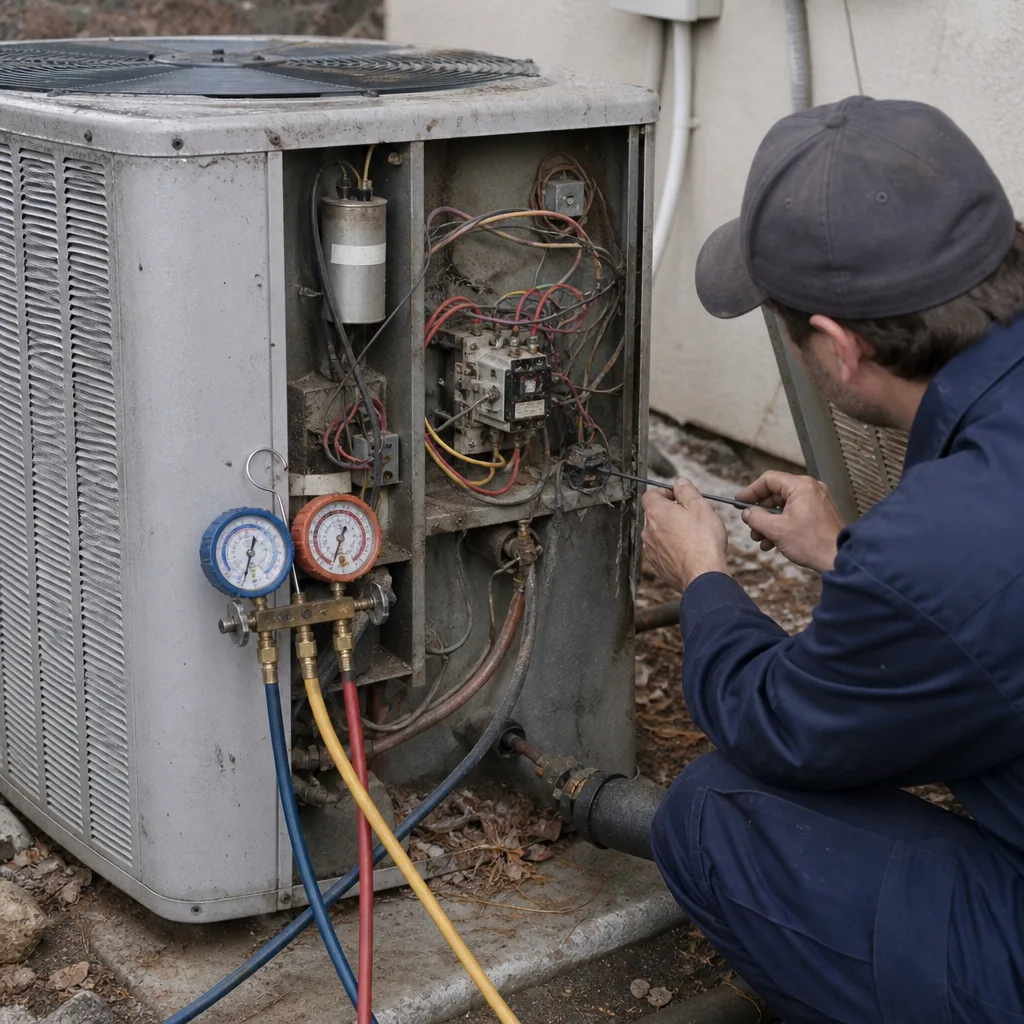
- Run a full cycle test with a technician to confirm the system lights, heats, and cycles off properly, and to check for a cracked heat exchanger.
Notice that most of these are things you can check yourself in a few minutes. The last one isn’t. We’ll get there.
Burner Cleaning in a Dusty Desert: Why Every Year
In humid climates, many technicians recommend cleaning burner assemblies on a two-to-three-year schedule. In Mesquite, that schedule is too long. The desert dust here is fine and alkaline, and a furnace cabinet that sits open and dormant for seven months is a collection trap. By the time fall arrives, enough dust has settled onto the burners to cause incomplete combustion, weak flames, and, in bad cases, the furnace short-cycling or failing to light.
We recommend annual burner cleaning for any furnace in Mesquite. It’s one of the fastest ways to keep the system efficient and reliable through the season. When burners are dirty, you see it in three places:
- Flame quality. A clean burner produces a steady blue flame. Dust-clogged burners can produce yellow, lazy, or lifting flames.
- Efficiency. Dirty burners waste fuel and drive up your bill without any obvious warning.
- Reliability. More fall no-heat calls start with dirty burners than almost any other cause we see in Mesquite.
It’s worth saying plainly: burner assemblies are part of the gas train, and they should be cleaned by a trained technician. This isn’t a component a homeowner should disassemble. What you can do is look at the flame through the sight glass (if your furnace has one) and note whether it’s steady and blue. If it’s yellow, call for service before using the system. Our Heating & Furnace in Mesquite page covers what those service visits involve in more detail.
Testing the Heat Exchanger Before the First Cold Night
The heat exchanger is the most important safety component in a gas furnace. It’s the metal chamber that separates combustion gases from the breathable air your blower pushes through the house. A crack in the heat exchanger can allow carbon monoxide into your living space, so this check is not optional. Some of it you can do yourself. Some of it requires a professional.
What a homeowner can check
- Look at the flame through the sight glass, if there is one. A steady blue flame is healthy. A yellow, wavering, or lifting flame can indicate a heat exchanger problem.
- Note any unusual smells. A metallic or burning smell on startup that doesn’t clear within a minute or two is worth a professional look.
- Watch for soot or scorching around the heat exchanger seams when the access panel is off.
- Check your carbon monoxide alarms. Make sure you have working CO detectors on every level of the home, near bedrooms and in the garage. This is not a substitute for a professional inspection, but it’s the last line of defense.
What a technician checks
A proper heat exchanger inspection requires visual and functional checks that you can’t do without training and equipment. A technician looks for cracks, warping, or corrosion in the metal, uses a combustion analyzer to check CO levels and combustion quality, and in some cases uses a camera to inspect the interior of the exchanger. If you suspect a problem – or if the system is more than 15 years old and it’s been more than a year since the last inspection – do not run the furnace until it’s been checked. Carbon monoxide is odorless and it can build up before anyone notices.
We handle these inspections as part of every fall tune-up. If you’d like a second opinion on an estimate another company gave you, our Fireside Heating & Air Co. Mesquite home page explains how we do that for free.
Filter Maintenance for a Dual-System Home
Here’s a mistake we see all the time in Mesquite: a home where one filter serves both the furnace and the air handler, and the homeowner changes it based on what the furnace needs only. In a dual-system home, that single filter is doing double duty, and it needs to be changed on the shorter schedule of the two systems.
Here’s how the schedule breaks down in most Mesquite homes:
- 1-inch pleated filters: every 30 to 60 days. In dusty months or during heavy cooling season, lean toward 30.
- 2-inch filters: every 60 to 90 days.
- 4-inch or 5-inch media filters: every 6 to 12 months, but check them at the change of every season.
- Washable or reusable filters: rinse every 30 days, and let them fully dry before reinstalling.
One thing to be careful with in a dual-system setup: the filter for the cooling side is often the same one the furnace uses, but the sizing and location can trip you up. If you’re not sure where the filter is, or if you change one and the other stays dirty, you’re not alone. Fall is the right time to sort that out – before the heating season starts. The AC Repair & Installation in Mesquite page covers the cooling-side filter schedule, since the two systems share the same air path.
While you’re thinking about air, our Heat Pump & Mini Split in Mesquite page is a good place to read up if you’re considering a heat pump for next season – some Mesquite homes run a heat pump for both heating and cooling, and the filter schedule is a bit different for those systems.
The October Timing Window
Timing is one of those things people underestimate about furnace maintenance. In Mesquite, the first cold snap usually comes sometime in late October or early November – and the moment the overnight temperatures dip, every homeowner in town picks up the phone at once. The week after that first cold night is the busiest week of the year for any HVAC company in Mesquite.
The October window, before the first cold snap and before the rush, is the right time for furnace service. Here’s why:
- You get the appointment you want. Scheduling in early or mid-October means we can book you in a slot that fits your day, not the other way around.
- There’s time to fix what we find. If the tune-up turns up a bad capacitor or a failed igniter, there’s still time to order the part and get it in before the cold hits.
- The system gets tested in mild weather. If the furnace has an issue, you’ll find out on a 75°F October afternoon, not on a 35°F November night when you’re calling for emergency service.
- You’re not competing with everyone else. When the first cold snap hits, every Mesquite homeowner who waited is calling us at once. Calling in October gets you service before the crowd.
We’ve been here long enough to know exactly when the calls start. Our phones are answered by a live person 24 hours a day, every day of the year, so if you do find yourself in that after-cold-snap situation, we’ll pick up. But the far easier path is to book the tune-up in October and never have to call in a hurry at all. Our Heating & Furnace in Mesquite service page has details on what a tune-up includes.
The Monthly and Mid-Winter Check-In
Once the heating season is underway, the schedule gets lighter. Here’s the routine we recommend from November through March in Mesquite:
- Monthly: Check the filter, listen for unusual sounds, and glance at the flame through the sight glass if there is one. If anything looks off, note it and call.
- Monthly: Walk around the house and make sure all the supply and return vents are open and unobstructed. Furniture and rugs blocking returns is common and easy to miss.
- Every 60-90 days: Replace the filter, or per the schedule above.
- January or February: A mid-winter check-in if your system has been working hard or if you’ve noticed anything concerning during the season.
- March or April: When the heating season winds down, that’s the time to plan the cooling-side tune-up before summer. The AC Repair & Installation in Mesquite page covers that side of the calendar.
The point of the monthly checks is not to become a furnace technician. It’s to catch small problems before they turn into no-heat calls. Our technicians have up to 8 years of experience, and the pattern they see most often is a homeowner who noticed something odd in December, forgot about it, and then called in January when the system failed.
Common Mistakes to Avoid
Here’s the short list of furnace maintenance mistakes we see most often in Mesquite. Each one costs money – some cost comfort, and a few are a safety concern.
- Running the furnace on summer’s old filter. The first cold night in Mesquite is not the moment to discover the filter is clogged with dust from seven months of dormancy. Change it before the first startup, not after. Running on a dirty filter strains the blower and shortens its life.
- Skipping the burner cleaning because “it worked last year.” A furnace that lit fine last winter can fail on the first cold night this year due to dust buildup on the burners. In the desert, “worked last year” doesn’t mean much if you skipped the annual cleaning.
- Ignoring a yellow flame. A blue flame is healthy; a yellow, wavering, or lifting flame is a warning sign of a burning problem and, potentially, a heat exchanger issue. Don’t shrug it off.
- Never checking the cabinet for rodents. The single most-overlooked item on the fall checklist. Mice in the cabinet chewed through the wiring is a real cause of fall no-heat failure in Mesquite, and it’s cheap to check.
- Assuming the same filter serves both systems. In dual-system homes, a mismatched or forgotten filter is common. Change it on the shorter of the two schedules.
- Waiting for the first cold snap to call. The week after the first cold night is the busiest week of the year. Scheduling in October gets you the appointment you want and the time to fix what’s found.
- Skipping the heat exchanger inspection because “there’s no smell.” Carbon monoxide is odorless. A visual check of the flame and a CO alarm aren’t a substitute for a professional heat exchanger inspection.
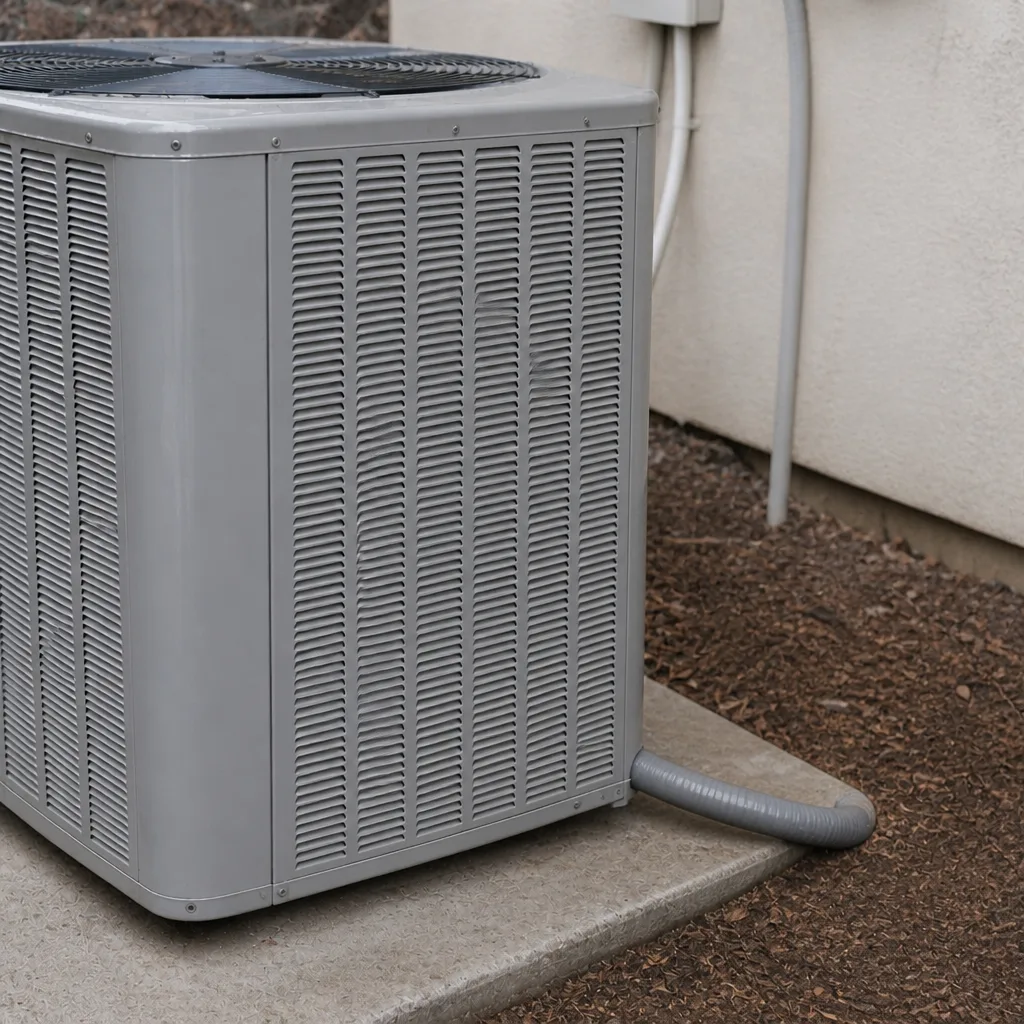
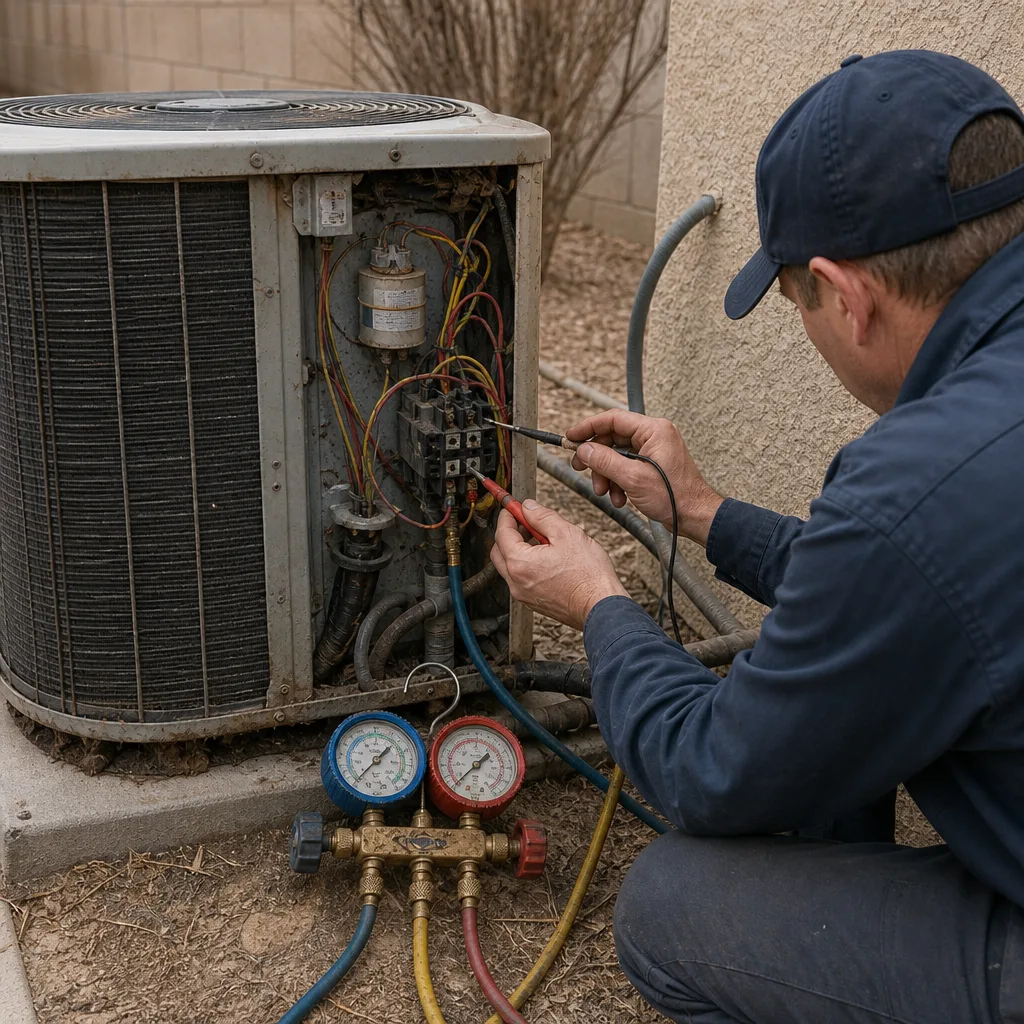
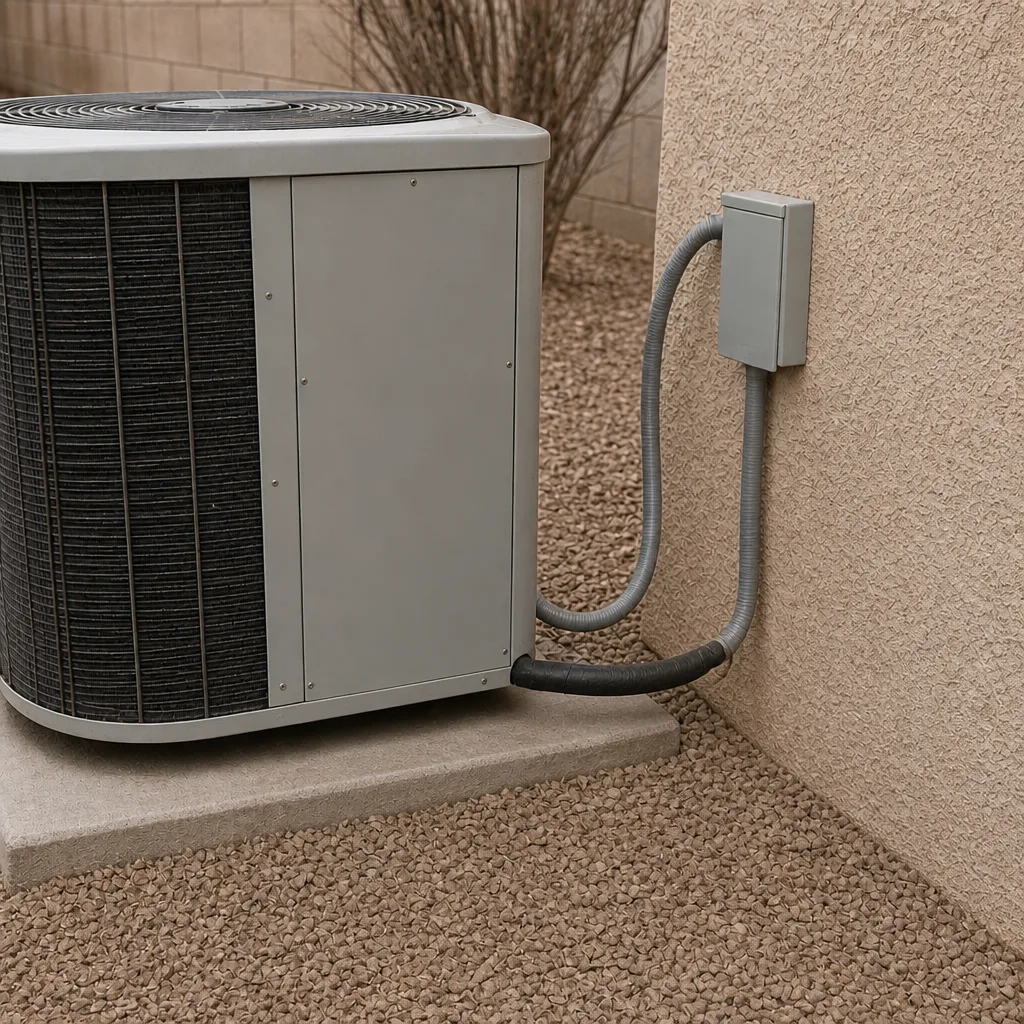
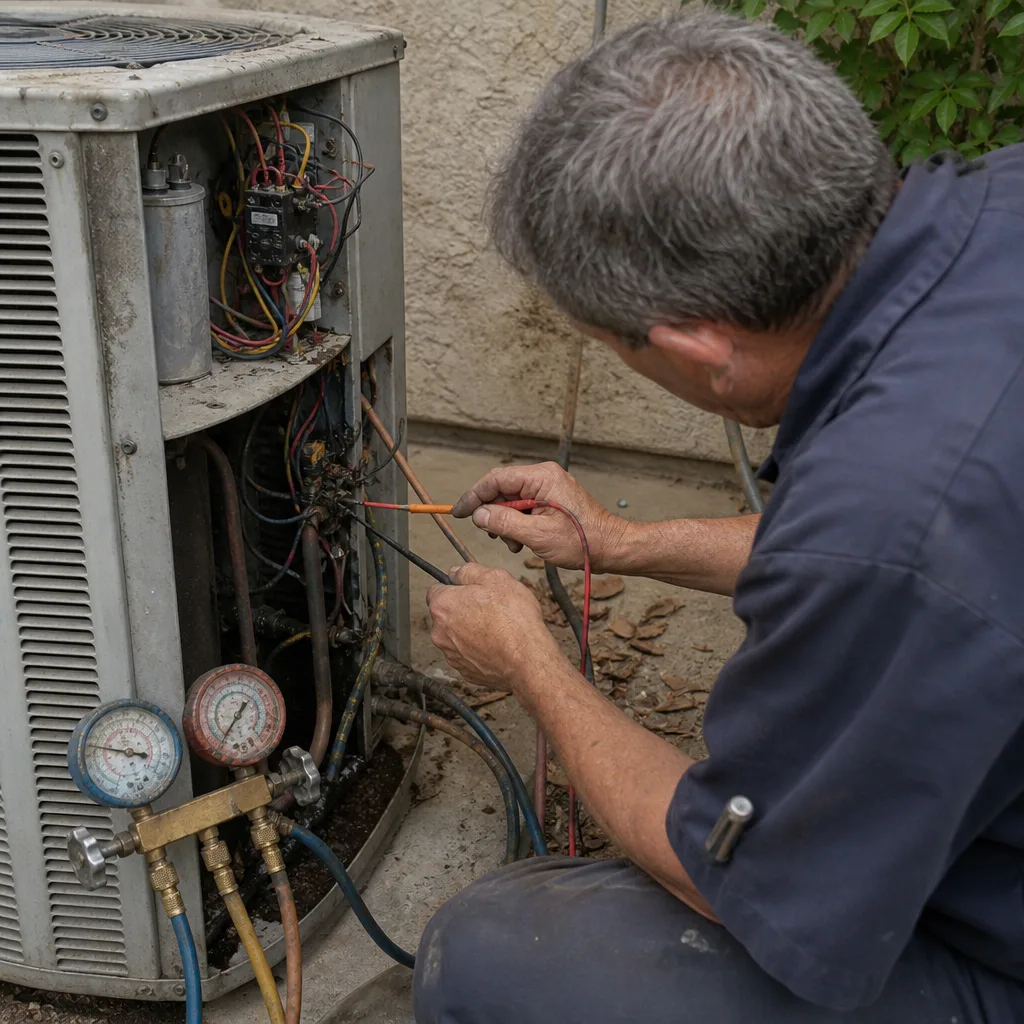
See the difference
 Before
 After
 Before
 After
 Before
 After
When to Call a Professional
Some things you check yourself. Others you don’t touch. Call a professional if you notice any of these in Mesquite:
The system fails to light or lights and goes out immediately. The flame is yellow, wavering, or lifting. You smell gas near the furnace. Your carbon monoxide alarm goes off. You find chewed wiring, droppings, or nesting material in the cabinet. The system short-cycles – running for a few minutes and shutting off before the house is warm. The blower runs but the air is cold. You hear banging, scraping, or screeching from the unit. The system is more than 15 years old and has never had a heat exchanger inspection.
Fireside Heating & Air Co. Mesquite offers free estimates in Mesquite – call (888) 570-3601. If it’s the middle of the night and you’ve got no heat, we answer the phone around the clock with a live person. Every job is backed by our 90-Day Done Right Promise: if it isn’t done right, we make it right, in writing, no arguing.
Frequently Asked Questions
Once a year, ideally in October before the first cold snap. A furnace that sat dormant through a Mesquite summer also benefits from a pre-season startup check on the burners, cabinet, and ignition components – which is what our fall tune-up covers. Calling in October gets you scheduled before the cold-weather rush and gives time to fix anything we find.
Because the desert dust in Mesquite is fine and alkaline, and a dormant furnace collects it all summer. In humid climates, burner cleaning is often on a 2-3 year schedule. In Mesquite, annual cleaning is the right schedule. Dirty burners cause weak flames, wasted fuel, and a higher chance of a no-heat failure on the first cold night.
You can do a basic visual check – look at the flame through the sight glass, note any unusual smells, and keep working CO alarms on every level of the home. But a proper heat exchanger inspection requires a trained technician with the right equipment. If you suspect a problem or the system is more than 15 years old, don’t run the furnace until it’s checked. Call us for an inspection.
Open the access panel and look for droppings, shredded insulation, or chewed wiring. The cabinet is warm and dark, and mice love it. If you find anything, don’t run the system until it’s been checked. In Mesquite, chewed wiring from rodents is one of the most common causes of fall no-heat calls, and it’s a fast, cheap fix if it’s caught early.
Use the shorter of the two schedules. If the cooling side calls for a filter change every 30 days in dusty months, that’s the schedule to follow for the shared filter, even though the furnace might tolerate a longer interval. A 1-inch pleated filter typically needs changing every 30-60 days in Mesquite, and 30 days during dusty months is the safer choice.
No overtime charge – the price quoted is the price paid. Our phone lines are answered by a live person 24 hours a day, every day of the year, so if the furnace quits on a cold night, you’ll reach us. We’ll give you a straight quote before any work begins.
The Bottom Line
Furnace maintenance in Mesquite isn’t the same as furnace maintenance in a cold climate. Your system isn’t worn out from running – it’s worn out from sitting. So the schedule needs to reflect that: an annual burner cleaning, a cabinet inspection for rodents, a heat exchanger check before the first cold night, and a fresh filter before you ever touch the thermostat. And the timing matters, too. October is the window. Book it before the first cold snap arrives and before everyone else in Mesquite picks up the phone at the same time. A little planning in October is the easiest way to avoid a 2 a.m. no-heat call in January.
If you’d like help getting your furnace ready for the season, call Fireside Heating & Air Co. Mesquite at (888) 570-3601 for a free estimate. We’re here around the clock, and we stand behind every job with our 90-Day Done Right Promise.
Standing offers: $50 Off Any Repair Over $250 | Free Second Opinion on Any Written Estimate | $89 Seasonal Tune-Up | Senior & Veteran 5% – Always.
Written by the team at Fireside Heating & Air Co. Mesquite.