
Last updated November 18, 2026
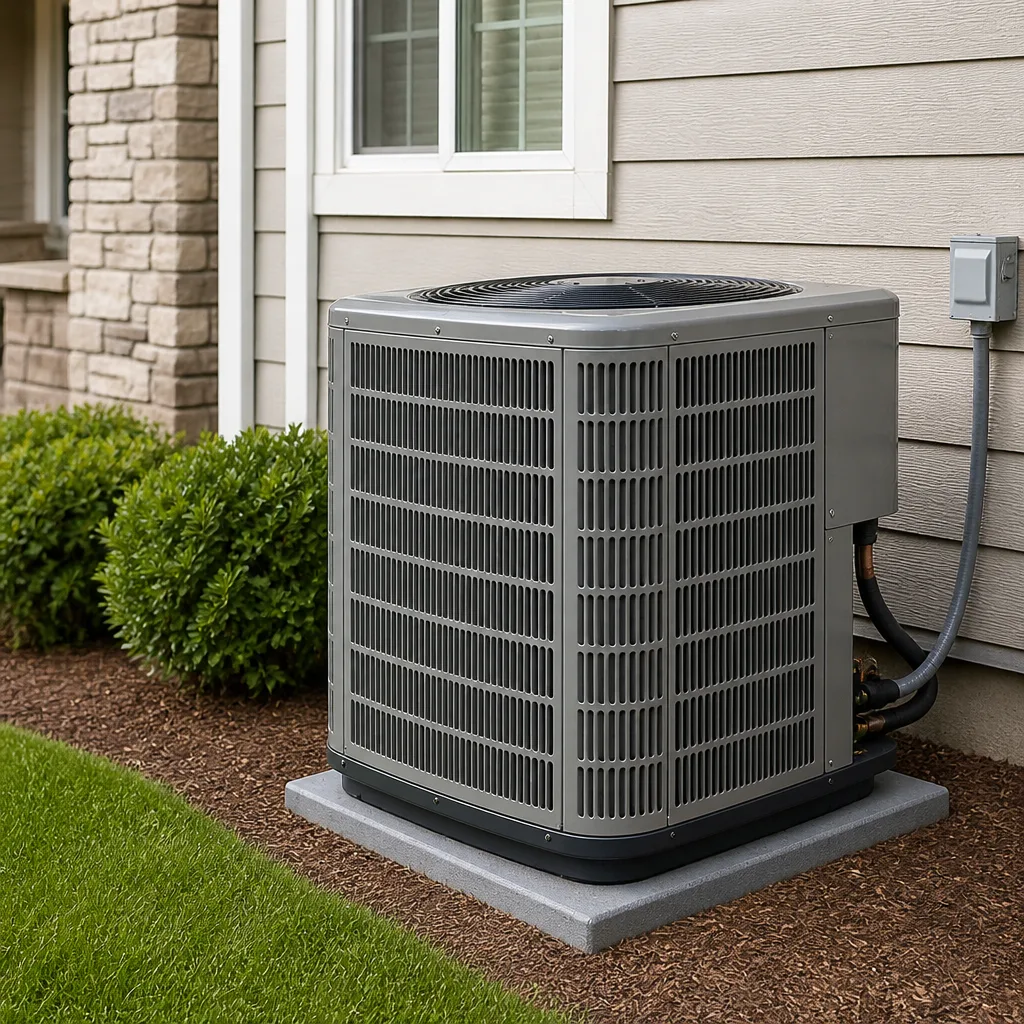 AC repair
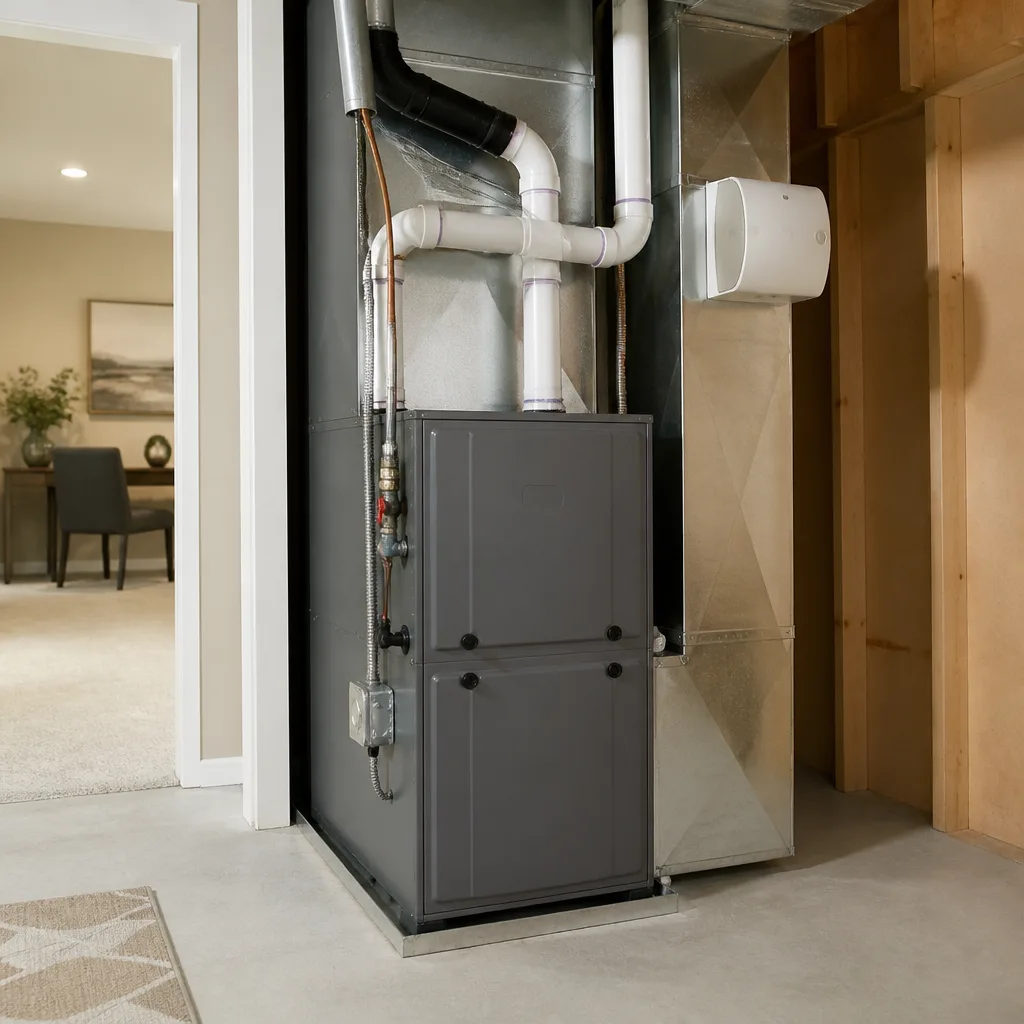 Furnace & heating
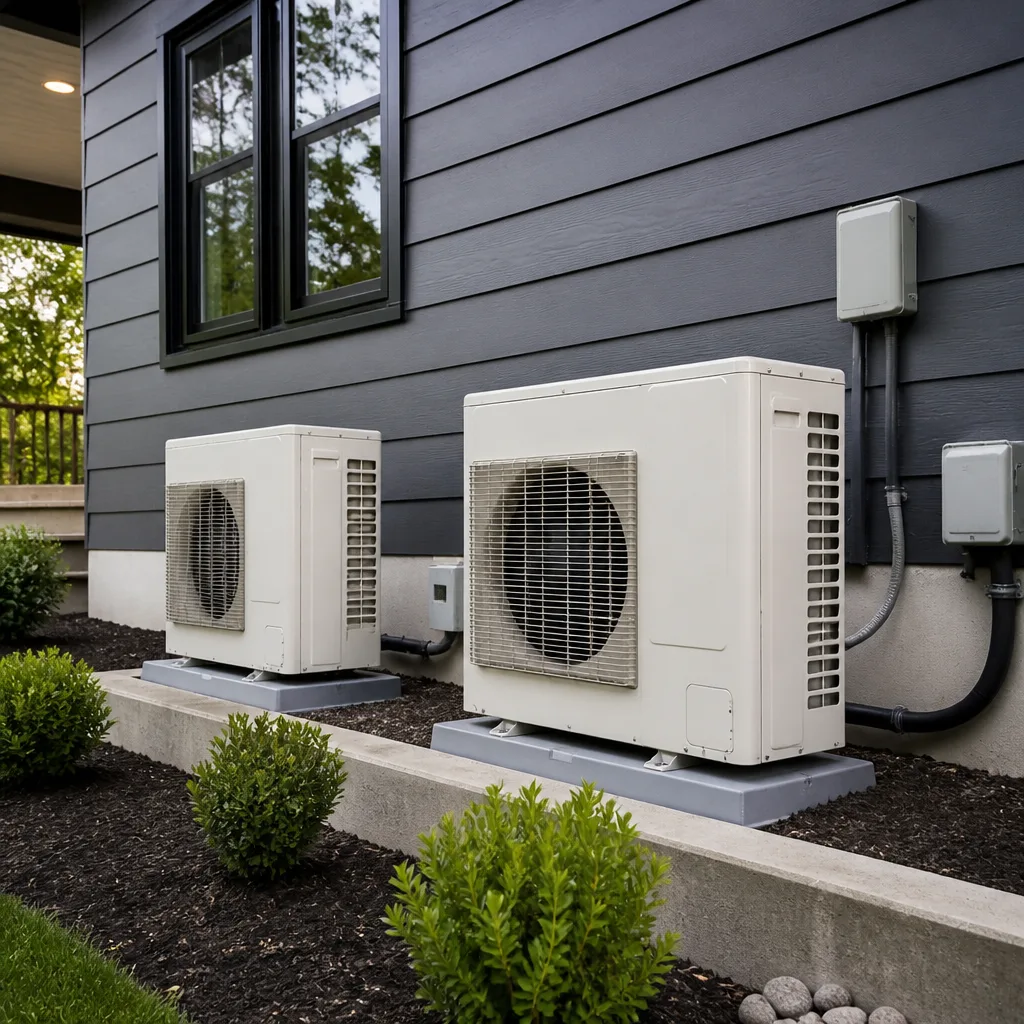 Heat pumps
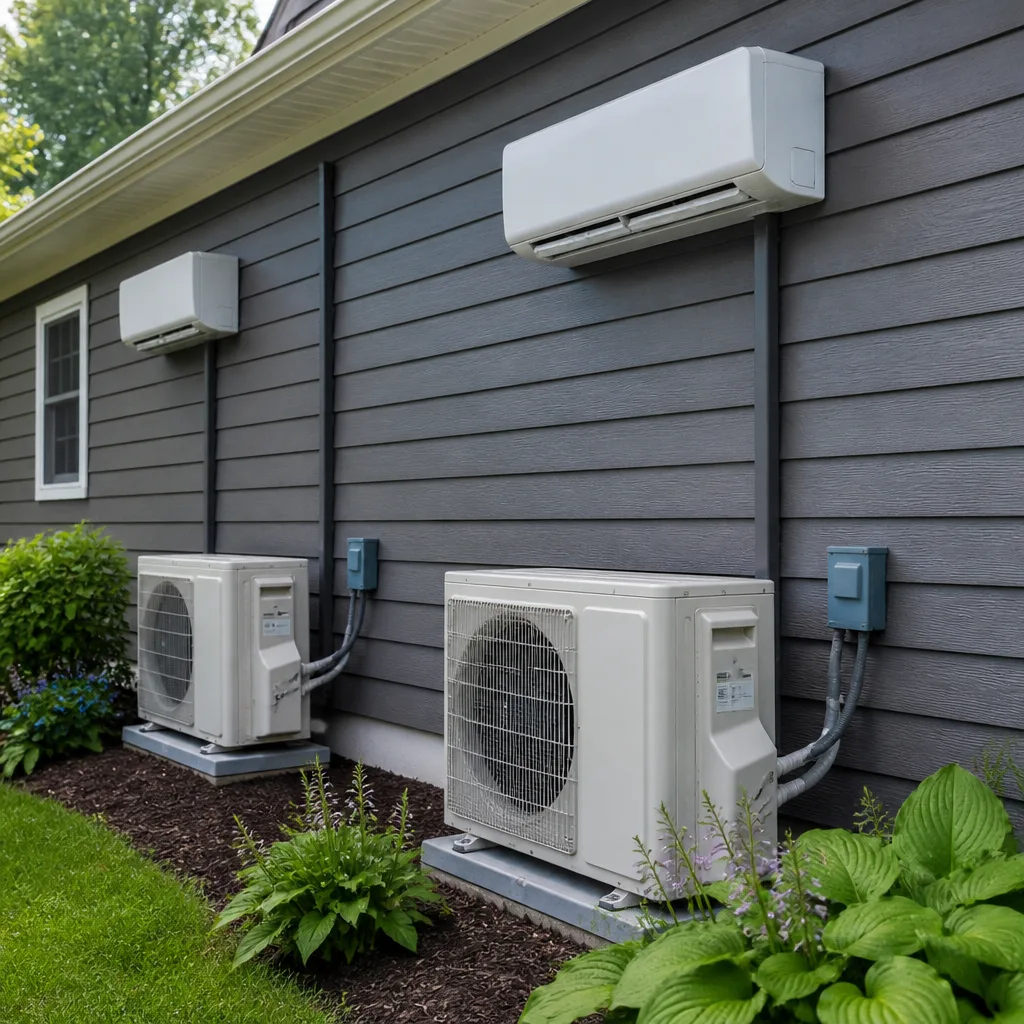 Ductless mini splits
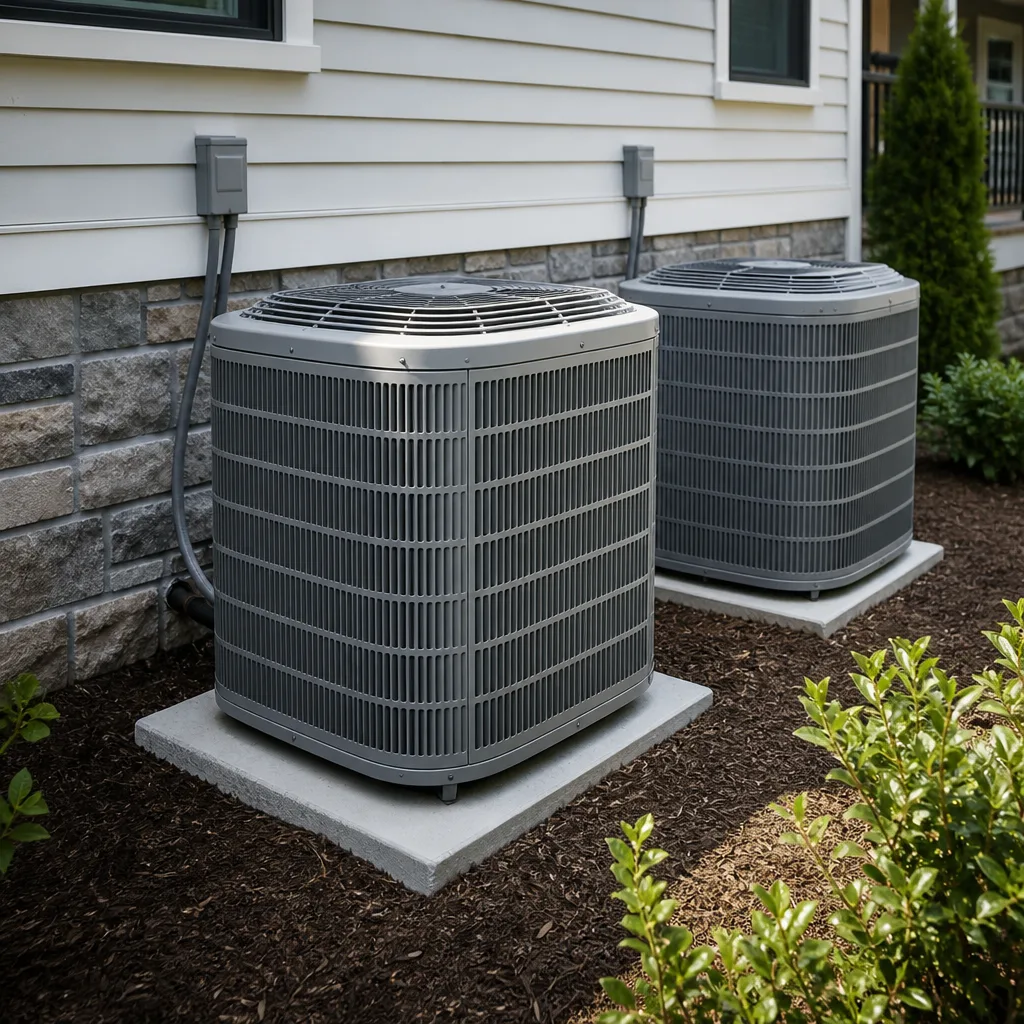 Carrier
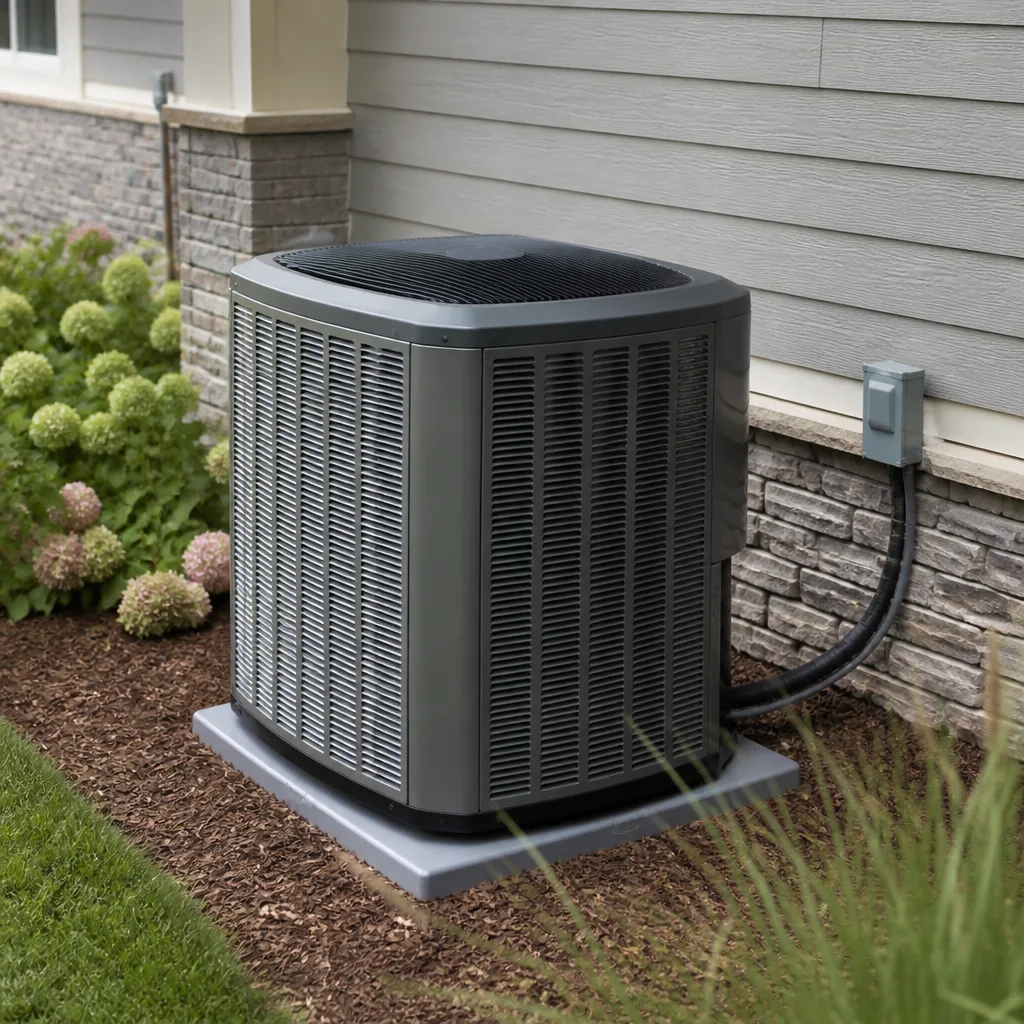 Trane
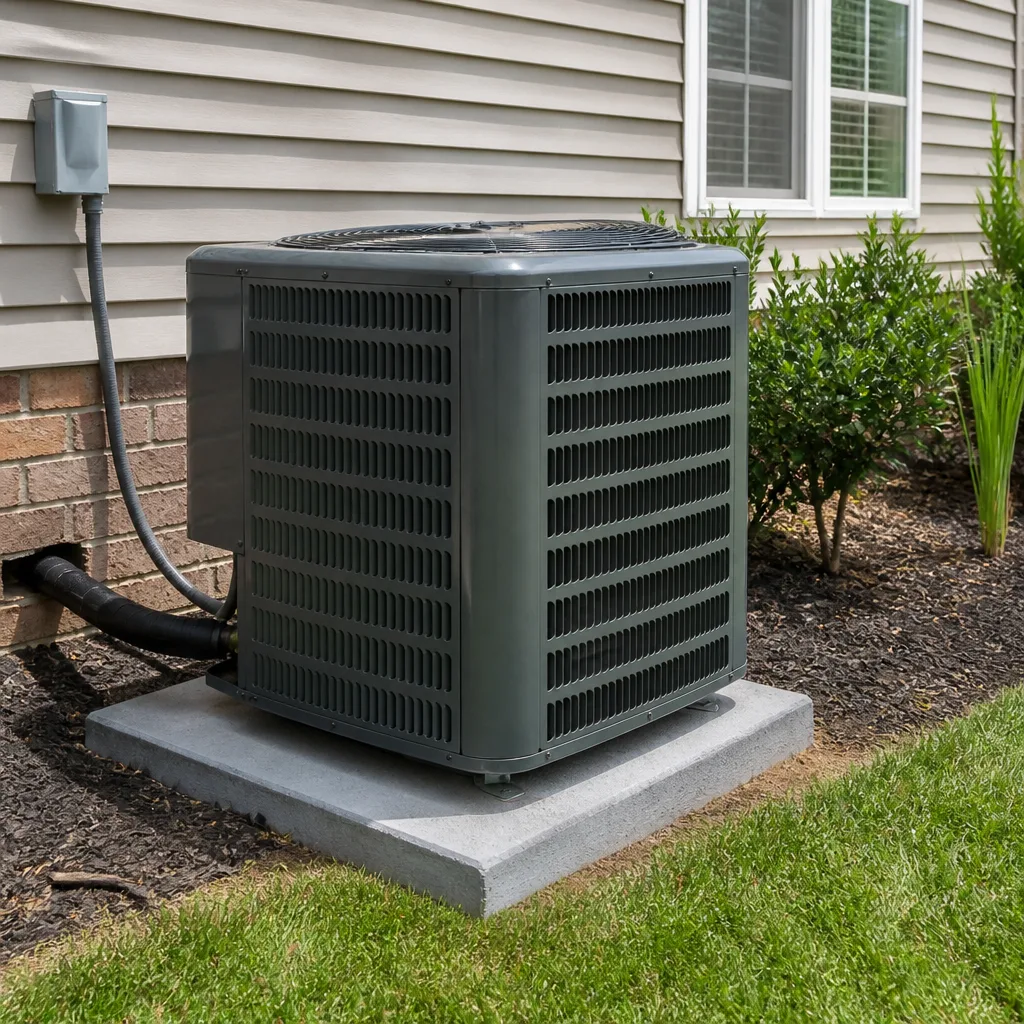 Goodman
Seasonal tune-up and full diagnostic on your Carrier, Trane, or Goodman system - readings shown to you before any repair is proposed
Diagnosis first, numbers second - you approve the repair price before a single part goes in.
Get your free estimateAC Repair & Installation Maintenance Schedule: What to Do and When
A filter that lasts 90 days in Portland lasts about 30 days in Mesquite during peak season. That single fact breaks most of the maintenance advice homeowners find online. A clogged filter doesn’t just cut airflow. It starves the evaporator coil of heat exchange capacity, drives refrigerant pressures out of range, and can turn a $12 filter into a $1,200 repair. Mesquite systems run nine months of cooling a year through desert dust and caliche particulate, and the calendar that keeps a system alive here looks nothing like a national average. This guide lays out the month-by-month schedule we use, so you know exactly what to do and when.
Quick Answer
In Mesquite, plan on a four-stage schedule: change the filter every 30 days from May through September, clean the outdoor condenser coil every 45 days during the cooling season, clear and flush the condensate drain line by late June before monsoon humidity, and book a professional inspection in March (before first heat) and again in October (after the long run). Skip the generic “90-day filter” advice – it’s wrong for this climate.
Styles & brands we work with
- AC repair
- Furnace & heating
- Heat pumps
- Ductless mini splits
- Carrier
- Trane
- Goodman
Table of Contents
- Why the Standard 90-Day Schedule Fails in Mesquite
- The Month-by-Month Schedule for Mesquite’s 9-Month Cooling Season
- March Is the Only Month That Matters for Pre-Summer Prep
- How Often to Clean the Coil Here vs. What the Manual Says
- Clearing Condensate Drains Before July Monsoon Humidity
- What a Proper Fall Inspection Should Cover
- Repair or Replace: Scheduling the Decision
- What to Do Today
Why the Standard 90-Day Schedule Fails in Mesquite
Most filter change intervals you see printed on a box come from manufacturers who test in average conditions. Average means a place with four distinct seasons, moderate humidity, and indoor dust levels that don’t include fine caliche grit blowing off construction lots and open desert. Mesquite is not average. Our cooling season runs from roughly April through early November, and through the hottest stretches – think 110 degrees for weeks in July – your system runs continuously, pulling in constant airborne silt.
Here’s what that means for the filter. In moderate climates a pleated filter catches enough of the load that a 90-day interval holds up. In Mesquite, after roughly 30 days in peak summer the same filter is loading with a mix of household lint and fines that coat the media surface. Airflow drops. The blower works harder. The evaporator coil doesn’t get enough warm air passing across it, so its surface temperature drops below the dew point range it’s designed for, and you start icing. Ice means refrigerant pressures swing outside spec. That’s the pressure failure that shows up as a burnt compressor contactor or a seized compressor on a system that just needed a clean filter.
We’ve seen this pattern repeatedly on Goodman and Rheem systems in Sun City and along the newer construction on the east side of Mesquite. Homeowners who did everything the manual said still lost a compressor in year six because the manual was written for Phoenix average dust, not Mesquite desert-fine particulate on a system running eight hours a day.
Filter discipline is the core of the schedule, but it’s not the only difference. Coil cleaning intervals, condensate line flushing, and the timing of pre-summer checks all shift too. The rest of this guide gets specific about each one. If you want a broader view of the repair and installation side of things, our AC Repair & Installation in Mesquite page covers the service side, and this page handles the calendar.
The Month-by-Month Schedule for Mesquite’s 9-Month Cooling Season
Here’s the full year as we lay it out for homeowners on our Fireside Heating & Air Co. Mesquite home service list. Print it, tape it to the side of the air handler, and check it off.
- January. Filter check (usually fine this month). Visual inspection of the outdoor condenser for debris packed from winter winds. Confirm the heat pump is switching to cooling mode cleanly if you run one.
- February. Filter change if more than 60 days since last. Clear any leaf or tumbleweed accumulation around the condenser pad. Check that the disconnect box is accessible and not obstructed.
- March. Professional pre-summer inspection. Filter change. Coil inspection and cleaning if needed. Condensate line flush. Full refrigerant pressure check. This is the critical month.
- April. Filter change. First 45-day coil cleaning begins – rinse the outdoor coil from the inside out with the system off. Verify thermostat is holding setpoint properly on the first hot days.
- May. Filter change (30-day interval starts here). Coil cleaning. Check condensate line flow. Listen for any change in blower noise.
- June. Filter change. Coil cleaning. Flush condensate line ahead of the monsoon. Check outdoor unit fan blade for cracks and clean the fan guard.
- July. Filter change. Coil cleaning. Condensate line flush again after first monsoon rains. Watch for icing on the indoor coil or short cycling.
- August. Filter change. Coil cleaning. Condensate flush after monsoon. Note any gradual loss of cooling – this is when capacity problems show up.
- September. Filter change. Coil cleaning. Final pre-fall inspection scheduling.
- October. Professional fall inspection. Filter change. Coil cleaning. Full system check before heating season switchover.
- November. Filter change. Coil cleaning of the outdoor unit. Switch thermostat to heating if not already.
- December. Filter change. Observe heating operation. Schedule a heating tune-up if you haven’t had one. Our Heating & Furnace in Mesquite page has the furnace-specific version of this schedule.
The core difference vs. a national schedule: the filter changes every 30 days from May through September, and the outdoor coil gets attention every 45 days, not once a year. That’s the calendar that keeps equipment alive through nine months of cooling.
March Is the Only Month That Matters for Pre-Summer Prep
Homeowners routinely call us in the first week of May when the system won’t keep up. By then it’s already too late for several things. March is the last month with enough runway to order a part, fix a small refrigerant leak properly, or get on the schedule without a wait.
Why May is too late: in Mesquite, the first real heat wave hits in early May most years. Once the daily high crosses 100 for a stretch, equipment that was borderline in March will fail. Compressors that were running near their limit with a partially restricted coil in spring give up. But the deeper problem is that any repair or replacement started after mid-April gets squeezed – parts ordering for a Lennox or Trane coil that isn’t on a local shelf can stretch a week, and replacement decisions made in June mean you’re choosing between a temporary fix and living through a hot week without air.
What a March inspection should cover, and why each item matters here:
- Refrigerant charge check. A charge that slowly dropped over nine months of continuous summer running shows up in March, not July. Catching it in March means a top-off, not a compressor.
- Capacitor and contactor test. These fail after thousands of hours of hot operation. Testing in March catches the ones near end-of-life before they strand you in July.
- Coil cleaning if needed. If the outdoor coil packed up with caliche fines over the previous summer, cleaning in March prevents the airflow restriction from compounding in the new season.
- Condensate line check. Verify flow, clear any algae buildup, confirm the safety switch works. See the drain section below for why this matters before July.
- Duct inspection at accessible joints. Nineteen-year-old duct tape in an attic here has often baked loose. Leaks cost you cooling capacity all summer.
Book the March visit in February if you can. Our phones are answered by a live person around the clock, and the backlog in March is real. If you run a heat pump rather than a straight AC, the March check also covers the reversing valve and defrost controls – see our Heat Pump & Mini Split in Mesquite page for the added items that apply.
How Often to Clean the Coil Here vs. What the Manual Says
Most equipment manuals call for cleaning the outdoor condenser coil “as needed” or once a year during annual service. That guidance assumes average dust. Mesquite is not average. We recommend the outdoor coil be cleaned every 45 days during the cooling season – roughly six cleanings per year, versus the one that a manual implies is sufficient.
Why the interval matters more here than anywhere else: the condenser coil is a fin-and-tube heat exchanger, and the fins on today’s high-efficiency units are packed tighter than they were on older systems. Tighter fins catch more dust and lose airflow faster when they load up. In Mesquite, windblown fines and caliche grit settle into those fins and, over a season, form a mat that slows heat rejection. A system running with a matted coil on a 110-degree day will run hotter internal pressures than a clean one, and every degree of extra pressure shortens the compressor’s life. It also costs you money at the meter every hour it runs.
Cleaning the coil is a job most homeowners can do without calling us, and it’s the one maintenance task on this list we’re comfortable handing to you. Turn the system off at the thermostat and the disconnect, use a garden hose on the indoor-facing side of the coil so the spray pushes debris out the way it came in, and avoid a pressure washer (it bends fins). Do not use a chemical coil cleaner unless you know what you’re doing – some degrade the fin coating.
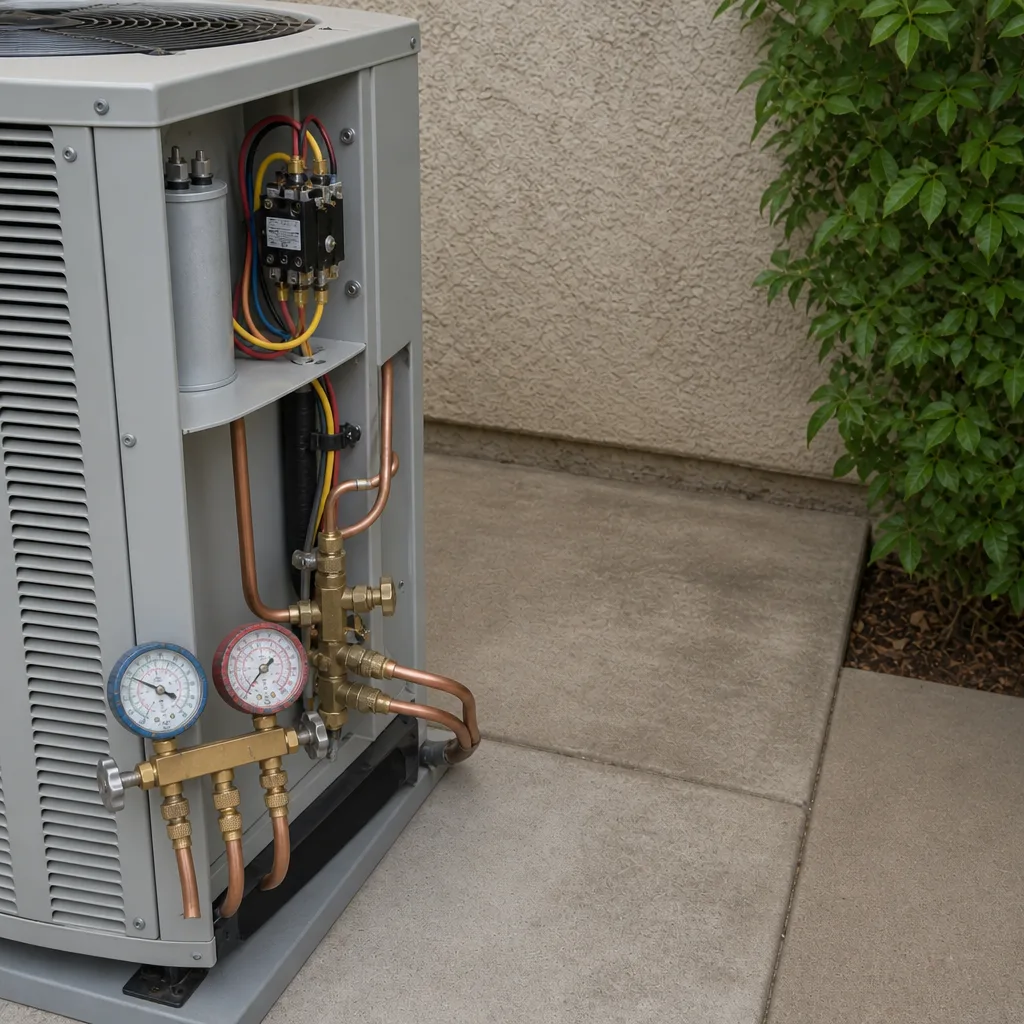
What you should not do yourself: anything involving the refrigerant circuit, the electrical contactor, or a coil that’s mechanically damaged or frozen. Those are jobs for a trained technician with gauges and the right tools. If you see a coil matted beyond what a hose can clear, that’s when to call. Our AC Repair & Installation in Mesquite page covers what a professional coil cleaning involves, including split coil cleaning on packaged units and confirming the charge afterward if the coil was dirty enough to have affected system operation.
Clearing Condensate Drains Before July Monsoon Humidity
Condensate drain lines don’t get enough attention in Mesquite, and July monsoon season is exactly when a clogged line becomes a water problem. Here’s the mechanism: your indoor coil pulls moisture out of the air as it cools it. That water drains out through a line at the base of the air handler. In most of Mesquite’s dry summer, the line drains slowly, and the flow isn’t enough to keep algae from growing on the line interior. Then in July or August the humidity climbs, the coil produces much more condensate, the line can’t keep up with a partial clog, and the pan fills and overflows. Water ends up in the closet, on the ceiling, or through the drywall.
Two flushings per year is the minimum. Do one in March or April, and the second no later than the last week of June. The July monsoon pattern in Mesquite is a real thing – afternoon thunderstorms roll in, outdoor humidity climbs, and systems that dripped a slow trickle through June suddenly produce a steady stream.
Professional fall inspection after that long run should include the following steps, and it’s worth knowing what they’re for. A trained technician will:
- Confirm condensate flow by running the system and observing the drain outlet.
- Flush the primary line with a drain-safe solution and check the trap.
- Test the float switch (the safety device that shuts the system off when the pan fills).
- Check the secondary drain pan and any auxiliary overflow line.
- Inspect the coil for mold or biological growth that can plug the drain pan and drain line together.
If you’ve never flushed your own line, the safe way is a wet-dry vacuum on the outdoor drain outlet while the system runs, with a small amount of water poured into a cleanout fitting at the air handler. If there’s no cleanout fitting, or the pan is hard to reach, let us handle it. The AC Repair & Installation in Mesquite page covers the drain line service we do routinely during tune-ups, and a seasonal tune-up is how a lot of homeowners get the flushing handled without thinking about it. Our current offer is $89 for a seasonal tune-up.
What a Proper Fall Inspection Should Cover
By October, your system in Mesquite has often run continuously for five straight months. That’s a lot of hours. The fall inspection is the check that a national calendar treats as “winterizing” but that in Mesquite is really about confirming the system survived the long run and is set up correctly for heating.
A proper fall inspection for a Mesquite system should cover:
- Refrigerant pressure check – has the charge held through the summer? Any drop means find the leak now, not in three months.
- Compressor amp draw and capacitor test – a compressor that’s pulling higher amps than spec in October is on borrowed time.
- Contactor and control board inspection – look for pitting, corrosion, or burned contacts from a summer of cycling.
- Coil cleaning or verification – end-of-season coil cleaning removes the summer’s accumulation.
- Condensate line flush and pan inspection – clear out what accumulated in the monsoon months.
- Heat pump reversing valve test – critical for heat pump owners heading into the heating season.
- Blower motor and wheel inspection – has the indoor blower collected dust? A dirty blower wheel throws off the system balance.
- Duct inspection at accessible joints – seasonal thermal cycling loosens joints and tape.
- Thermostat calibration and mode check – confirm the thermostat engages heat cleanly, with no short cycling.
What a fall inspection should not be: a list of unnecessary upsells. If your York system is running fine at the end of a long summer, we tell you. The point of the fall visit is to catch problems before winter, not to generate work.
Repair or Replace: Scheduling the Decision
Many homeowners call us because the question is really repair-or-replace, not which maintenance item to check off. The right time to make that call is October, once the system has a full summer of data behind it – not in the middle of July when it fails. Here’s the plain way we frame it.
Repair is the right call if: the system is under 12 years old, the repair is a capacitor, contactor, blower motor, or a single refrigerant leak, and the cost is well under a third of a replacement. Our current offer is $50 off any repair over $250, which helps on the parts that aren’t cheap.
Replacement is worth talking about if: the system is 13+ years old and has needed two or more refrigerant top-offs in the last two summers, the compressor is the problem, or the repair cost is approaching half the cost of new equipment. In Mesquite, a system that has run nine seasons of 110-degree weather has done more work than a 20-year-old system in a cooler climate.
Replacement in Mesquite is scheduled work, not same-day work. It has to be load-calculated, sized for your home’s square footage, window load, and insulation, and matched to your existing ducting and refrigerant line size. Getting the sizing wrong is one of the most common causes of short equipment life, and it’s worth the extra days to do it right. Our AC Repair & Installation in Mesquite page lays out what installation involves, and we quote it flat – no surprises. Please don’t expect us to install a system the day you call. And please don’t let anyone rush the sizing.
What to Do Today
Whatever month you’re reading this, some items on the schedule apply now:
- Check the filter. If you can’t see light through it, replace it. Today.
- Confirm the outdoor condenser has 24 inches of clear space on all sides and no debris in the fins.
- Look at the drain pan under the air handler. If it has standing water, shut the system off and call.
- Listen to the system from outside. A new clunk, rattle, or hum you didn’t notice last week is worth a phone call.
- Mark a March pre-summer inspection on next year’s calendar now. Every homeowner who has lost a compressor in July wishes they had.
Common Mistakes to Avoid
- Following the 90-day filter rule. The advice was written for moderate climates. In Mesquite peak-season dust, it’s roughly three times too long. Change every 30 days May through September.
- Waiting for May to call. By May the schedule is already behind. Fans and capacitors that were marginal in March fail in the first hot stretch, and parts take longer to source once everyone wakes up.
- Hosing the coil from the wrong side. Spray from the inside-facing side outward so debris exits the way it entered. Spraying from outside pushes the mat further into the fins on a Lennox or Daikin coil.
- Skipping the second monsoon drain flush. One flush in spring isn’t enough. July’s humidity loads the drain, and a partial clog becomes a ceiling stain.
- Running the system with visible icing on the indoor coil. That’s almost always low refrigerant or restricted airflow. Operating through it is how compressors die.
- Letting the outdoor pad sink. Desert soil settles, especially after monsoon rain. A condenser that’s tilted can strain the compressor. Walk out and check it looks level.
- Hiring a same-day replacement. If someone offers to install a new system the day you call, either the sizing isn’t real or the paperwork isn’t. Replacement is scheduled, load-calculated work.
See the difference
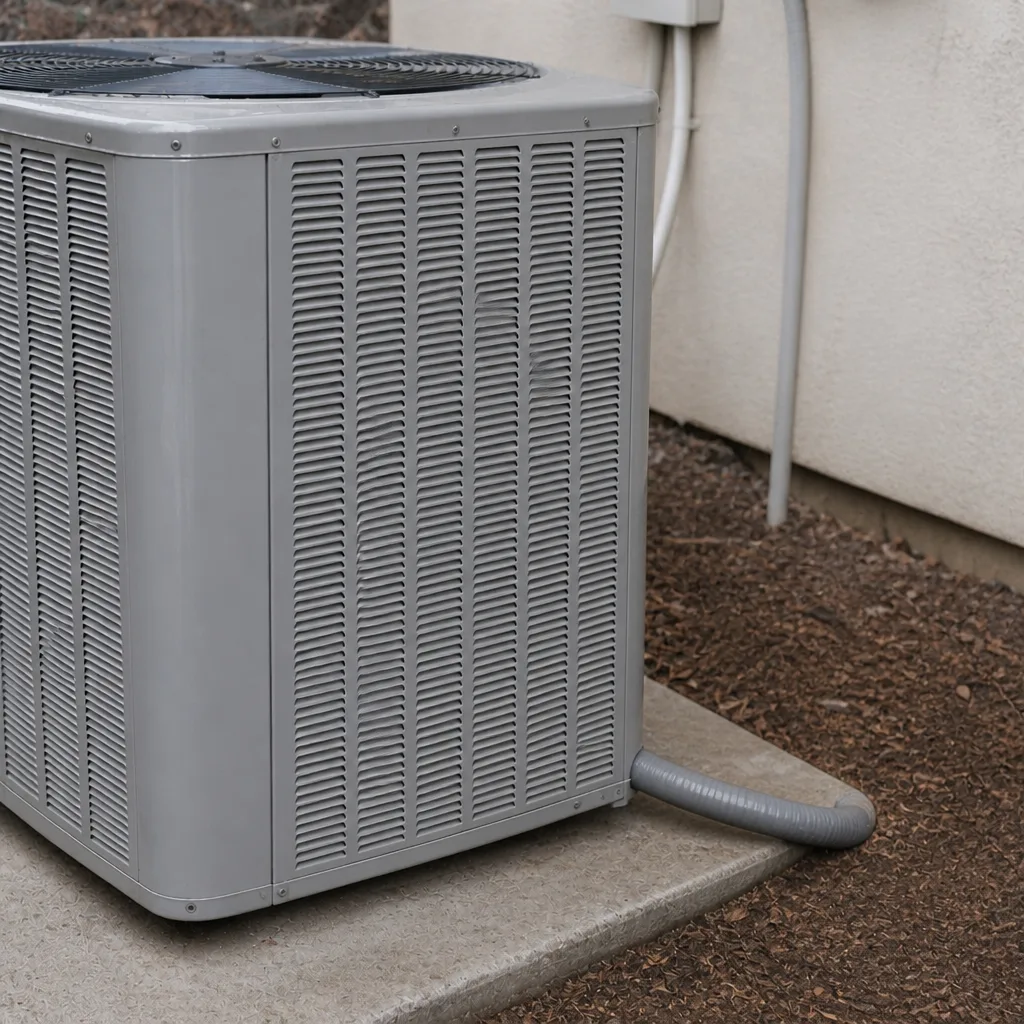
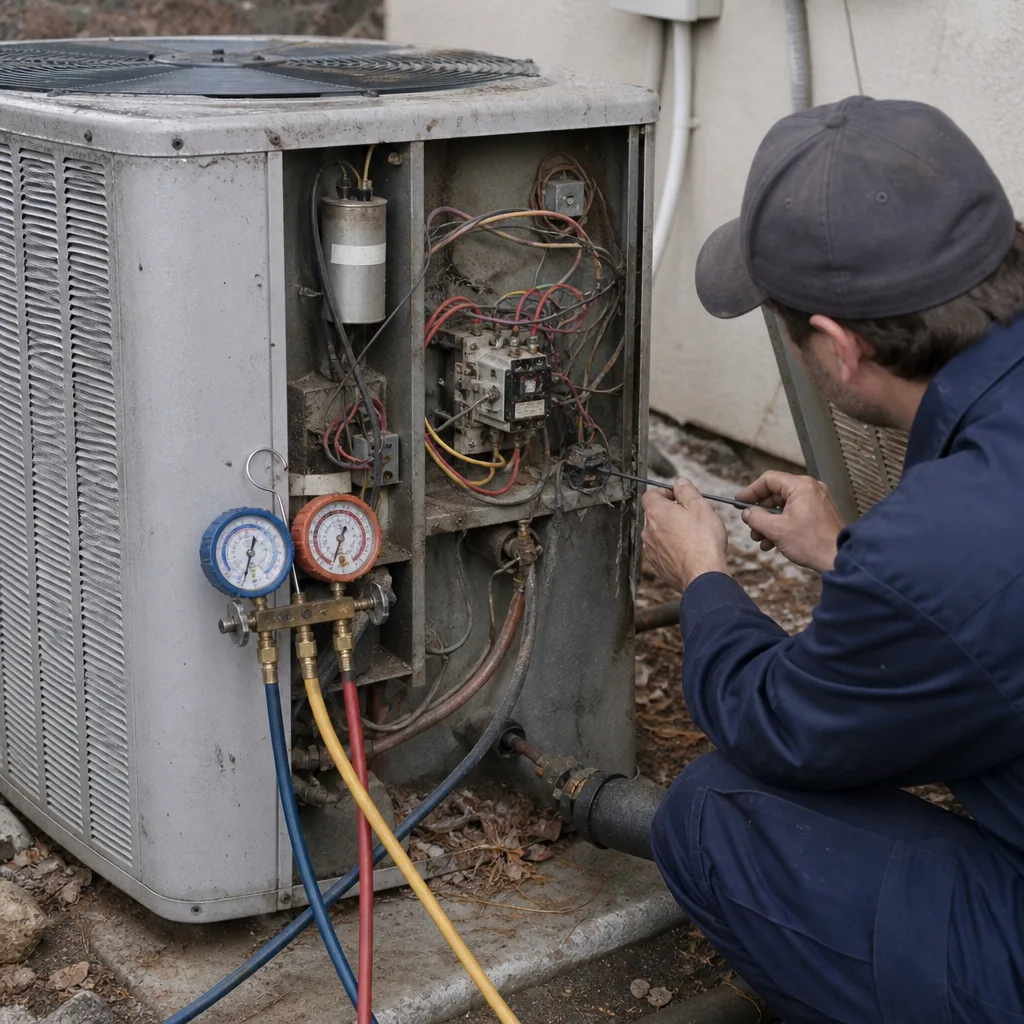 Before
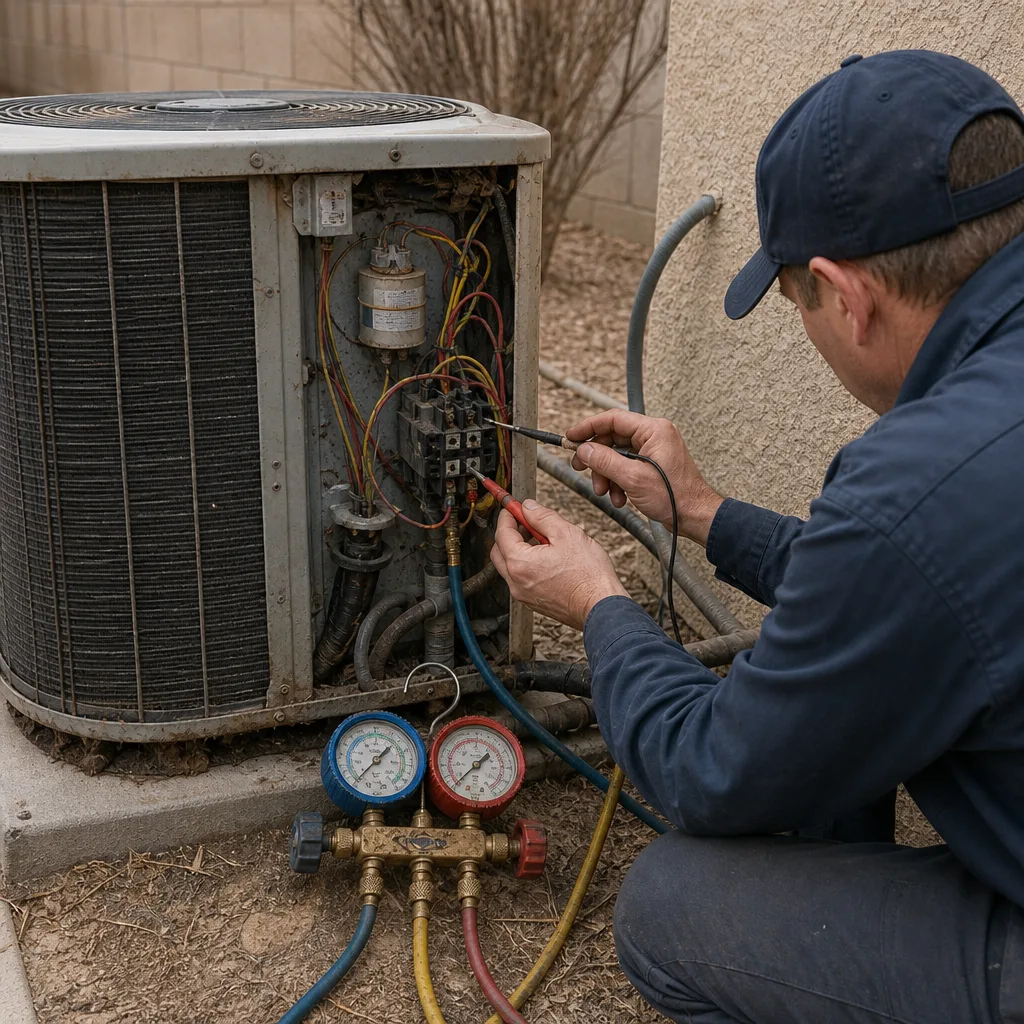
 After
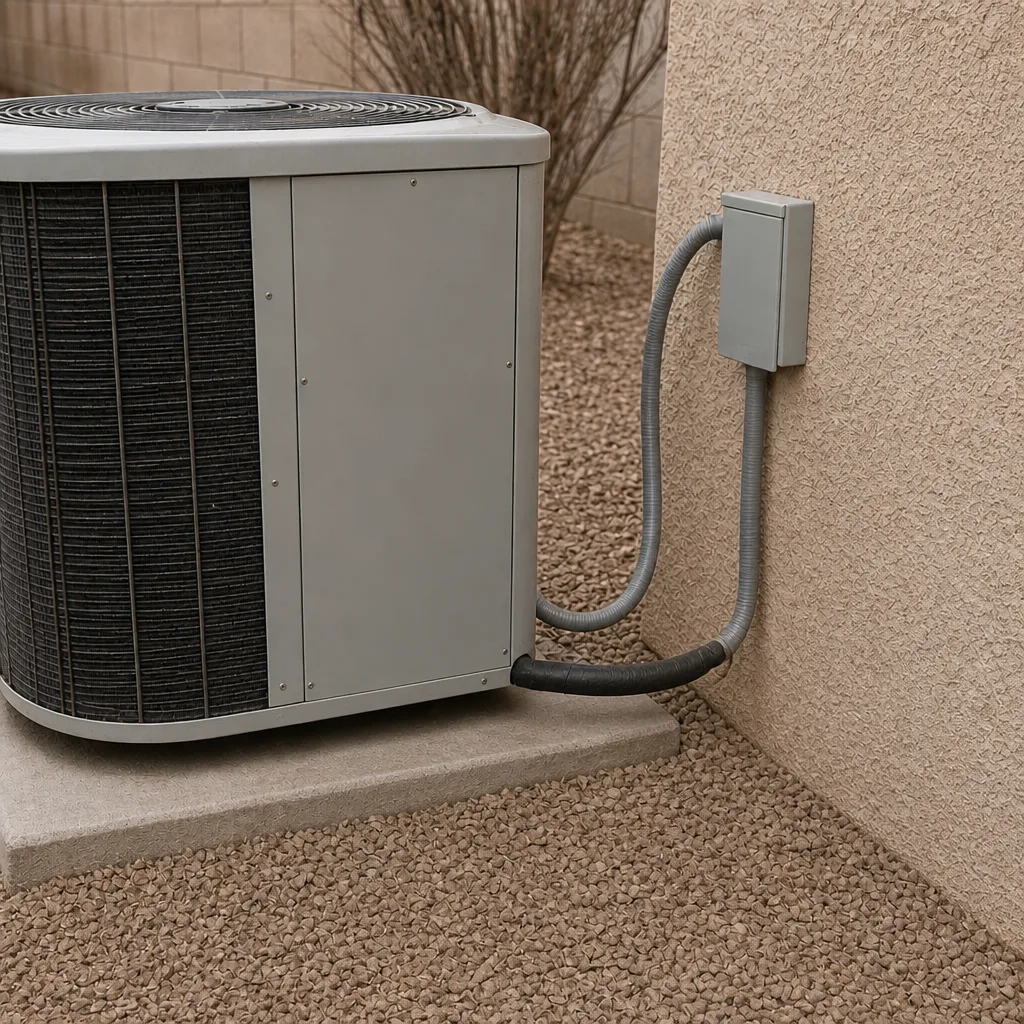
 Before
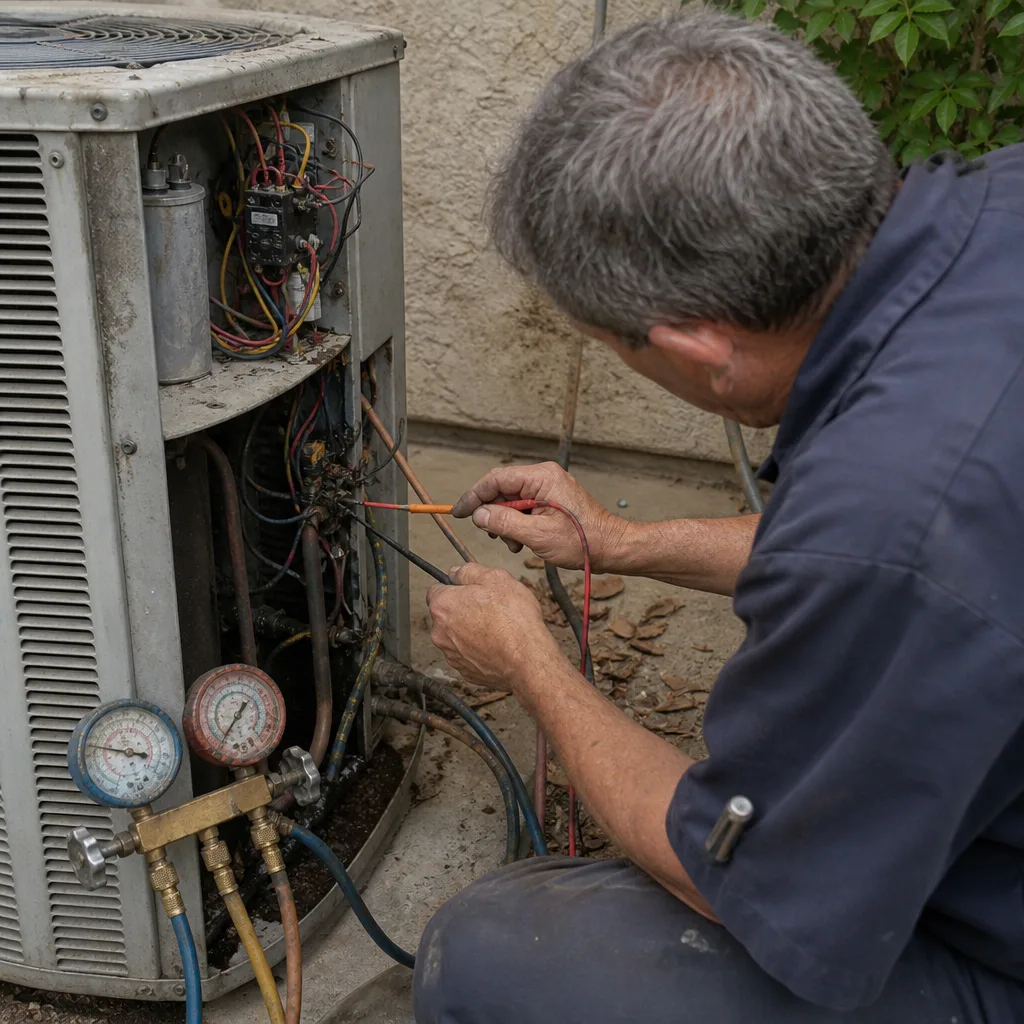
 After
 Before
 After
When to Call a Professional
Some maintenance tasks belong to you. Filter changes, coil rinsing, keeping the outdoor unit clear. Others belong to a technician with gauges and the right tools: anything touching the refrigerant circuit, electrical components, or a system that’s behaving differently than it did last week. Call us when you notice ice on the indoor coil, when the system stops keeping up on a hot day, when you hear a new sound from the outdoor unit, when the drain pan has standing water, or when the breaker trips repeatedly. Don’t attempt to recharge a system yourself or open the electrical panel – those carry real risk and void most warranties.
Fireside Heating & Air Co. Mesquite offers free estimates in Mesquite – call (888) 570-3601. Phones are answered by a live person, day or night, and every job is backed by our 90-Day Done Right Promise.
Frequently Asked Questions
Every 30 days from May through September, and every 60 days the rest of the year. Mesquite’s dust load and nine-month cooling season make the standard 90-day interval far too long here. A clogged filter starves the evaporator coil, drives refrigerant pressures out of range, and can cost a compressor. Call (888) 570-3601 if you want a free estimate on a tune-up that includes a filter change.
March is the right month, and February is the right month to book it. Any time before the first heat wave matters, but March gives us enough runway to order a part or address a refrigerant leak properly. May is too late for the same fixes. Call us at (888) 570-3601 to get on the March schedule – estimates are free.
Every 45 days during the cooling season – roughly six cleanings per year. Manufacturer manuals usually say once a year, but that assumes average dust. Mesquite’s windblown caliche fines and high-hour runtime call for a tighter interval, and the difference shows up in compressor life and your electric bill. Call (888) 570-3601 if the coil is beyond what a garden hose can clear.
Monsoon humidity spikes in July and August. In dry months the drain line carries a slow trickle that lets algae grow undisturbed, and when the coil starts producing a real stream the clogged line can’t handle it. Flush by late June and again after the first monsoon rains. We flush drains as part of every tune-up, and the current seasonal tune-up is $89 – call (888) 570-3601.
No. A fall inspection after five months of continuous running catches things the March check can’t – refrigerant charge loss through the summer, compressor amp draw climbing above spec, contactor wear, and drain clogs. October is the right time to make the repair-vs-replace decision. Call (888) 570-3601 for a free second opinion on any written estimate you’ve received.
Filter changes and coil rinses – yes, do those yourself. Refrigerant checks, electrical testing, and drain line flushing under the air handler are technician work. A tune-up is $89 and includes items that protect a system you’d otherwise replace earlier than necessary. For homeowners in Mesquite who are planning to stay in the home, that math is easy. Call (888) 570-3601.
The Bottom Line
The maintenance schedule that works in Portland or Denver is not the one that works in Mesquite. What keeps a system alive here is a filter change every 30 days in peak season, coil cleaning every 45 days, two condensate drain flushes a year with the second one timed to the July monsoon, and professional inspections in March and October. Skip any of those and you’re paying for it in refrigerant, compressor life, and hot weeks without air. Book a March inspection now, keep the filter schedule on the fridge, and you’ll get full life out of the equipment you have. Fireside Heating & Air Co. Mesquite is here when you need us – call (888) 570-3601 for a free estimate.
Written by the team at Fireside Heating & Air Co. Mesquite.