
Last updated November 18, 2026
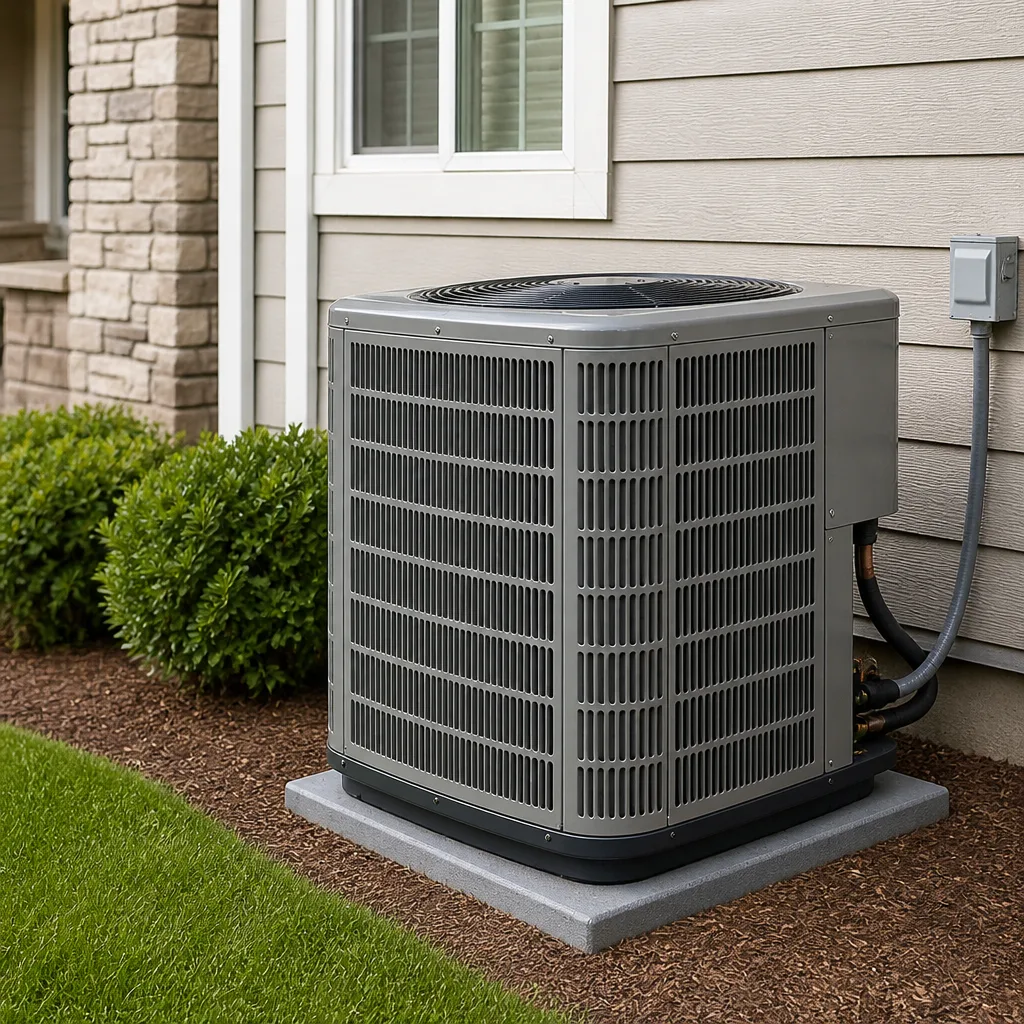 AC repair
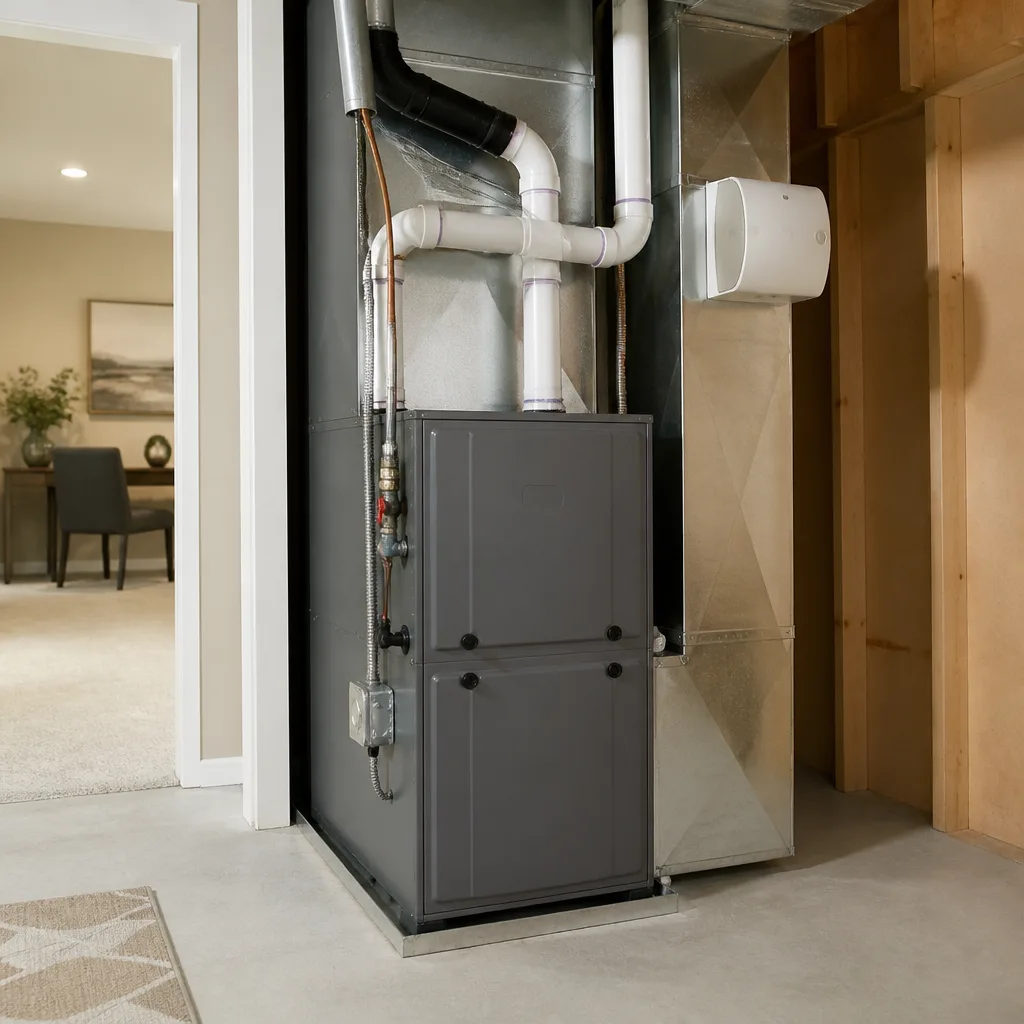 Furnace & heating
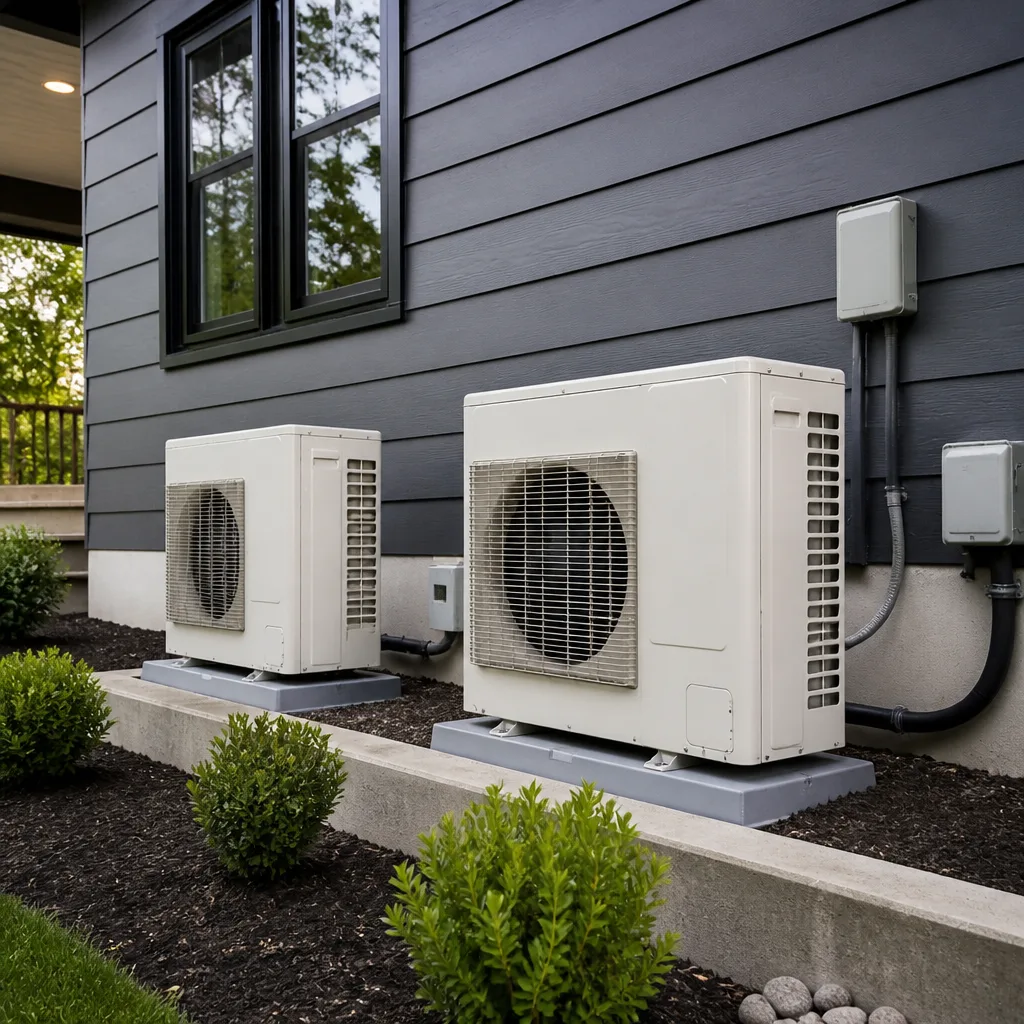 Heat pumps
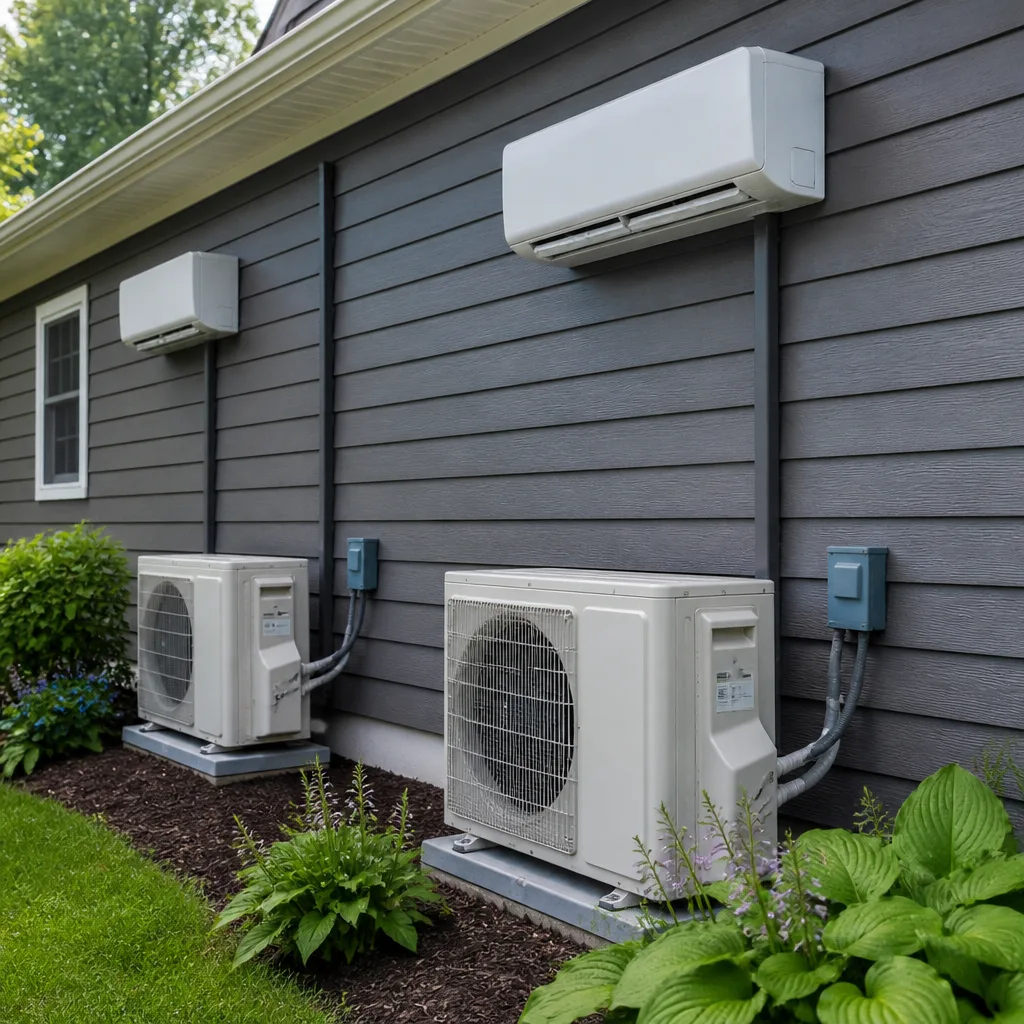 Ductless mini splits
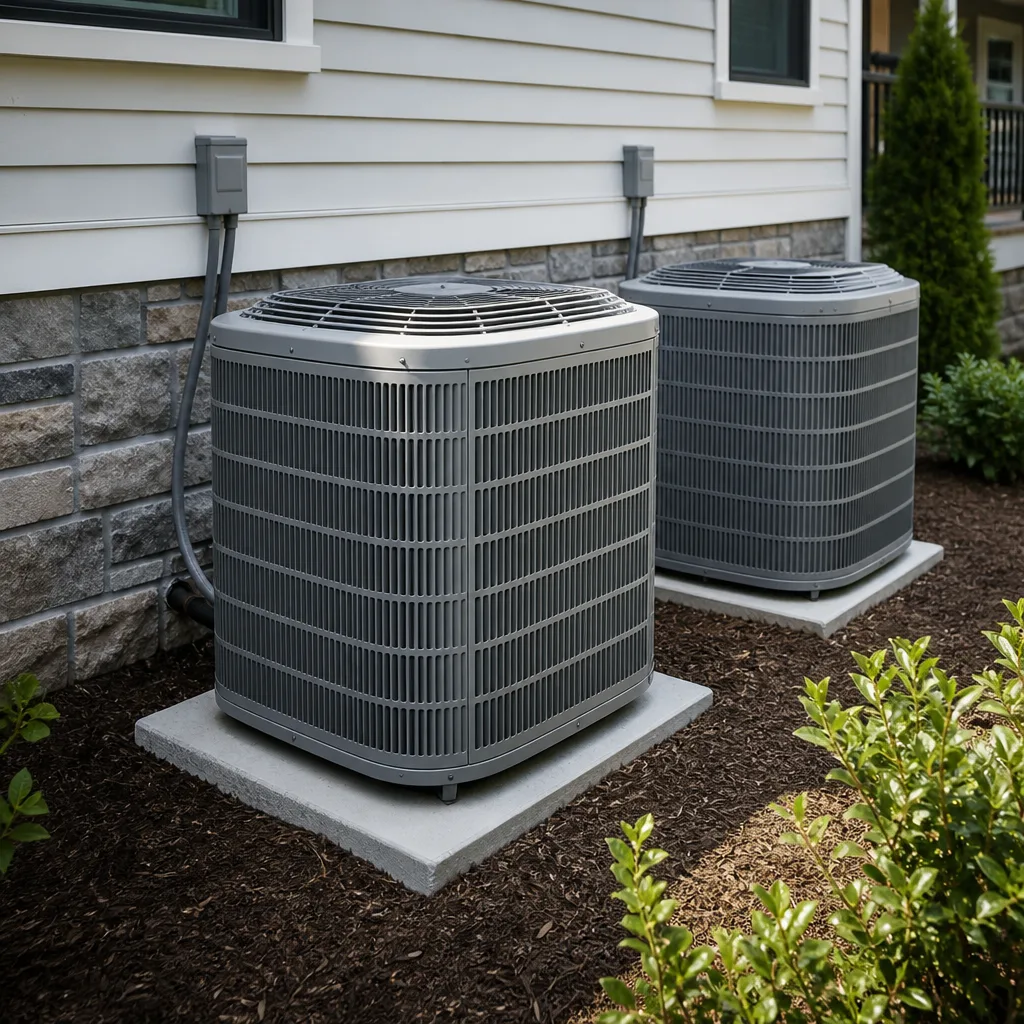 Carrier
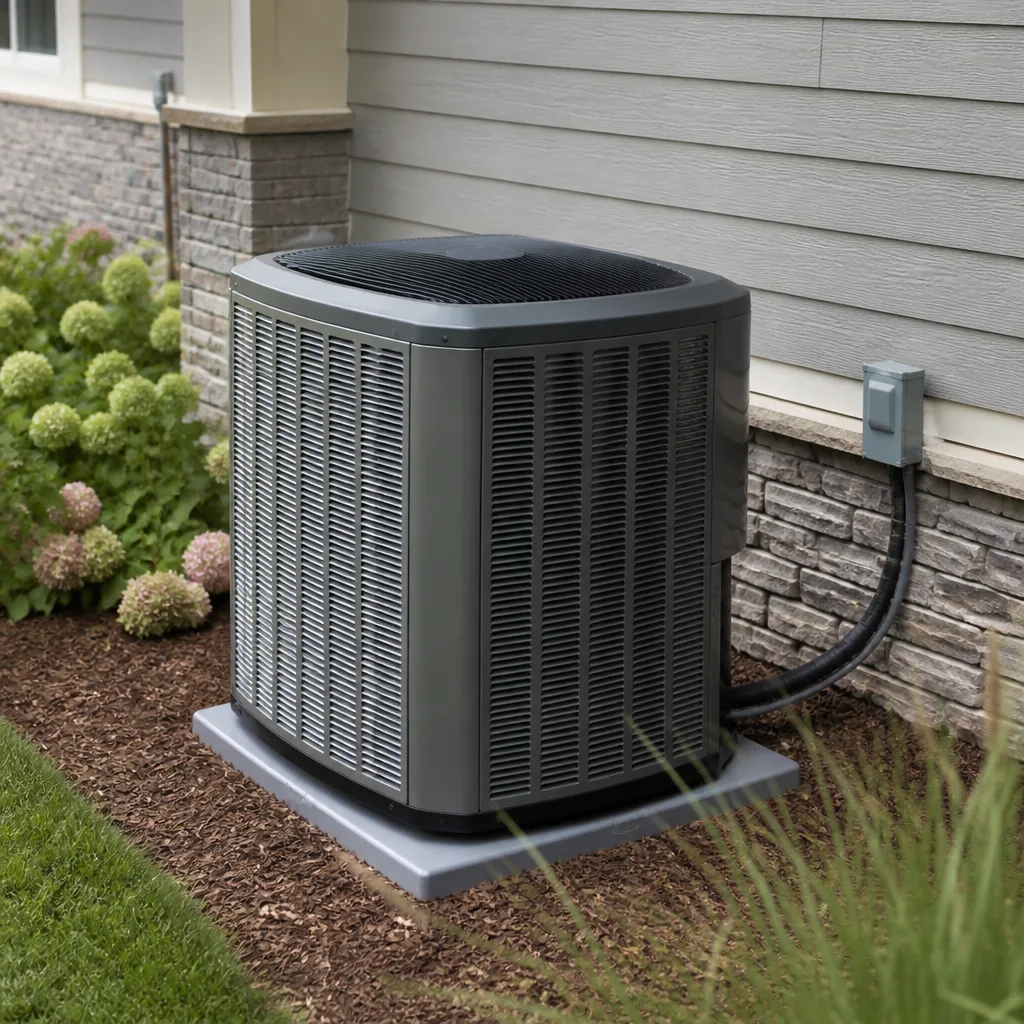 Trane
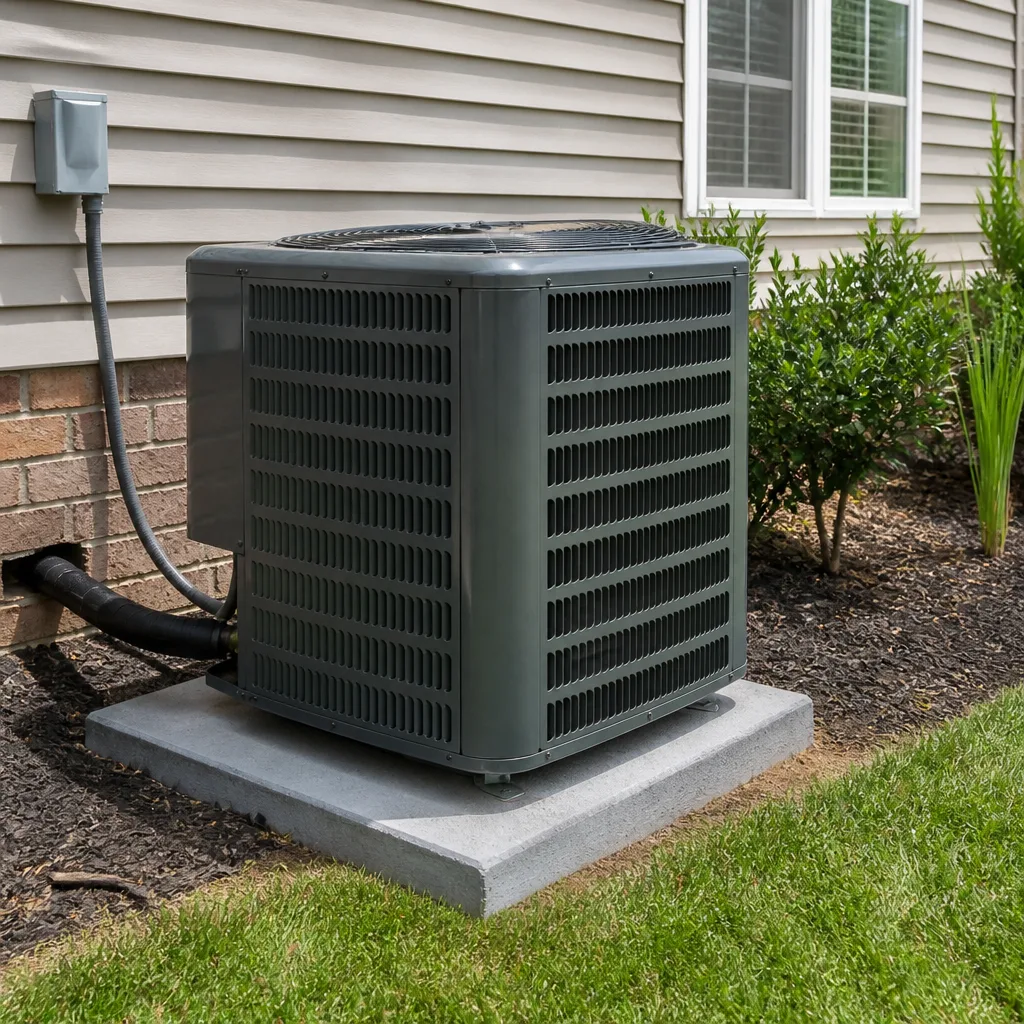 Goodman
Seasonal tune-up and full diagnostic on your Carrier, Trane, or Goodman system - readings shown to you before any repair is proposed
Diagnosis first, numbers second - you approve the repair price before a single part goes in.
Get your free estimateAC Repair & Installation Troubleshooting: Common Problems and How to Fix Them
A system blowing warm air on a 108°F Mesquite afternoon could have six completely different causes, and five of those fixes cost under $200. The sixth means the compressor is gone. The symptom at the thermostat looks identical in all six cases. The price difference is enormous. This guide teaches you to read the pattern of symptoms, the sounds, the timing, the frost, the airflow, so that when a technician hands you a quote you already know whether the diagnosis makes sense. We will walk through what each failure mode looks like from the outside, the order a competent diagnostic visit should follow, and how to document what you’re seeing so the diagnosis takes twenty minutes instead of ninety.
Quick Answer
Most AC systems that stop cooling in Mesquite fail for one of six reasons: a spent capacitor, low refrigerant, a dirty evaporator coil, a clogged filter choking airflow, a failed contactor, or a failing compressor. You can narrow which one you’re dealing with by listening for whether the outdoor unit hums but doesn’t start, watching whether it short-cycles or runs nonstop, and checking whether the coil ices over. A capacitor or filter is a small repair. A compressor is not. Knowing the difference protects your wallet.
Styles & brands we work with
- AC repair
- Furnace & heating
- Heat pumps
- Ductless mini splits
- Carrier
- Trane
- Goodman
Table of Contents
- The Six Reasons Your AC Stops Cooling (and What Each One Costs)
- Reading the Symptoms: Capacitor vs. Refrigerant vs. Dirty Coil
- The Correct Diagnostic Sequence a Technician Should Follow
- Short-Cycling vs. Running Constantly: Two Very Different Problems
- What a Frozen Evaporator Coil Actually Tells You
- How to Document Symptoms Before You Call
- Installation Troubleshooting: What Goes Wrong After a New System
- Common Mistakes to Avoid
- When to Call a Professional
- Frequently Asked Questions
The Six Reasons Your AC Stops Cooling (and What Each One Costs)
When we run a diagnostic in Mesquite, we are narrowing to one of six failure modes. Each one has a distinct fingerprint, and each one lands in a very different price bracket. Understanding these six categories is the single most useful thing you can learn before a technician arrives.
- Failed run or start capacitor (typically $150 to $280 installed). The outdoor unit hums but won’t kick over, or it tries to start and clicks off. Capacitors degrade faster in extreme heat, and Mesquite summers push them hard.
- Low refrigerant charge ($200 to $450 for a top-off, more if there’s a leak to find and repair). The system runs but can’t keep up, the indoor coil may frost, and the refrigerant lines feel warm on the suction side. A system that’s low on charge is leaking, and topping it off without finding the leak is money down the drain.
- Dirty evaporator or condenser coil ($200 to $400 to clean). Weak airflow, system runs long, indoor coil may ice. Dust from the desert and cottonwood fluff settle into condenser fins quickly here.
- Clogged air filter (cost of a filter, under $25). Reduced airflow, frozen coil, system overheats and shuts down on a safety. The cheapest fix on the list and the most frequently overlooked.
- Failed contactor or control board ($180 to $400). The outdoor unit is completely dead, no hum, no click. Power is present but the signal to start isn’t getting through.
- Failing compressor ($1,200 to $4,000 depending on system size and brand). The system hums, trips the breaker within seconds, and smells hot. This is the expensive one, and it’s the reason diagnosis matters before you authorize a repair.
Notice that four of the six are under $400. A capacitor, a filter, a coil cleaning, or a contactor covers the vast majority of no-cool calls we see in Mesquite. If a technician jumps straight to “you need a new compressor” without walking through the first five possibilities, that’s a flag. For a deeper look at our repair process, see our parent page on AC Repair & Installation in Mesquite.
Reading the Symptoms: Capacitor vs. Refrigerant vs. Dirty Coil
The trouble is that “not cooling” describes three completely different faults. Here’s how to tell them apart using only what you can see, hear, and feel at the unit.
Capacitor vs. refrigerant: Go outside and listen. If the outdoor unit hums and doesn’t spin up, or spins only when you nudge the fan blade, that’s a capacitor or a seized fan motor. If the unit runs normally, both fan and compressor are going, but the air coming out of the vents is only slightly cool rather than cold, that’s more likely a refrigerant charge issue or a dirty coil. The capacitor is an electrical failure; low refrigerant is a cooling-capacity failure. They behave very differently.
Refrigerant vs. dirty coil: Both give you weak cooling, so look at the copper lines. If the large insulated line feels warm or sweating heavily and the indoor coil is frosting, you’re likely low on charge. If the system runs and moves plenty of air but the air just isn’t cold, and the outdoor coil is packed with dust or lint, that’s a heat-rejection problem, not a charge problem. A dirty condenser can’t shed heat, so the system fights itself. Mesquite’s airborne dust makes this pattern common.
Dirty filter vs. both: Pull the filter first. If it’s gray and matted, replace it and let the system thaw and run for a day before you conclude anything else. A choked filter mimics both low charge and a dirty coil by starving the system of airflow.
In our experience across Mesquite, a homeowner who runs these three checks before calling cuts the diagnostic time roughly in half. And they are much harder to sell an unnecessary repair to. If you have a heat pump or mini split in Mesquite, the same logic applies, though the reversing valve adds another possible failure.
The Correct Diagnostic Sequence a Technician Should Follow
A professional diagnostic visit is not guesswork. It follows an order, cheapest and most common causes first, and it uses a multimeter and gauges, not just a hand on the suction line. Here is the sequence you should expect to see and, more importantly, what it means if steps get skipped.
- Interview and system history. The technician asks what you’ve noticed, when it started, and whether the filter was changed. Skipping this is a sign they plan to guess.
- Visual and filter check. Both indoor and outdoor units, filter condition, coil condition, breaker status. This catches the cheap fixes first.
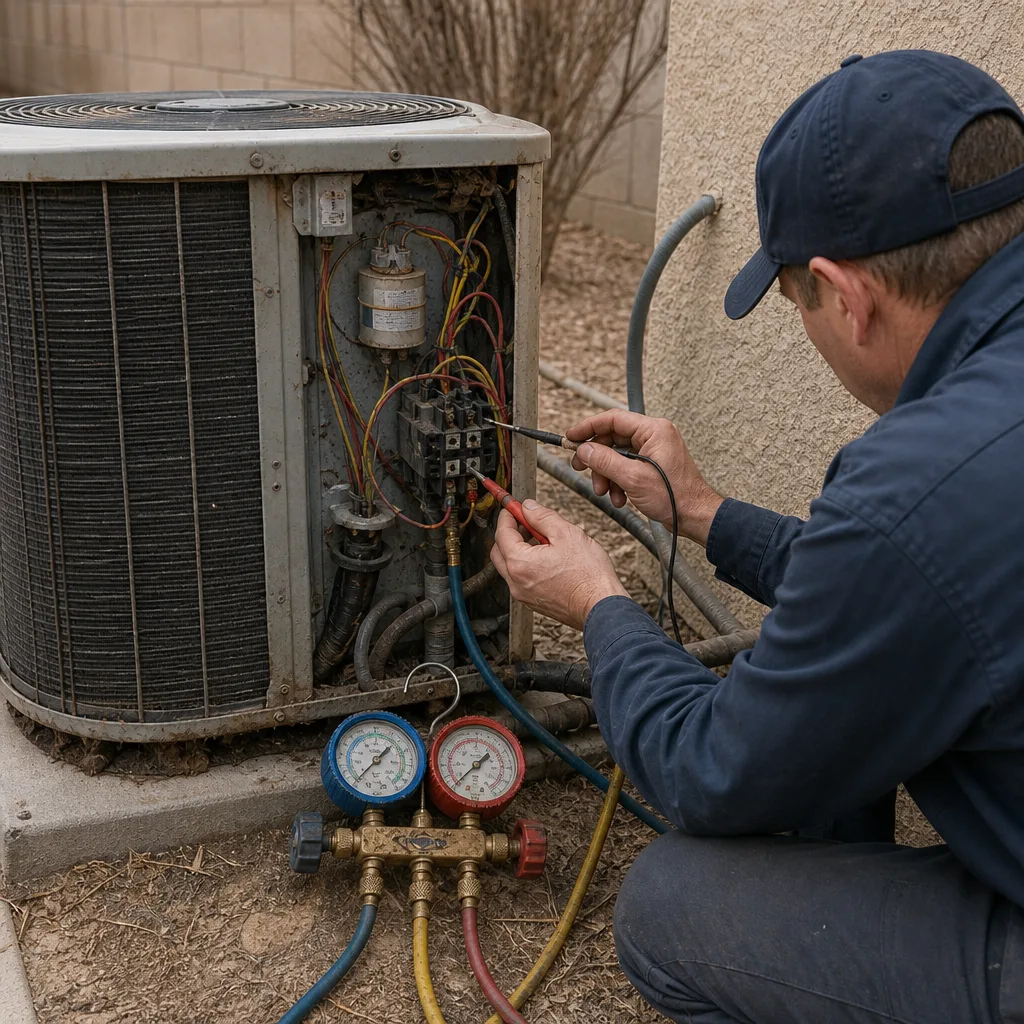
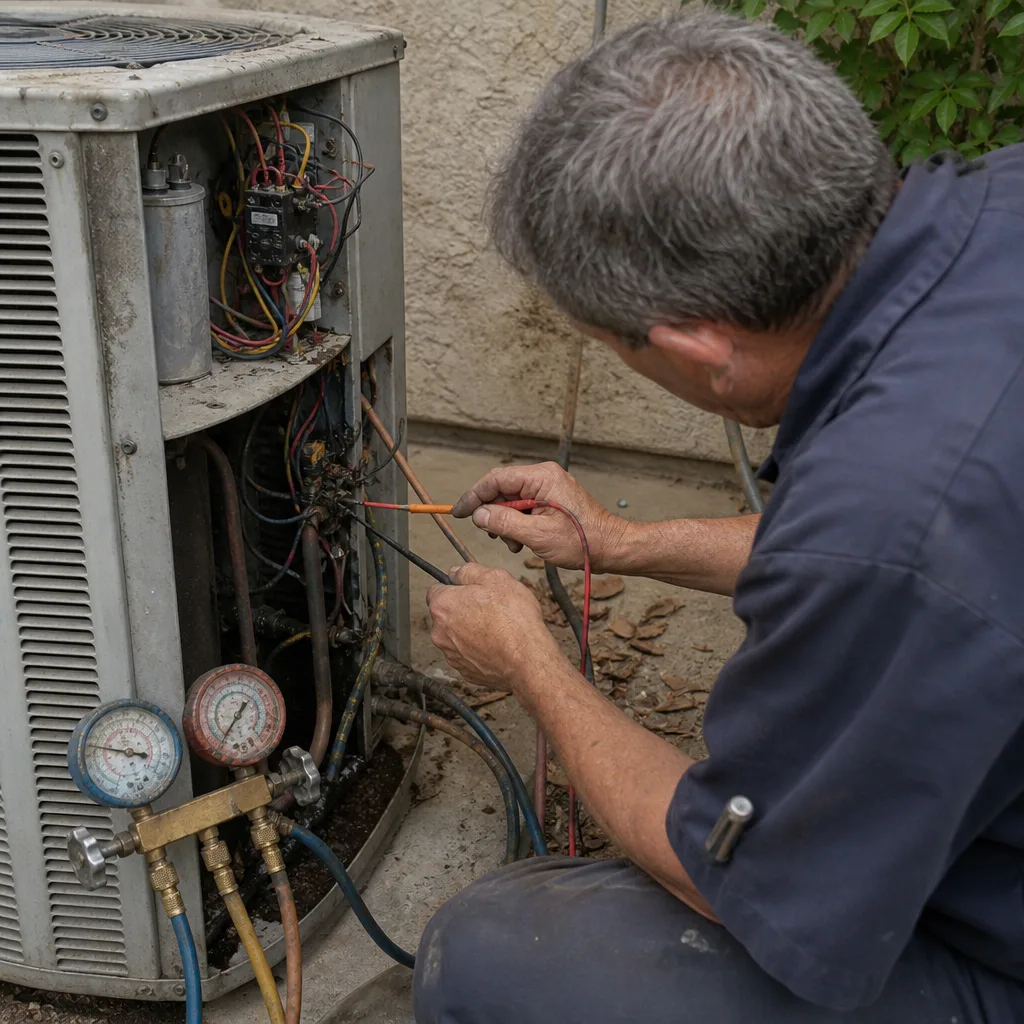
- Electrical testing at the outdoor unit. Multimeter on the capacitor, contactor, and windings. A good technician tests the capacitor’s microfarads against its rated value. If they swap a capacitor without testing it, question the invoice.
- Airflow verification. Temperature split across the evaporator coil and static pressure measurement. Weak airflow is the hidden cause behind a lot of “not cooling” calls.
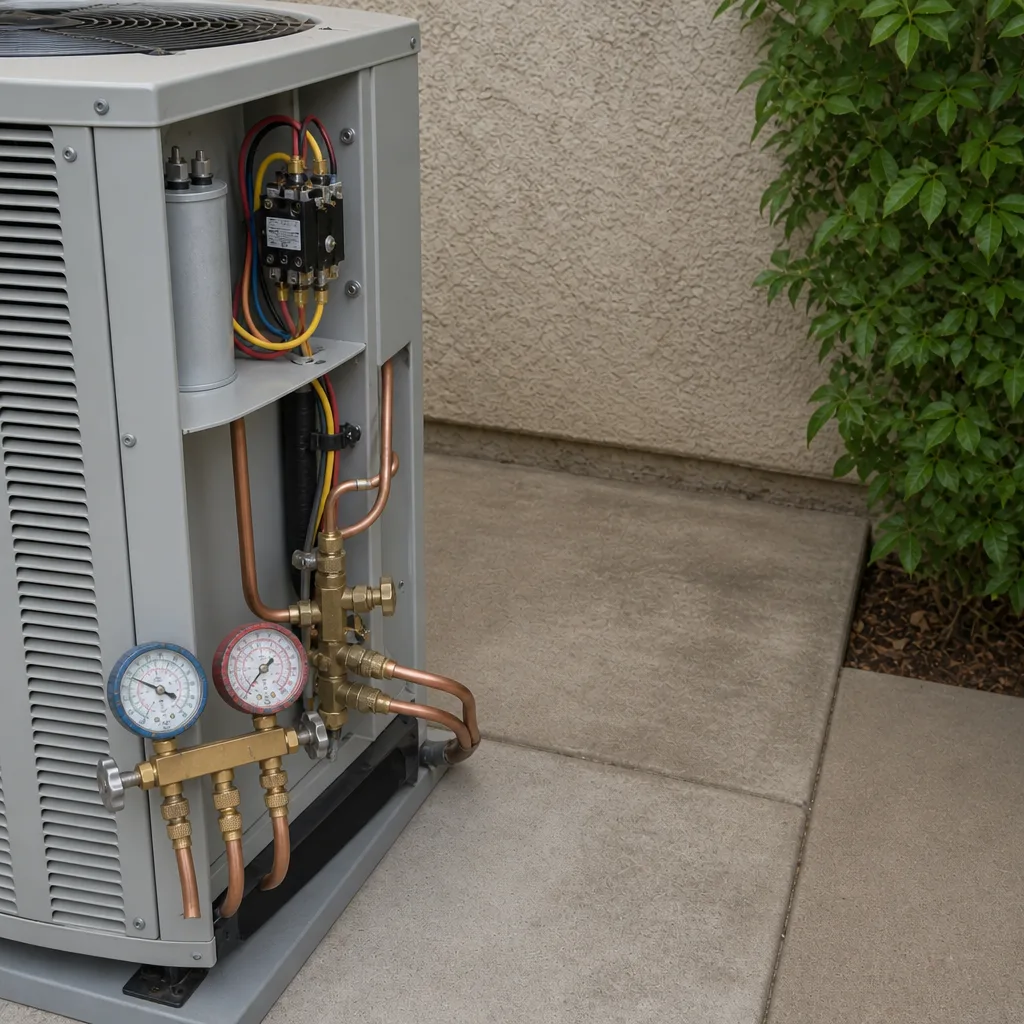
- Refrigerant gauges and superheat/subcool check. This confirms charge and efficiency. Reading pressures alone isn’t enough; superheat and subcool tell the story.
- Written findings before any repair is authorized. You should see the diagnosis in writing with the price before work begins.
What it means if steps get skipped: if a technician jumps from step 1 straight to “you’re low on refrigerant,” they never confirmed your airflow or your electrical. If they quote a compressor without a full electrical and airflow check, get a second opinion. This is exactly where a free second opinion pays for itself.
Short-Cycling vs. Running Constantly: Two Very Different Problems
Short-cycling, the system turning on and off every few minutes, is almost never the same fault as a system that runs constantly. Homeowners lump them together. They shouldn’t.
Short-cycling points to a safety or control issue. The system starts, reaches a limit, and shuts itself down. Common causes in Mesquite: a clogged filter causing high head pressure that trips the high-pressure switch, an oversized system cooling the house too fast and satisfying the thermostat before dehumidifying, a failing thermostat, a refrigerant overcharge, or a control board fault. Rapid cycling stresses the compressor more than any other operating condition because each start draws a heavy current spike.
A system that runs constantly points to capacity. It’s working, but it can’t keep up. Causes: low refrigerant, dirty coils, an undersized system for our summer design temperatures, duct leaks dumping cold air into the attic, or a house with poor insulation and west-facing windows baking in the afternoon sun. This is a capacity problem, not a control problem.
Here’s why the distinction matters. If your system short-cycles, the fix is usually electrical or a restriction, and it’s often modest. If it runs nonstop and the house never gets cool, you may be looking at a charge or capacity issue, and in older systems that can tip the repair-versus-replace conversation. Our heating and furnace team in Mesquite sees the same pattern in winter with short-cycling furnaces, and the diagnostic logic is identical.
What a Frozen Evaporator Coil Actually Tells You
Ice on the indoor coil is a symptom, not a diagnosis. When the evaporator coil ices over, it means the coil temperature dropped below freezing, and there are only a handful of reasons that happens.
- Restricted airflow. A clogged filter, blocked return, closed registers, or a failing blower motor starves the coil of warm air to absorb. The coil gets too cold and frosts. This is the most common cause and the cheapest to fix.
- Low refrigerant charge. With less refrigerant, the coil runs colder than it should and can freeze. A leak is the underlying problem.
- A failing blower or dirty blower wheel. Even with a clean filter, a weak blower doesn’t move enough air.
You cannot correctly diagnose a frozen coil while it’s frozen. Any honest technician will shut the system down, let it thaw, replace the filter, and then measure airflow and charge with the coil clear. If someone diagnoses “low refrigerant” while the coil is still iced and quotes a top-off, be skeptical. Let it thaw, then measure. In a dry heat like Mesquite’s, homeowners sometimes don’t notice the ice because it melts fast between cycles, so a “no cool” complaint with a clean-looking coil can still be a frost problem. If the coil is blocked with ice, the real fix is never adding refrigerant first.
How to Document Symptoms Before You Call
Twenty minutes of your time before the call can cut ninety minutes off the diagnostic visit, and it makes it far harder to be oversold. Get a notepad and write down the following:
- What the thermostat reads and what the house feels like. “Set to 72, holding 81, blowing faintly cool.” Compare the actual indoor temperature to the setpoint.
- What the outdoor unit is doing. Fan spinning or not? Compressor humming or silent? Tripping the breaker within seconds? Listen and note it.
- How often it cycles. Count starts and stops over fifteen minutes. Once every few minutes is short-cycling; once every twenty is normal.
- Filter condition and last change date. Take a photo. Replace it if it’s dirty so the technician starts from a known baseline.
- Any frost or condensation. Ice on the indoor coil, sweating on the copper lines, water pooling near the air handler.
- When it started and what changed. A heat wave, a power outage, a new thermostat, a recent filter change. Context narrows the cause.
Hand that sheet to the technician. It tells them where to look and where not to waste time. It also tells them you’re paying attention, which is its own kind of protection.
Installation Troubleshooting: What Goes Wrong After a New System
Troubleshooting doesn’t stop when the truck leaves. We get called back on installations, and most of the problems trace to a handful of causes. A system that was correctly sized and commissioned should hit its rated temperature split from day one.
Improper charge or airflow balance. If the charge wasn’t verified with superheat and subcool after installation, the system may run but never quite keep up. This is a commissioning issue, and it’s fixable under warranty.
Duct problems hiding in plain sight. A new unit on twenty-year-old ducts with leaks and undersized returns will never perform. The equipment gets blamed; the ductwork is the culprit. This is common in Mesquite homes where the original ductwork was sized for an older, smaller system.
Thermostat and control settings. A new smart thermostat programmed for a different schedule, or stuck in a fan-only mode, reads as a broken system. Check the settings before assuming a failure.
Filter installed incorrectly or forgotten. A filter put back in backwards, or a filter left out of the return, causes airflow and dust problems.
For installation questions on brands like Lennox, Goodman, or Rheem, our team can walk you through what correct commissioning should look like. When we install, we verify charge and airflow, and we put the promise in writing. If it isn’t done right in the first 90 days, we make it right. See the Fireside Heating & Air Co. Mesquite home page for how we stand behind the work.
Common Mistakes to Avoid
- Adding refrigerant without finding the leak. A low-charge system is leaking. Topping it off without locating and repairing the leak just delays the same failure and the same bill. Make sure the technician leak-tests first.
- Swapping parts without testing them. Replacing a capacitor or contactor without a multimeter test is guessing with your money. Demand the test reading.
- Ignoring a dirty filter during a Mesquite summer. During peak heat season, filters load up fast. A choked filter can trip a safety and look exactly like a refrigerant problem.
- Diagnosing a frozen coil while it’s still frozen. Let it thaw, then measure. Any diagnosis done on an iced coil is unreliable.
- Believing a compressor verdict without a full electrical and airflow check. A bad start capacitor can masquerade as a dead compressor. Get the data and, if it’s still in doubt, a free second opinion.
- Running the system on a tripped breaker. If the breaker trips repeatedly, stop resetting it. That’s a safety issue, and continuing to reset it can damage the compressor.
- Replacing a system because of a duct problem. Weak performance in an older Mesquite home is often duct leakage and undersized returns, not a dying unit. Test the ducts before you spend on equipment.
When to Call a Professional
Some troubleshooting belongs to you: check and replace the filter, note the symptoms, look at the outdoor unit from a safe distance. But several situations are not a DIY fix and shouldn’t be treated as one. If the breaker trips repeatedly, if you smell burning or see scorch marks at the outdoor unit, if the compressor trips instantly, or if there’s any sign of a refrigerant leak, stop and call. Refrigerant handling requires recovery equipment to do legally and without risk, and electrical diagnosis at the outdoor unit carries a shock hazard from a dual-run capacitor even after power is cut. A trained technician with gauges and a meter can pinpoint the cause in a single visit. Fireside Heating & Air Co. Mesquite offers free estimates in Mesquite; call (888) 570-3601 and a live person will answer, day or night.
Frequently Asked Questions
A warm-air complaint in Mesquite usually comes down to one of six causes: a failed capacitor, low refrigerant, a dirty evaporator or condenser coil, a clogged filter, a failed contactor, or a failing compressor. Five of those six cost under $400 to fix. The pattern of symptoms, whether the outdoor unit hums without starting or runs but can’t cool, tells you which category you’re in before the technician arrives. Call (888) 570-3601 for a free estimate once you’ve checked the filter and noted the symptoms.
Listen to the outdoor unit. If the fan won’t spin or the compressor hums without starting, suspect the capacitor. If the unit runs normally but the supply air is only mildly cool, suspect low refrigerant or a dirty coil. The capacitor is an electrical fault; low refrigerant is a cooling-capacity fault. A technician confirms which with a multimeter and gauges, not a guess. Call us for an exact diagnosis and free estimate.
Most AC repairs in Mesquite can be completed the same day, especially common failures like a capacitor, contactor, or filter. We carry the parts for those. Compressor and refrigerant-leak repairs may need a follow-up if a part has to be ordered. Either way, we quote the price before we start, and the price quoted is the price paid. Call (888) 570-3601 to schedule.
Short-cycling is usually a safety or control issue, not a capacity problem: a clogged filter tripping the high-pressure switch, a failing thermostat, an overcharged system, or a control board fault. It’s different from a system that runs constantly, which points to low charge or undersized capacity. Rapid cycling stresses the compressor, so don’t ignore it. Let a technician test it. Estimates are free; call (888) 570-3601.
A frozen coil signals restricted airflow or a low refrigerant charge. The most common cause is a dirty filter or blocked return starving the coil of warm air. Never diagnose or add refrigerant while the coil is frozen; let it thaw, then measure airflow and charge. If it refreezes after a clean filter, there’s likely a leak. Call for a proper superheat and subcool check.
Repair when the fault is a capacitor, contactor, or filter and the compressor and coil are sound. Consider replacement when a compressor fails, when refrigerant leakage can’t be stopped, or when weak performance traces to duct problems that new equipment won’t fix. Our team will lay out both options in writing with honest numbers, and we’ll give a free second opinion on any written estimate. Call (888) 570-3601.
The Bottom Line
The AC isn’t just a box on the side of the house; it’s the difference between a comfortable July and a miserable one. Reading the pattern of symptoms before you call is the best defense you have against an unnecessary bill. Four of the six common no-cool causes cost under $400. A compressor is the outlier, and it should never be diagnosed without a full electrical and airflow check. Document what you see, check the filter, and don’t add refrigerant to a frozen coil. When you’re ready for a straight answer, call Fireside Heating & Air Co. Mesquite at (888) 570-3601 for a free estimate. A live person answers every call, and the work is backed by our 90-Day Done Right Promise.
Written by the team at Fireside Heating & Air Co. Mesquite.
See the difference
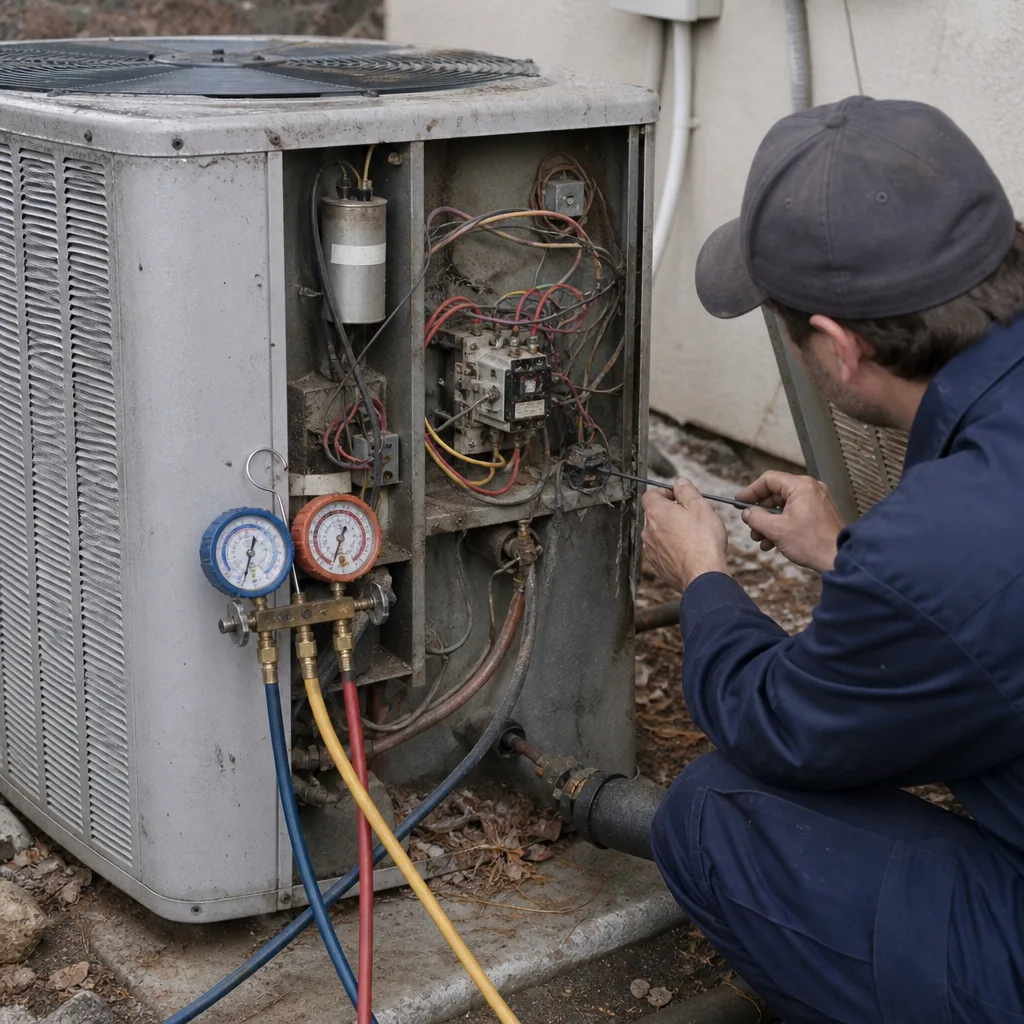 Before
 After
 Before
 After
 Before
 After