
Last updated November 18, 2026
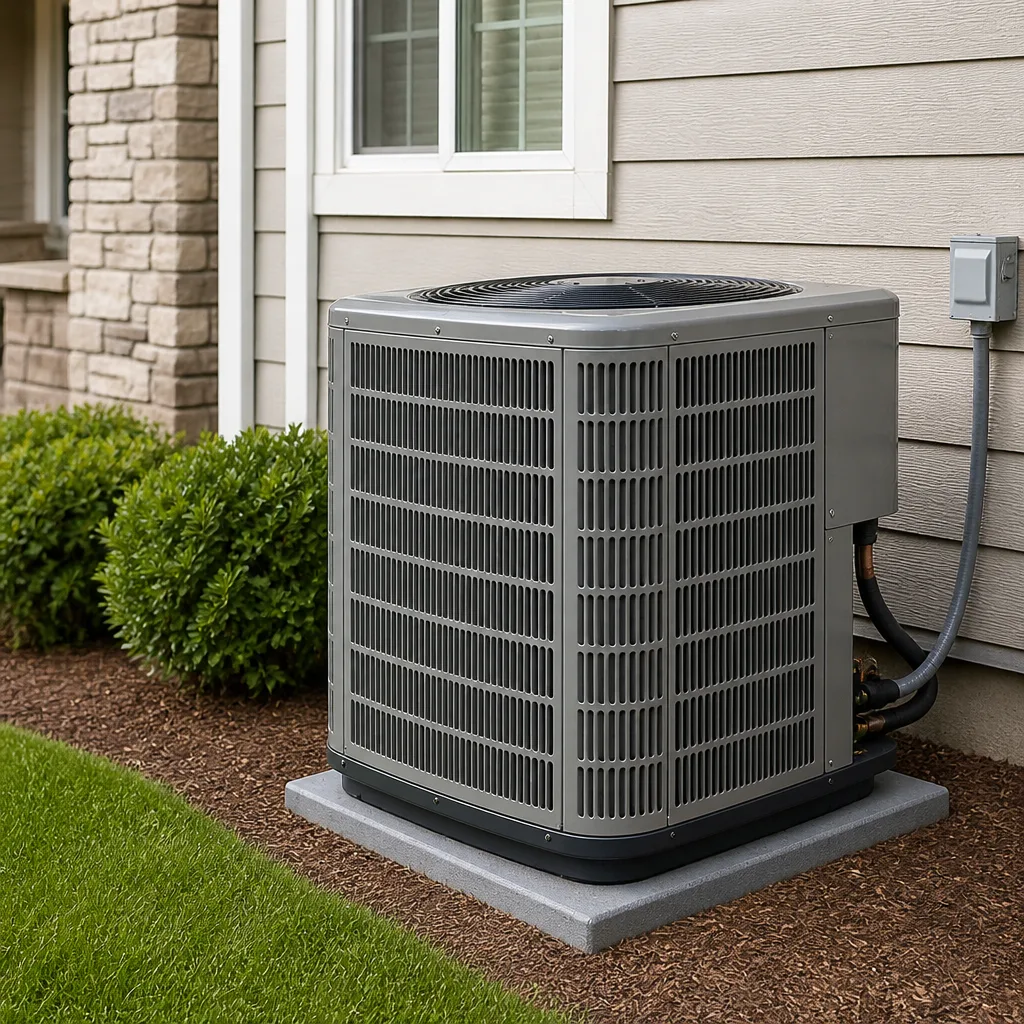 AC repair
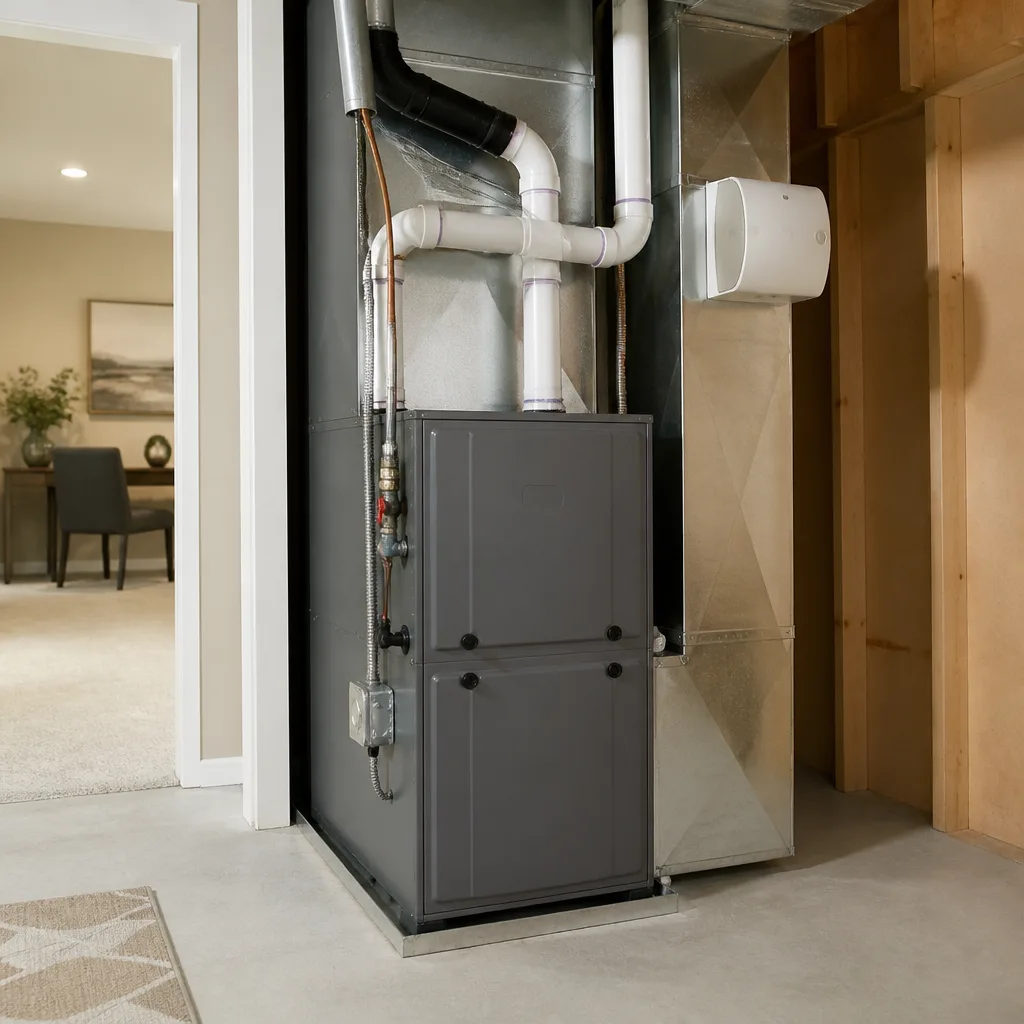 Furnace & heating
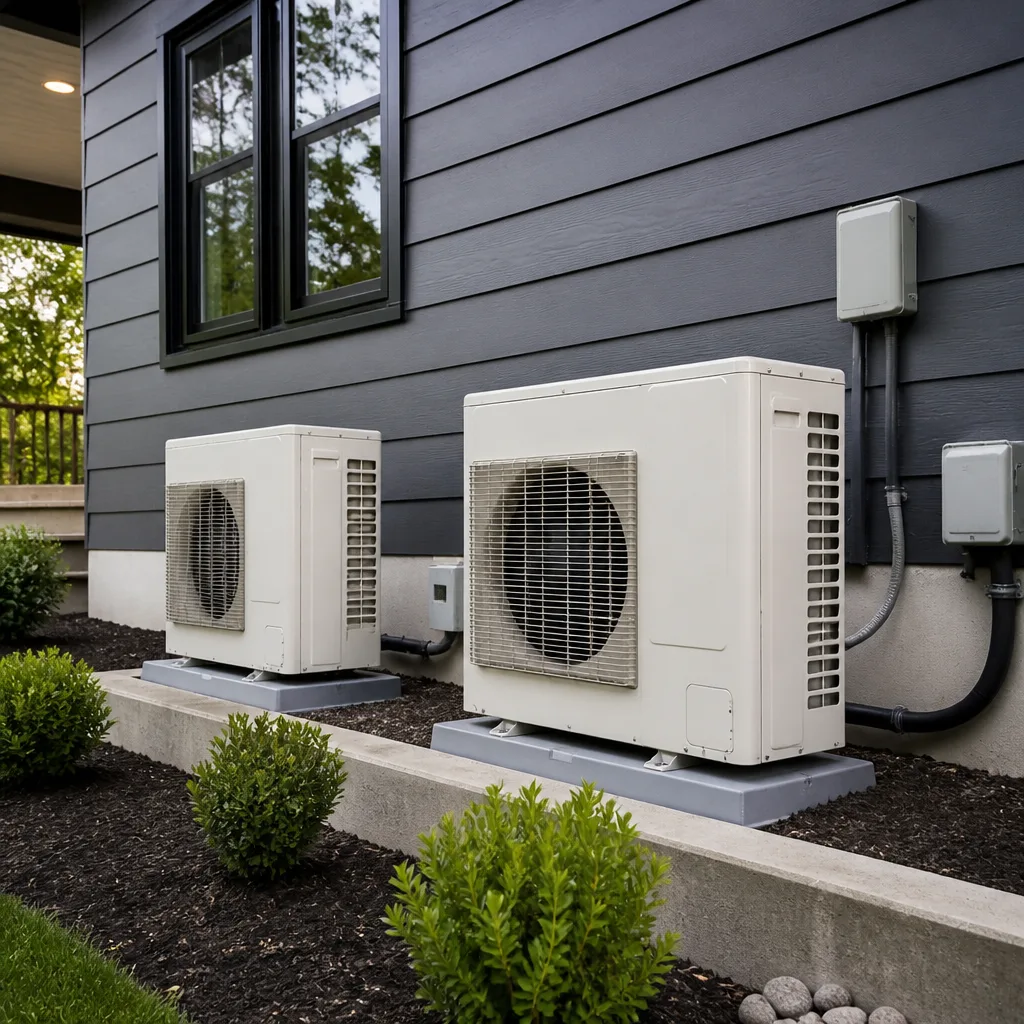 Heat pumps
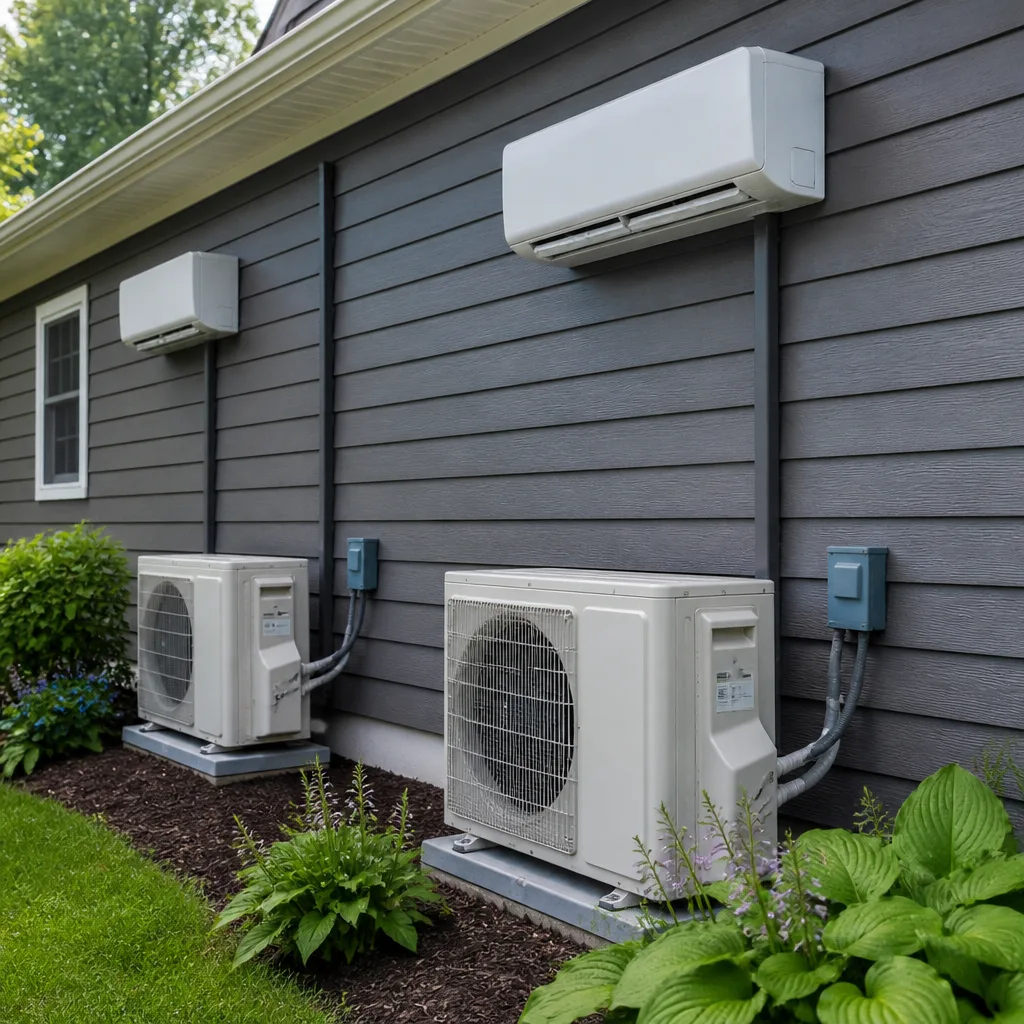 Ductless mini splits
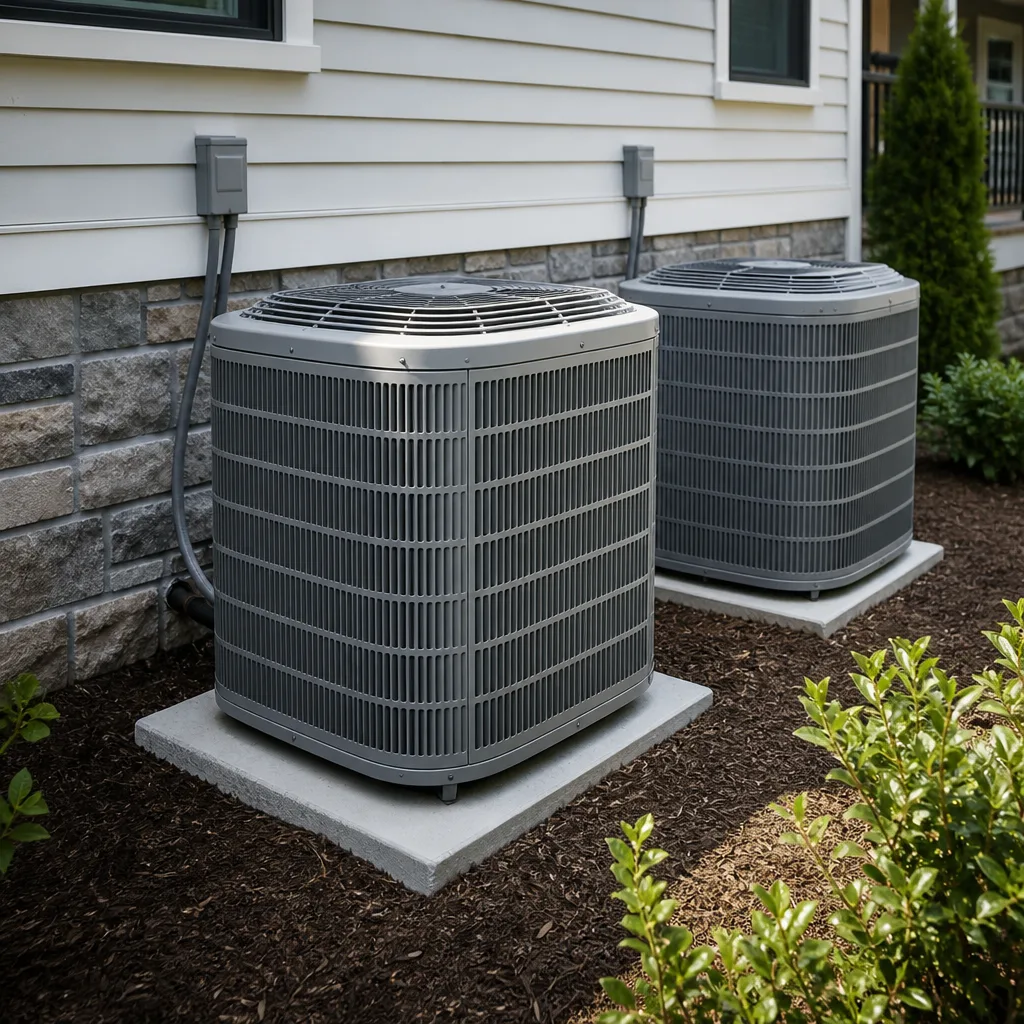 Carrier
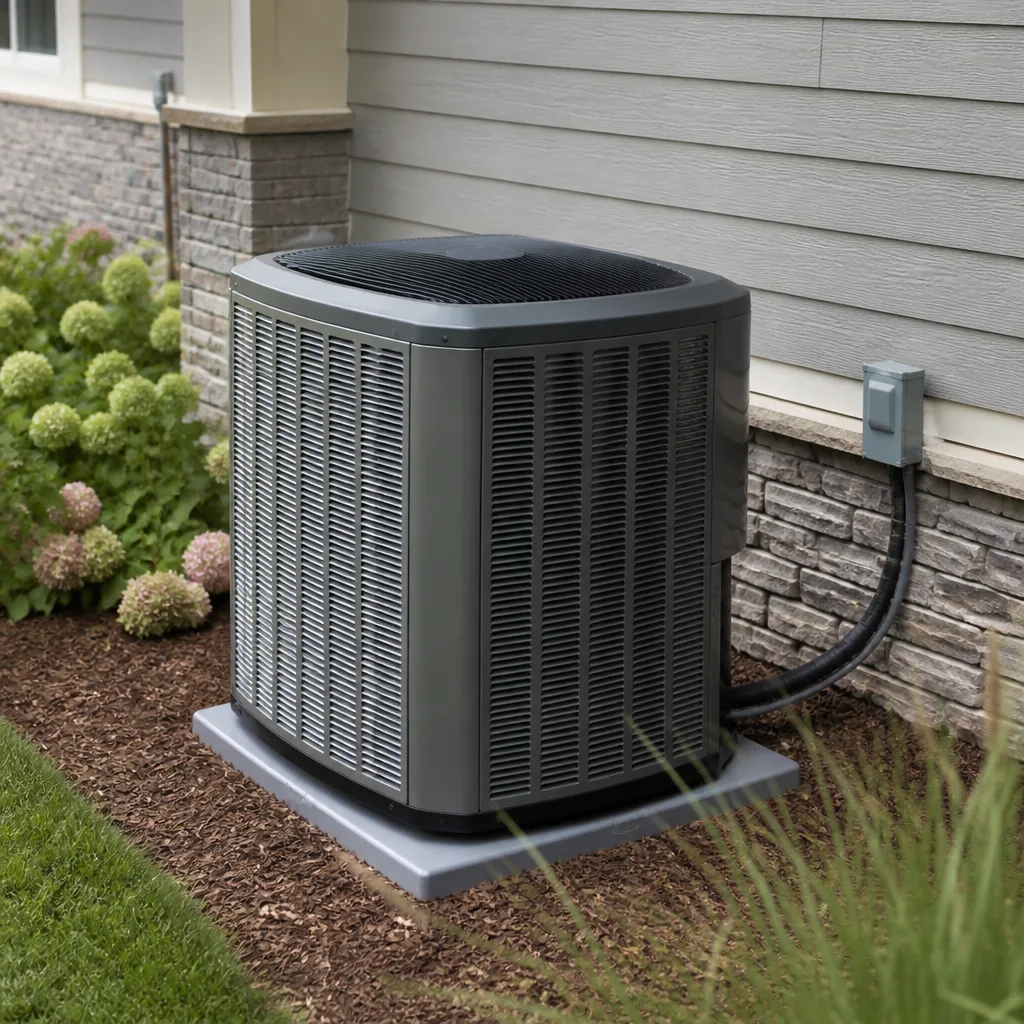 Trane
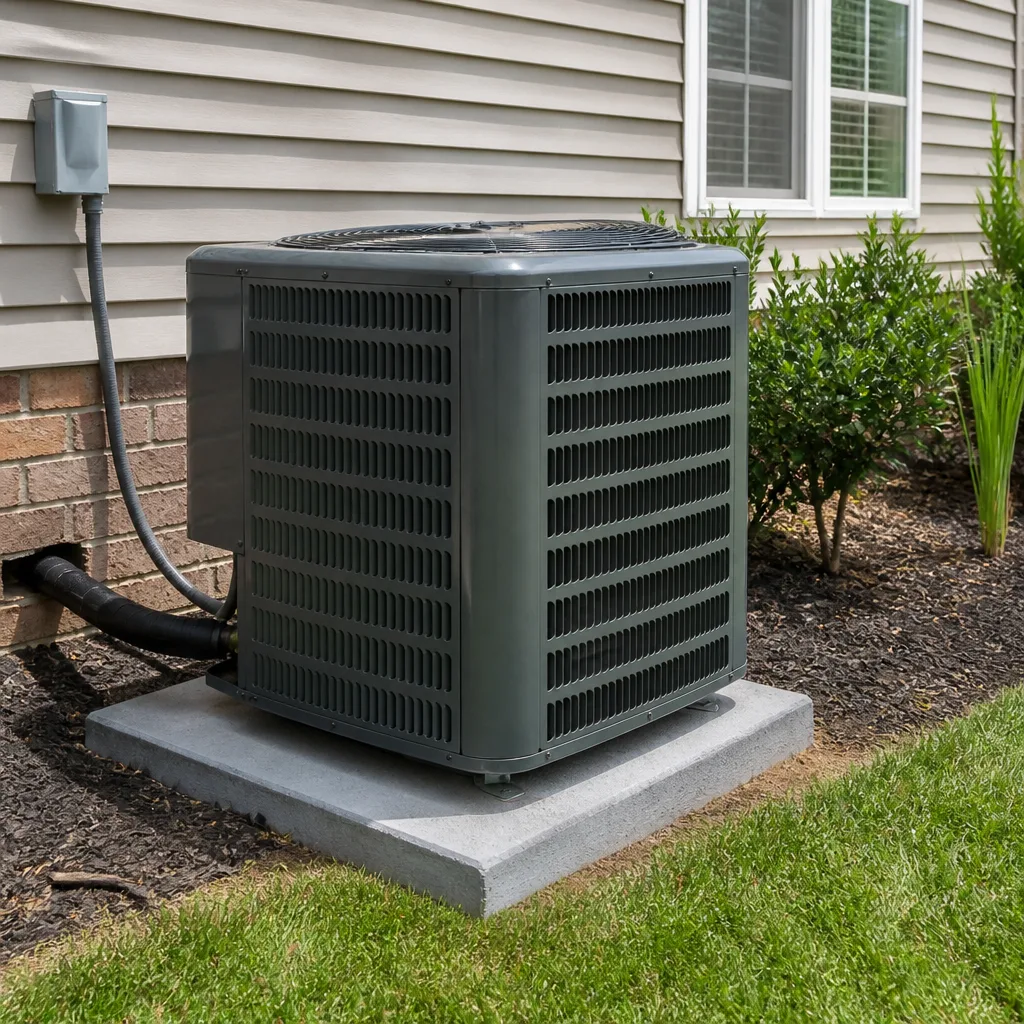 Goodman
Seasonal tune-up and full diagnostic on your Carrier, Trane, or Goodman system - readings shown to you before any repair is proposed
Diagnosis first, numbers second - you approve the repair price before a single part goes in.
Get your free estimateThe Complete Guide to HVAC in Mesquite
Mesquite sits about 1,300 feet higher than Las Vegas, and the Virgin River Gorge funnels wind straight through town on a regular basis. That combination of elevation, grit, and gusting wind means your condenser is working against conditions no manufacturer’s default settings were written for. A system that runs fine in a Phoenix subdivision can quietly underperform on a Mesquite rooftop for years before anyone notices. This guide explains why, covers how heat pumps, furnaces, filters, coils, and thermostats actually behave in Mesquite, and shows you how to get a system that lasts instead of one that just survives.
Quick Answer
HVAC in Mesquite, NV works differently than in most Southwest cities because of higher elevation, heavy alkaline dust, hard water, and occasional hard freezes that hit the Virgin River corridor. A properly spec’d system here needs altitude-adjusted sizing, shorter filter intervals, corrosion-aware coil protection, and staged backup heat for the handful of nights that dip below freezing. Get those four things right and your equipment runs for years. Get them wrong and you will be replacing parts on a system that was never set up for this town.
Table of Contents
- Why Mesquite’s Climate Breaks Generic HVAC Assumptions
- Equipment Sizing at Elevation: Why the Nameplate Number Isn’t the Whole Story
- Dust, Alkaline Soil, and What They Do to Your Coils
- Filter Replacement Intervals for Mesquite Homes
- Heat Pump Performance Through Mesquite’s Cold Snaps
- Utility Rates and Smart Scheduling for Mesquite Homeowners
- Hard Water and Your HVAC: What Actually Matters
- The Difference Between Comfortable and Quietly Degrading
Why Mesquite’s Climate Breaks Generic HVAC Assumptions
Most HVAC guides are written for a generic Southwest that really means Phoenix or Las Vegas. Mesquite is neither. We sit in the Virgin River Gorge corridor, which channels wind through town in a way that puts constant positive pressure on exposed outdoor units. That wind carries fine dust from the surrounding desert, and the dust here is alkaline, not neutral. It sticks to condenser fins, works into blower compartments, and coats evaporator coils in a film that insulates them from the air they’re supposed to be cooling.
Elevation matters too. At roughly 1,300 feet above Las Vegas, air density is lower, which affects how a compressor moves refrigerant and how a blower moves air. Most equipment leaves the factory set for sea level or close to it. That’s fine for the first summer. By year four or five, a system that was never adjusted for altitude has usually been running slightly off its design point the entire time. Nothing dramatic. Just less capacity on the worst days and more wear than the equipment was built for.
Three conditions in Mesquite deserve specific attention:
- Peak summer heat that regularly pushes past 110°F, which is where condensers lose efficiency fast if airflow or charge is off.
- Wind-driven dust from the gorge that shortens filter and coil cleaning intervals compared with Las Vegas or St. George.
- Winter hard freezes in the 20s, usually brief but real, that catch heat pumps and exposed piping off guard.
None of these is unusual on its own. Together, in the same town, they mean a Mesquite HVAC system needs a setup that has been tuned for Mesquite, not one pulled off a template. That’s the whole thesis of this guide, and it’s what separates a system that’s quietly comfortable from one that’s quietly degrading. When you’re ready to talk through your specific house, Fireside Heating & Air Co. Mesquite home is the place to start.
Equipment Sizing at Elevation: Why the Nameplate Number Isn’t the Whole Story
Equipment sizing in Mesquite starts with a Manual J load calculation, the same as anywhere else. What changes here is what goes into it. Altitude adjustments reduce the effective capacity of both heating and cooling equipment, and a contractor who just matches the square footage to a tonnage number will leave you with a system that runs long in July and short in January.
We’ve seen this repeatedly in Mesquite: a builder sizes a 2,000-square-foot home at three tons because that’s what the tract plan called for, but the home has west-facing glass, an unconditioned garage wall, and a low-slope roof with R-30 insulation. That house needs closer to 3.5 tons to hold 74°F on a 112°F afternoon, and the three-ton setup will run continuously from 3 p.m. to 8 p.m. all summer. It still “works.” It just never recovers, and the compressor wears faster than it should.
What a proper sizing process looks like in Mesquite:
- Room-by-room load calculation using actual window areas, insulation values, and orientation, adjusted for our elevation.
- Duct static pressure test before choosing equipment, because most Mesquite homes have ductwork built for an older, smaller system.
- Altitude derate check on the selected furnace or heat pump to confirm it delivers rated output at 1,300 feet.
- Airflow verification against the blower curve, not just the nominal CFM on the spec sheet.
A properly sized system in Mesquite will run longer cycles at lower output, which actually helps with both comfort and humidity control in the monsoon months. A system that was oversized to “be safe” will short-cycle, wear out contactors faster, and leave cold spots throughout the house. For a full breakdown of what equipment sizing and installation look like in town, see our AC Repair & Installation in Mesquite page.
Dust, Alkaline Soil, and What They Do to Your Coils
The dust in Mesquite isn’t just a housekeeping problem. Alkaline dust from the surrounding desert reacts with the moisture on condenser and evaporator coils, and over time it creates a crust that’s harder to remove than the sand-and-lint mix you’d find in most other markets. We’ve pulled condenser coils out of four-year-old Mesquite homes that had a quarter-inch of mineralized grit packed into the fins. Those units were still running. They were also using 15 to 20 percent more electricity than they did when they were new.
The evaporator is worse because it’s indoors and nobody looks at it. A coated evaporator coil struggles to absorb heat from the return air, which drops the suction pressure, which makes the compressor work harder. By the time the homeowner notices warm air from the vents, the system has usually been degrading for two or three seasons.
Practical things that keep coils alive in Mesquite:
- Annual condenser coil cleaning with a proper coil-safe cleaner, not just a garden hose. The alkaline residue needs a mild acid rinse to break it down.
- Quarterly pleated filter changes during the dusty season, March through June, when wind through the Virgin River Gorge is at its strongest.
- Evaporator inspection every two years, at minimum, and every year once the system is past its tenth season.
- Clear the outdoor unit’s clearance zone of at least two feet on all sides so the fan can move air without pulling extra grit into the coil face.
We’ve seen a lot of Mesquite homes where the compressor itself failed, not because it was defective but because it spent years pulling against a fouled coil. That’s a $2,000 problem created by a $200 maintenance habit nobody kept up. If your system is past year five and you don’t know when the coils were last cleaned, that’s worth a visit. For equipment details by brand, look at our Heat Pump & Mini Split in Mesquite page, where we cover how Coated and standard coils hold up in alkaline environments.
Filter Replacement Intervals for Mesquite Homes
Most filter manufacturer recommendations assume a generic residential environment. In Mesquite, with our dust load and wind patterns, those recommended intervals are usually too long. A filter that says “up to three months” is realistically a six-week filter here during late winter and spring.
We tell homeowners in Mesquite to use this rough schedule:
- March through June: check every 30 days, replace or clean every 45 if you have pets or live near an open lot.
- July through October: check every 45 days, replace every 60. Summer dust is finer and gets past cheap filters.
- November through February: check every 60 days, replace every 90. Winter wind events through the gorge can still load filters fast.
Filter thickness matters as much as filter rating. A one-inch filter has very little surface area for its MERV rating, so it loads quickly and chokes airflow. If your system has a one-inch slot and you want MERV 11 or higher, consider having a proper filter cabinet installed. That single change often does more for a Mesquite system’s life than anything else. For furnace-specific questions, our Heating & Furnace in Mesquite page covers filter housing options and what works with your specific setup.
Heat Pump Performance Through Mesquite’s Cold Snaps
Heat pumps are the default choice in most of Mesquite, and for good reason. Most winters, the town barely sees freezing, so the system runs at two to three times the efficiency of a gas furnace. The problem shows up in the handful of nights each winter when the temperature drops into the low 20s and sits there for several hours. A heat pump’s capacity falls as outdoor temperature falls, and if the system was sized for “average Mesquite winter,” it may not keep up on the coldest nights without help.
That’s why backup heat staging matters here. A properly set up Mesquite heat pump system has:
- An accurate outdoor temperature sensor that knows when to bring on auxiliary heat, set to match the actual balance point of the equipment, not a factory default.
- Staged auxiliary heat rather than a single all-or-nothing strip, so the system can add 5 kW before it needs 10.
- A smart or programmable thermostat set not to trigger the aux heat on every small recovery, only when the heat pump genuinely can’t hold setpoint.
- Defrost cycle verification so the outdoor unit clears frost on cold, damp nights without short cycling.
We’ve seen Mesquite heat pumps installed with the auxiliary heat lockout set for the factory default of 30°F. When the temperature hits 28 for three hours, the strips come on and stay on, and the homeowner’s electric bill for that month jumps $80 to $120. A ten-minute adjustment during installation prevents most of that. If your heat pump is running strips more than a few hours per winter, it’s worth a look before next cold snap.
Utility Rates and Smart Scheduling for Mesquite Homeowners
Overton Power District serves most of Mesquite, and the rate structure rewards paying attention to when you run heavy loads. The details change, so confirm against your own bill, but the pattern is the same as most Nevada desert utilities: peak-hour pricing in the late afternoon and early evening during summer, lower rates overnight and in the morning.
That reality should shape how you program your thermostat and when the house is pre-cooled. A few principles that work well in Mesquite:
- Pre-cool before peak hours. If your peak window starts at 3 p.m., drop the setpoint two degrees at 1 p.m. and hold it until 3. Then let it rise naturally during peak, rather than fighting the heat with the compressor at its worst efficiency point.
- Don’t use aggressive setbacks during the day if you have a heat pump. The recovery cost usually eats the savings, especially in the 110°F weeks.
- Schedule pool pumps and EV charging for overnight if you have them, so the whole-home load doesn’t stack against HVAC during peak.
- Ask us to verify your thermostat schedule against your actual utility rate sheet during a tune-up. It’s a five-minute check that pays back every summer.
Mesquite’s seniors on fixed incomes tend to see the biggest benefit from getting this right, because the difference between a well-scheduled heat pump and a poorly-scheduled one is often $40 to $60 a month in July and August. Our Senior and Veteran 5% standing discount stacks on top of whatever scheduling you get right.
Hard Water and Your HVAC: What Actually Matters
Most hard-water conversations are about plumbing fixtures and water heaters, but there’s a real HVAC angle in Mesquite. The water here is mineral-heavy, and any HVAC equipment that touches water is affected:
- Whole-home humidifiers accumulate scale on their pads and manifolds, which drops output and eventually plugs the water line. In Mesquite, expect to replace pads twice as often as the manufacturer’s schedule suggests.
- Condensate drain lines from the air handler can develop mineral crust at the trap, causing backups that trip the float switch and shut the system down. Flushing the drain line with vinegar twice a year helps.
- Evaporative coolers (still common in older Mesquite homes) scale up fast and need pads replaced every season, not every other. A neglected swamp cooler here loses half its cooling capacity by July.
- Steam humidifiers and any equipment with a water reservoir need scale removal once a year, sometimes twice if the home’s water hardness runs above 15 grains per gallon.
None of that is dramatic, but it’s the kind of thing that turns into a mid-summer service call if nobody is paying attention. During a tune-up, we check these water-touching components because they’re easy to forget and easy to fix before they fail.
The Difference Between Comfortable and Quietly Degrading
The most expensive HVAC failures in Mesquite aren’t the ones that happen suddenly on a Saturday afternoon. They’re the ones that have been happening slowly for years while the homeowner sits in a house that’s “fine.” The system holds 76°F, so nobody worries. But the compressor has been running 20 percent longer than it should. The coil is coated. The refrigerant charge has drifted low over four seasons. The contactor is pitted. Every one of those things shortens remaining service life.
There’s a simple test: if you can’t remember the last time someone actually measured your system’s performance, you don’t know if it’s working as designed. Comfort isn’t the same as efficiency. A system can be comfortable right up to the day the compressor fails.
The things that separate a properly performing Mesquite system from a quietly degrading one:
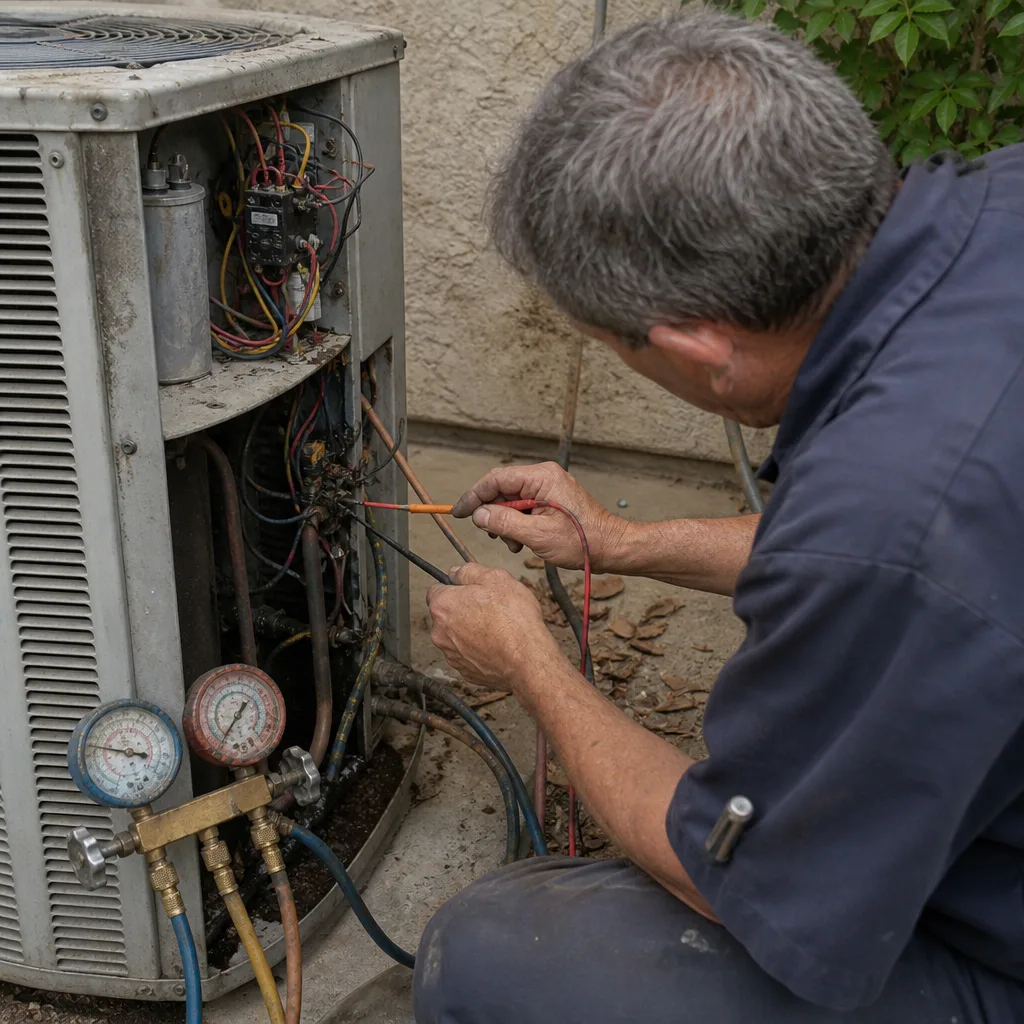
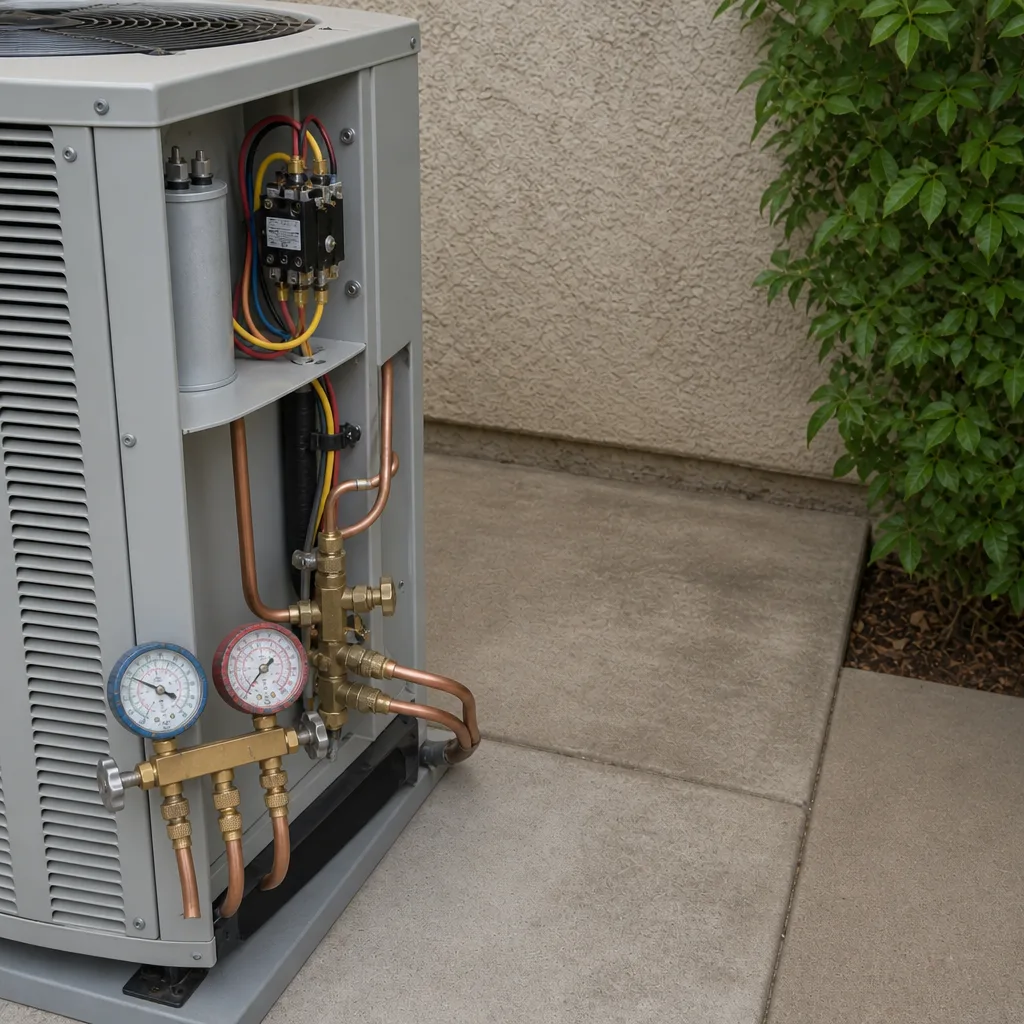
- Measured refrigerant superheat and subcooling against manufacturer spec, not just “the gauges looked okay.”
- Static pressure readings across the air handler, checking for duct leaks that have been letting hot attic air into your supply for a decade.
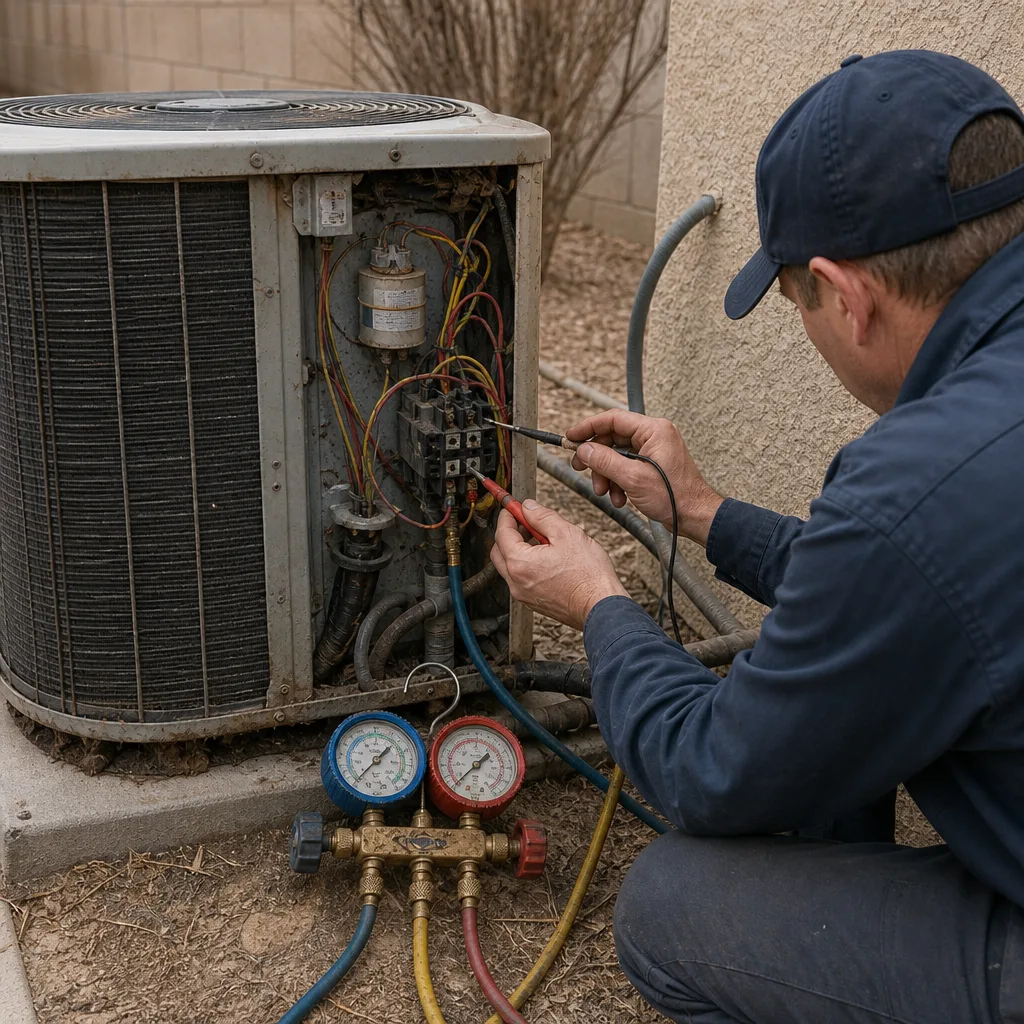
- Capacitor and contactor testing so a $30 part doesn’t cost you a $400 emergency call in July.
- Coil cleaning and honest inspection, so you know what condition the fins are in before they become the reason for a full system replacement.
Every one of those is part of an $89 Seasonal Tune-Up we run at Fireside Heating & Air Co. Mesquite, and every one comes with a written report of what we found. Our technicians are not paid on what they sell. If your system is fine, we tell you so. If it isn’t, you get the specifics in writing, and the 90-Day Done Right Promise backs whatever we do.
Common Mistakes to Avoid
- Sizing by square footage alone. A builder’s rule of thumb ignores elevation, window orientation, and duct condition, and it’s the number one reason Mesquite systems are quietly undersized. A proper Manual J takes an hour and costs a fraction of what a replacement does.
- Waiting until filter change lights come on. Mesquite’s dust loads filters faster than the reminder schedule assumes. Check monthly during spring, don’t trust the light.
- Using a one-inch MERV 13 filter in a slot built for a cheap fiberglass pad. It’ll choke airflow and stress the blower. If you want high filtration in Mesquite, upgrade to a proper filter cabinet.
- Ignoring the heat pump’s auxiliary heat lockout setting. Factory defaults are for a generic climate. Mesquite winters will cost you extra if yours is set for 30°F instead of the actual balance point.
- Choosing the cheapest bid without checking the load calculation. A low price with no Manual J is a low price for the wrong system. You’ll pay for that difference in efficiency and lifespan.
- Running the system after it starts short-cycling. A short-cycling system in Mesquite’s summer heat will fail within a season or two. Get it looked at immediately, not “next time we’re in town.”
- Skipping condensing-unit coil cleaning because the unit “looks clean.” Alkaline dust doesn’t show up from ten feet away. It shows up when we take the grille off.
When to Call a Professional
Call a professional if you hear the system short-cycling, if the air from the vents is warm when it should be cold, if your electric bill jumped more than 20 percent without a rate change, if the outdoor unit is making grinding or buzzing noises, if the auxiliary heat runs more than a couple of hours per winter, or if your system is past year ten and hasn’t had a real tune-up. Those are all moments when a $200 visit stops a $2,000 repair.
Fireside Heating & Air Co. Mesquite offers free estimates in Mesquite, and our phones are answered by a live person at any hour. Call (888) 570-3601 and we’ll talk through what’s happening before we schedule anything.
Frequently Asked Questions
Every 30 to 45 days during the dusty spring season (March through June), then every 60 to 90 days the rest of the year. Mesquite’s alkaline dust and wind through the Virgin River Gorge load filters faster than most manufacturer schedules assume. If you have pets or live near an open lot, check monthly year-round. Call (888) 570-3601 if you’re not sure your current filter is sized right for your system.
Yes. At roughly 1,300 feet above sea level, air density is low enough that equipment rated at sea level produces slightly less heating and cooling capacity unless it’s derated and adjusted during installation. The difference is subtle on the spec sheet but real in performance, especially in the peak summer weeks.
Yes, if they’re set up right. Most Mesquite winters barely touch freezing, so a heat pump runs at two to three times the efficiency of a gas furnace. The few nights that drop into the 20s require properly staged auxiliary heat and a thermostat programmed for our actual balance point, not a factory default. If your strips are running more than a few hours per winter, something needs adjusting.
Residential system replacements in Mesquite typically run $6,500 to $14,000 depending on tonnage, brand, and whether duct work needs updating. Heat pumps tend to sit on the higher end because of the equipment cost. Call (888) 570-3601 for a written fixed price – estimates are free, and we’ll bring a second-opinion review of any other written quote you’ve received at no charge.
It damages any part that touches water: humidifier pads, condensate drain traps, evaporative cooler pads, and steam humidifier reservoirs. You’ll replace pads more often than manufacturer schedules suggest and flush the drain line twice a year. The refrigerant side of the system isn’t affected. We check all water-touching parts during every tune-up.
As a general rule, if the system is past 12 years, facing a repair over $1,500, or has had two or more compressor-related issues, replacement usually makes more sense than another fix. Under those thresholds, repair is often the better call – and we’ll tell you so honestly. Call (888) 570-3601 and we’ll give you a straight answer before you commit.
The Bottom Line
Mesquite is not a generic Southwest HVAC market, and the equipment in your home shouldn’t be treated like it is. Elevation, alkaline dust, wind through the Virgin River Gorge, hard water, and the occasional hard freeze all push your system harder than a Las Vegas or Phoenix install would ever see. The fixes are simple: proper sizing, shorter filter intervals, coil cleaning that addresses alkaline crust, staged auxiliary heat, and thermostat programming that matches your actual utility rates. Get those right and your system runs comfortably for years. Get them wrong and you’ll spend the difference at the worst possible moment.
Whatever your system is doing, or not doing, we’re here. Call (888) 570-3601 for a free estimate. Live person, any hour, no voicemail tree. And every job comes with our written 90-Day Done Right Promise – done right, or we make it right, with no arguing and no paperwork.
Written by the team at Fireside Heating & Air Co. Mesquite.
Styles & brands we work with
- AC repair
- Furnace & heating
- Heat pumps
- Ductless mini splits
- Carrier
- Trane
- Goodman
See the difference
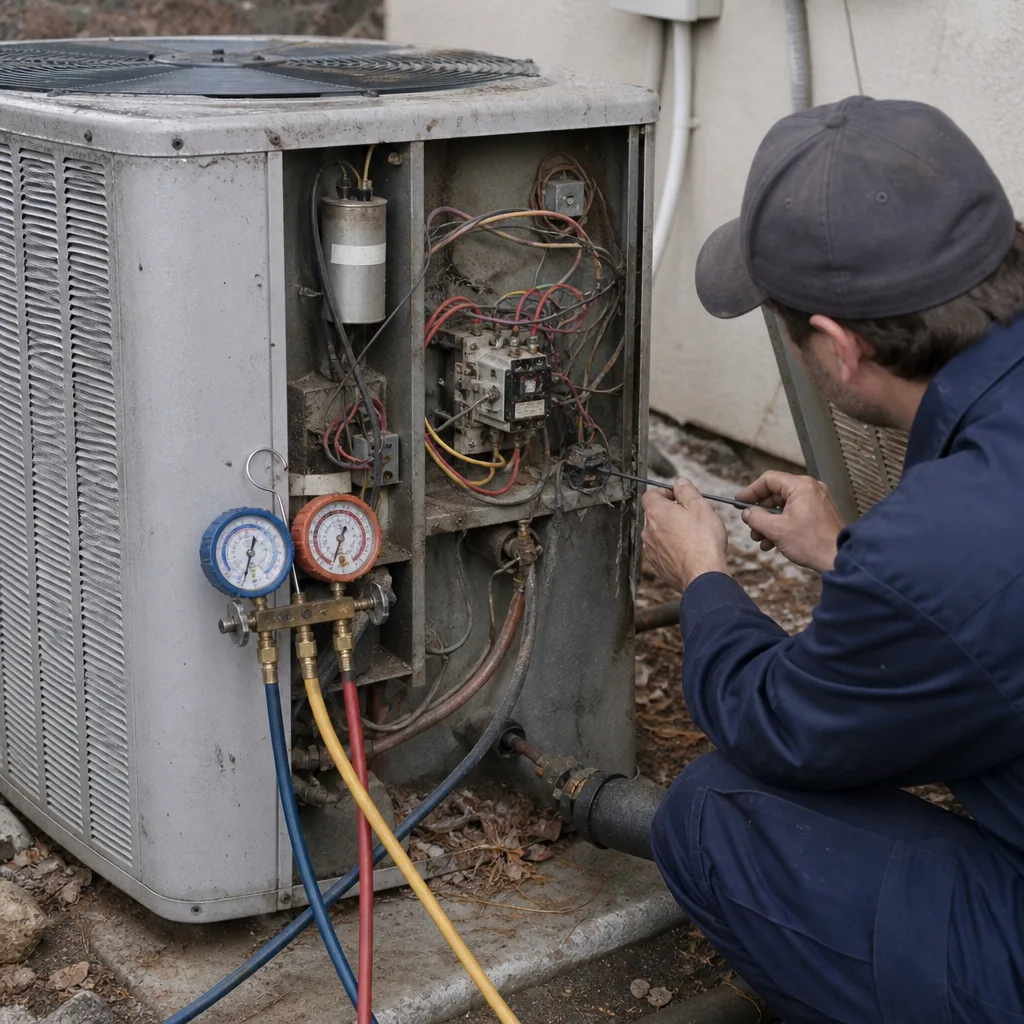 Before
 After
 Before
 After
 Before
 After