
Last updated November 18, 2026
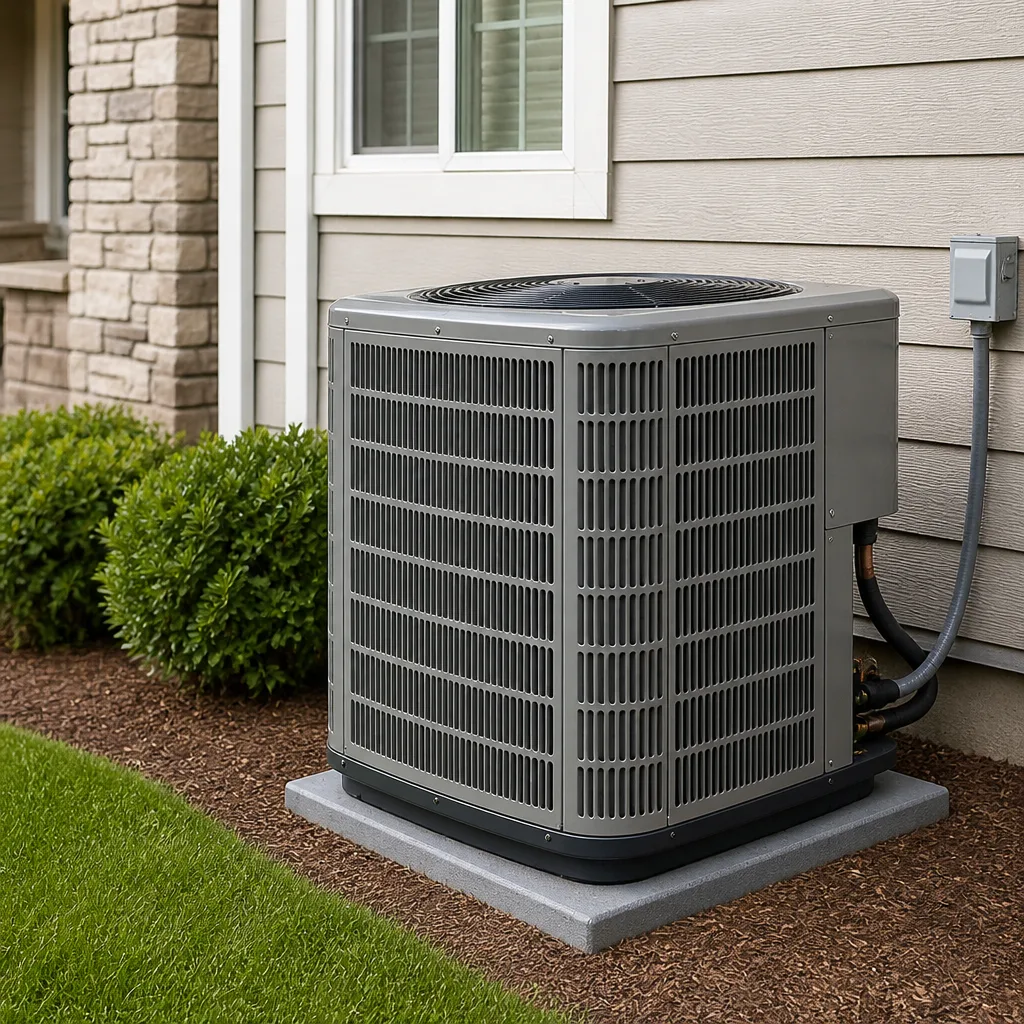 AC repair
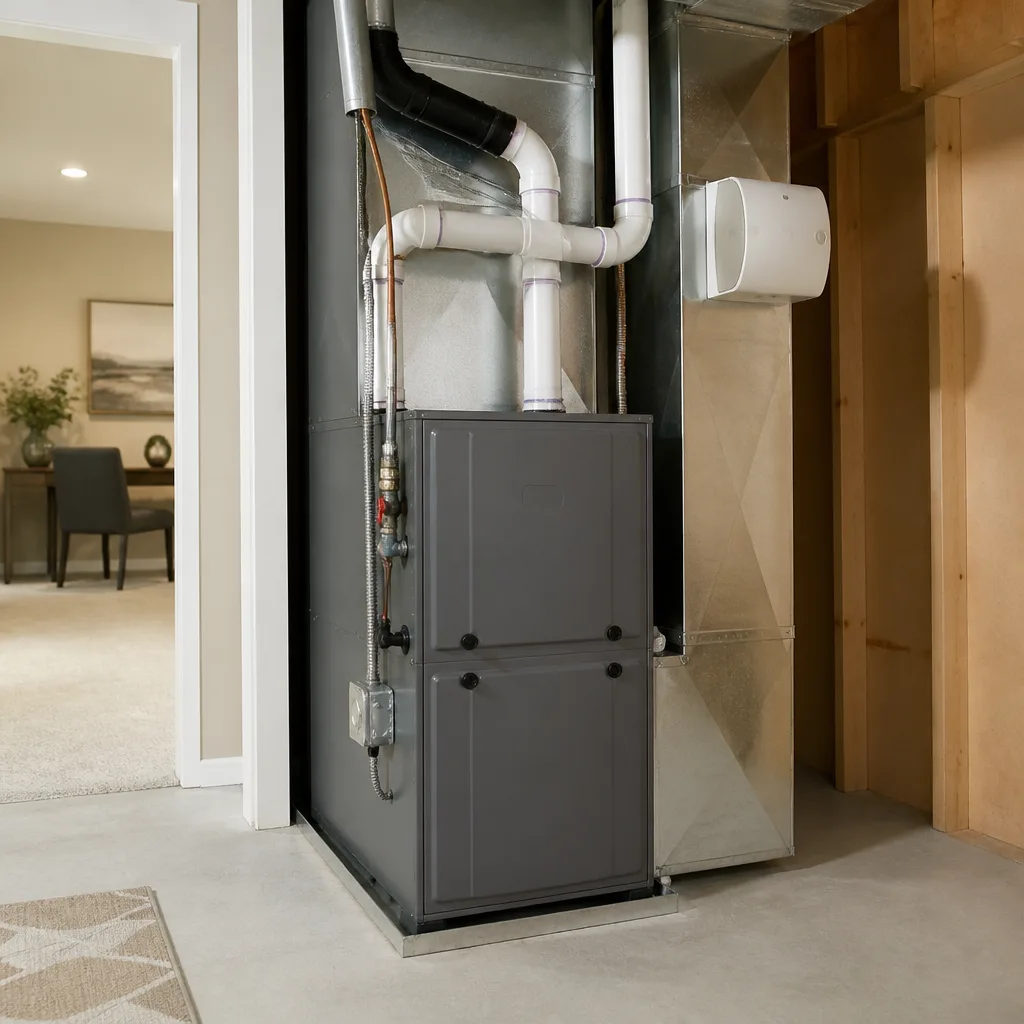 Furnace & heating
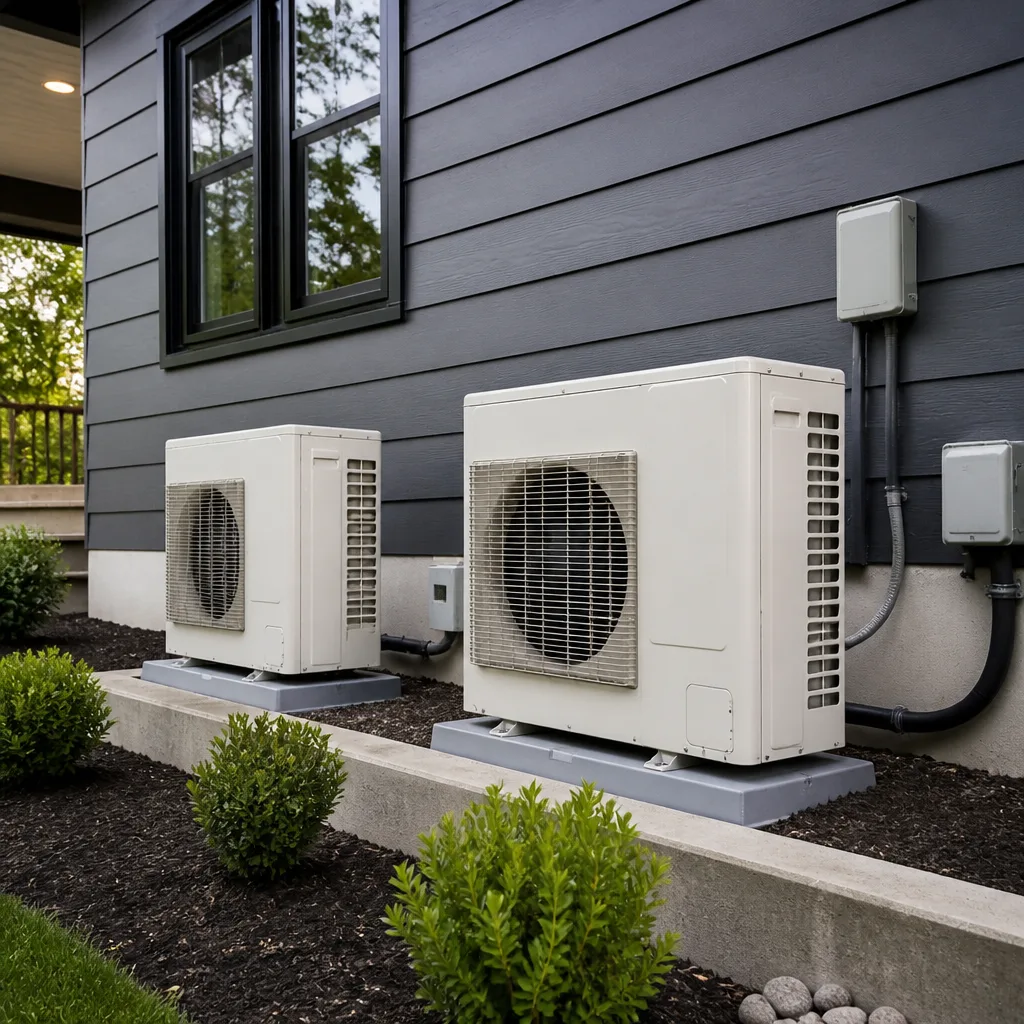 Heat pumps
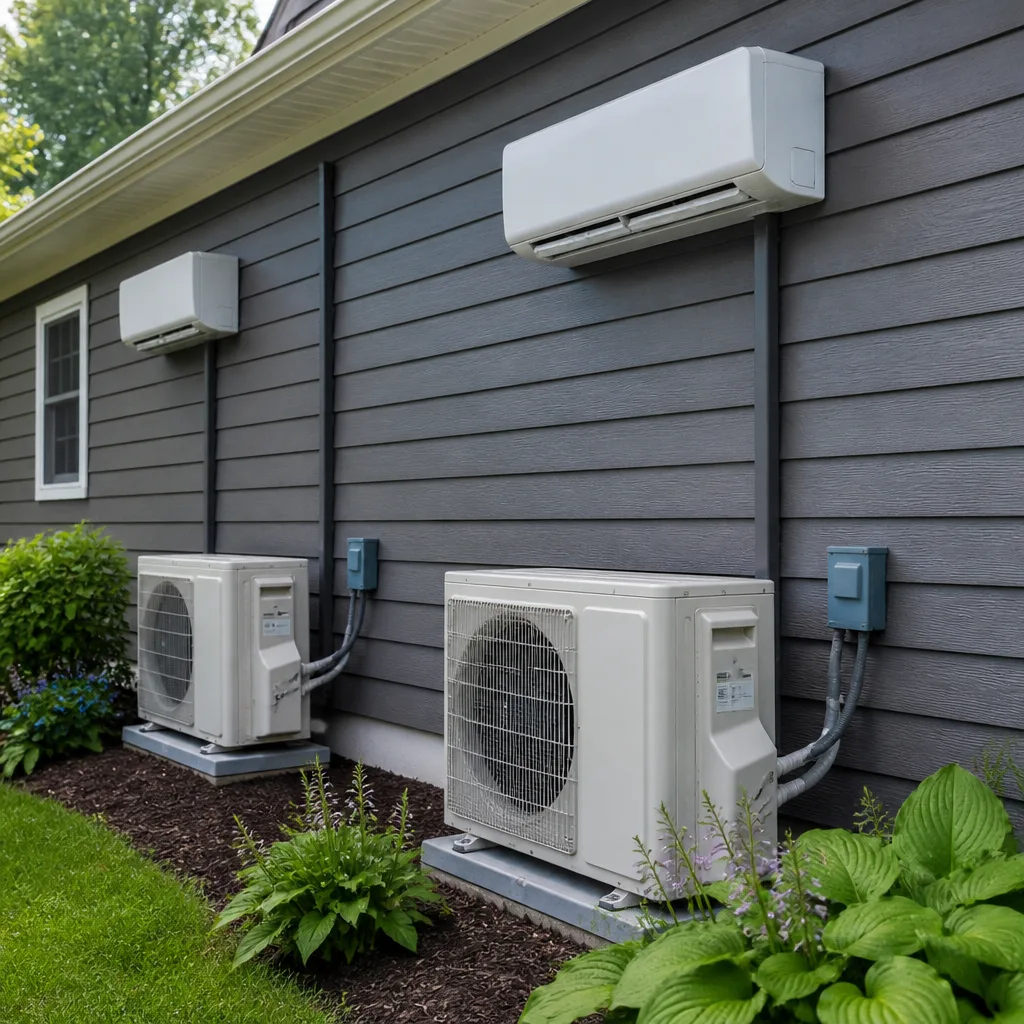 Ductless mini splits
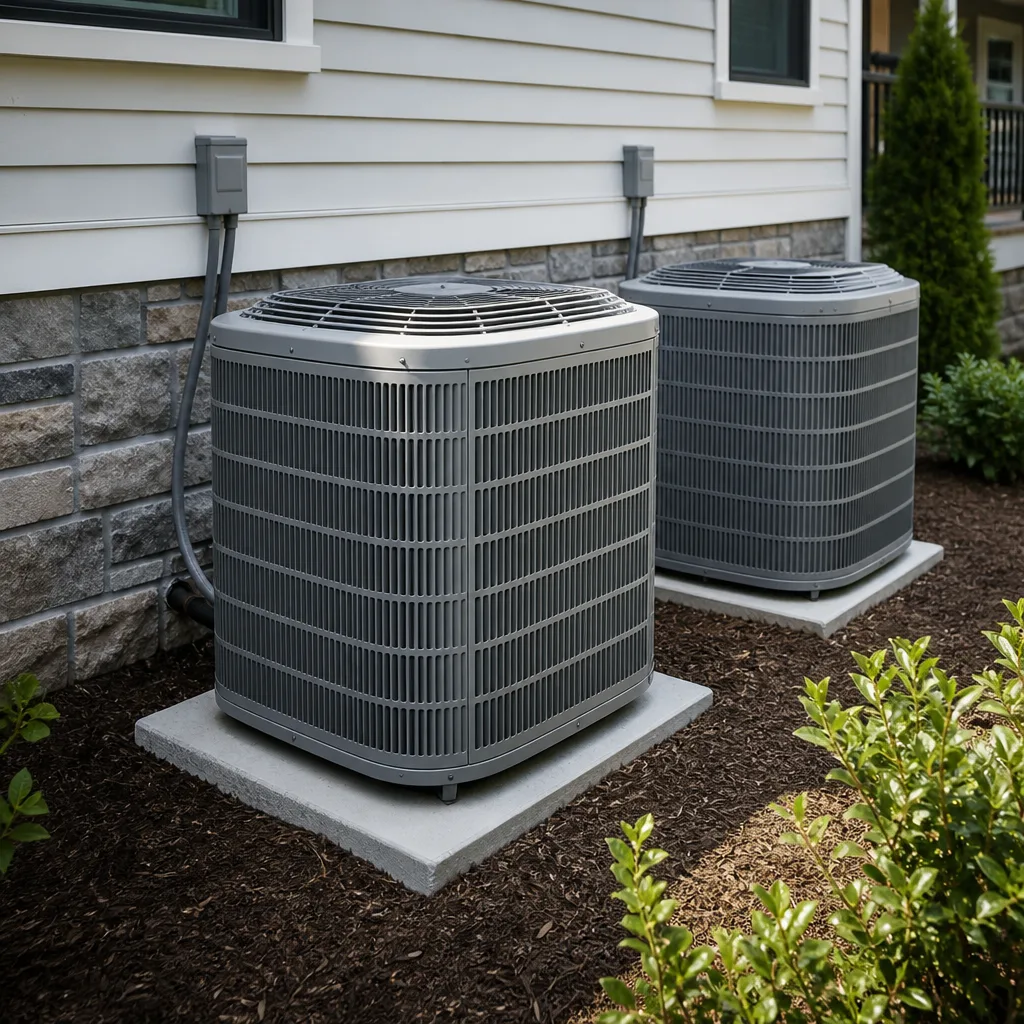 Carrier
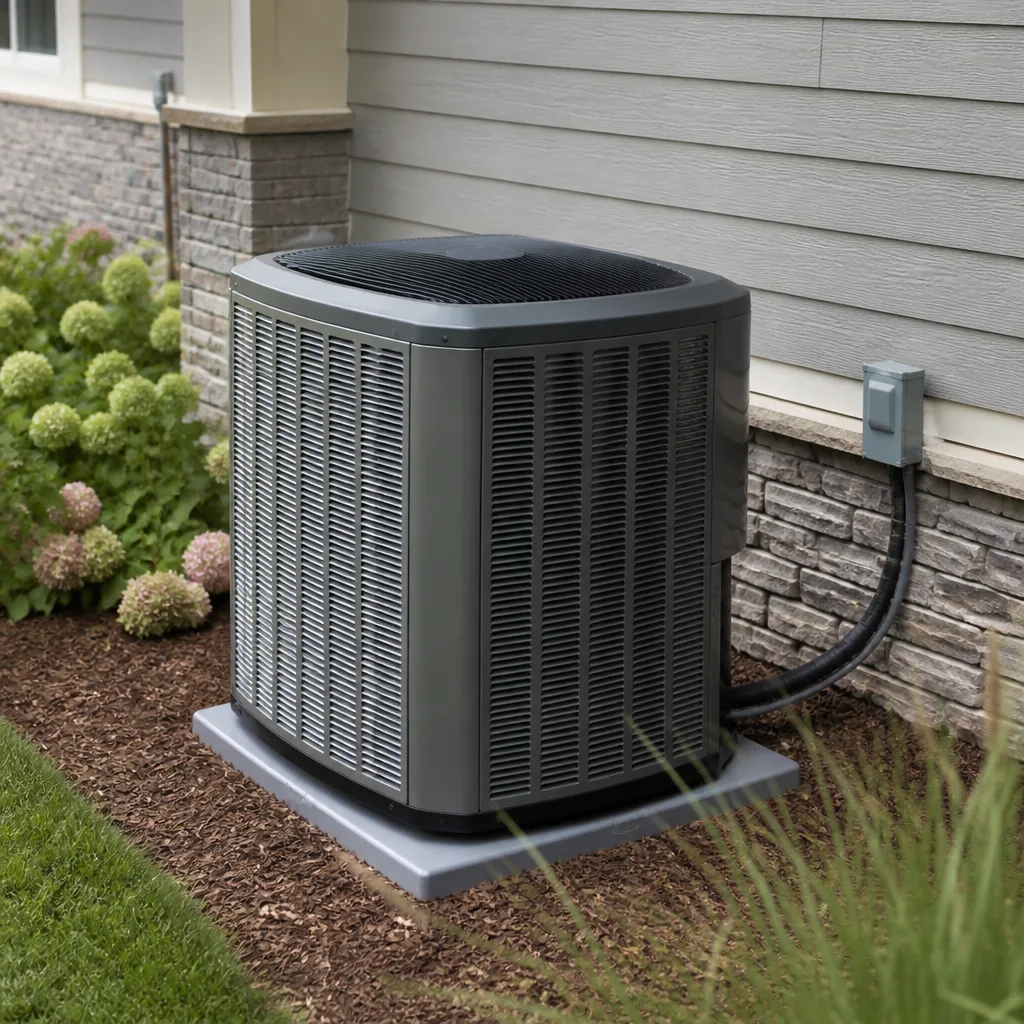 Trane
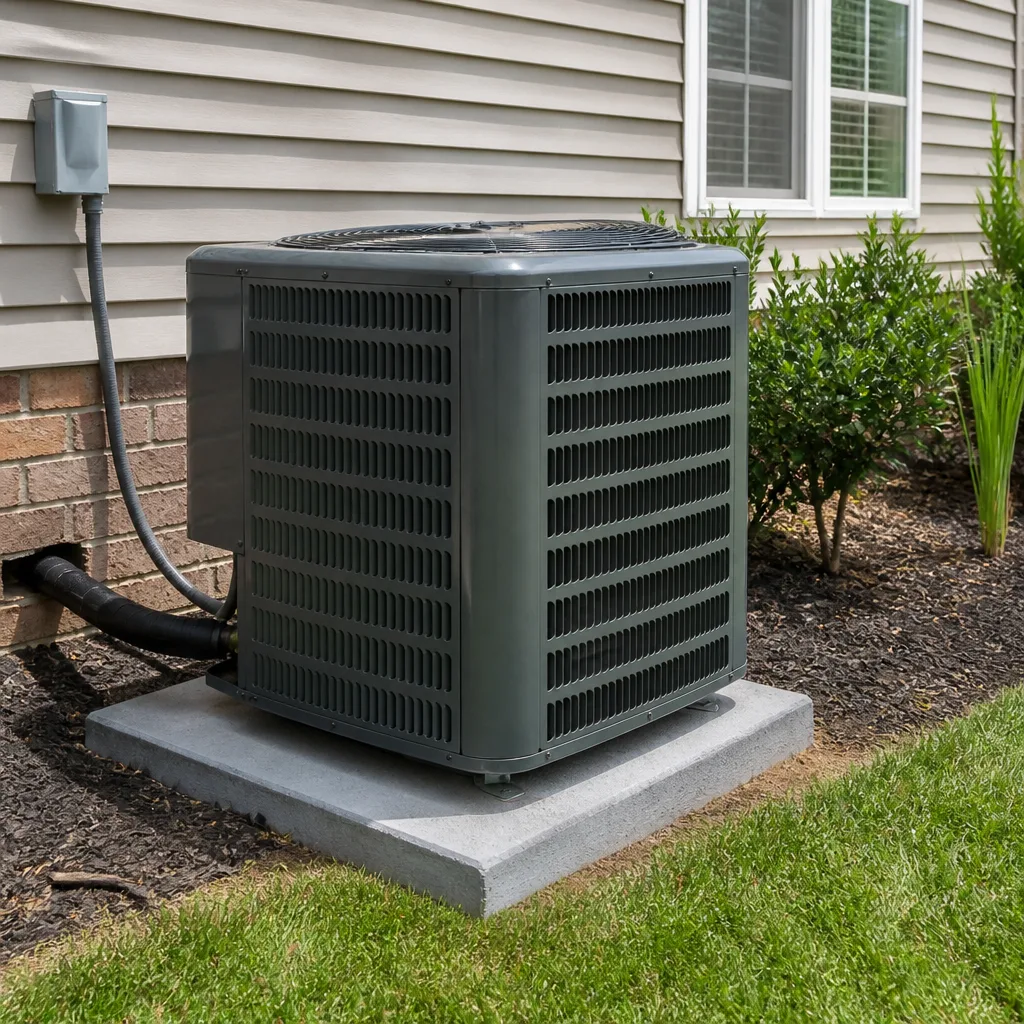 Goodman
Seasonal tune-up and full diagnostic on your Carrier, Trane, or Goodman system - readings shown to you before any repair is proposed
Diagnosis first, numbers second - you approve the repair price before a single part goes in.
Get your free estimateChoosing the Right HVAC Brand: A Buyer’s Guide for Mesquite
One of the best-reviewed air conditioners in America was engineered and tested to a 95-degree ambient standard. Mesquite beats that by 20 degrees for weeks at a time in July. No consumer survey will tell you that, because the people writing those surveys don’t live where the asphalt softens in the afternoon sun. What follows is the part of brand selection the rankings skip: which manufacturers publish verified high-ambient ratings, how parts actually reach a rural Nevada driveway, and how to ask a contractor a question that gets you a straight answer. If you’re replacing a system in Mesquite, this is the guide we wish every homeowner had before they signed.
Quick Answer
The best HVAC brand for Mesquite is the one whose equipment is rated for sustained ambient temperatures above 115°F and whose replacement parts can reach your driveway inside 24 hours. National brand rankings don’t measure either of those things. In our experience, a mid-tier system with verified desert ratings and a strong local parts network will outlast a feature-loaded flagship that sits waiting on a component from a Las Vegas warehouse.
Styles & brands we work with
- AC repair
- Furnace & heating
- Heat pumps
- Ductless mini splits
- Carrier
- Trane
- Goodman
Table of Contents
- What “High-Ambient Rated” Actually Means
- Which Brands Publish Verified Ratings Above 115°F
- Parts Availability in Rural Nevada
- Manufacturer Warranty vs. the Service Network Behind It
- How Contractor Brand Relationships Work
- The Honest Case for Mid-Tier Brands
- A Step-by-Step Way to Decide
- Common Mistakes to Avoid
What “High-Ambient Rated” Actually Means in Equipment Specs
Every air conditioner carries an ambient temperature rating. It’s the outdoor temperature range the manufacturer validated the equipment to operate within, and it’s buried in the expanded product data, not the glossy brochure. The industry’s default test standard for residential split systems assumes a 95°F outdoor design condition. That’s a fine number for most of the country. It’s a fiction in Mesquite, where June through September routinely pushes past 110°F and the overnight low sometimes doesn’t drop below 90.
When a system runs above its rated ambient, the compressor works harder to reject heat, head pressure climbs, and the unit draws more current. It doesn’t fail dramatically. It ages faster. Capacitors cook, contactors pit, and a compressor that should last fifteen years starts showing its wear at ten. That’s the quiet cost of buying equipment rated for a climate you don’t live in.
Here’s what to look for in the spec sheet:
- Operating range, not “desert-ready” marketing. A real high-ambient rating is a published number, usually stated as a maximum outdoor operating temperature. “Built for tough climates” is not a number.
- AHRI reference numbers. Matched system ratings through the Air-Conditioning, Heating, and Refrigeration Institute tell you the equipment was tested as a complete system, not as a lone condenser.
- Design temperature for your zip code. Clark County design conditions for Mesquite run well above the national default. Ask for equipment rated to the local design temperature plus margin.
This matters more in Mesquite than almost anywhere in Nevada. We’ve watched systems rated to 95°F limp through their fifth summer on the flat lots near the Sun City Mesquite side of town, where afternoon sun hits a west-facing condenser with nothing to break it.
Which Brands Publish Verified Ratings Above 115°F
Most major manufacturers publish extended operating ranges, but they don’t all publish them the same way. Some list a clear maximum ambient temperature in the product data. Others list the standard 95°F test condition and leave the “desert” language to the dealer. The difference is whether you’re buying a documented capability or a sales pitch.
Carrier and Trane both publish expanded product data that includes operating limits well above the standard test condition on their higher-tier lines. Lennox publishes similar data across its variable-capacity equipment. Goodman, which sells heavily into value-tier markets, publishes solid technical documentation but tends to leave the desert suitability question to the installing contractor’s judgment. The takeaway isn’t that one brand is “best.” It’s that brand discipline matters: ask for the published number, and if it doesn’t exist in writing, treat the claim as unverified.
A practical way to vet a brand in Mesquite:
- Ask the contractor to show you the manufacturer’s published ambient operating range for the specific model they’re quoting. Not the line. The model number.
- Check whether the system is rated as a matched set through AHRI. A mismatched coil and condenser can erase a high-ambient rating entirely.
- Ask how the equipment performs at 115°F specifically, not “up to” a number. The “up to” language usually means a degraded capacity figure at the top of the range.
- Confirm the warranty terms survive installation in a high-ambient climate. Some manufacturers shorten compressor coverage in extreme-heat regions if registration isn’t completed properly.
Our technicians have up to 8 years of experience working these spec sheets with homeowners across Mesquite, and the conversation almost always comes back to the same point: a published number beats a persuasive salesman.
Parts Availability in Rural Nevada: How to Check Before You Buy
A brand is only as good as the parts network behind it, and in rural Nevada that network is short. Mesquite sits roughly 80 miles from Las Vegas, which means most replacement components route through a Las Vegas warehouse before they ever reach a local supply house. If your brand’s distributor doesn’t stock the part, you’re waiting on a truck. In July, with a failed compressor, that wait is measured in days of 105-degree afternoons inside your house.
Before you commit to a brand, ask these questions of the contractor and of the local supply houses:
- Is there a distributor with regional stock? Brands with strong Clark County distribution can usually get common parts to Mesquite same day or next day. Brands without it can take a week.
- Which components are “always stocked” versus special order? Capacitors, contactors, and fan motors should be on the shelf. Compressors and control boards are often special order regardless of brand.
- What’s the realistic lead time on a compressor swap? Ask in days, not “soon.”
- Does the brand have a direct factory parts channel? Some manufacturers ship direct to contractors, which can shave days off a rural repair.
This is one of the reasons our AC repair and installation in Mesquite work leans on brands with established regional parts pipelines. It’s not about brand loyalty. It’s about how fast we can get your house cool again when the compressor fails on a Saturday in August.
Manufacturer Warranty vs. the Service Network Actually Behind It
A ten-year parts warranty sounds like protection. It’s really a promise that the manufacturer will replace a failed component, not a promise that anyone will show up at your door. The service network is the part that actually matters, and it isn’t printed on the box.
In Clark and Lincoln County, the warranty equation breaks down like this:
- Parts coverage is typically 5 to 10 years on major components, and it’s honored by the manufacturer, not the contractor.
- Labor coverage is separate and usually much shorter, often 1 to 5 years, and it’s provided by the installing contractor. If that contractor closes or moves, the labor coverage disappears with them.
- Registration deadlines matter. Most manufacturers require product registration within a set window to keep the full warranty active. Miss it and the coverage reverts to a shorter default term.
- Service network depth is the wildcard. A brand with one authorized service provider in the Mesquite area is a brand with a bottleneck.
When you buy a system in Mesquite, ask two questions: who honors the labor warranty, and how many qualified technicians in the area can service this brand? If the answer to the second question is “just us,” that’s worth knowing before you sign. Our approach is simple. We back every installation with the 90-Day Done Right Promise, a written guarantee that if it isn’t done right, we make it right. No arguing, no paperwork chase. And our phones are answered by a live person 24 hours a day, which matters when a warranty issue turns into a 2 a.m. no-cooling call.
How Contractor Brand Relationships Work (And How to Ask About Them)
Every HVAC contractor in Mesquite has brand relationships. Some are dealer agreements that come with training, priority parts access, and co-op marketing support. Some carry margin incentives: the contractor makes more money installing one brand than another at the same job price. Neither of those things is automatically bad. But you deserve to know which is driving the recommendation.
Here’s how to ask, plainly:
- “Are you recommending this brand because it’s the right fit for my home, or because of your dealer agreement?” A straight answer here tells you a lot.
- “Do you install other brands? Which ones, and why this one over those?”
- “If I asked for a different brand, would the labor warranty still apply?”
- “Walk me through the parts pipeline for this brand in Mesquite.”
We service nine major brands across Mesquite and the surrounding communities: Carrier, Trane, Lennox, Goodman, Rheem, York, Daikin, Bryant, and American Standard. That breadth isn’t a marketing line. It’s what allows us to recommend based on your home’s load, your ductwork, and the local parts reality, rather than on what makes us the most margin. For a deeper look at how we match equipment to a house, the heat pump and mini split page for Mesquite walks through the load calculations that drive the brand recommendation in the first place.
The Honest Case for Mid-Tier Brands in a High-Abuse Climate
Feature-rich flagship systems are engineered for efficiency ratings and quiet operation. They’re impressive on paper. But in a climate that pushes equipment to its thermal limits for four months a year, complexity has a cost. More sensors, more variable-speed components, more control boards, more failure points. Each of those parts has to survive 115°F ambient heat, and each one has to be sourced and shipped to Mesquite when it fails.
A mid-tier single-stage or two-stage system has fewer things to break. It runs at fixed speeds, so the compressor either works or it doesn’t, and diagnosis is faster. Its parts are more likely to be on a shelf in Las Vegas. In our experience, a well-installed mid-tier system in Mesquite frequently outlasts a poorly installed flagship, and the homeowner never notices the difference until year twelve when the flagship is on its third control board and the mid-tier unit is still humming.
That said, we’re not telling you flagship is wrong. Variable-capacity equipment can run at lower output during the shoulder seasons and cut your energy use meaningfully. It’s also quieter. The point is that in a high-abuse climate, “does it survive” matters more than “how many features does it have.” A simple system rated for the heat will serve a Mesquite home longer than a complicated system rated for a milder climate, every time.
A Step-by-Step Way to Decide on a Brand
- Get a load calculation. Not a rule-of-thumb sizing. A real Manual J calculation tells you what capacity your Mesquite home actually needs, which narrows the brand field to equipment that fits.
- Narrow to equipment with verified high-ambient ratings. Ask for the published number at or above 115°F.
- Confirm parts reach Mesquite inside a day. Ask about the specific components that fail most often in desert heat: capacitors, contactors, fan motors, control boards.
- Compare quotes for matched systems. A mismatched condenser and coil erases the ratings you were buying.
- Ask the contractor directly which brand is best for your home and why. Compare against a second opinion. We offer a free second opinion on any written estimate, and it’s worth taking.
- Check the labor warranty, not just the parts warranty. Understand who honors it and how to reach them.
For the heating side of the equation, the same logic applies. Furnaces and heat pumps have design temperature ranges too, and a system sized for a cooler climate will short-cycle its way through a Mesquite winter. Our heating and furnace service page for Mesquite covers the sizing side in more depth.
Common Mistakes to Avoid
- Buying on a national ranking alone. Consumer surveys are written by people who don’t live in Mesquite. The system that ranks first nationally may not carry a verified rating above 115°F.
- Letting “desert-ready” stand as proof. If the manufacturer doesn’t publish an ambient number, the claim is marketing. Ask for the spec sheet. If it isn’t in writing, walk away.
- Ignoring the parts network. We’ve seen homeowners wait five days for a control board because the brand had no regional distribution. In July, that’s five days in a house that never drops below 95.
- Choices driven by the dealer agreement, not the home. Ask your contractor directly whether the recommendation is about fit or incentive. A good contractor welcomes the question.
- Overlooking the labor warranty. A manufacturer’s ten-year parts warranty means nothing if the local contractor who carries the labor coverage closes. Confirm who honors it and how to reach them.
- Skipping registration. Miss the product registration window, and many manufacturers revert to a shorter default warranty. In Clark County, that’s a costly oversight.
- Assuming bigger is better. An oversized system in Mesquite short-cycles, wears out faster and never runs long enough to pull humidity out of the air during the shoulder seasons.
See the difference
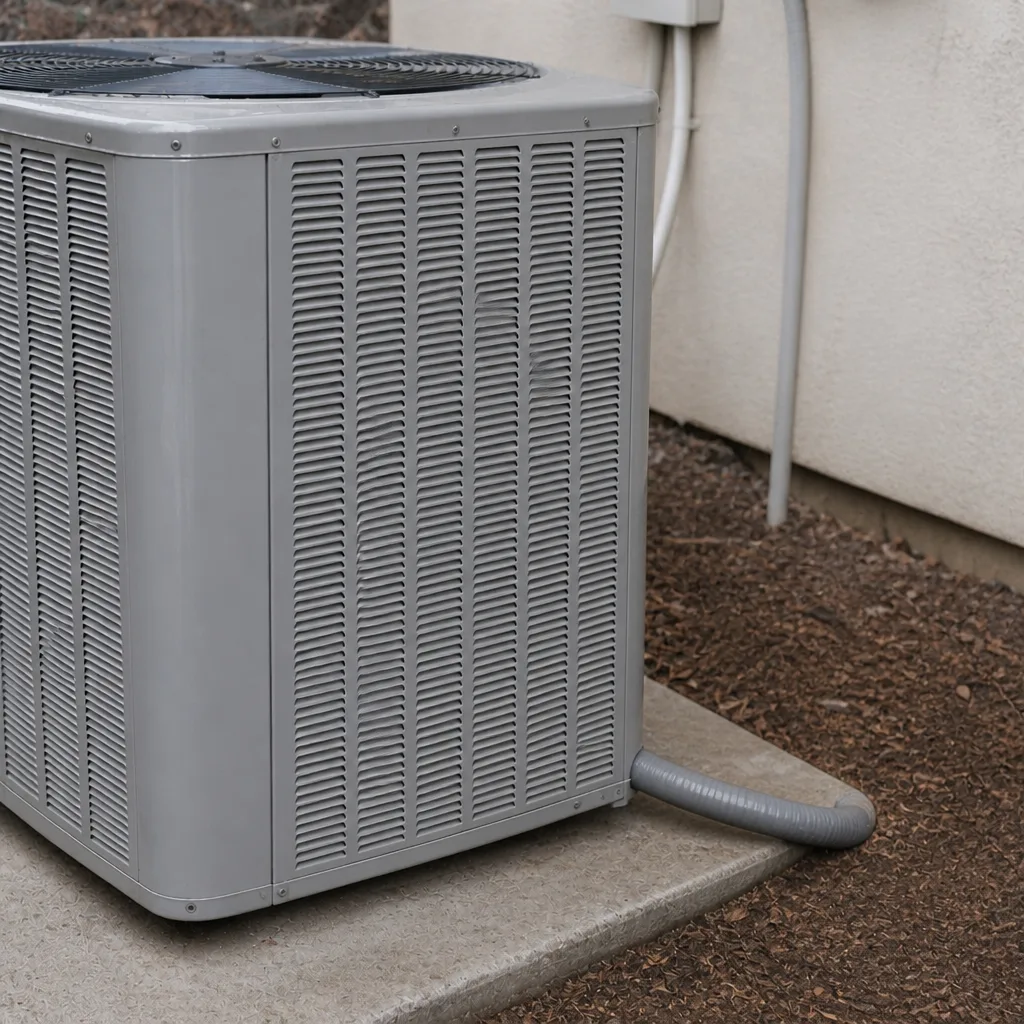
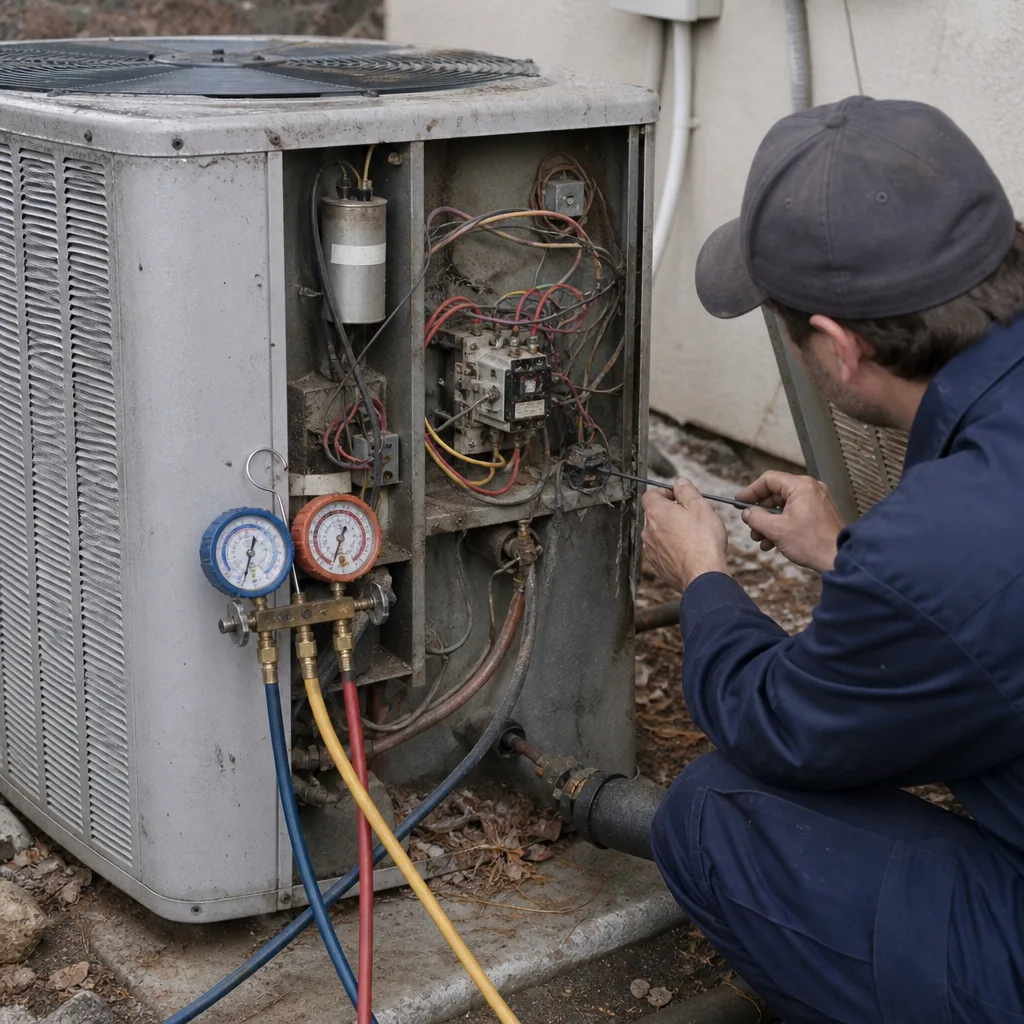 Before
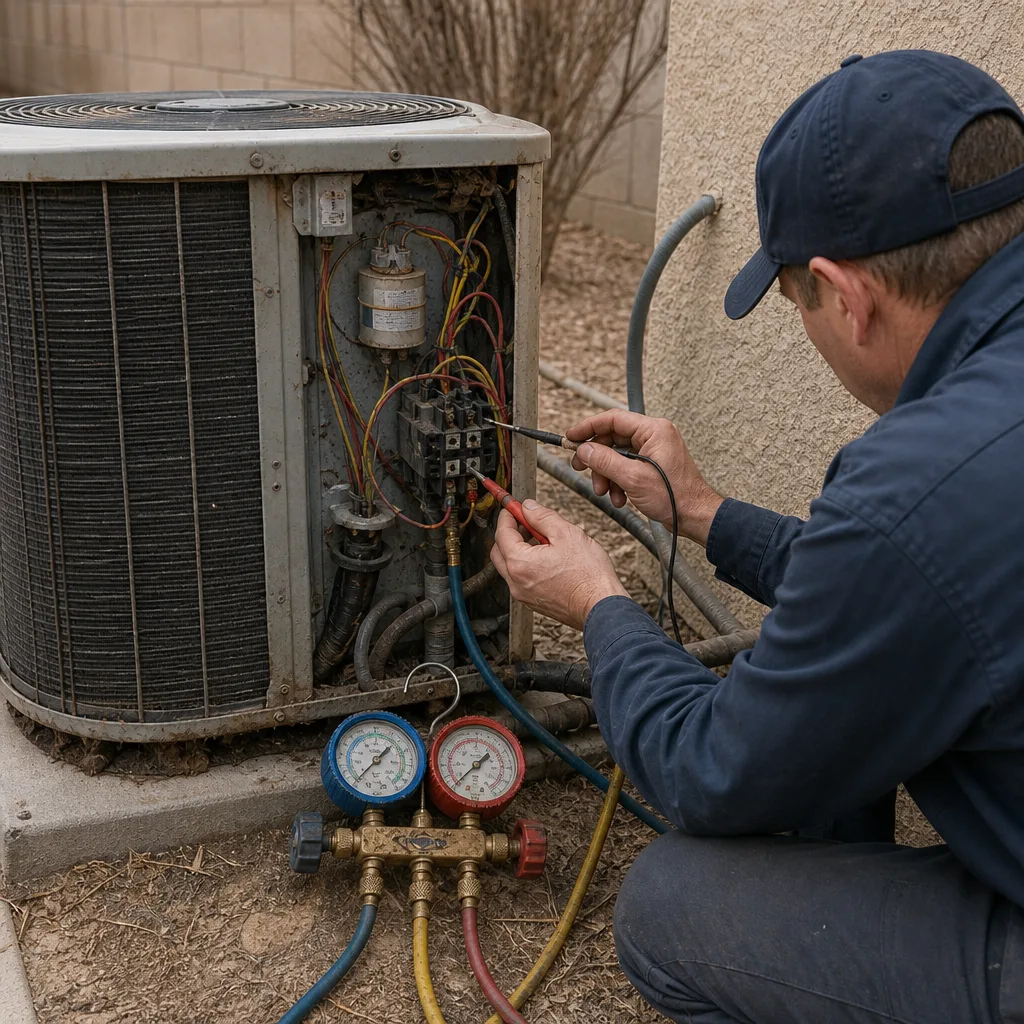
 After
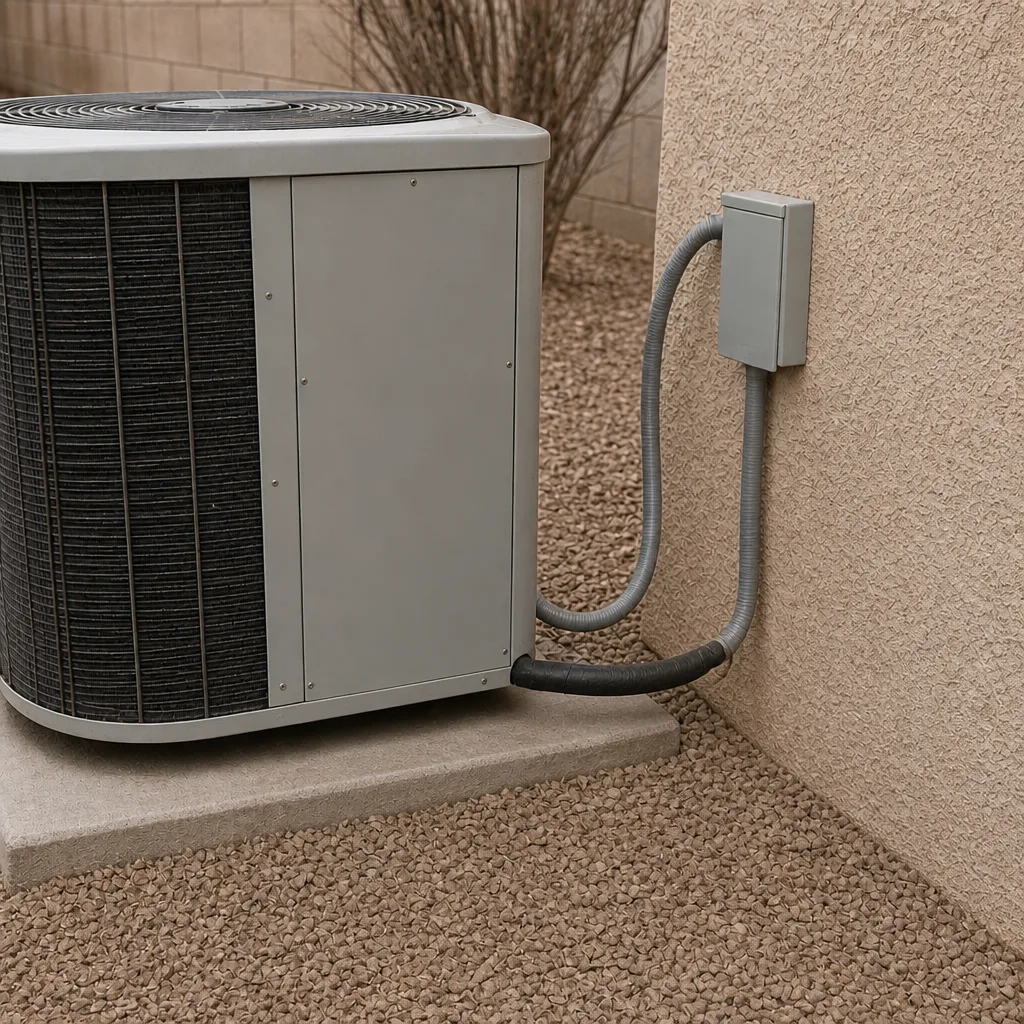
 Before
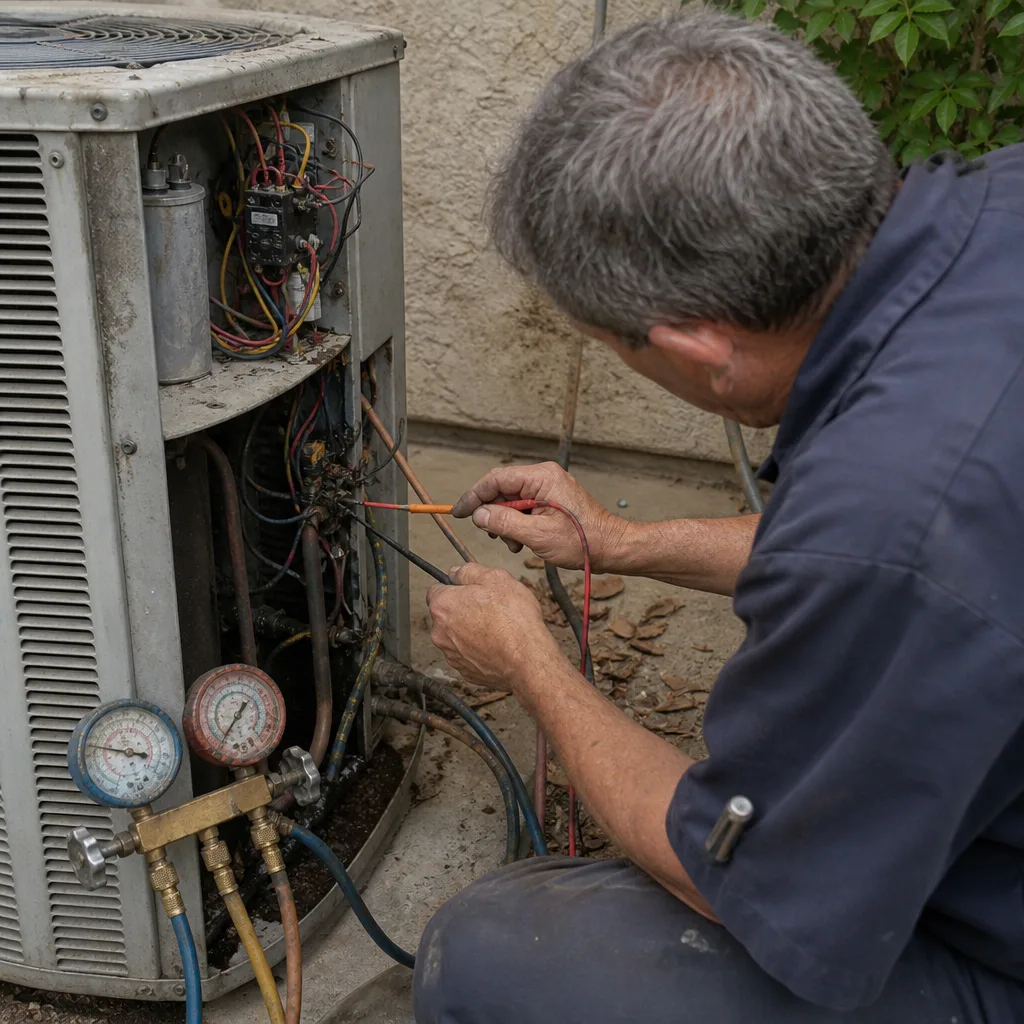
 After
 Before
 After
When to Call a Professional
Brand selection is one decision in a longer chain: load calculation, equipment choice, ductwork assessment, installation, and ongoing service. Call a professional when you’re replacing a system over ten years old, when your electricity bills climb without explanation, when the system runs constantly in July without reaching setpoint, or when a repair quote exceeds a third of the replacement cost. Those are the points where a straight repair-versus-replace conversation saves the most money. High-tension components inside a condenser and refrigerant handling under pressure are not homeowner work. A mistake there can cause a serious injury and void the warranty. Fireside Heating & Air Co. Mesquite offers free estimates in Mesquite. Call (888) 570-3601.
Frequently Asked Questions
The best brand for Mesquite is the one with a published high-ambient rating at or above 115°F and a parts network that reaches Mesquite inside 24 hours. Carrier, Trane, and Lennox all publish expanded operating data on their higher-tier equipment. Ask for the specific model’s spec sheet before you sign. Call (888) 570-3601 for an exact quote. Estimates are free.
Not on its own. SEER measures efficiency under standard test conditions, which assume a milder climate than Mesquite. A high-SEER system that isn’t rated for local ambient temperatures may perform well on paper and still wear out faster here. The ambient rating matters more. Call for a free second opinion on any written estimate.
Ask the contractor to name the regional distributor and how components arrive. In Mesquite, most parts route through Las Vegas, roughly 80 miles away. Brands with strong Clark County distribution can often deliver same day or next day. If the answer is vague, ask about the three most common failure parts: capacitors, contactors, and control boards. Call (888) 570-3601 for a straight answer on the brands we service.
Often, yes. Fewer components means fewer failure points, and simpler parts are easier to source. That holds true in any climate, but Mesquite’s sustained heat makes it more pronounced. A well-installed mid-tier system typically outlasts a poorly matched flagship in this market. We’ll talk through the honest tradeoff on your home, not ours.
The manufacturer’s warranty covers parts for 5 to 10 years, but not the labor to install them. Labor coverage is usually provided by the contractor, often for a shorter term. That’s why who installs your system matters as much as which brand you choose. Our 90-Day Done Right Promise is a written guarantee: if it isn’t right, we make it right.
Yes. We offer a free second opinion on any written estimate, and it’s one of the most useful services we provide. Bring us the two quotes and we’ll walk through equipment specs, ambient ratings, warranty terms, and parts access side by side. Call (888) 570-3601. Our technicians have up to 8 years of experience reading these documents.
The Bottom Line
National brand rankings don’t measure what decides a system’s fate in Mesquite. Verified high-ambient ratings and a real parts pipeline in rural Nevada do. Ask for the published operating range. Ask how fast a compressor or control board reaches your house. Ask why a contractor is recommending one brand over another, and listen to whether the answer is about your home or their margin. A mid-tier system rated for the heat will often outlast a feature-loaded flagship that wasn’t. Since 1984, we’ve built our work on a simple idea: the job gets done right, or we make it right. For homeowners in Mesquite who want one company they never have to think about again, that’s the whole pitch.
Call Fireside Heating & Air Co. Mesquite at (888) 570-3601 for a free estimate. Our phones are answered by a live person 24 hours a day, and we’ll walk you through the brand question on your own home, not a brochure.
For the broader picture of what we do across the area, the Fireside Heating & Air Co. Mesquite home page lays it out. When you’re ready to move from brand research to scheduling, call (888) 570-3601.
Written by the team at Fireside Heating & Air Co. Mesquite.