
Last updated November 18, 2026
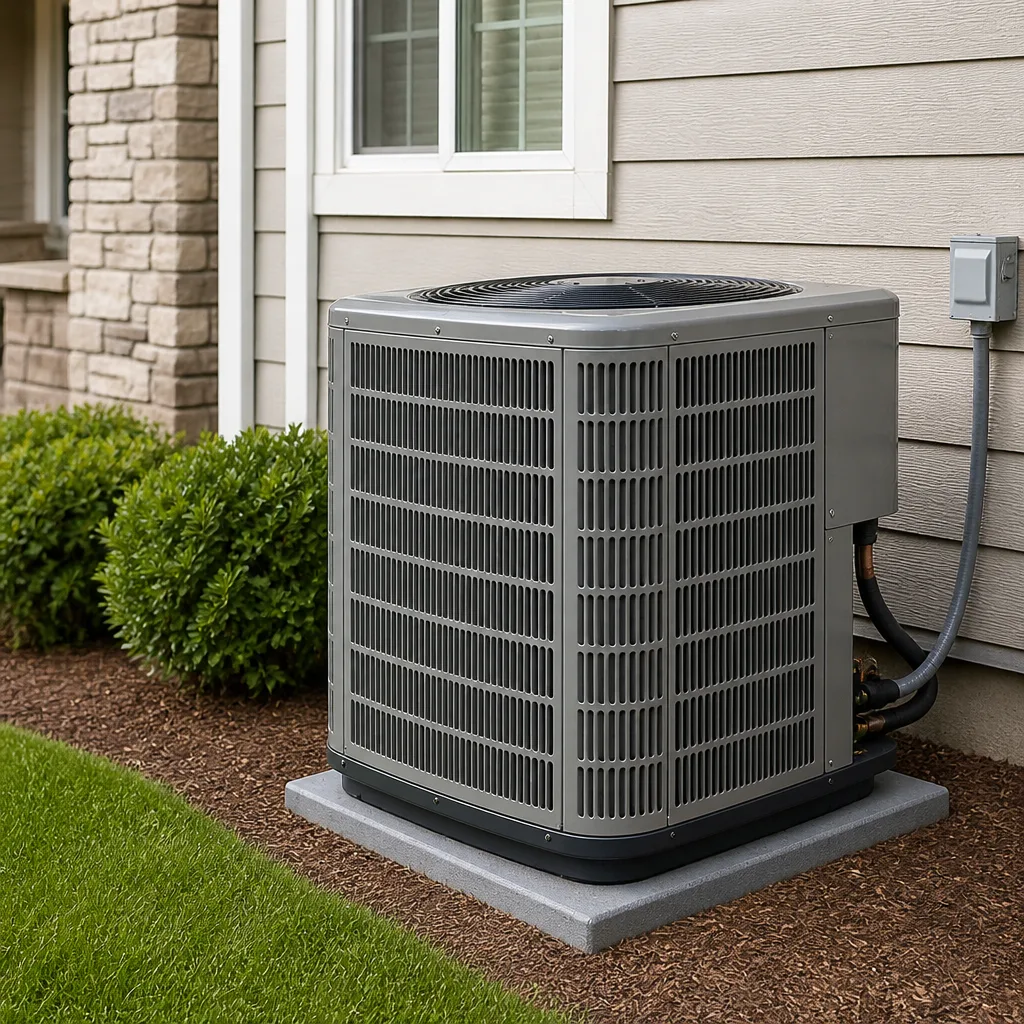 AC repair
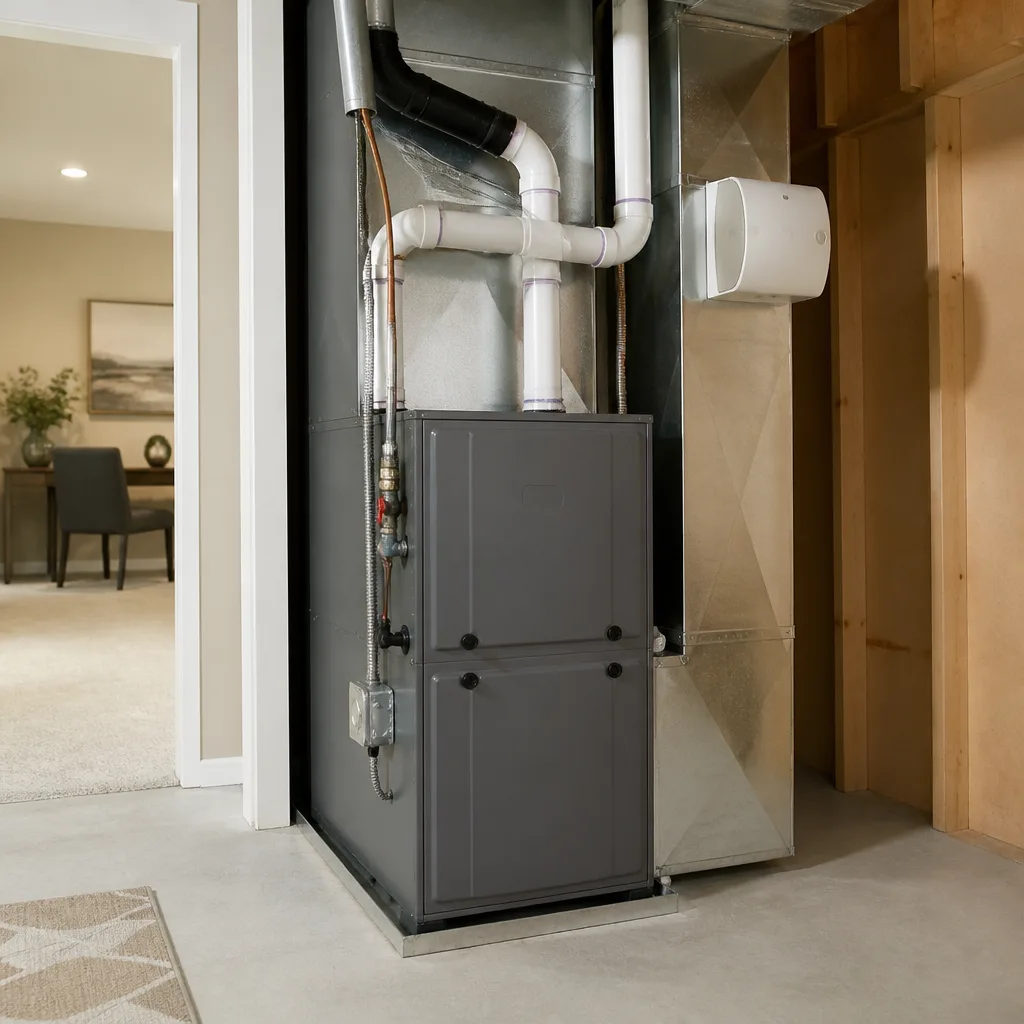 Furnace & heating
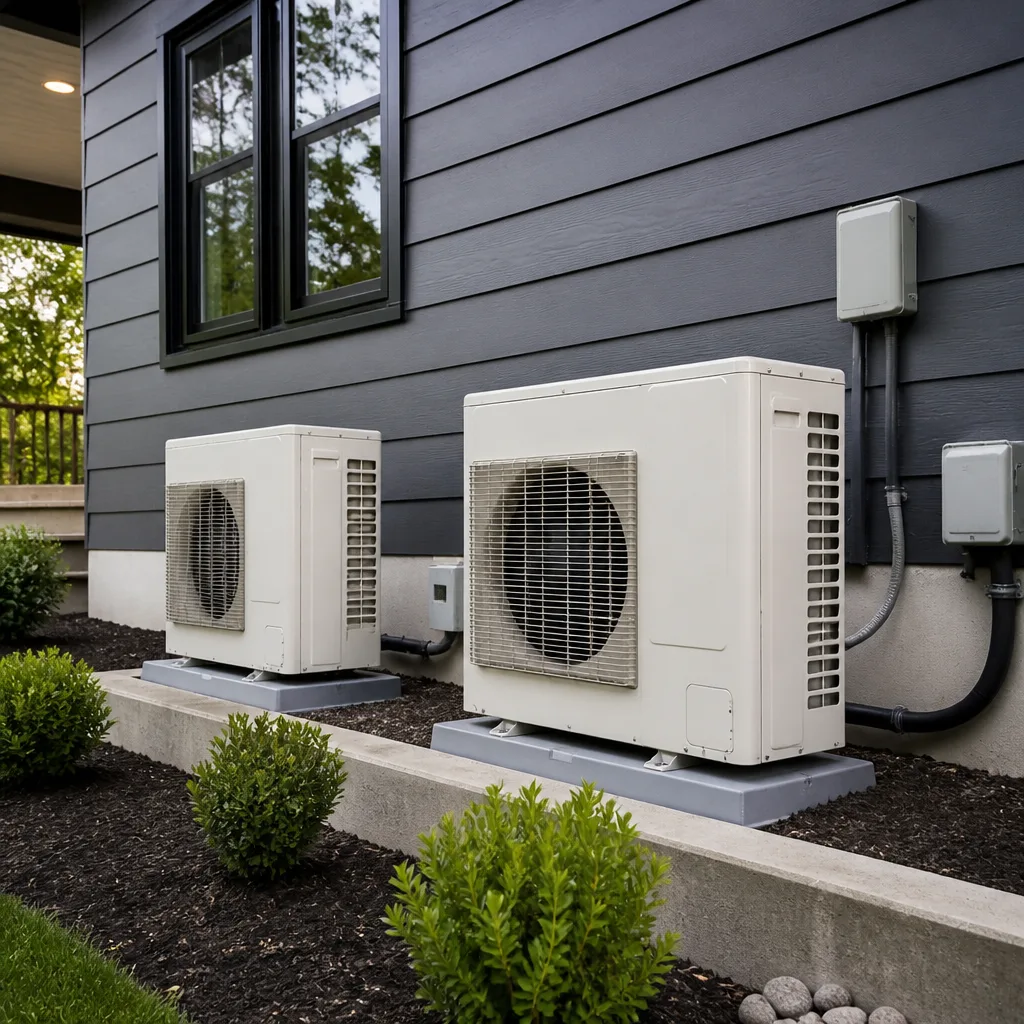 Heat pumps
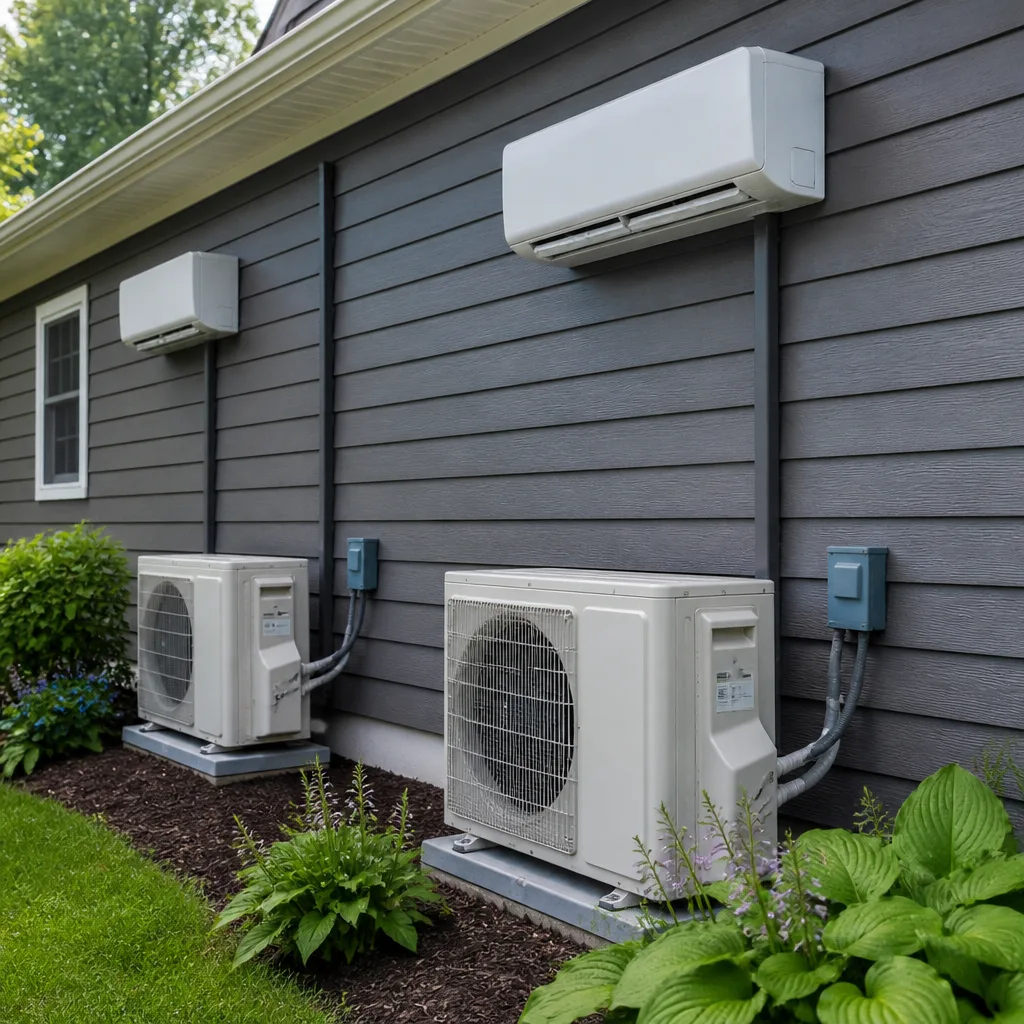 Ductless mini splits
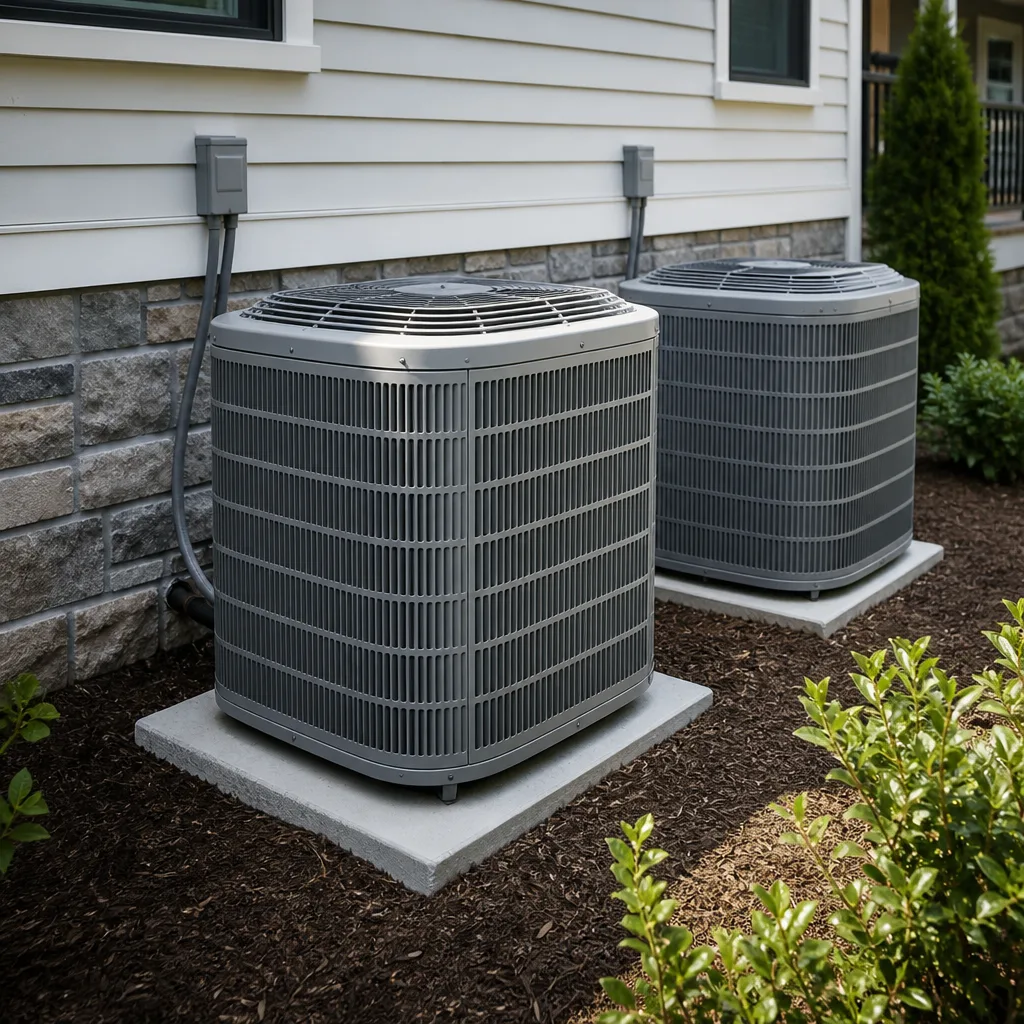 Carrier
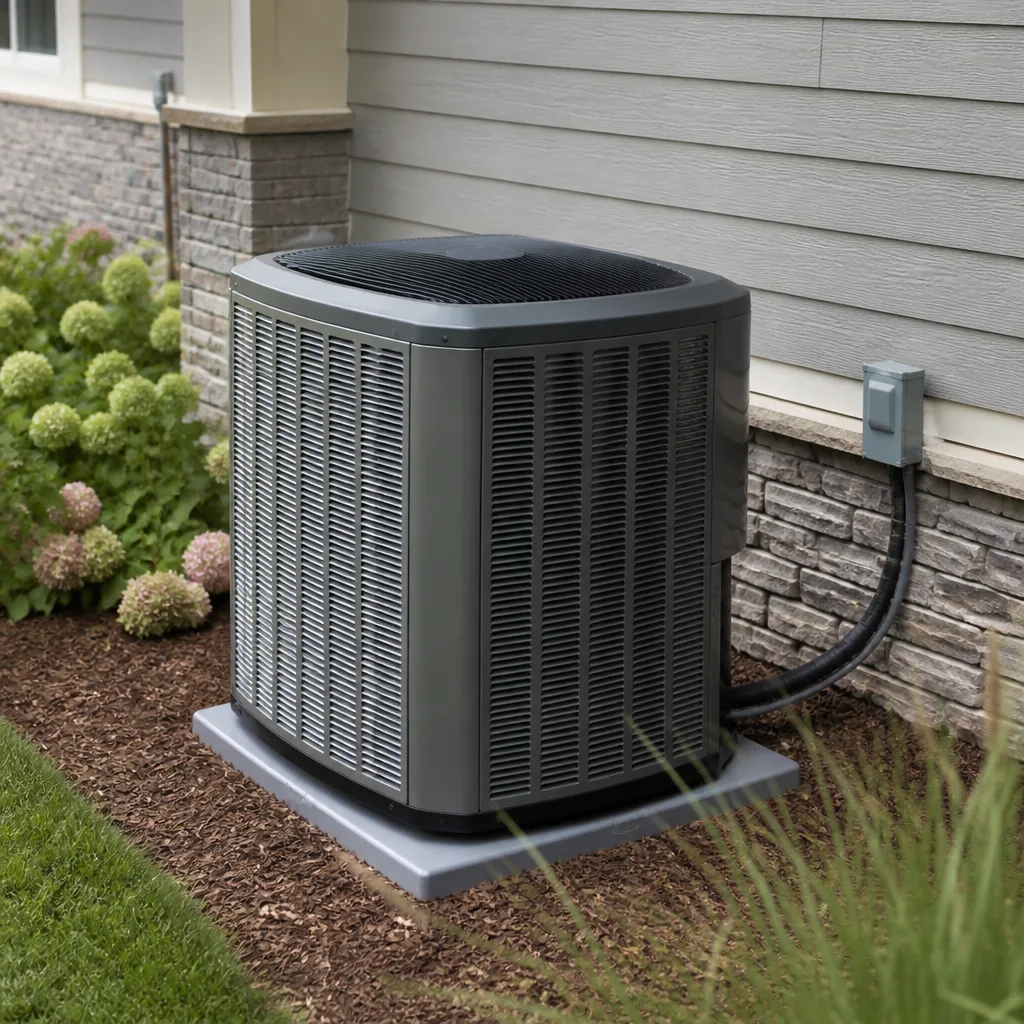 Trane
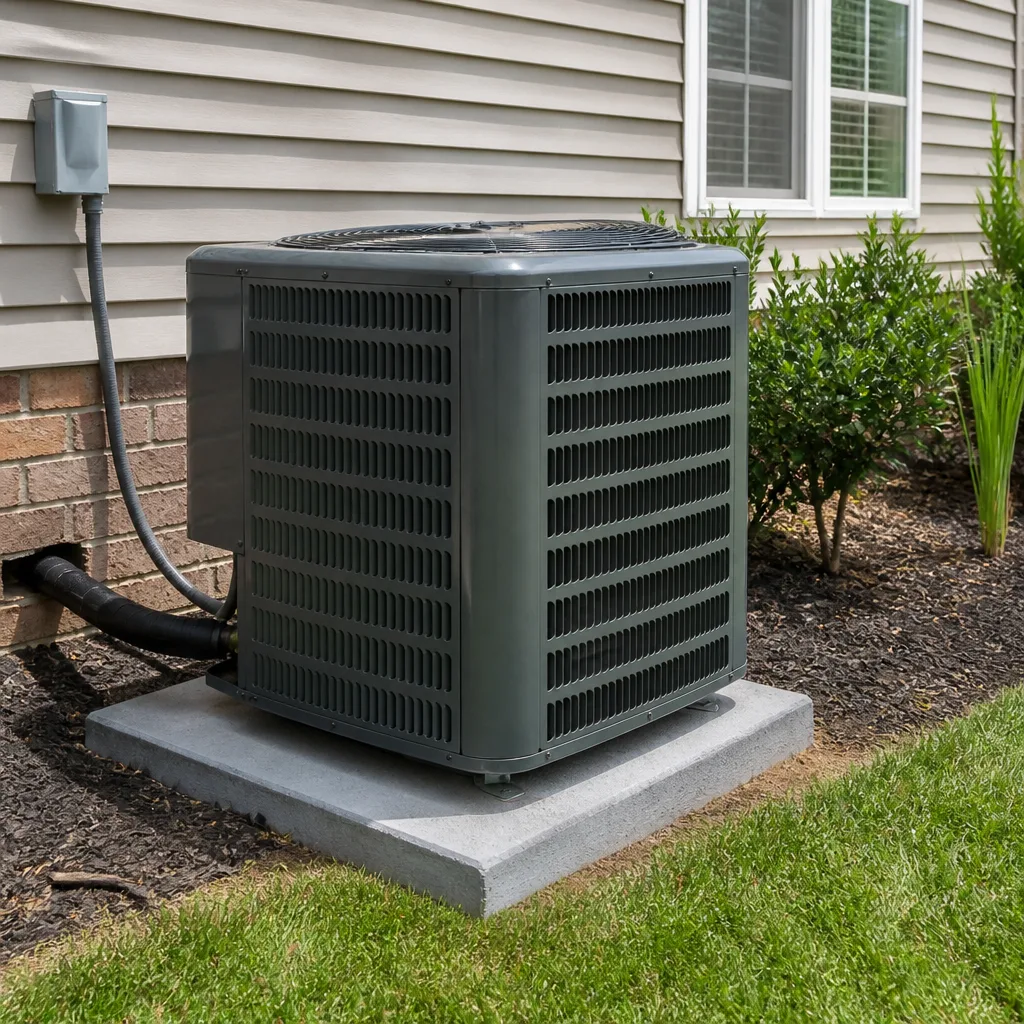 Goodman
Seasonal tune-up and full diagnostic on your Carrier, Trane, or Goodman system - readings shown to you before any repair is proposed
Diagnosis first, numbers second - you approve the repair price before a single part goes in.
Get your free estimateAC Repair & Installation Maintenance Checklist for Mesquite Homeowners
The number-one reason Mesquite AC units fail in July is not neglect. It’s order. We’ve pulled condenser fans off units that had a brand-new filter in the return and a evaporator coil so matted with dust and cottonwood fluff that the system couldn’t move air at all. Somebody did the maintenance. They just did it in the wrong sequence, so the easy task masked the hard one. A 115-degree cooling season punishes that kind of mistake faster here than almost anywhere in Nevada. This checklist is built around the actual failure sequence we see in Mesquite – ordered by which problems cascade into a full shutdown when the heat peaks. You’ll learn what to check yourself, what a licensed tech has to handle, and how to verify the work was done.
Quick Answer
A proper AC maintenance checklist in Mesquite follows a specific order: filter and return airflow first, then evaporator coil cleaning, then condenser coil cleaning timed to dust and seed-pod season, then refrigerant charge verification, then electrical and capacitor checks, then a full performance test under load. Skipping ahead or treating the annual filter change as “maintenance” leaves the coil fouling that actually kills systems in July. A pre-season visit in spring and one condenser rinse mid-summer is the rhythm that holds up in Mesquite’s climate.
Styles & brands we work with
- AC repair
- Furnace & heating
- Heat pumps
- Ductless mini splits
- Carrier
- Trane
- Goodman
Table of Contents
- Why the Order of Your Checklist Matters in Mesquite
- The Sequenced Pre-Season Checklist
- Condenser Coil Cleaning: Timing It to Mesquite’s Dust and Seed-Pod Seasons
- Refrigerant Charge Verification: Why “Looks Fine” Isn’t Fine
- What You Can Inspect Yourself vs. Five Tasks That Require a Licensed Tech
- Post-Installation: What to Confirm in Writing Before the Truck Leaves
- Mesquite Neighborhood Notes: What We See Where
- How to Schedule Maintenance Around Mesquite’s Cooling Season
Why the Order of Your Checklist Matters in Mesquite
Most maintenance checklists floating around the internet were written for a climate with a mild summer and a wet winter. They treat every check as equally urgent and list them alphabetically or by the technician’s convenience. That works fine in Portland. It does not work in Mesquite, where a unit runs flat-out from May through September and the outdoor temperature regularly crosses 110°F.
Here’s the failure sequence we actually see. A homeowner changes the filter in April, feels responsible, and skips the coil cleaning. The system runs fine through May. By late June, the evaporator coil is fouled with a thin mat of dust that reduces airflow by 20 to 30 percent. Reduced airflow drops the coil temperature, which causes the coil to ice, which makes the homeowner turn the thermostat down, which makes the system run longer and ice harder. By the first 115-degree week, the compressor is cycling on thermal overload and the house won’t get below 85. That’s not a filter problem. That’s a filter-and-coil problem that the filter change alone disguised.
Getting the order right front-loads the checks that cascade. It also tells you early in the season whether refrigerant is slowly leaking or whether the system is just working too hard against restricted airflow. Those are two very different repairs, and treating one as the other wastes money. Our technicians have up to 8 years of experience and have seen this pattern in nearly every Mesquite neighborhood we work in, from Sun City to the older homes off Sandhill. The sequence below is what we actually run.
The Sequenced Pre-Season Checklist
This is the order that matters. Each step prepares the ground for the next one – a proper step 3 is meaningless if step 2 hasn’t been done. Book this in March or April, before the first heat wave hits and the schedule fills.
- Replace the air filter and note the MERV rating. In Mesquite’s dust, a MERV 8 filter is usually the right call. A MERV 13 restricts airflow in most residential systems and makes the evaporator coil work harder. Change it every 60 days during cooling season, not every 90.
- Check the return-air path for leaks and obstructions. Look at the return grille for dust build-up, then follow the duct to the air handler. A collapsed flex duct or a disconnected return in the attic can undo everything downstream.
- Clean the evaporator coil. This is the step most checklists bury or skip. The A-frame coil inside the air handler needs a proper wash, not a spray of canned cleaner. Access matters: if your air handler has no service panel for the coil, the tech needs to open the plenum.
- Clean or rinse the condenser coil. Outdoor unit. See the next section for timing – this is where Mesquite’s specific schedule differs from every generic checklist.
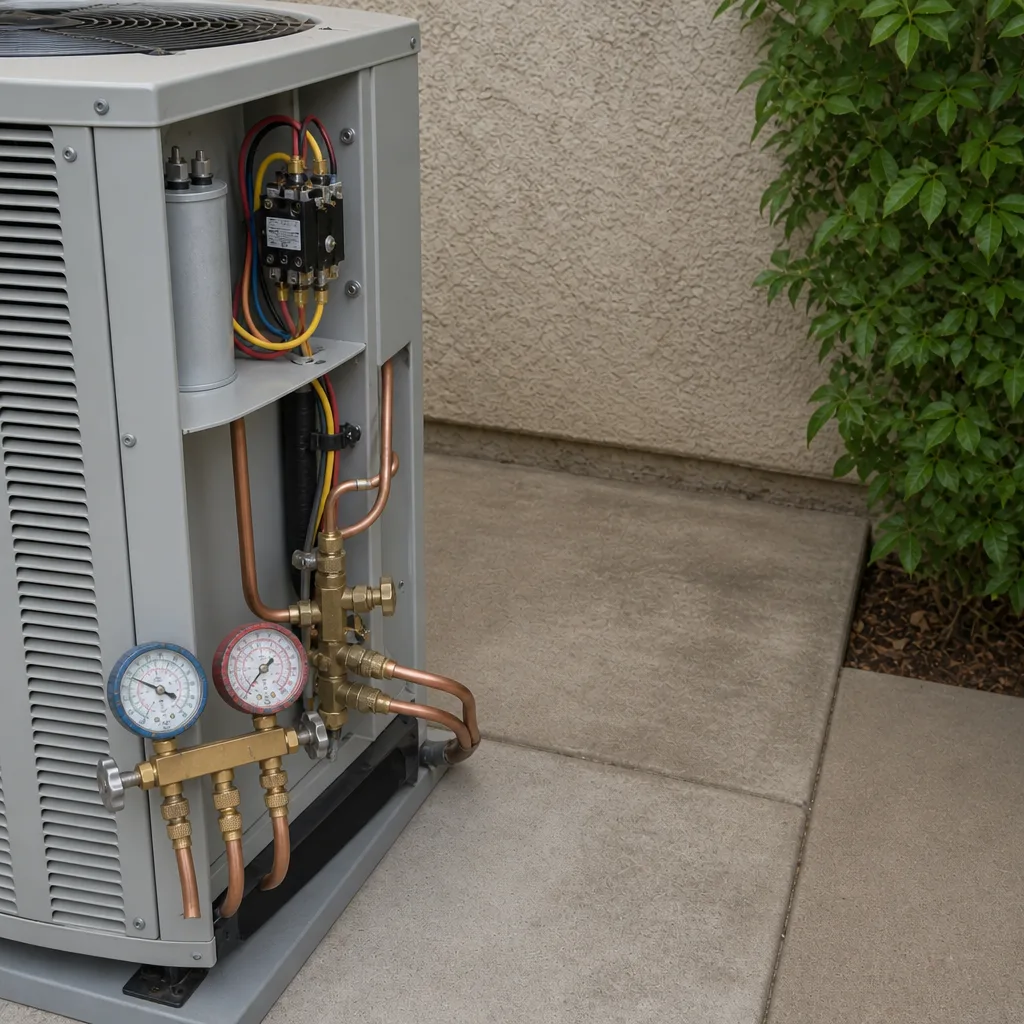
- Verify refrigerant charge with gauges and superheat/subcooling. Not a pressure reading alone – a full superheat and subcooling calculation. This is how a slow leak gets caught before it becomes a mid-July compressor burnout.
- Test the capacitor, contactor, and start components. A weakening capacitor is the second most common cause of “AC won’t start” calls we get in Mesquite. It fails without warning in high heat.
- Check the condensate drain and float switch. In a desert climate, a clogged drain can still flood an attic in monsoon season. The float switch should shut the system down if the drain backs up.
- Run a performance test under load. Measure the temperature drop across the evaporator (return-air temp minus supply-air temp) and compare against the manufacturer’s spec. A 15 to 20-degree drop is typical; anything less needs investigation.
Every job we do carries the 90-Day Done Right Promise. If the work doesn’t hold, we come back and make it right, in writing, no arguing. That’s what a pre-season visit should feel like too – you paid for a specific set of checks, and you should get a written report of what was actually found.
Condenser Coil Cleaning: Timing It to Mesquite’s Dust and Seed-Pod Seasons
Generic advice says “clean the condenser coil annually.” In Mesquite, that’s wrong by a factor of two and it’s timed wrong. Our dust and seed-pod seasons run on different clocks.
Dust season peaks in March through May, when the spring winds lift the valley dust and carry it across every neighborhood. A dirty condenser coil from dust season is already in place before the first serious heat. That’s why the pre-season cleaning happens in early spring, after the dust settles, not in February.
Seed-pod season hits differently depending on which trees are nearby. The cottonwoods and palms in older Mesquite neighborhoods drop fluff and pods in late May and June, and that material finds its way into condenser fins like a filter. In the neighborhoods around the Virgin River corridor, we’ve pulled fist-sized mats of pod fluff off the outdoor coils in June. Sun City homes tend to have less tree cover, so their coil loading is mostly dust.
Here’s the schedule that works:
- March or April: Full condenser coil cleaning, before the first 100-degree week.
- Late June or early July: A second rinse – just the outdoor coil, often as a quick service call. This is the check no generic checklist tells you to do.
- Any time you see the system working harder than it did in May: Ask for a coil inspection rather than assuming the refrigerant is low.
Coil cleaning is not a power-wash job. High-pressure water bends fins and drives dirt deeper. A proper cleaning uses a low-pressure rinse with the right fin-safe cleaner and, where needed, a comb tool to straighten bent fins. If a technician shows up with a garden hose and the throttle wide open, that’s a red flag.
Refrigerant Charge Verification: Why “Looks Fine” Isn’t Fine
A “looks fine” visual inspection misses the slow leak pattern that is genuinely common in desert-climate units. Here’s why. In Mesquite, the outdoor unit bakes at 110-plus degrees for months while cooling, then the system shuts off at night and the metal contracts. That thermal expansion and contraction cycle, repeated thousands of times per summer, works on every braze joint, every flare fitting, and every Schrader valve. A tiny leak that would take five years to manifest in a mild climate can show up in one Mesquite summer.
A proper charge verification uses gauges on both the high and low side, plus a superheat measurement (for a fixed-orifice system) or subcooling measurement (for a TXV system). The technician compares those readings against the outdoor temperature at the time of the check to determine whether the charge is actually correct. A “pressure looks good” statement from a tech who didn’t measure the outdoor temp and calculate the target isn’t verification – it’s a guess.
What to look for in the report:
- The measured superheat or subcooling value, in numbers.
- The outdoor ambient temperature at the time of the reading.
- The target range from the manufacturer’s spec.
- Whether the tech found any signs of oil residue at braze joints or fittings (a slow-leak indicator).
If the system is low, the right response is not “just add refrigerant.” It’s leak detection first, then repair, then charge. Topping off a leak every spring is a treadmill that ends in a compressor replacement. We’ve had Mesquite homeowners call us after three years of annual top-offs asking why the system finally died – the refrigerant didn’t cause the failure, but the slow leak eventually did.
What You Can Inspect Yourself vs. Five Tasks That Require a Licensed Tech
Some of this checklist you can absolutely do yourself. Some you can’t, and it’s not a sales pitch – it’s the reality of working on a high-pressure refrigerant system and a live electrical panel.
What homeowners can legitimately inspect themselves
- The filter. Check it every 30 days in cooling season. If you can’t see light through it when held up to a lamp, change it.
- The outdoor unit’s visual condition. Look for obvious debris against the fins, missing fan blades, or ice on the lines.
- The air handler’s drain pan. Check for standing water or rust, especially after a monsoon storm.
- The thermostat batteries and settings. Verify the thermostat is calling for cool and the batteries aren’t dead.
- The breakers. Confirm the outdoor disconnect and indoor breaker are both on.
The five tasks that require a licensed tech – and that you shouldn’t attempt
- Refrigerant handling. Under federal EPA Section 608 rules, refrigerant can only be handled by a certified technician. Releasing refrigerant to the atmosphere is illegal and dangerous. If you see ice on the refrigerant lines, call a tech.
- Opening the electrical panel or disconnect. The capacitor holds a lethal charge even after the power is off. It can deliver a shock that has killed experienced technicians who forgot to discharge it.
- Evaporator coil cleaning that requires opening the plenum. This is the most common place Mesquite homeowners get into trouble by trying it themselves – sealed systems need to be re-sealed properly afterward to preserve refrigerant containment.
- Charge verification and leak detection. Requires gauges, a leak detector, and the knowledge to interpret superheat and subcooling against ambient conditions.
- Compressor or capacitor replacement. High-voltage, high-stakes work. A capacitor swap looks simple until the discharge shock happens.
If you’re a homeowner here and your system is under 10 years old, a spring tune-up that runs through the full eight-step sequence above is the highest-value maintenance dollar you can spend. Our seasonal tune-up is $89 and comes with a written report of what was found. Technicians aren’t paid on a commission, so there’s no incentive to sell you a compressor you don’t need.
Post-Installation: What to Confirm in Writing Before the Truck Leaves
If you’ve just had a new system installed, the checklist changes. Installation quality in Mesquite is often the difference between a 12-year system and a 20-year system. Before the installer pulls out of the driveway, confirm these in writing – not verbally, in writing, on the work order or a printed commissioning report.
- Manual J load calculation. In Mesquite, oversized systems are a real problem – a 3-ton unit on a house that needs 2.5 tons will short-cycle, won’t remove humidity properly during monsoon season, and will wear out faster. Ask for the load calculation. A contractor who can’t provide it installed by feel.
- Line set pressure test and evacuation. Confirm the installer pulled a proper vacuum (500 microns or below) and held it before adding charge. If they didn’t, moisture can be trapped in the system.
- Static pressure measurement. This is the measurement of how much resistance the ductwork is putting on the system. If it’s too high, airflow is restricted and the system will run hot. Ask for the before and after numbers.
- Temperature split at the return and supply. After a new install, this should land in the manufacturer’s spec range – typically 15 to 20 degrees. Get the number in the paperwork.
- Refrigerant charge by weight. Ask whether the charge was set by weight (per the nameplate) or by superheat/subcooling. Either is acceptable; what matters is that the tech used a specific method and documented it.
- Filter size and airflow note. The installer should tell you the exact filter size, whether the system was configured for that filtration grade, and whether the return-air path has any restrictions.
Job done right, or we make it right. That’s what the 90-Day Done Right Promise means, and it’s the standard we hold every install to. If you’re comparing written estimates and want a second opinion, we offer a free second opinion on any written estimate. It’s not a sales tactic – we’ve had Mesquite homeowners call for the second opinion, keep their original contract, and leave with a better understanding of what they paid for.
Mesquite Neighborhood Notes: What We See Where
Mesquite is not one climate. The neighborhoods sit at different elevations, have different age profiles, and see different failure patterns. Here’s what we actually see:
Sun City Mesquite. Newer construction, mostly systems under 15 years old. The most common calls are capacitor failures and thermostat issues during the first big heat wave. The homes tend to be tight and well-insulated, so the systems run efficiently, but the outdoor units sit in enclosures that trap heat. Coil cleaning matters here even though the dust load is lower.
Older neighborhoods near the Virgin River corridor. The cottonwood and palm tree cover here means seed-pod season hits hardest. We’ve seen condenser coils so fouled in June that the system was tripping the high-pressure switch. If you’re within a couple of blocks of the river, plan for a mid-summer condenser rinse in addition to the spring cleaning.
Outlying homes with longer duct runs. Static pressure issues show up more here. The system is running harder than it should, and the failure mode is a motor that dies at year 8 instead of year 15. A static pressure test on a service call is worth asking about.
Second homes and snowbird properties. Systems that sit off for six months at a time need a different start-up checklist – including a careful inspection for rodent intrusion, pest nests in the outdoor unit, and thermostat settling. We see more than a few of these every spring when the seasonal residents return.
How to Schedule Maintenance Around Mesquite’s Cooling Season
The schedule that works for most Mesquite homeowners:
- March: Book the pre-season tune-up. That’s the full eight-step sequence, not just a filter change.
- June or early July: Condenser coil rinse, especially if you’re near tree cover.
- September or October: Post-season check, before the heating season begins and you forget what the system needed.
- Anytime: Filter changes every 60 days during cooling season. If you can’t remember the last one, do it now.
If your system is over 10 years old and you’re spending $500 or more a year on repairs, it’s worth a straight talk about repair versus replace. We’ll give you the honest comparison, not a hard sell. The full AC repair and installation service guide is a good place to understand what a replacement in Mesquite actually involves.
Common Mistakes to Avoid
- Changing the filter and calling it maintenance. In Mesquite, the filter is one of eight steps. Doing it alone creates a false sense of upkeep and leaves the failing evaporator coil masked.
- Waiting until the first system failure to book a tune-up. Emergency calls in mid-July are more expensive, and they happen during a heat wave when the schedule is full. Book in spring.
- Ignoring the mid-summer condenser rinse. Generic checklists say “annual.” In Mesquite’s dust and pod season, a June rinse is not optional for most neighborhoods.
- Accepting “refrigerant is fine” without numbers. If the technician didn’t measure superheat or subcooling against outdoor ambient, you didn’t get a verification.
- Topping off refrigerant every spring. That’s a leak you’re paying for three times. Have the leak found and fixed.
- Skipping the post-install commissioning report. A new system without written load calc, static pressure, and charge documentation is a system where you’ll never know if it was installed right.
- Using a MERV 13 filter in a system designed for MERV 8. Higher MERV sounds better. It isn’t – the airflow restriction in a desert system makes the evaporator coil work harder and pushes the compressor toward early failure.
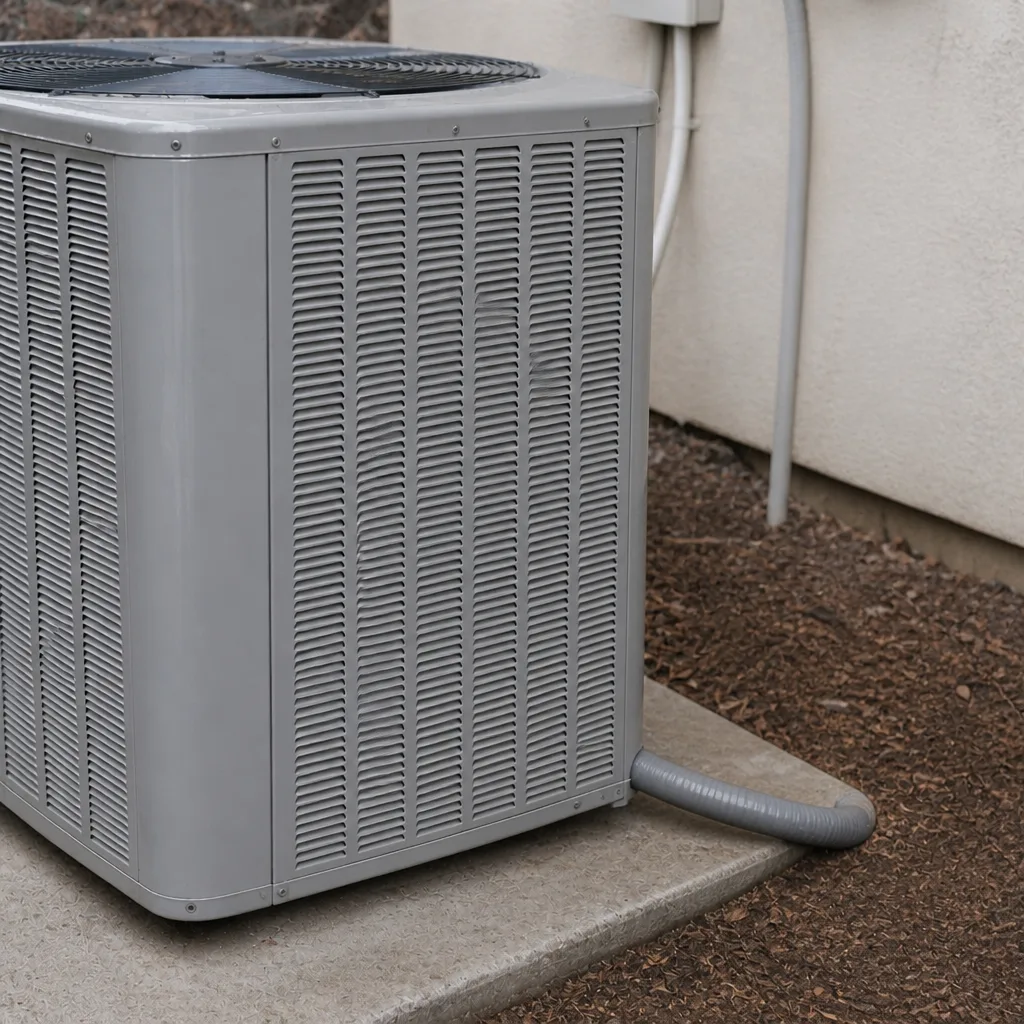
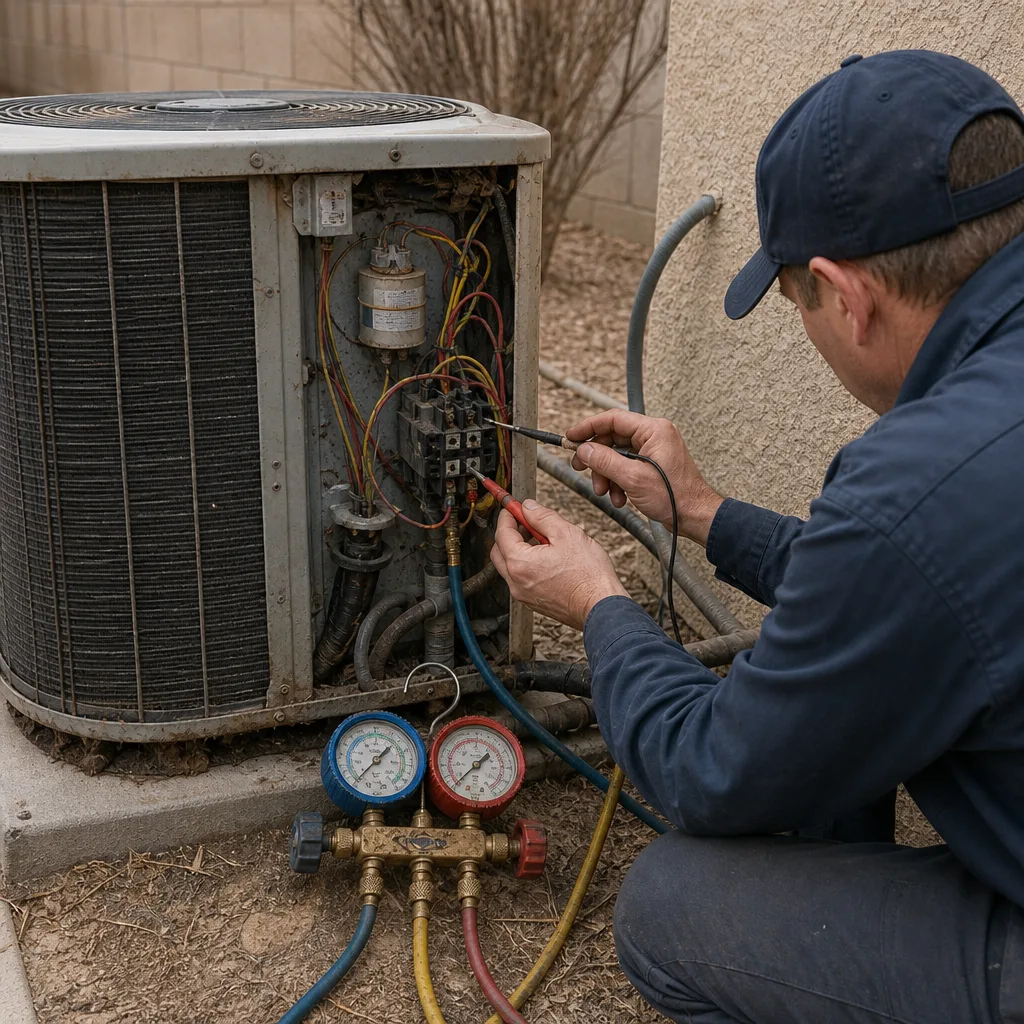
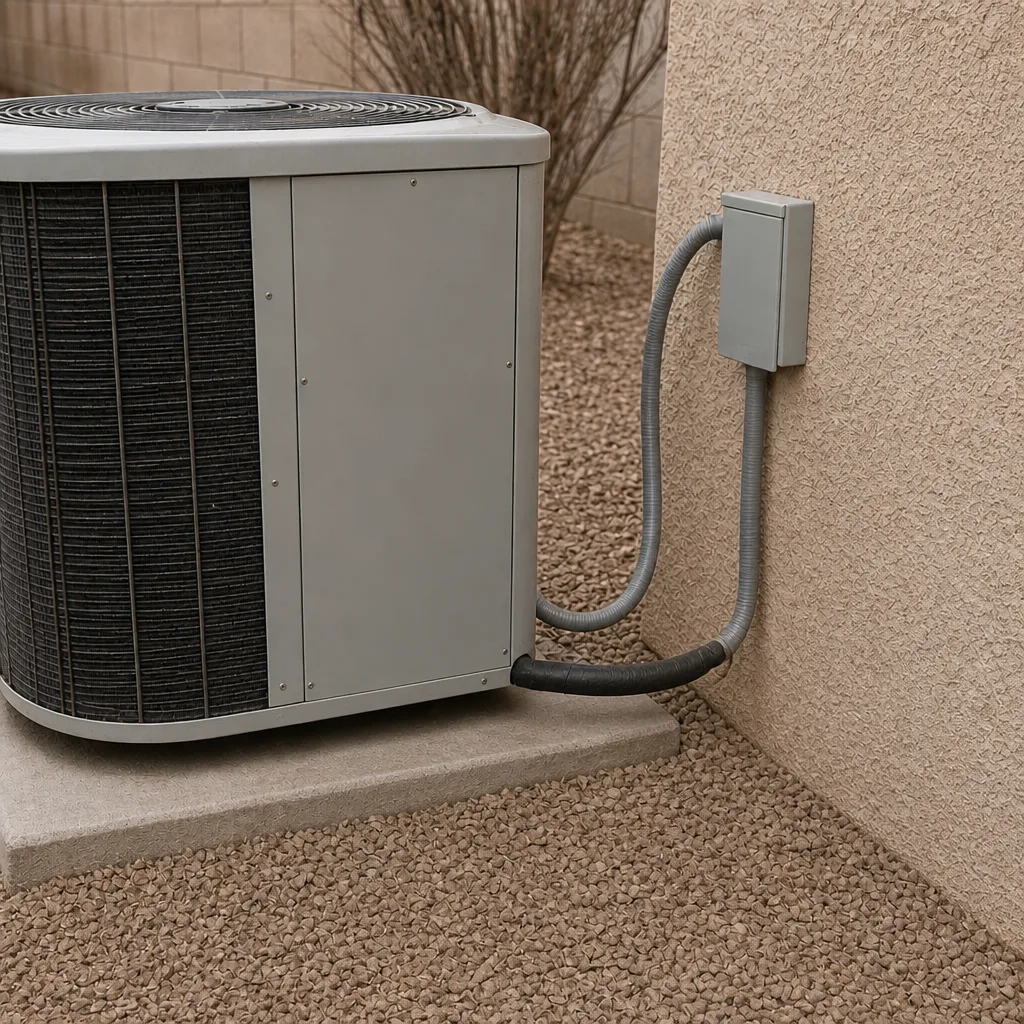
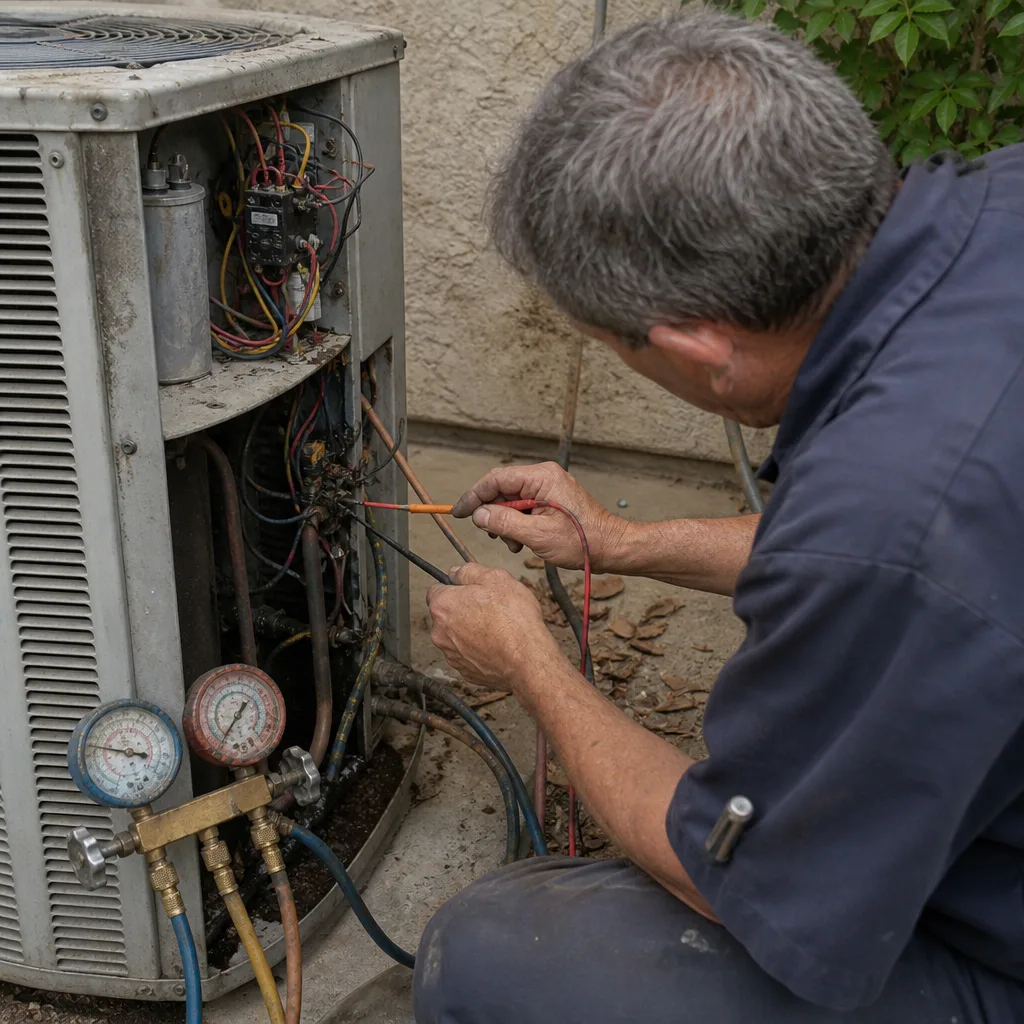
See the difference
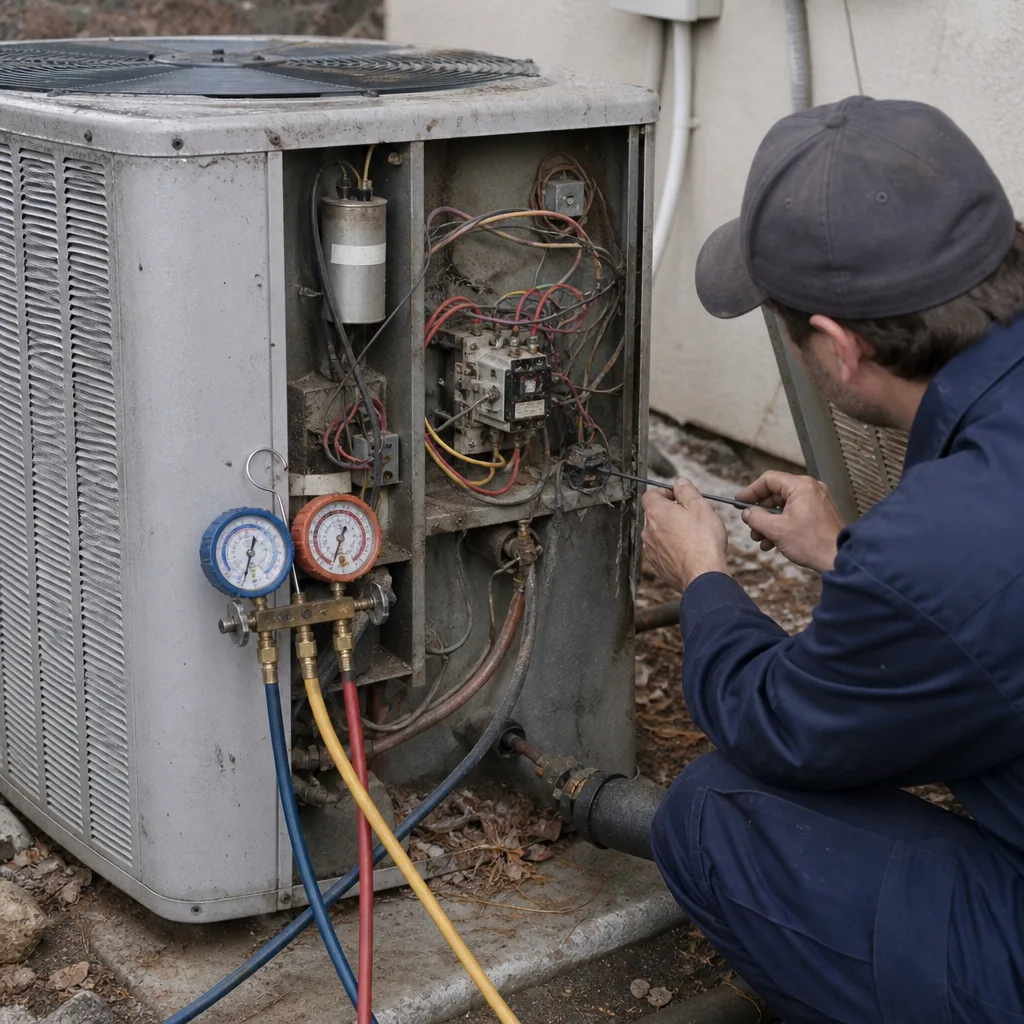 Before
 After
 Before
 After
 Before
 After
When to Call a Professional
Call a licensed HVAC technician when you see any of the following: ice on the refrigerant lines or evaporator coil, water in the drain pan or dripping from the air handler, a system that runs continuously without cooling, a breaker that trips when the AC starts, or a burning smell from the air handler. All of those are beyond a homeowner’s safe range – the ice in particular usually signals a refrigerant or airflow problem that needs gauges and a leak detector.
Also call a professional for any work on the refrigerant circuit or the electrical panel. Those two areas are where a confident homeowner can get seriously hurt or, in the case of refrigerant, run into legal trouble with EPA rules. There’s no DIY shortcut worth the risk.
For everything else – tune-ups, coil cleaning, capacitors, thermostats, and straight answers about whether your system is worth repairing – Fireside Heating & Air Co. Mesquite offers free estimates. Call (888) 570-3601 for an exact quote. Our technicians have up to 8 years of experience, work on Trane, Lennox, Goodman, and Rheem systems among the nine major brands we service, and answer every call with a live person. No voicemail tree, 24 hours a day.
Frequently Asked Questions
Twice a year is the right rhythm in Mesquite: a full pre-season tune-up in March or April, and a condenser coil rinse in June or early July. A single annual service skips the mid-summer coil cleaning that the desert dust and pod season makes necessary. If you want the standard schedule, $89 gets you the seasonal tune-up with a written report of what the technician found. Call (888) 570-3601 to book.
A proper tune-up in Mesquite includes the full eight-step sequence: filter and return-air check, evaporator coil cleaning, condenser coil cleaning, refrigerant charge verification with superheat or subcooling, capacitor and contactor testing, condensate drain and float switch check, electrical check, and a performance test under load. A tune-up that only changes the filter and rinses the outdoor coil skips the two checks most likely to catch a failure before July. Call us for a free estimate on the full sequence.
You can rinse loose debris with a garden hose on low pressure, and you should remove leaves and pod fluff from around the unit. What you shouldn’t do is power-wash the fins or remove the fan cage to get at the coil. Bent fins reduce airflow, and the electrical components inside the cabinet hold a lethal charge. A proper cleaning is a service call, and in most Mesquite neighborhoods it’s worth having done twice a season. Call (888) 570-3601 to schedule.
The reliable signs are ice on the refrigerant lines, a system that runs constantly without reaching the set temperature, and a slow rise in your electric bill over the cooling season. A gauge reading alone doesn’t tell you – proper verification uses superheat or subcooling measured against the outdoor temperature. If the reading says low, the next step is leak detection, not a top-off. Call us for a free second opinion on any written estimate.
The rule of thumb: if the system is over 12 years old and the repair is more than a third of the cost of a new system, replacement usually wins. In Mesquite’s climate, systems run harder and age faster than in mild climates, so a 12-year-old unit here is often at the end of its economic life. That said, a capacitor or contactor is a cheap fix on a system with plenty of life left. We’ll give you the honest comparison, backed by the 90-Day Done Right Promise if you do repair.
Yes – we answer the phone with a live person 24 hours a day, and we prioritize no-cooling calls during heat waves. Spring maintenance is scheduled, but a system down in July gets a same-day visit when the schedule allows. Call (888) 570-3601 for the fastest response.
The Bottom Line
A Mesquite AC repair and maintenance checklist lives or dies by its order. Filter first, evaporator coil second, condenser coil on the dust-and-pod schedule, refrigerant verified with gauges and superheat numbers, electrical and capacitor tested, performance verified under load. The homeowner who does this in spring and again in mid-summer spends less and stays cooler than the one who changes the filter and trusts that it’s enough. The five tasks you can’t safely do yourself – refrigerant, electrical, coil cleaning that opens the plenum, charge verification, and compressor or capacitor work – are worth the call. Fireside Heating & Air Co. Mesquite has served Mesquite homeowners for over 42 years, and we still run every tune-up to the same eight-step sequence, with a written report of what was found.
If you’d like a second set of eyes on your system this season, or a free estimate on a repair or replacement, call (888) 570-3601. Our technicians have up to 8 years of experience, work on Trane, Lennox, Goodman, and Rheem among the nine major brands we service, and arrive background-checked and uniformed. The price quoted is the price paid, and every job is backed by the 90-Day Done Right Promise. Done right, or we make it right. Explore the Fireside Heating & Air Co. Mesquite home page for the full picture of what we do, or dig into AC Repair & Installation in Mesquite for the repair-and-replace decision, Heating & Furnace in Mesquite for the heating-side checklist, and Heat Pump & Mini Split in Mesquite if you’re running a different system type.
Written by the team at Fireside Heating & Air Co. Mesquite.