
Last updated November 18, 2026
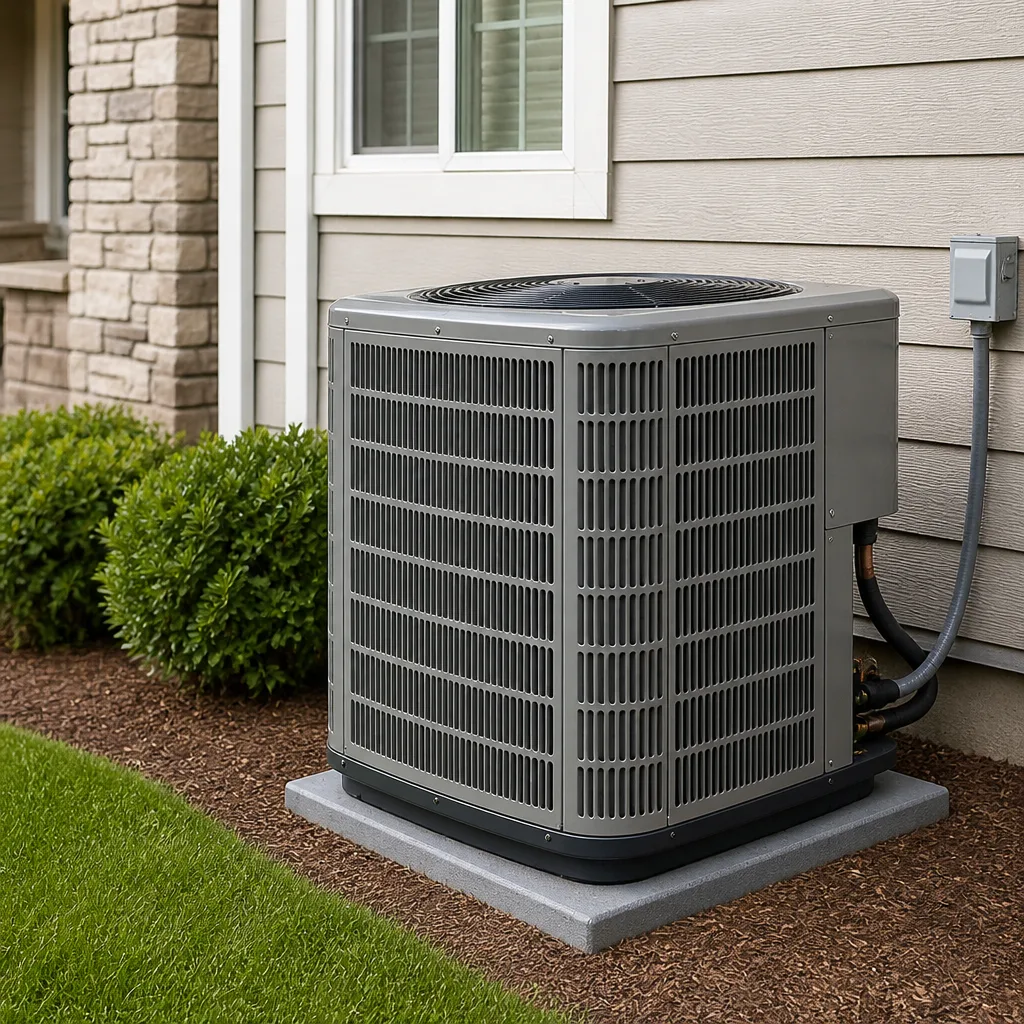 AC repair
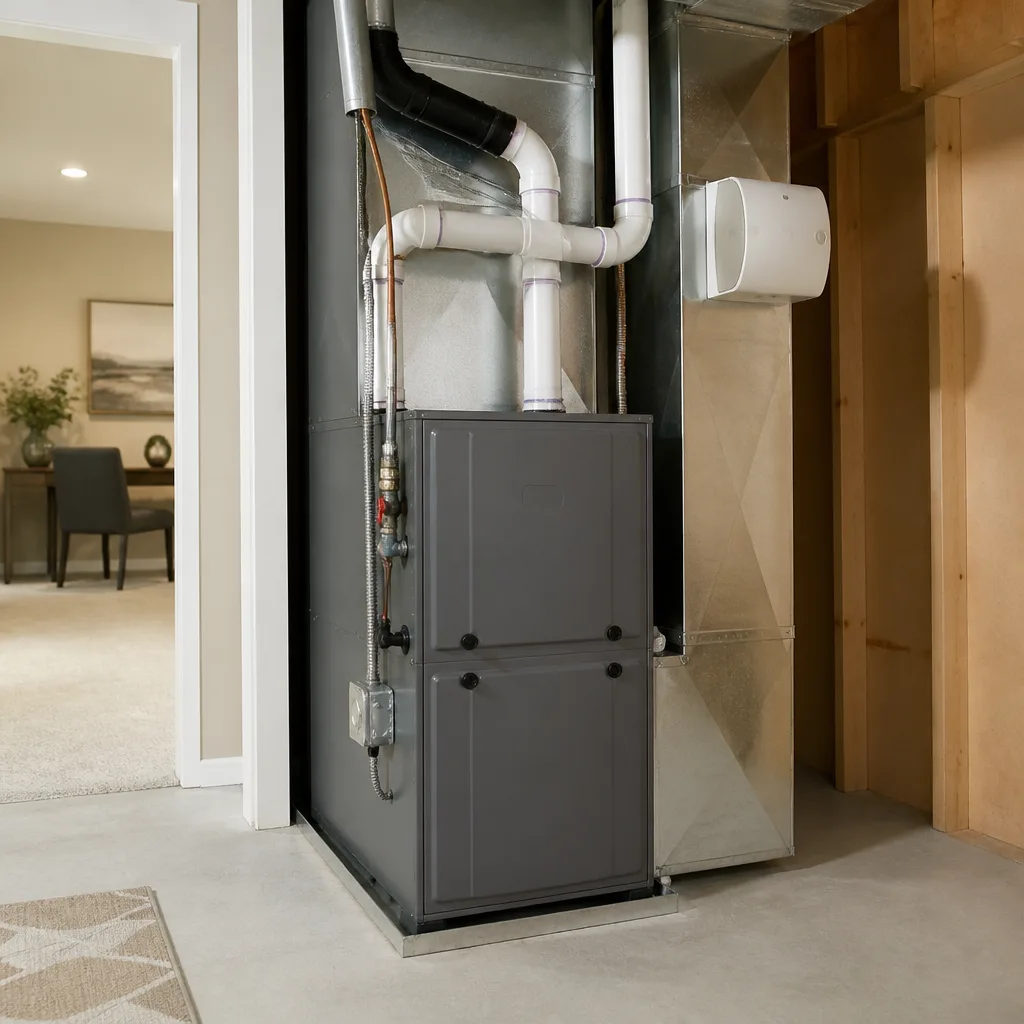 Furnace & heating
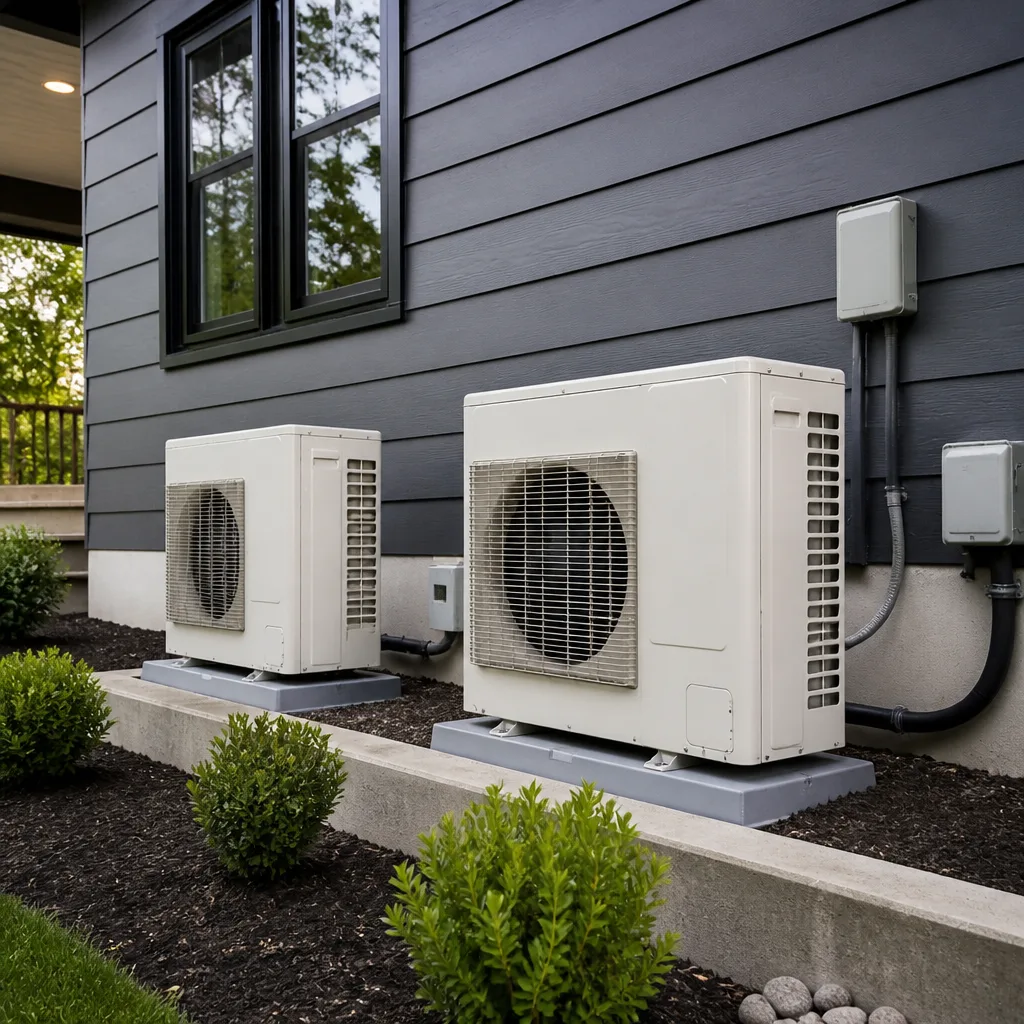 Heat pumps
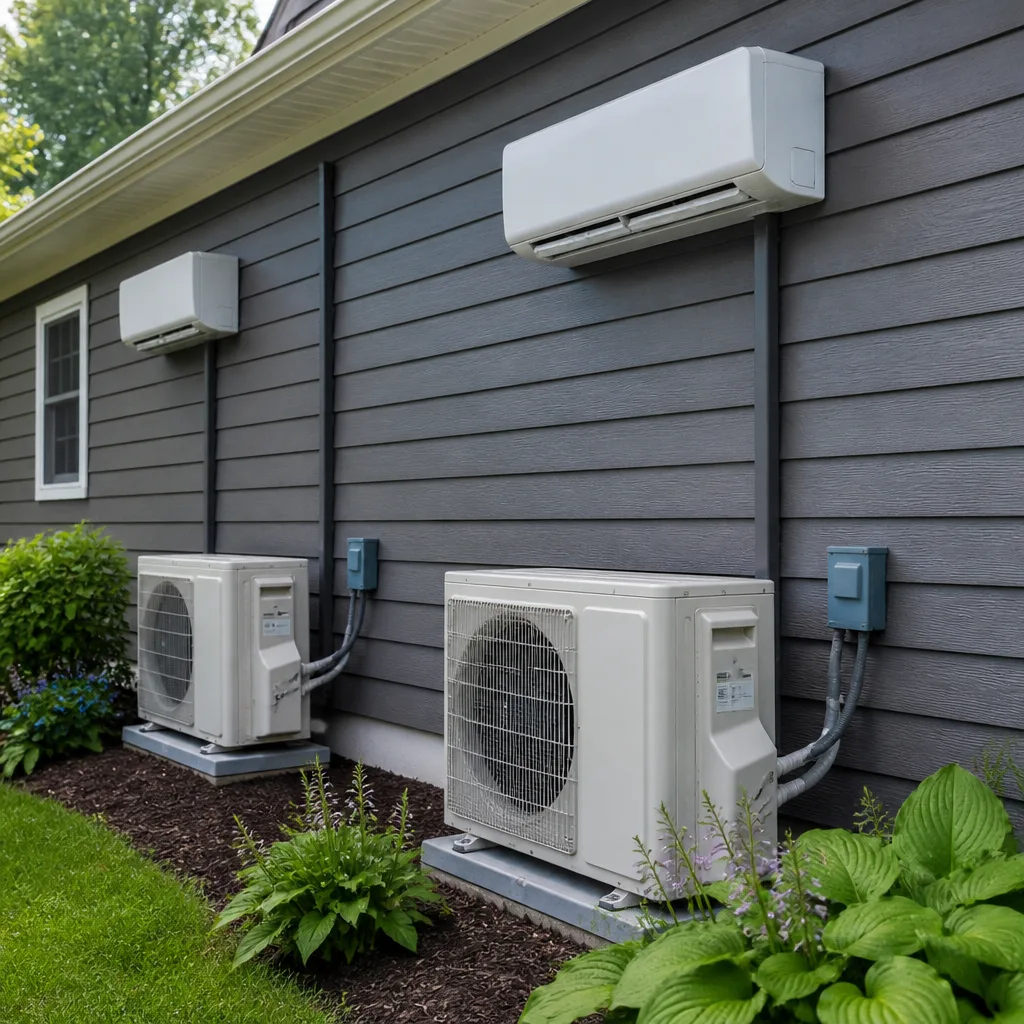 Ductless mini splits
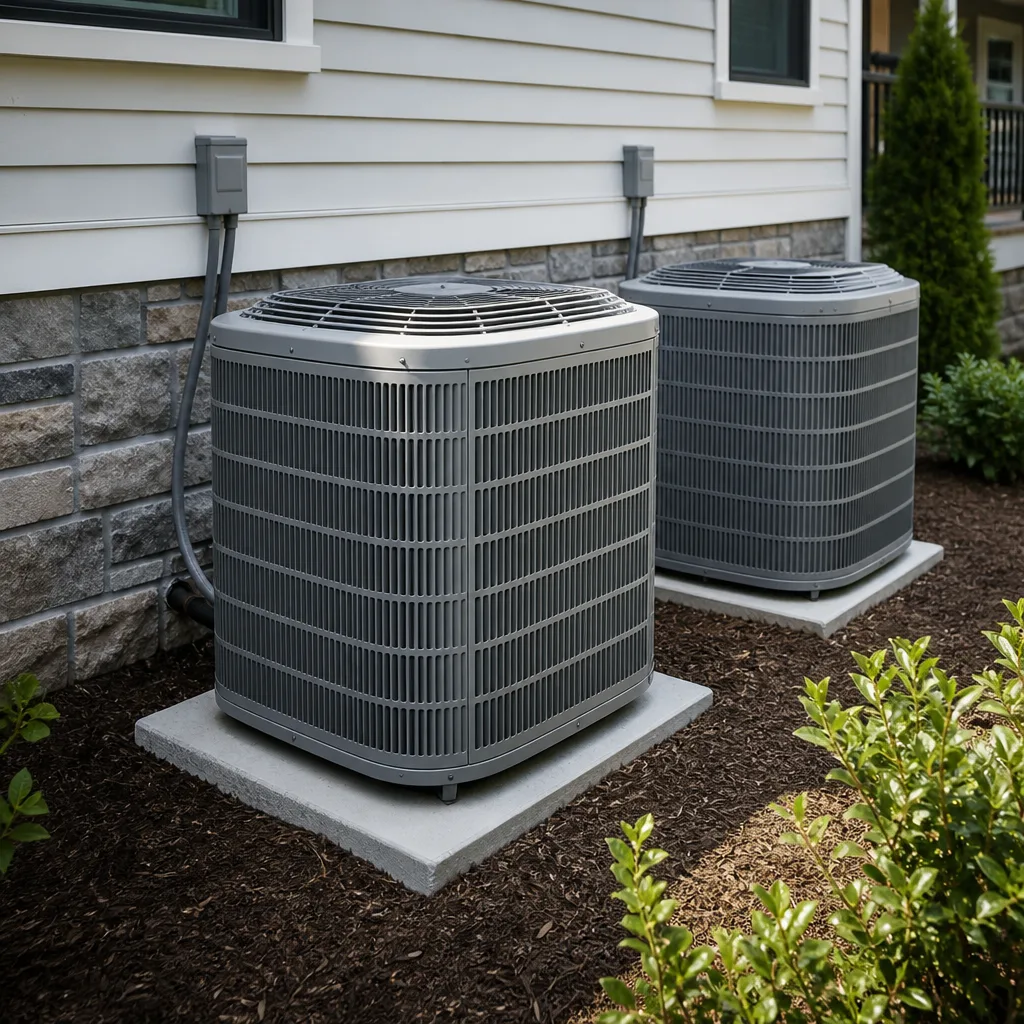 Carrier
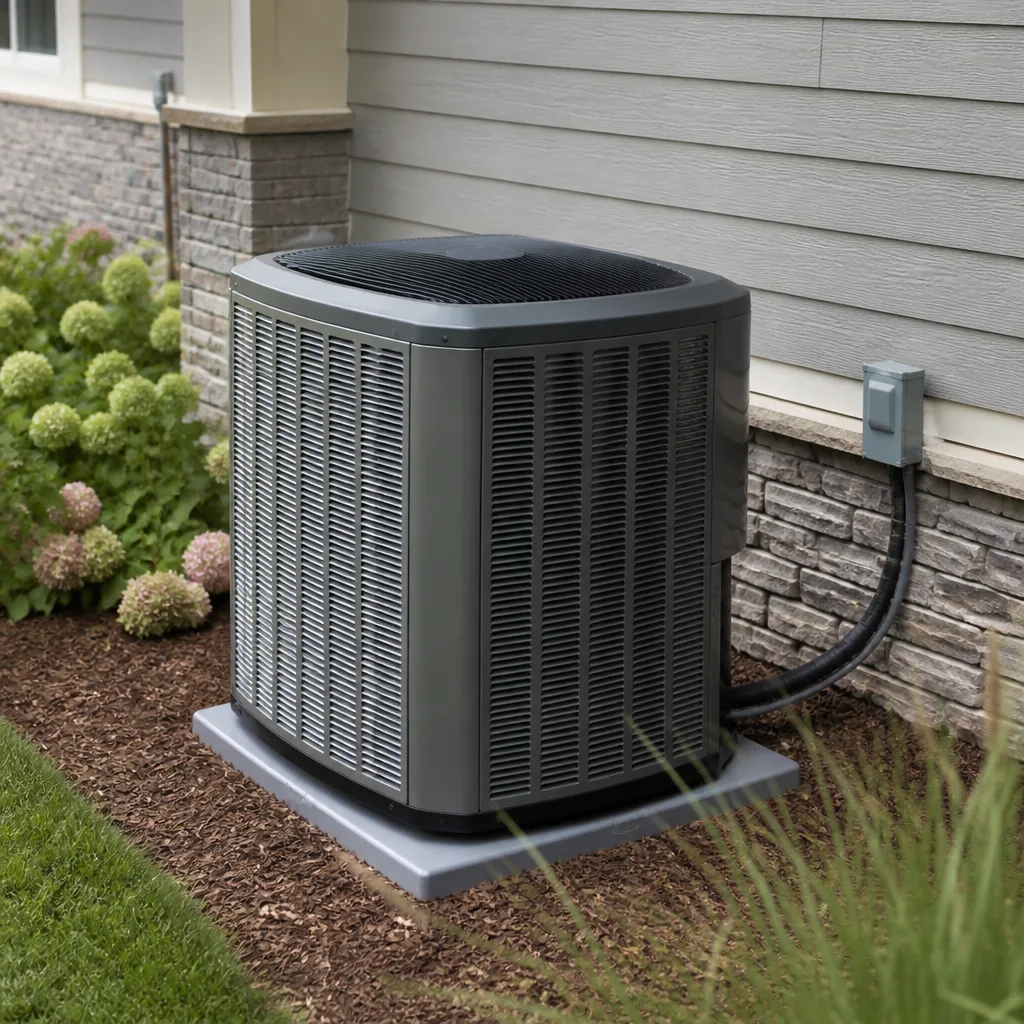 Trane
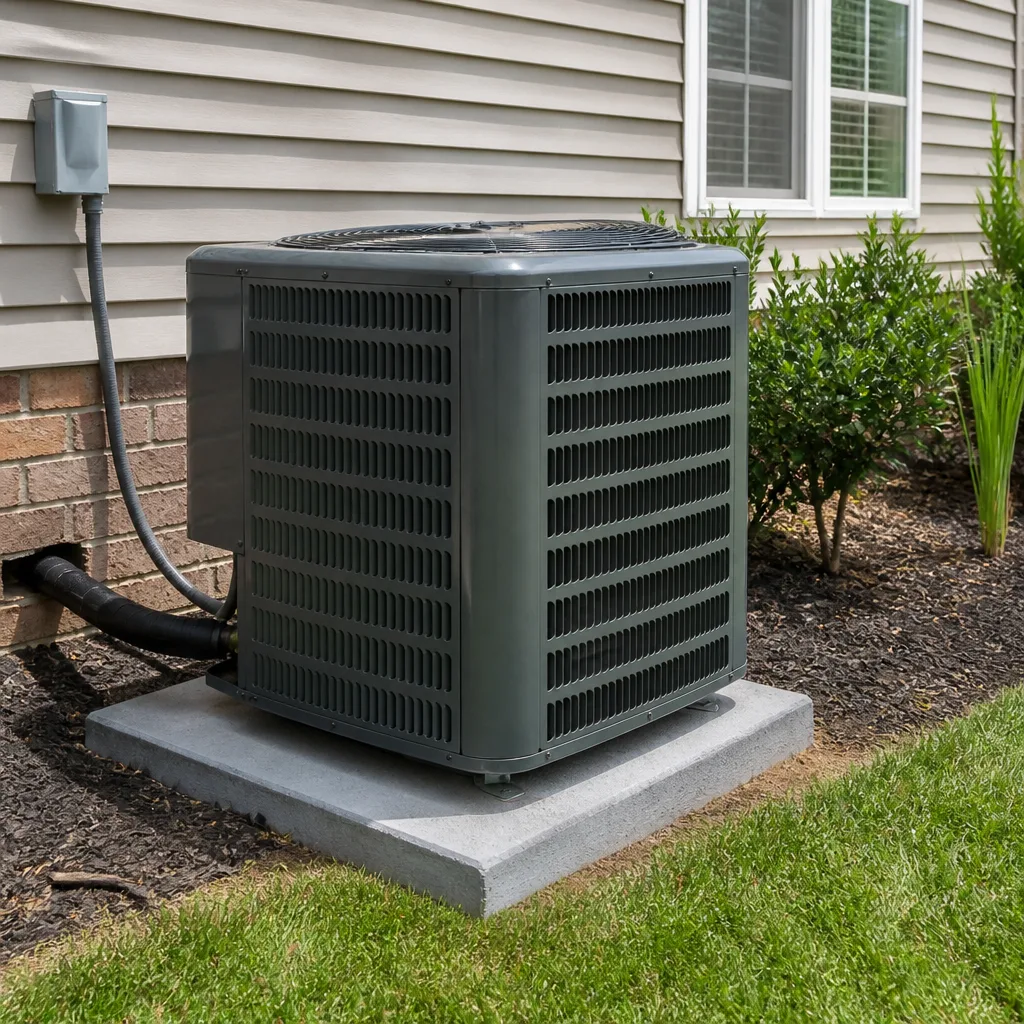 Goodman
Seasonal tune-up and full diagnostic on your Carrier, Trane, or Goodman system - readings shown to you before any repair is proposed
Diagnosis first, numbers second - you approve the repair price before a single part goes in.
Get your free estimateEmergency & Commercial HVAC Warning Signs Every Homeowner Should Know
Here’s the trouble with commercial HVAC: it almost never fails all at once. It fails in stages, and most of those stages are quiet. A rooftop unit running 4 degrees above set point on a July afternoon in Mesquite is already in partial failure, but it’s still blowing air, so nobody picks up the phone. Then the monsoon humidity rolls in, a compressor gives out on a Saturday, and a fully booked commercial space turns into a 100-degree problem by Monday. This guide walks you through the signals your system sends weeks before that happens, from the supply-to-return temperature test you can run with a cheap thermometer to the employee complaint pattern that predicts capacity loss. Read it once and you’ll never look at a warm afternoon the same way.
Quick Answer
Commercial HVAC systems broadcast two kinds of warning signs: loud ones (banging, grinding, water on the floor) and silent ones (a 15 – 20% jump in cooling costs, hot-and-cold spot complaints spreading across a floor plan, or a supply-to-return temperature split that’s dropped to 12 degrees when it should be 18 – 22). The silent signals matter more because they degrade capacity over weeks and land you in an emergency on the hottest day of the year. Watch the quiet signals and you’ll rarely face the loud ones.
Styles & brands we work with
- AC repair
- Furnace & heating
- Heat pumps
- Ductless mini splits
- Carrier
- Trane
- Goodman
Table of Contents
- The Delta-T Test: Reading Supply and Return Temperatures
- Your Utility Bill as a Diagnostic Tool
- Sound-Based Warnings from Rooftop Units
- Why Condensate Failures Spike in Mesquite After Monsoon Season
- The Employee Complaint Pattern That Predicts Failure
- Pure Emergency Signs You Cannot Ignore
- Homeowners: Same Warnings Apply to Your House
- What Routine Maintenance Actually Catches
The Delta-T Test: Reading Supply and Return Temperatures
A $20 infrared thermometer and ten minutes of walking your space can tell you more about system health than most people realize. The delta-T is the difference between the temperature of the air going into the return grille and the air coming out of the supply register. On a properly charged, properly operating system, that split should run 18 to 22 degrees Fahrenheit in cooling season. If you’re reading 12 or 14 during the hottest part of the day, your system is working harder than it should be and losing ground.
Here’s how to measure it without a service call:
- Pick a mid-afternoon window, ideally between 2 and 5 p.m. That’s when the load on your system is highest and problems reveal themselves.
- Hold the thermometer (or its probe) against the return grille and let it settle for a full two minutes. Write the number down.
- Move to the nearest supply register in the same zone and hold there for two minutes. Write that number down.
- Subtract the supply from the return. That’s your delta-T.
- Repeat on two more registers in different zones. If you see big swings between them, you have a distribution problem – bad damper settings, a leaking duct connection, a collapsed flex run.
In Mesquite we see delta-T drop to 10 – 13 degrees on commercial units that haven’t been serviced for two or three summers. That gap is a warning you’re three to six weeks from a compressor failure, especially on older Carrier and Trane rooftop equipment that’s been running on the original charge. If any of this sounds like the air side of your home’s system, our guide to AC Repair & Installation in Mesquite gets into the residential side of the same readings.
Your Utility Bill as a Diagnostic Tool
The most underused HVAC diagnostic costs nothing and shows up every month. Compare a year-over-year cooling-season bill to the same month twelve months prior. If you see a 15 – 20% increase and you haven’t added equipment, expanded hours, or changed your schedule, you have a system warning on your hands. It’s not a rate hike. It’s your system telling you it’s lost efficiency.
Common causes of that unexplained increase:
- Low refrigerant charge – the compressor runs longer to reach set point, and every extra minute shows up on the meter.
- Failing condenser fan motor – the fan still turns, just not fast enough. Ten percent slower, and the unit loses real capacity.
- Dirty coils – a fouled outdoor coil in Mesquite dust can knock efficiency down 10 – 25% on its own.
- Refrigerant slugging – liquid refrigerant reaching the compressor, which shortens its life and drags efficiency down before the failure.
- Economizer stuck shut – you’re paying to run mechanical cooling when outside air would have done the job for free.
If the jump is 15% or more and you’ve ruled out a schedule or occupancy change, get a professional out before the peak heat. Fireside Heating & Air Co. Mesquite offers a free second opinion on any written estimate, which is a good way to sanity-check a diagnosis before you commit.
Sound-Based Warnings from Rooftop Units
Commercial rooftop equipment talks. Most facility managers tune it out because they hear it every day. Here’s what the three most common sounds actually mean.
Refrigerant Slugging
It sounds like a low, metallic knock or hammering coming from the compressor compartment, usually lasting a second or two at a time. That’s liquid refrigerant being drawn into the compressor instead of vapor. Slugging is the single loudest warning sign on a commercial unit, and it can destroy a compressor in a matter of weeks. It usually points back to a metering device problem or an overcharge.
Bearing Wear
A high, steady whine or squeal from the fan motor or blower bearings. It doesn’t get better on its own. Bearing wear accelerates in summer heat, and a seized bearing on a rooftop unit takes the motor with it, sometimes the shaft and wheel too. A $200 bearing replacement becomes an $1,800 motor job when you wait.
Economizer Flutter
A rhythmic clapping or flapping sound from the economizer hood, often at the same time every afternoon as outside temperatures swing. That’s the damper control hunting, and it’s a symptom of a stuck or miscalibrated actuator – which means your economizer is likely not working. A 2017 study of commercial rooftop units found economizer dampers failed or were disabled on the majority of units surveyed. If you’re hearing flutter, assume yours isn’t doing its job. We see it constantly on Bryant and American Standard rooftop systems around Mesquite that have never had the economizer serviced.
Why Condensate Failures Spike in Mesquite After Monsoon Season
Mesquite runs dry almost all year, which is exactly why condensate drain problems catch people flat. During the monsoon months of July through September, when humidity jumps and your system pulls far more moisture out of the air than it does in spring, condensate lines that have been quietly draining for eleven months start backing up. The early evidence is easy to spot if you know where to look.
What to check, in order:
- Look at the drain pan under each air handler or rooftop unit. Standing water, rust, or a slick of biofilm on the pan surface means a slow drain. That biofilm is usually a mix of algae and debris, and it forms fastest in the shoulder months.
- Check the pan’s overflow switch or safety float. If the system has a float switch, trip it manually with a gentle lift and confirm it shuts the unit off. A float that doesn’t cut the unit is a switch failure waiting to become a water damage call.
- Watch the drain line outlet. A steady, clear trickle is fine. A drip that’s recently slowed down, or that stopped entirely, means the line is partially plugged.
- Look for water staining on ceiling tiles, drywall, or roof structure directly below or around the unit. That’s evidence the pan has already overflowed at least once.
In a Mesquite commercial space, most of these drain pans sit on a flat roof or in a mechanical closet that nobody visits. That’s why the first sign of trouble is usually a wet ceiling on the hottest day of the year and a scramble to find someone. Any signed, verified water intrusion below a rooftop unit is a call-today issue. Water and electrical controls don’t mix well.
The Employee Complaint Pattern That Predicts Failure
Listen to the complaints your people make about being too warm or too cold. Not one complaint. The pattern of complaints over weeks. When a system is losing capacity, the pattern looks like this: a handful of “my office is hot” comments in one corner of the floor first, then a few more three weeks later, then a general grumble that the whole space just isn’t comfortable anymore. That’s not a thermostat quirk. That’s a system losing ground zone by zone.
The specifics we look for when a Mesquite business owner tells us about “hot and cold spots”:
- Complaints clustering geographically – the southwest corner in the afternoon, one row of desks by a window wall, one conference room and nowhere else. That pattern points to a failing zone damper, a blocked supply, or a VAV box losing its actuator.
- Complaints spreading outward from the original cluster – the problem isn’t a bad register, it’s a system running short on capacity that’s now affecting more of the space.
- Complaints getting worse at 3 – 5 p.m. – afternoon peak load. Classic low-charge or undersized-capacity signature.
- Complaints that follow the seasons once, then persist year-round – the system’s lost ground and the building envelope alone can’t cover it.
If two of these patterns overlap, don’t wait for a breakdown. The system is running in partial failure. Controllers on a Daikin VRV system, a modern Bryant packaged unit, or an older Trane rooftop all log the same kind of data – discharge temperature, runtime, set-point deviation – and a service call can read that history before the system locks out entirely.
Pure Emergency Signs You Cannot Ignore
There’s a whole separate category of warning that moves from “schedule a call” to “shut it down and call now.” These are the ones that put people or property at risk, not just comfort.
- Burning smell, hot plastic, or scorched wiring odor from any air handler, rooftop unit, or electrical panel feeding the equipment. Shut power at the disconnect, then call.
- Repeated breaker trips on the HVAC circuit. Never reset more than once without a technician looking at the circuit. Wiring and motors have failed in ways that will fail again, sometimes with heat.
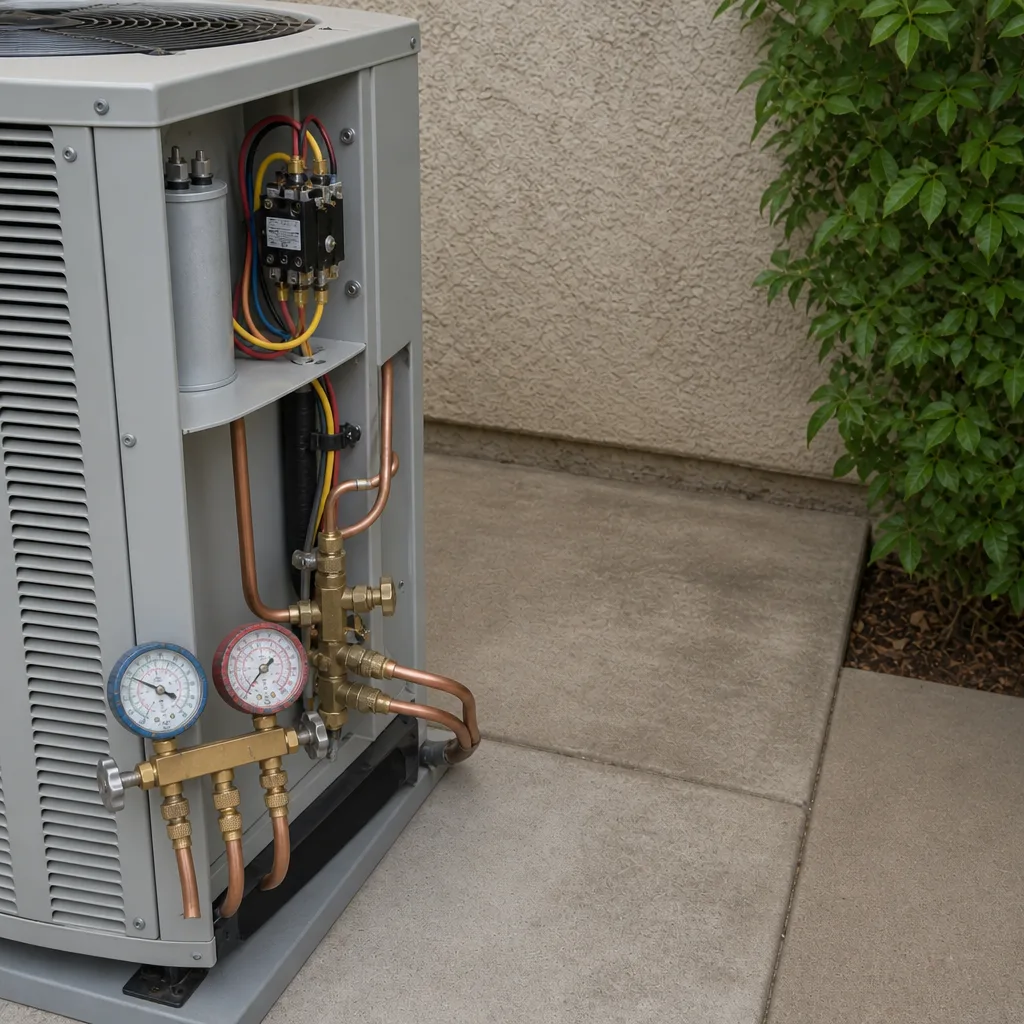
- Frost on refrigerant lines or the suction side of the indoor coil while cooling mode is running. That’s a symptom of low charge or a metering problem, and the compressor is being asked to work against the wrong conditions.
- Standing water or ceiling staining anywhere water belongs on a floor under or around HVAC equipment.
- Any electrical burning smell or smoke at the outdoor disconnect or control board. These involve energized equipment, high voltage, and refrigerant under pressure. This is not a homeowner or facility-manager repair, and we don’t recommend opening control panels to investigate. Get someone trained out right away.
Fireside Heating & Air Co. Mesquite operates with a live person answering the phone around the clock, so an after-hours emergency gets a real human, not a voicemail system. The Fireside Heating & Air Co. Mesquite home page lays out the standing offers and the 90-Day Done Right Promise that comes with every repair.
Homeowners: Same Warnings Apply to Your House
If you own a home in Mesquite rather than a commercial building, all of this applies directly to your system, just at a smaller scale. The delta-T test works on your residential evaporator coil and air handler exactly the same way. A 15 – 20% jump in your summer power bill is the same signal it is on a rooftop unit. Dirty coils, low charge, failing capacitors, and stuck economizers do the same damage in a house in Sun City Mesquite that they do in a strip center.
The one meaningful difference is risk. A commercial building losing capacity makes people uncomfortable and costs money. A house losing cooling capacity in a July heat wave is a health risk, especially for older residents. That’s why we treat residential no-cooling calls with the same urgency as commercial emergencies, and why we answer every call live, 24 hours a day. If you’re weighing repair against replacement on a system that’s twenty years old and running hot, our Heating & Furnace in Mesquite page covers the repair-or-replace math clearly.
And if your home’s system is a heat pump or ductless mini-split rather than a conventional furnace and condenser, the diagnostic readings differ, and our guide to Heat Pump & Mini Split in Mesquite covers the specific signs to watch on those.
What Routine Maintenance Actually Catches
Spring maintenance exists because most commercial HVAC failures start as something small, cheap, and invisible from the outside. A properly done tune-up catches those before they become an emergency. Concretely, here’s what a real maintenance visit looks for on your system:
- Refrigerant charge by superheat and subcooling, not by “feels cold.” Low charge is the most common precursor to compressor failure, and it shows up long before symptoms do.
- Capacitor reading versus rated capacitance. A start capacitor running at 40% of its rating is three weeks from failing on the hottest day of the year.
- Economizer operation, tested end to end, not just eyeballed. If the damper won’t move, you’re paying for cooling you didn’t need to pay for.
- Condensate pan, drain line, and float switch cleaned and tested.
- Belt tension, bearing wear, and blower balance on any belt-driven air handler or rooftop unit.
- Filter condition and static pressure across the air handler, because high static pressure tells you more about an airflow problem than the filter itself does.
Fireside Heating & Air Co. Mesquite runs a seasonal tune-up at $89, with a written report of exactly what was found. No one on our team is paid on what they sell, so the report tells you what the equipment actually needs and nothing more. That’s the difference between maintenance and a sales visit.
Common Mistakes to Avoid
- Waiting for a full breakdown before calling. A system running in partial failure is already expensive. Every week you wait adds runtime to a compressor that’s working against a problem you could have caught cheaply.
- Treating a warm afternoon as a rate hike. If your cooling cost jumps 15 – 20% year over year with no schedule change, your system is telling you something. Don’t blame the utility until you’ve checked the delta-T.
- Ignoring the “hot and cold spots” complaint. When two employees complain about the same corner of the building, that’s evidence. When five do, that’s a system losing capacity.
- Skipping the economizer check in spring. Most rooftop economizers we test in Mesquite are stuck or disabled. That’s money every afternoon, all summer.
- Resetting a tripped breaker more than once. A circuit that trips twice has a fault. Call a professional instead of resetting it repeatedly.
- Letting the condensate pan go unvisited until the ceiling stains. Water damage is exponentially more expensive than a drain-line clearing. Look at the pan every spring, before the monsoons.
- Calling the lowest bidder after an emergency. An emergency brings out the vultures. The company you want on the phone at 2 a.m. is the one you already called twice, whose price was what it quoted, and whose guarantee is in writing.
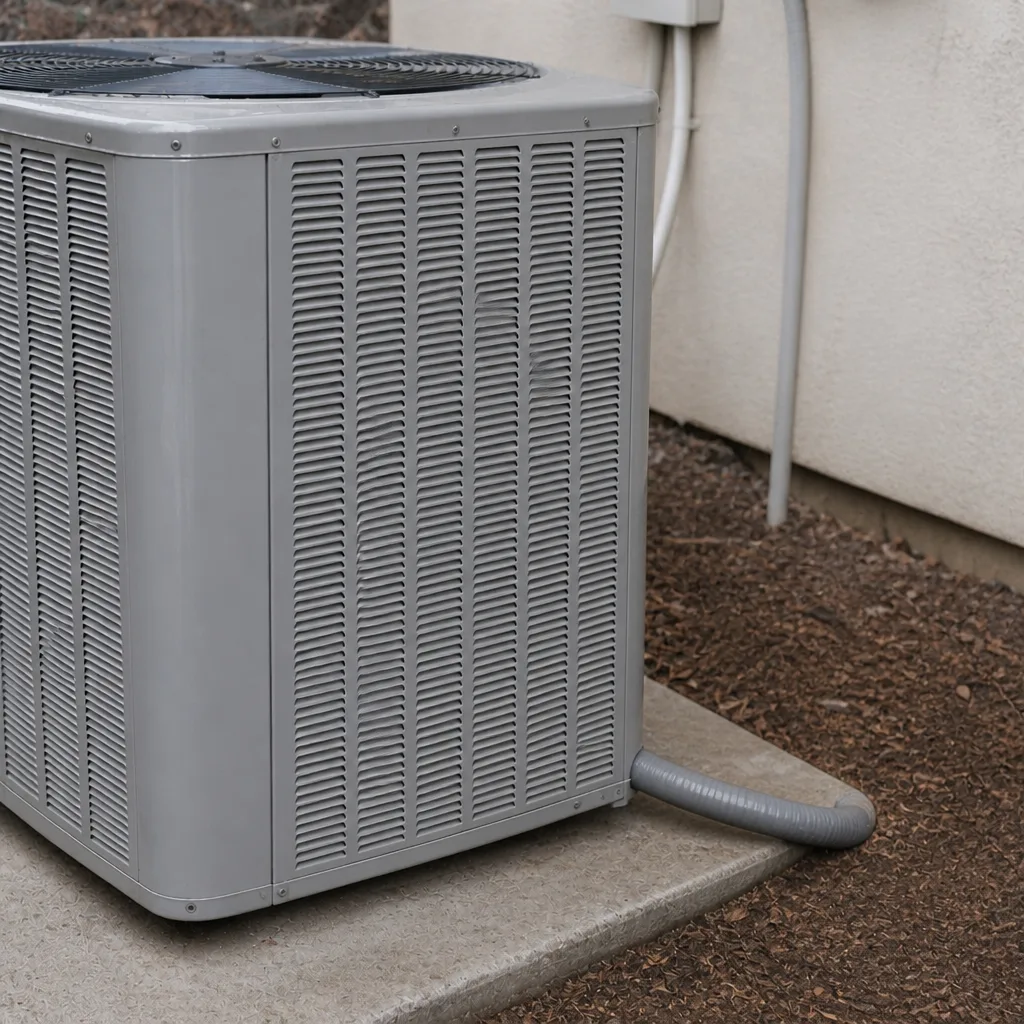
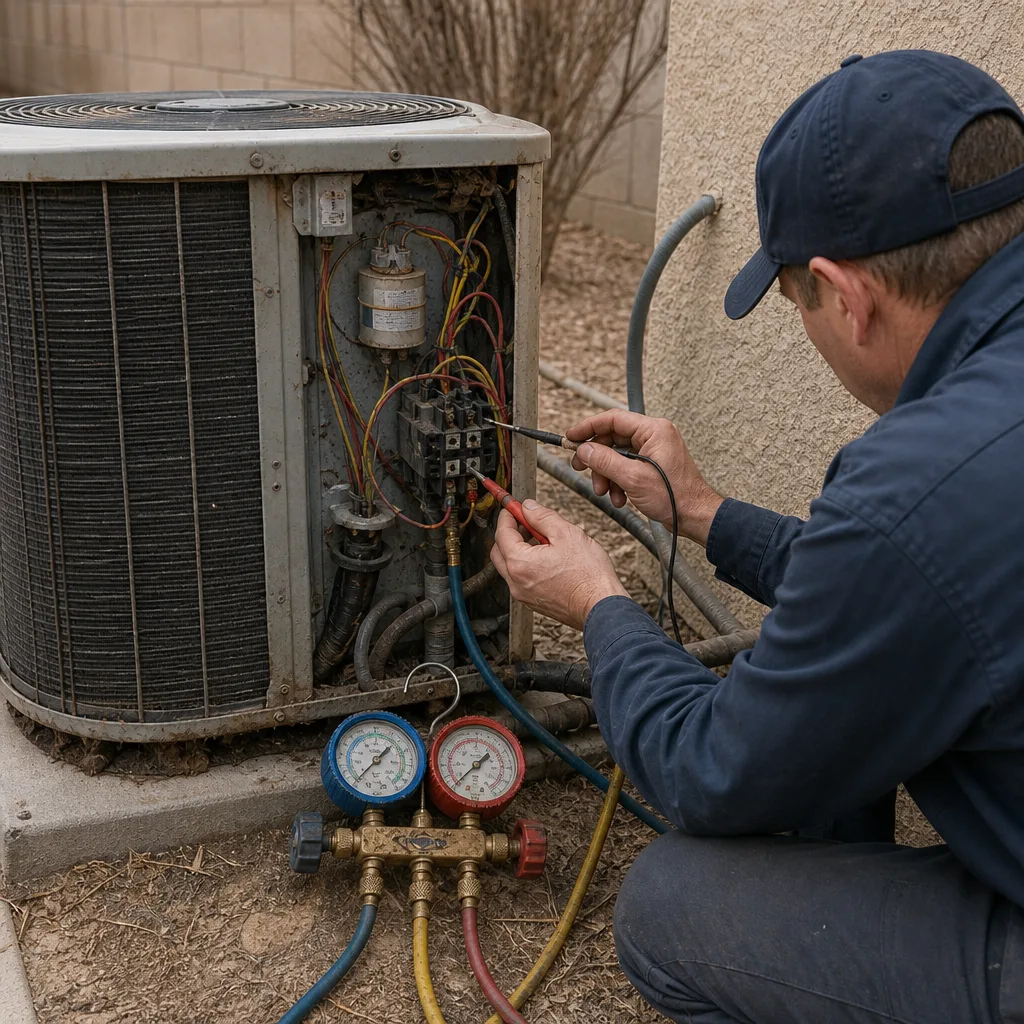
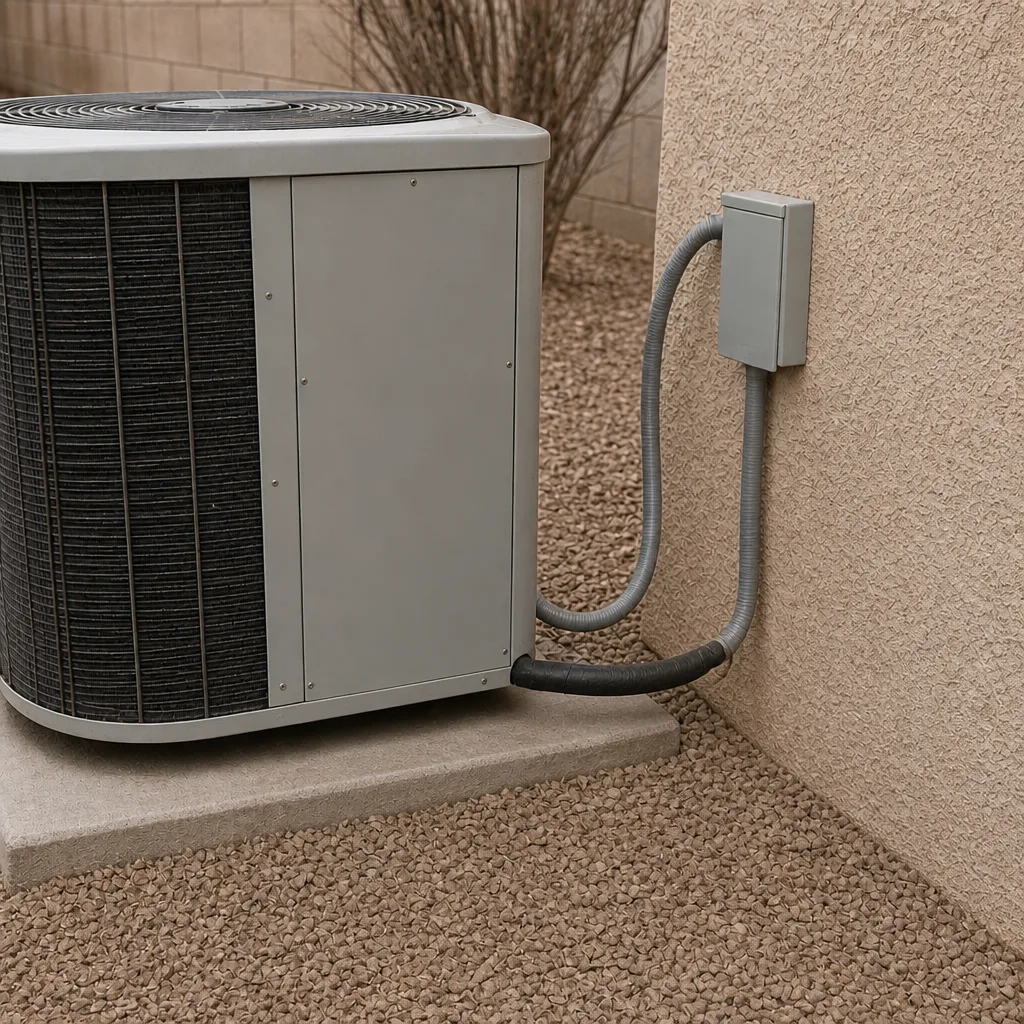
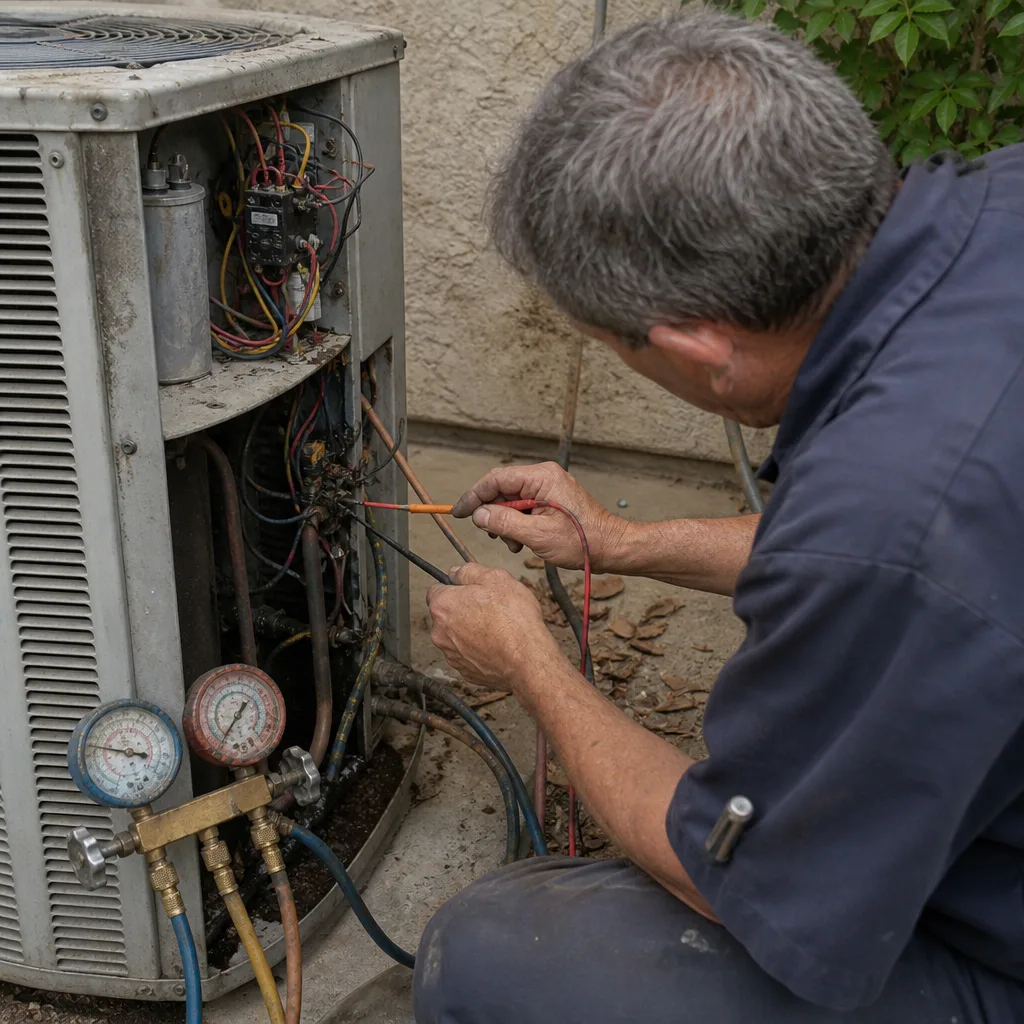
See the difference
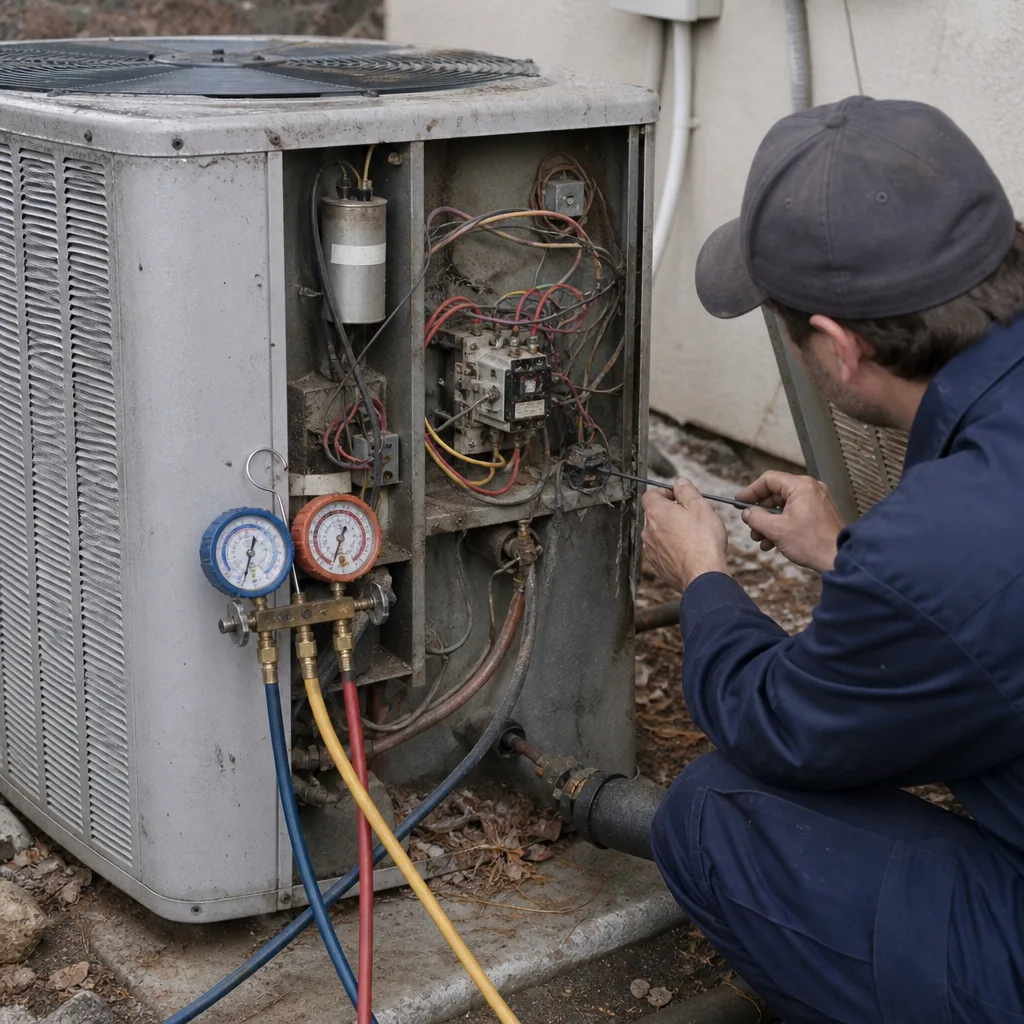 Before
 After
 Before
 After
 Before
 After
When to Call a Professional
Call today, not next week, if you’re seeing any of the following: delta-T readings below 14 during afternoon peak, a 15% or more year-over-year cooling cost jump, a burning smell or repeated breaker trips, frost on refrigerant lines, an economizer that flutters or won’t move, a wet ceiling below a rooftop unit, or complaints spreading across your floor plan. Any one of those is a warning. Two or more is a partial failure that needs eyes on the equipment. Fireside Heating & Air Co. Mesquite offers free estimates in Mesquite – call (888) 570-3601 to schedule a visit. Technicians are background-checked and uniformed, and every repair is backed by our 90-Day Done Right Promise – if it isn’t done right, we make it right, in writing, no arguing.
Frequently Asked Questions
A diagnostic visit typically runs $89 to $180 in Mesquite depending on number of units and travel. If repairs are approved, we credit a portion of the diagnostic toward the work. Call (888) 570-3601 for a flat quote on your specific site.
Measure the delta-T with a $20 infrared thermometer. A supply-to-return split of 18 – 22 degrees means the system is working. Anything under 14 in the afternoon is a warning sign. Call (888) 570-3601 if your readings look short.
Monsoon humidity overwhelms a condensate drain system that’s fine in spring. If you smell musty air or see ceiling stains around September, the pan or drain line is likely backing up. Get it looked at before the leak damages ceiling or structure.
Yes, for Mesquite and surrounding areas. We answer every call live, 24 hours a day, and same-day repair is our standard on a no-cooling call during the cooling season. Call (888) 570-3601 and a person picks up.
Cheap tune-ups skip refrigerant charge testing, capacitor readings, economizer testing, and condensate float checks. Those four items are exactly what prevent the mid-July emergency. Our $89 tune-up checks them and gives you a written report of what was found.
No. Our pricing is the same regardless of season, and the price quoted is the price paid. Emergency calls are not marked up. Call (888) 570-3601 for an upfront quote.
The Bottom Line
Commercial HVAC failure isn’t an event – it’s a process. The system broadcasts its decline in delta-T readings, utility bills, rooftop sounds, condensate evidence, and employee complaints long before it quits. Watch for those signals and you’ll pay for small repairs, not emergencies. Miss them and you’ll pay peak-season pressure pricing on a 100-degree day when every service company in Mesquite is booked out. Read the signs, take the readings, and call early. If you’d like someone who answers the phone live to look at your system, Fireside Heating & Air Co. Mesquite is ready. Call (888) 570-3601 for a free estimate.
Written by the team at Fireside Heating & Air Co. Mesquite.