
Last updated November 18, 2026
 Heat pumps
 AC repair
 Furnace & heating
 Ductless mini splits
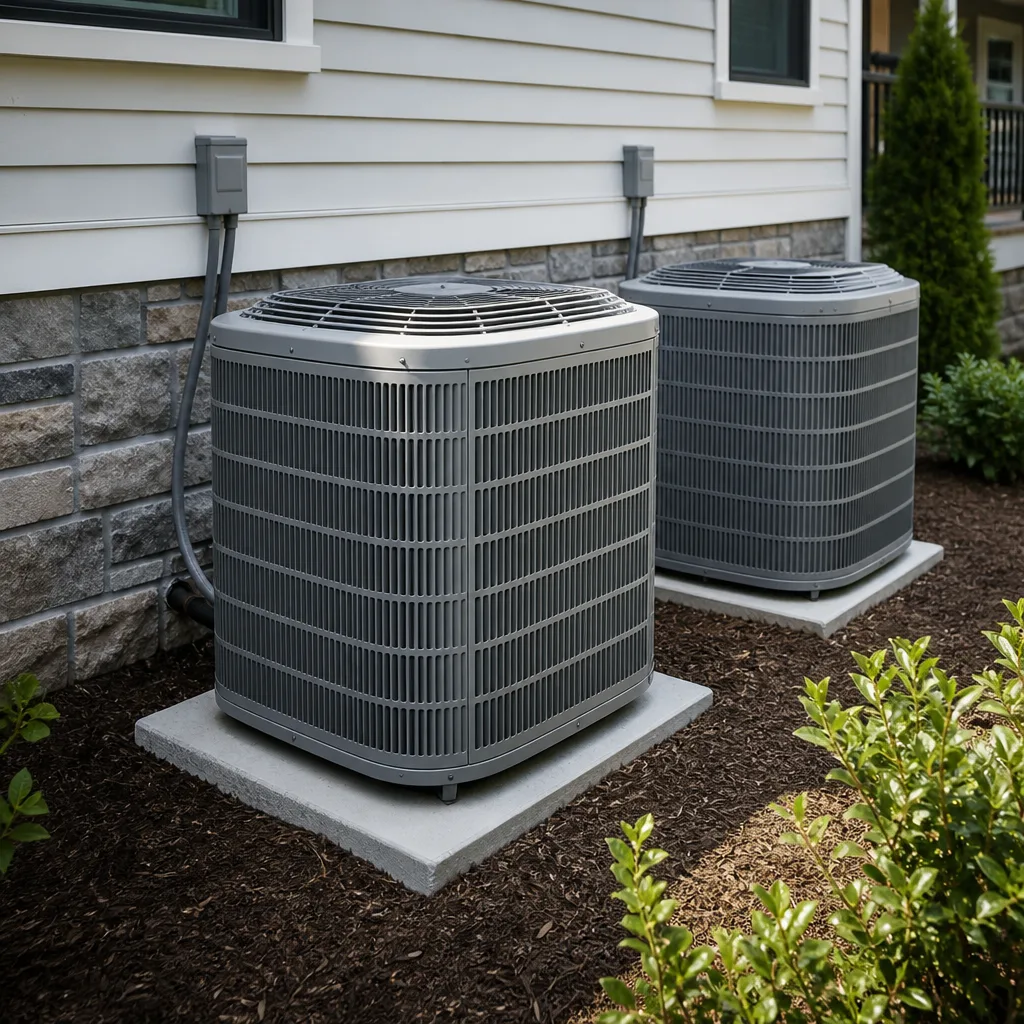 Carrier
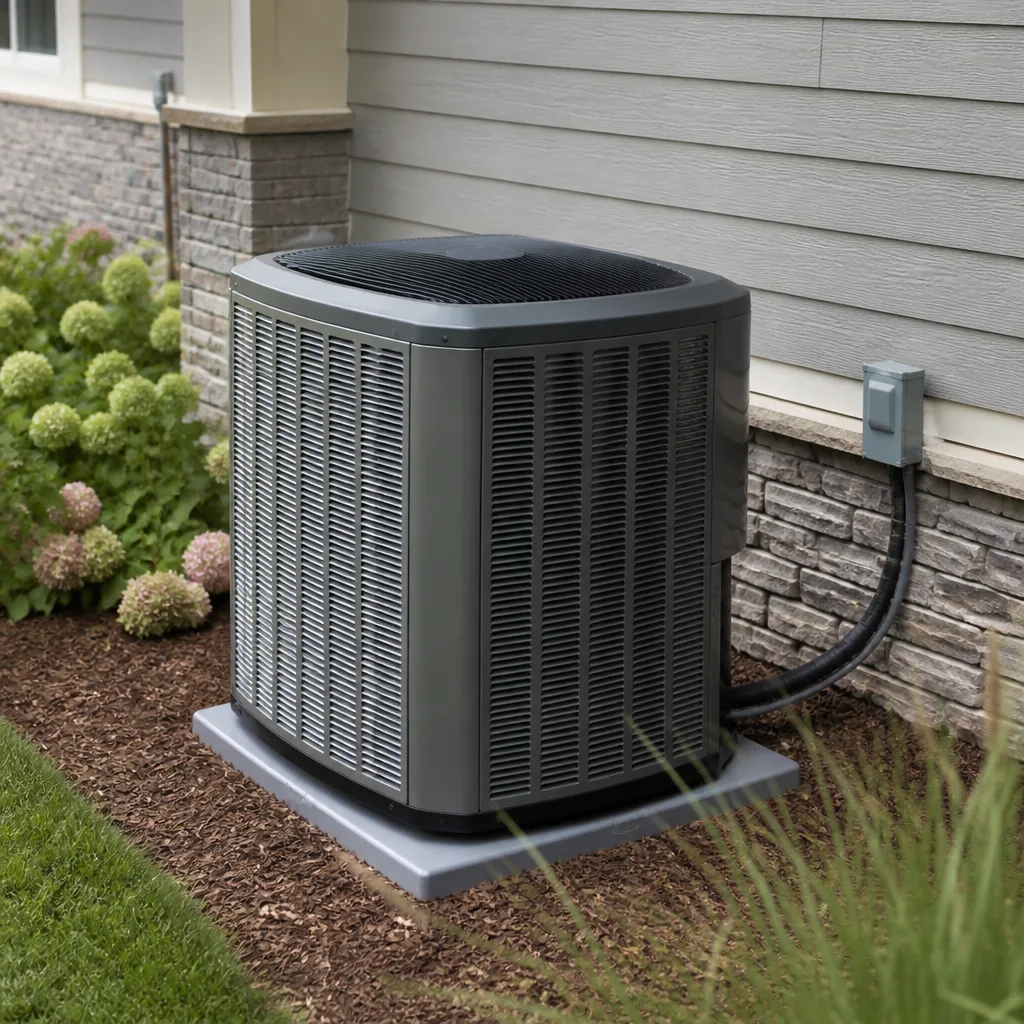 Trane
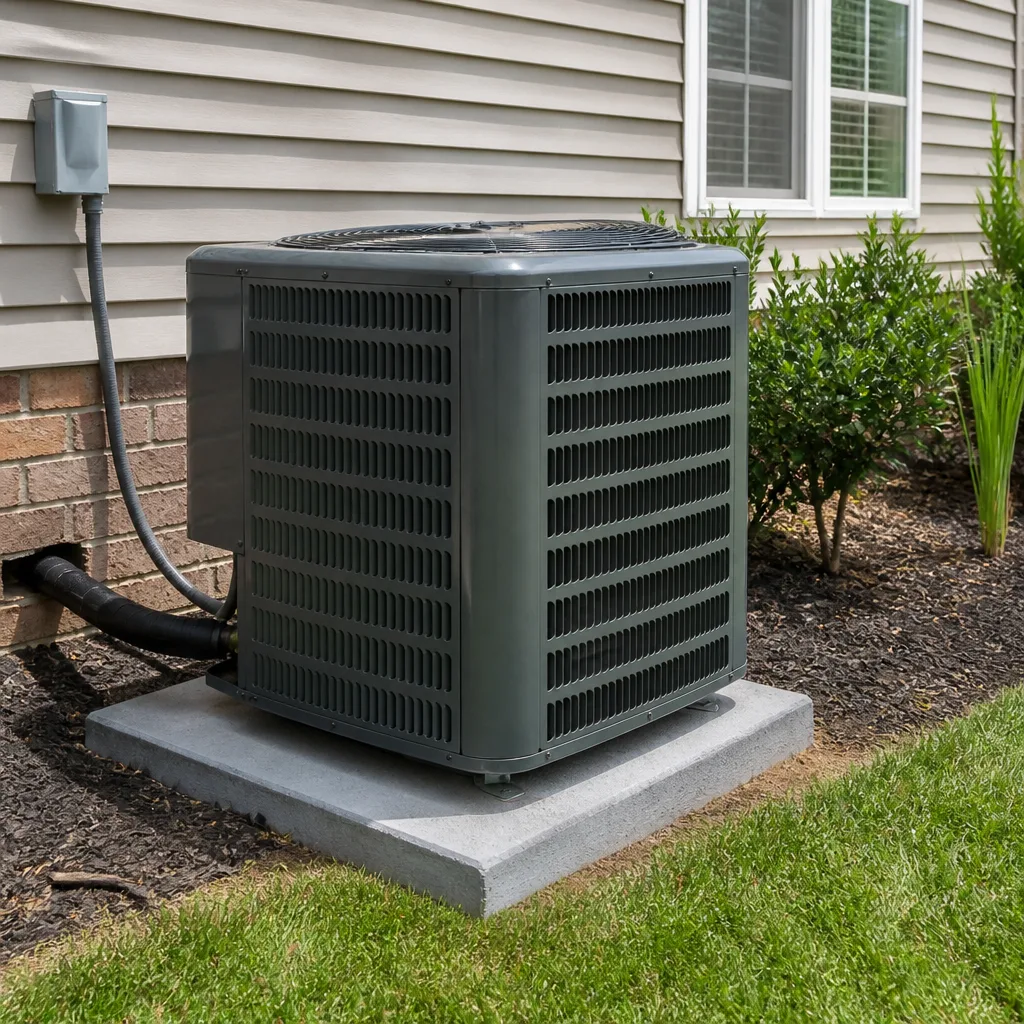 Goodman
Seasonal tune-up and full diagnostic on your Carrier, Trane, or Goodman system - readings shown to you before any repair is proposed
Diagnosis first, numbers second - you approve the repair price before a single part goes in.
Get your free estimateHeat Pump & Mini Split Troubleshooting: Common Problems and How to Fix Them
A blinking E1 code on your mini split indoor head looks alarming. It’s often a dirty thermistor that takes four minutes to clean, but it can also be a refrigerant leak that gets expensive if you let it run. We’ve walked into hundreds of Mesquite homes where a homeowner spent a weekend on YouTube and a hundred dollars on parts before realizing the problem was airflow, not refrigerant. This guide skips the rabbit holes. You’ll get a symptom-first decision tree: what each failure looks like, what you can safely check yourself, and where the line sits between a homeowner fix and a job that needs an EPA 608-certified technician.
Styles & brands we work with
- AC repair
- Furnace & heating
- Heat pumps
- Ductless mini splits
- Carrier
- Trane
- Goodman
Quick Answer
Most mini split and heat pump problems fall into one of four buckets: blocked airflow (dirty filters, clogged coils), a refrigerant charge problem, an electrical or control fault, or a sensor giving bad readings. The first step is always the same – clean the filters and coils and confirm air is actually moving before you suspect anything mechanical. If airflow is fine and the system still won’t heat or cool, the issue is almost always refrigerant, a sensor, or a board-level fault that needs a trained technician.
Table of Contents
- Start Here: The Symptom-First Troubleshooting Path
- Not Heating Enough? Work Through These Causes
- Not Cooling Enough? Check These in Order
- Unit Running but No Airflow: The Most Misdiagnosed Problem
- Unit Won’t Turn On At All
- Unusual Noise: What Each Sound Tells You
- Why Mesquite Dust Punishes Filters and Coils
- Refrigerant vs. Airflow: The Diagnosis Homeowners Get Wrong
- The Outdoor Unit in Extreme Summer Heat
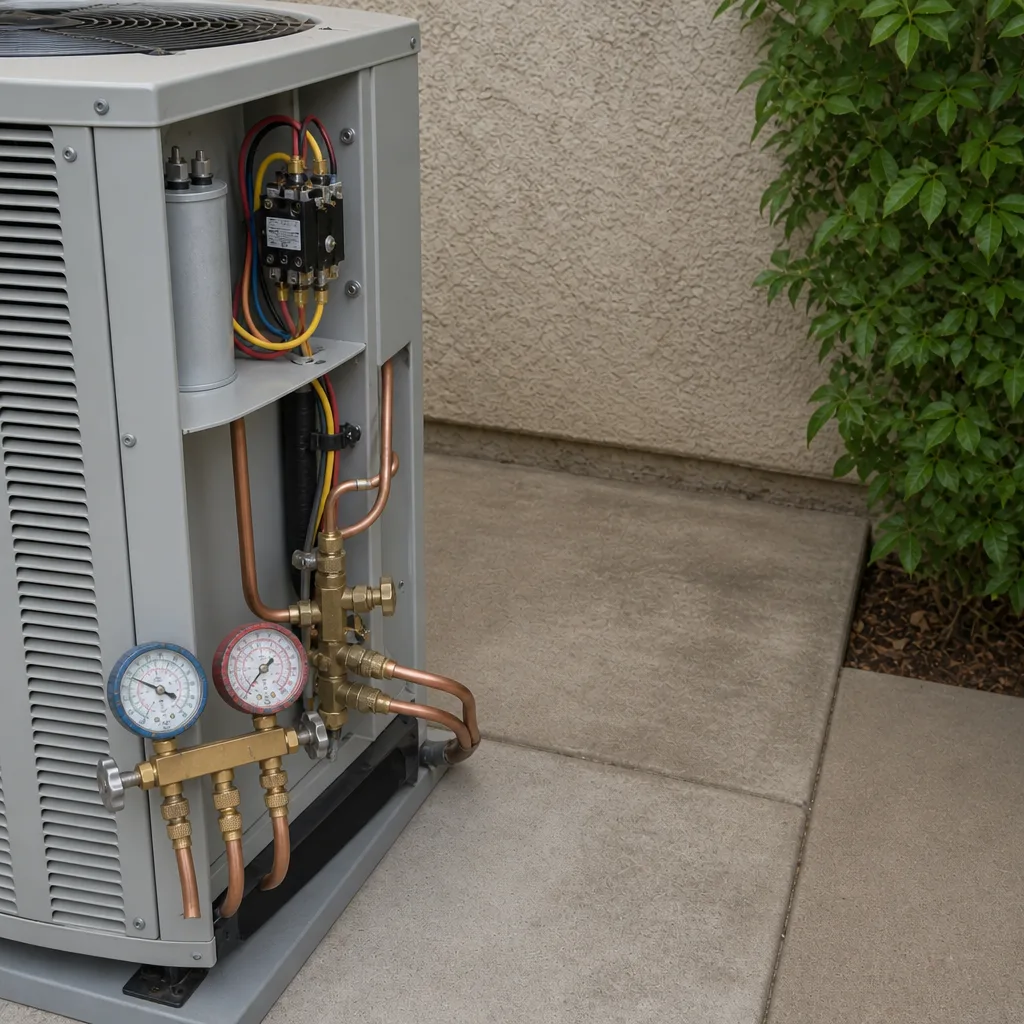
- What You Can Safely Do vs. What Requires EPA 608
- Common Mistakes to Avoid
- When to Call a Professional
- Frequently Asked Questions
- The Bottom Line
Start Here: The Symptom-First Troubleshooting Path
Stop reading the manual and start with the symptom. A heat pump or mini split that misbehaves is telling you which of its subsystems is struggling, and the symptom narrows the field fast. Here’s the path we use on every service call, and you can follow it before we arrive.
- Identify the exact symptom. Is it not heating, not cooling, running with no airflow, refusing to start, or making noise? Write it down. “It’s broken” tells us nothing; “the indoor head runs but blows room-temperature air” tells us a lot.
- Check the power. Breaker at the panel, disconnect switch at the outdoor unit, and the batteries in your remote or thermostat. Sounds basic. It resolves a surprising share of calls.
- Inspect the filter and indoor coil. Pull the filter. If it’s matted with dust, that alone can mimic a refrigerant fault by choking airflow and tripping a high-pressure or freeze limit.
- Look at the outdoor unit. Is the fan spinning? Are the coils caked with dust or cottonwood? Is there ice on the lines or the coil? Ice is a strong signal of low refrigerant or restricted airflow.
- Read the error code. Mini splits display fault codes on the indoor head or remote. Write the code down and look it up – codes are brand-specific, so a Lennox code and a Goodman code for the same fault can differ.
- Decide: airflow, refrigerant, or control. If you cleaned the filter, confirmed airflow, and the symptom persists, you’re past the homeowner stage. That’s when you call.
In our experience across Mesquite, step three catches more real problems than everything else combined. We’ll explain why below. If you’d rather skip the ladder entirely, our Heat Pump & Mini Split in Mesquite page covers how we diagnose these systems.
Not Heating Enough? Work Through These Causes
Insufficient heating on a heat pump almost always traces to one of a short list of causes, and the order matters. Work top to bottom.
- Airflow restriction. A clogged filter, a blocked return, or a dusty indoor coil starves the system and it can’t move enough warm air. This is the most common and the cheapest to fix.
- Defrost cycle stuck. Heat pumps periodically run a defrost cycle to melt frost off the outdoor coil. If it’s stuck in defrost, it blows cold air indoors. A stuck reversing valve or a bad defrost sensor causes this.
- Low refrigerant. A system low on charge struggles to absorb heat from cold outdoor air, so it heats weakly or not at all. This needs a certified technician and a leak search.
- Backup heat not engaging. Some systems rely on auxiliary heat strips when outdoor temps drop. If the strip or its contactor fails, you lose that backup.
- Sensor or board fault. A thermistor reading wrong, or a control board not switching the reversing valve, produces a unit that runs but never heats.
Here’s the Mesquite wrinkle: our winter mornings sit cold enough to test a heat pump but rarely cold enough to expose a marginal one, so a weak charge can go unnoticed until a genuinely cold snap. If heating has felt “fine but not great” for a season, it’s worth a proper check before winter arrives. Our Heating & Furnace in Mesquite page walks through what a heating diagnostic covers.
Not Cooling Enough? Check These in Order
Insufficient cooling in a Mesquite summer is the complaint we hear most, and it usually isn’t a failed compressor. Work through these in order and you’ll find the cause more often than not.
- Filter first. A dirty filter chokes the indoor coil. Replace or clean it and note whether the airflow improves.
- Outdoor coil condition. Mesquite dust and cottonwood pack the outdoor coil fins. A caked coil can’t reject heat and the system cools poorly even with a full charge.
- Thermostat settings. Confirm the mode is COOL and the setpoint is below room temperature. Sounds obvious until a misclicked “heat” mode shows up on a service call.
- Refrigerant charge. If airflow is clean and the system still underperforms, low charge or a restriction in the line set is the likely culprit. That’s a technician job.
- Compressor or capacitor. A failed run capacitor keeps the compressor from starting. A failing compressor causes no cooling at all. Both need a pro.
If you’re noticing weak cooling alongside a rising electric bill, that combination points toward a mechanical problem rather than airflow alone. Our AC Repair & Installation in Mesquite page covers the repair side.
Unit Running but No Airflow: The Most Misdiagnosed Problem
The unit hums, the display lights up, but nothing comes out of the vents. Homeowners read this as “the compressor is dead” and start pricing a new system. Most of the time it’s airflow, and it’s fixable.
- Blower motor failure. The indoor blower has stopped. Could be a failed motor, a bad capacitor, or a control board not sending power. No airflow into the room.
- Frozen indoor coil. A restricted filter or low charge lets the indoor coil freeze into a solid block of ice. The fan runs but air can’t pass through ice. Turn the system off and let it thaw before diagnosing further.
- Blocked filter or return. A closed return grille, furniture pushed against it, or a filter packed solid will kill airflow.
- Damper or duct issue. On ducted systems a stuck damper or a collapsed flex duct cuts flow to certain rooms.
If you see ice, don’t keep running the system. Thaw it, clean the filter, and call. Ice on the coil is one of the clearest signs of a refrigerant or airflow fault, and running it frozen can damage the compressor. Call (888) 570-3601 and we’ll tell you whether it’s a thaw-and-clean job or a service call.
Unit Won’t Turn On At All
A completely dead mini split or heat pump narrows things down quickly. Before you call, run this list.
- Breaker. Check the main panel for a tripped breaker serving the system, plus the disconnect switch at the outdoor unit.
- Remote or thermostat. Dead batteries or a mode set to OFF. Test with fresh batteries.
- Power at the outdoor unit. If the indoor head powers up but the outdoor unit doesn’t, the problem may be the disconnect, the contactor, or the low-voltage control wiring.
- Error code on the head. Many mini splits refuse to start and display a code when a sensor fails. A code here points straight at the control side.
If all the obvious power checks pass and the unit still won’t start, it’s a control or board fault. Those need a meter, a wiring diagram for your specific brand (Rheem, York, Lennox, and Goodman all wire their boards differently), and a technician who knows what to look for.
Unusual Noise: What Each Sound Tells You
Sound is diagnostic. Each noise points to a subsystem, and the type of sound steers the repair in a different direction.
- Rattling or buzzing from the outdoor unit. Loose panels, a failing contactor, or debris inside the housing. Often minor, but worth checking before it becomes a bigger fault.
- Screeching or grinding. Bearing failure in the outdoor fan motor or the indoor blower. Grinding is a stop-the-system noise – shut it down and call.
- Hissing or gurgling. Refrigerant moving through the lines, sometimes a sign of a leak or a partially restricted line set.
- Clicking on and off repeatedly. Short-cycling caused by a control fault, a pressure limit, or an undersized or restricted system.
- New, louder hum indoors. A failing blower motor or transformer. Worth a look before it stops the blower entirely.
Screeching and grinding are the two noises that shouldn’t wait. If the outdoor fan motor seizes, it can take out the compressor. Call (888) 570-3601 and we’ll get eyes on it.
Why Mesquite Dust Punishes Filters and Coils
Manufacturer maintenance intervals typically assume a “normal” environment. Mesquite isn’t that. Between the desert dust, the seasonal cottonwood, and the fine particulate that settles on every outdoor coil in town, our systems dirty up far faster than the manual’s six-month or yearly schedule assumes.
We regularly see outdoor coils packed within a couple of months of the last cleaning, especially on properties near open desert lots or wind-exposed stretches. The indoor filter needs replacement more often than the standard “every three months” advice too. If you run the system hard through summer, expect to inspect the filter monthly and clean the outdoor coil at least once mid-season.
Why it matters so much: a dirty coil and a low refrigerant charge produce the same symptom – poor heating or cooling – but they’re completely different problems with completely different fixes. Cleaning the coil is cheap and safe. Recharging the system is not. Getting this distinction wrong is where homeowners spend money they don’t need to. Our Fireside Heating & Air Co. Mesquite home page has more on how we handle local maintenance.
Refrigerant vs. Airflow: The Diagnosis Homeowners Get Wrong
This is the single most common misdiagnosis we see, and we want to save you from it. Both problems show up the same way: the unit runs, but it doesn’t heat or cool like it should.
The tell is airflow. If the indoor fan is moving strong, cool (or warm) air and the system still underperforms, the problem is more likely refrigerant or mechanical. If the airflow is weak, thin, or the unit hums without pushing air, it’s almost always airflow: a dirty filter, a dirty coil, or a failing blower.
Homeowners who jump straight to “we need more refrigerant” often buy a recharge when a $12 filter was the fix. The reverse is also true: adding refrigerant to a clean system without finding a leak just repeats the problem in a few weeks. A proper diagnosis measures airflow and system pressures side by side before touching the charge. Our heat pump and mini split service walks through that process.
The Outdoor Unit in Extreme Summer Heat
Mini splits and heat pumps have a maximum ambient operating temperature. In extreme heat, many units throttle back – deliberately reducing capacity to protect the compressor. That’s normal behavior, not a fault, and it’s important to know the difference.
If your system cools well in the morning and struggles in the late afternoon when outside temps peak, that’s usually the unit operating at its design limit, not a refrigerant issue. A qualified technician can measure the system’s actual performance against its rated capacity at the current ambient temperature and tell you whether it’s throttling normally or underperforming because of a fault.
What’s not normal: no cooling at all in the afternoon, a unit that shuts off and refuses to restart until it cools, or a system that was cooling fine last summer and now isn’t. Those suggest a fault. If you’re unsure which one you’re looking at, call (888) 570-3601. We can tell you over the phone whether it’s worth a service call.
What You Can Safely Do vs. What Requires EPA 608
There’s a real line here, and crossing it is either a wasted weekend or a serious hazard. We’d rather you know exactly where that line sits than find out the hard way.
Safe homeowner tasks:
- Replacing or cleaning filters
- Cleaning the outdoor coil fins with a garden hose
- Thawing a frozen indoor coil (after turning the system off)
- Checking and resetting breakers and the outdoor disconnect
- Replacing thermostat or remote batteries
- Clearing vegetation and debris around the outdoor unit
- Recording error codes for the technician
Job for a trained, EPA 608-certified technician:
- Any work involving refrigerant lines, charge, or evacuation
- Diagnosing or replacing a compressor, reversing valve, or expansion valve
- Electrical fault diagnosis at the control board or contactor
- Replacing a blower motor or outdoor fan motor
Handling refrigerant without EPA 608 certification is both a safety risk and a federal violation. It’s also how systems get overcharged or undercharged, which is a repair you’ll pay for twice. When you need this work done right, call (888) 570-3601.
Common Mistakes to Avoid
- Running the system with a frozen coil. Ice means the system can’t breathe. Keep running it and you risk the compressor. Thaw it and diagnose before you restart.
- Buying refrigerant as a do-it-yourself fix. Topping off without finding the leak is money down the drain. And it’s not a legal homeowner task without EPA 608.
- Assuming weak cooling means a new system. Dirty coils and filters are far more common than a dead compressor. Clean first, then diagnose.
- Ignoring a “minor” error code. A small E1 or sensor fault that goes untreated can turn into a refrigerant leak and a costly repair. Read the code, don’t just reset it.
- Skipping the outdoor coil during dust season in Mesquite. Coils here clog faster than the manual suggests. Clean them more often than the schedule says.
- Calling the lowest bid first. The cheapest quote often means a quick top-off with no leak search and a repair that fails in six weeks. Ask whether the diagnosis includes a leak test and a written estimate.
- Letting a “sometimes” problem sit. A unit that works on cool mornings and fails on hot afternoons is telling you something. Catch it before the middle of summer.
When to Call a Professional
Some of this you can handle with a filter, a hose, and a little patience. Some of it needs a trained technician, and knowing the difference saves you money and prevents damage. Call us when:
- Airflow is clean but heating or cooling is still weak
- You see ice on the coil or lines
- An error code keeps coming back after a reset
- The unit makes screeching or grinding noises
- The system won’t start and power checks pass
- Your electric bill jumped and the performance dropped
Fireside Heating & Air Co. Mesquite offers free estimates in Mesquite – call (888) 570-3601. Every job is backed by our 90-Day Done Right Promise, and a live person answers the phone, day or night.
Frequently Asked Questions
Nine times out of ten it’s airflow: a dirty filter, a clogged coil, or a restricted return. If airflow is clean and the problem persists, suspect refrigerant, a sensor fault, or a control board problem. Clean the filter and coil first, then call for a diagnosis.
On most brands it indicates a thermistor (temperature sensor) fault on the indoor or outdoor unit. Sometimes a dirty or loose sensor connector causes it; sometimes the sensor itself has failed. Read the code, clean the filter, and if the code returns, have a technician check the sensor.
No. Handling refrigerant requires EPA 608 certification under federal law, and doing it without the right gauges and equipment risks overcharging or undercharging the system. Both cause damage. Any refrigerant work needs a certified technician.
Many mini splits throttle back at high ambient temperatures to protect the compressor. Cooling that fades only in the hottest afternoon hours can be normal. No cooling at all, or a system that shuts off in the heat, points to a fault. A technician can measure actual performance against the rated capacity at your current outside temperature.
Inspect it monthly during cooling season and clean it as soon as it looks coated with dust. The standard three-month schedule assumes a “normal” environment, and Mesquite’s dust and cottonwood load is well above normal. The outdoor coil needs cleaning at least once mid-season.
Repair usually makes sense for a system under eight to ten years old with a clean filter, healthy airflow and a single identifiable fault. Replacement makes more sense when the repair cost exceeds roughly 40 percent of a new system, or when a compressor or reversing valve has failed on an aging unit. A straight repair-versus-replace conversation with a written estimate is the way to decide.
The Bottom Line
Most heat pump and mini split problems come down to airflow, refrigerant, control faults, or a bad sensor. Check the filter and coil first, confirm air is actually moving, and read the error code before you assume the worst. In Mesquite, dust and cottonwood accelerate the clogging process, so clean filters and coils more often than the manufacturer says. Handle the simple tasks yourself. Call a certified technician for refrigerant, compressors, and electrical faults. Done right the first time saves you the second bill. When you’re ready, call (888) 570-3601 – a live person answers, and the estimate is free.
Written by the team at Fireside Heating & Air Co. Mesquite.
See the difference
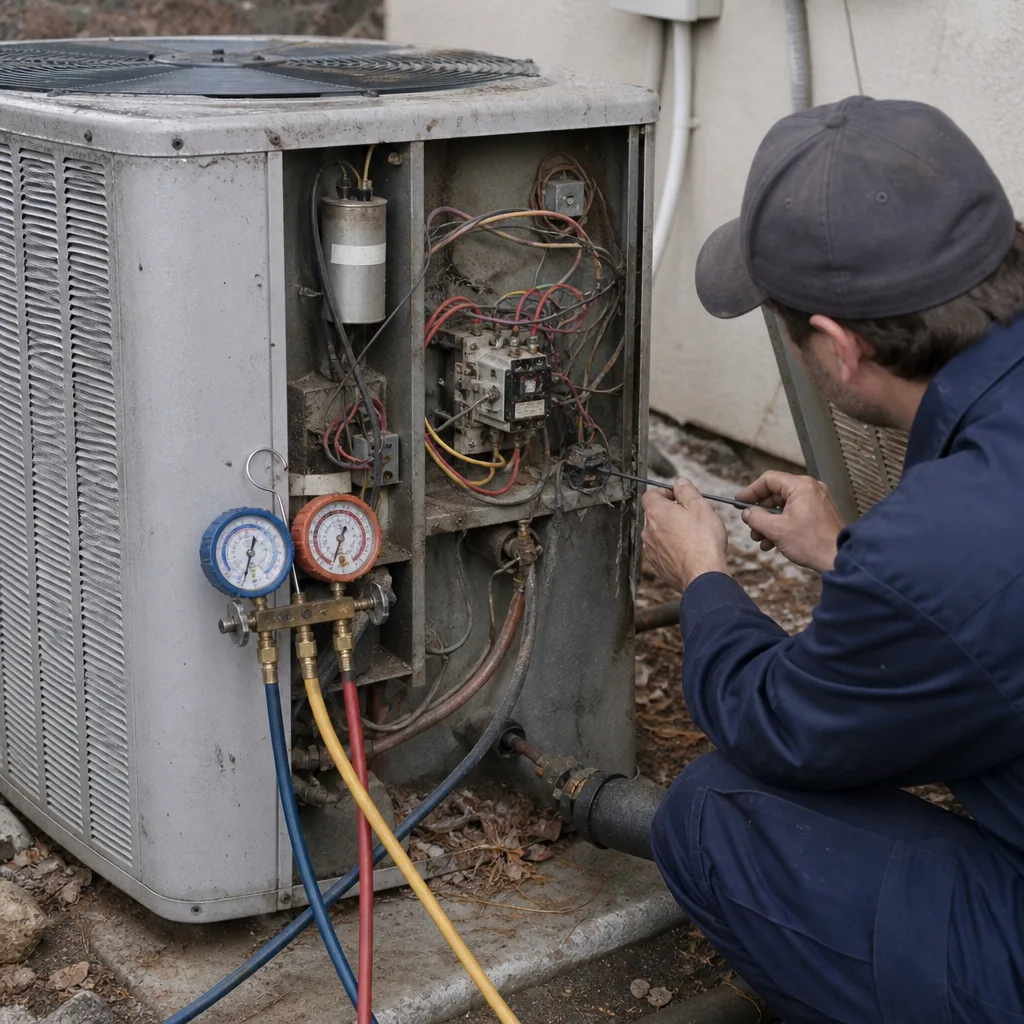 Before
 After
 Before
 After
 Before
 After